Calavida Cantina – Albuquerque, New Mexico

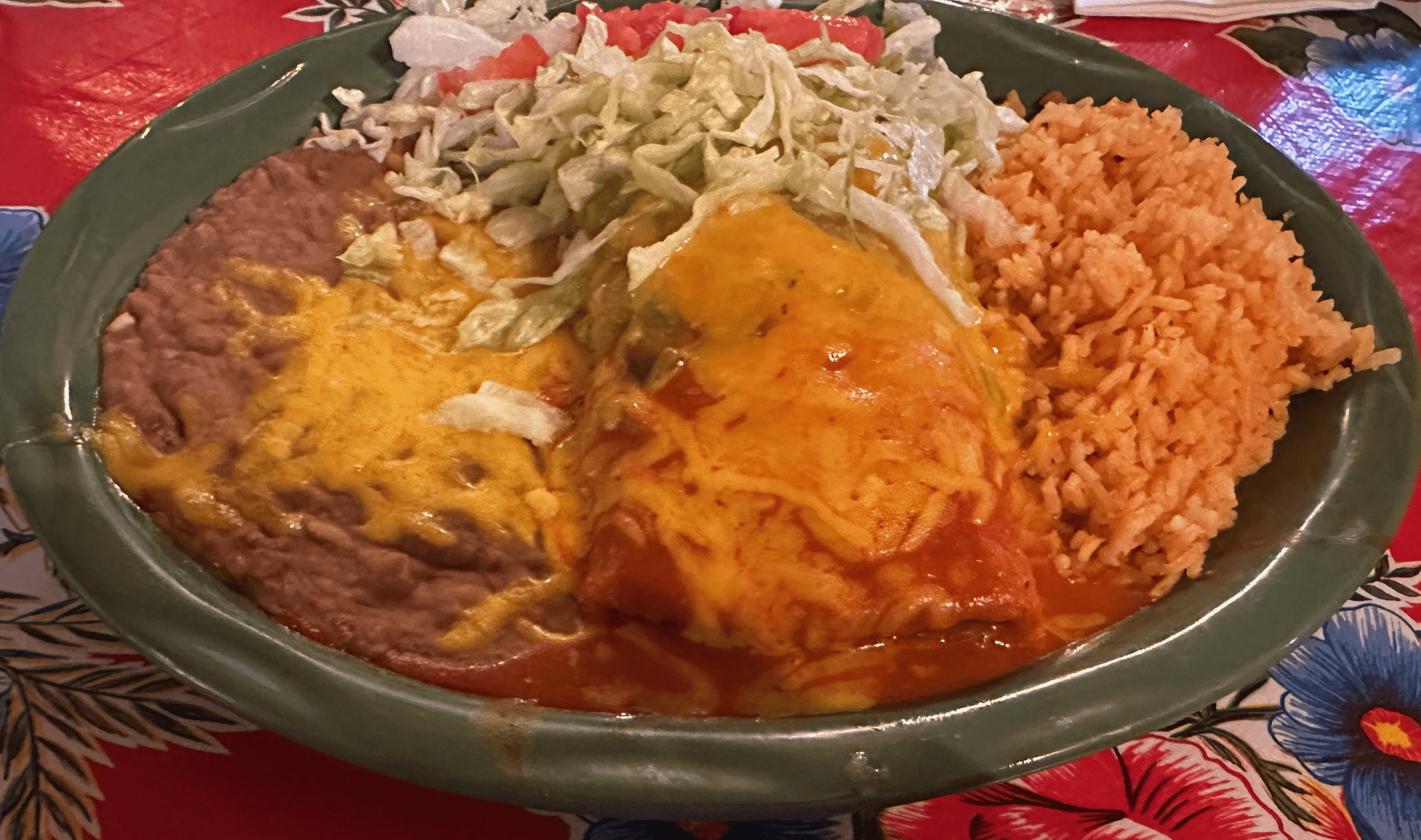
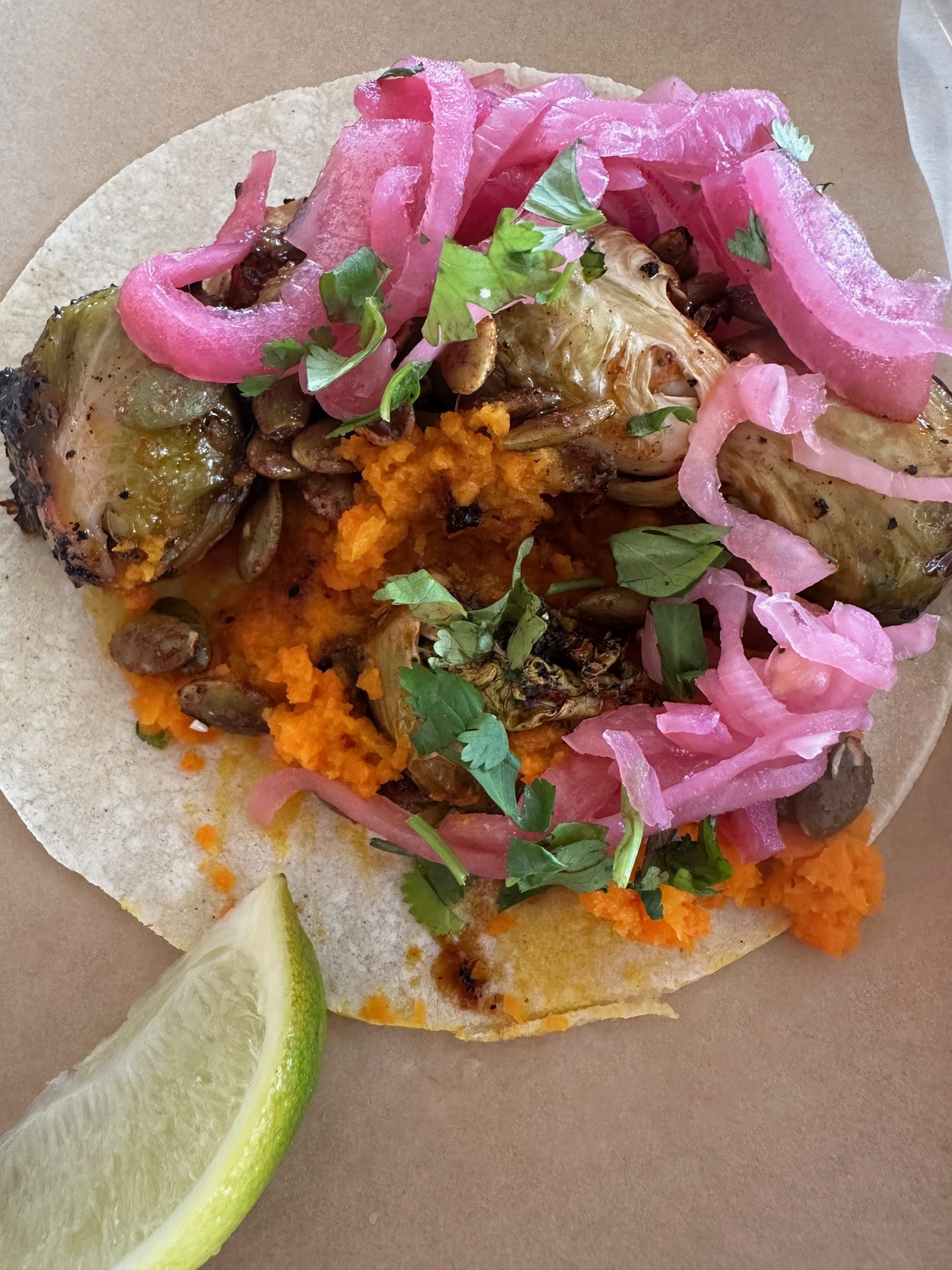
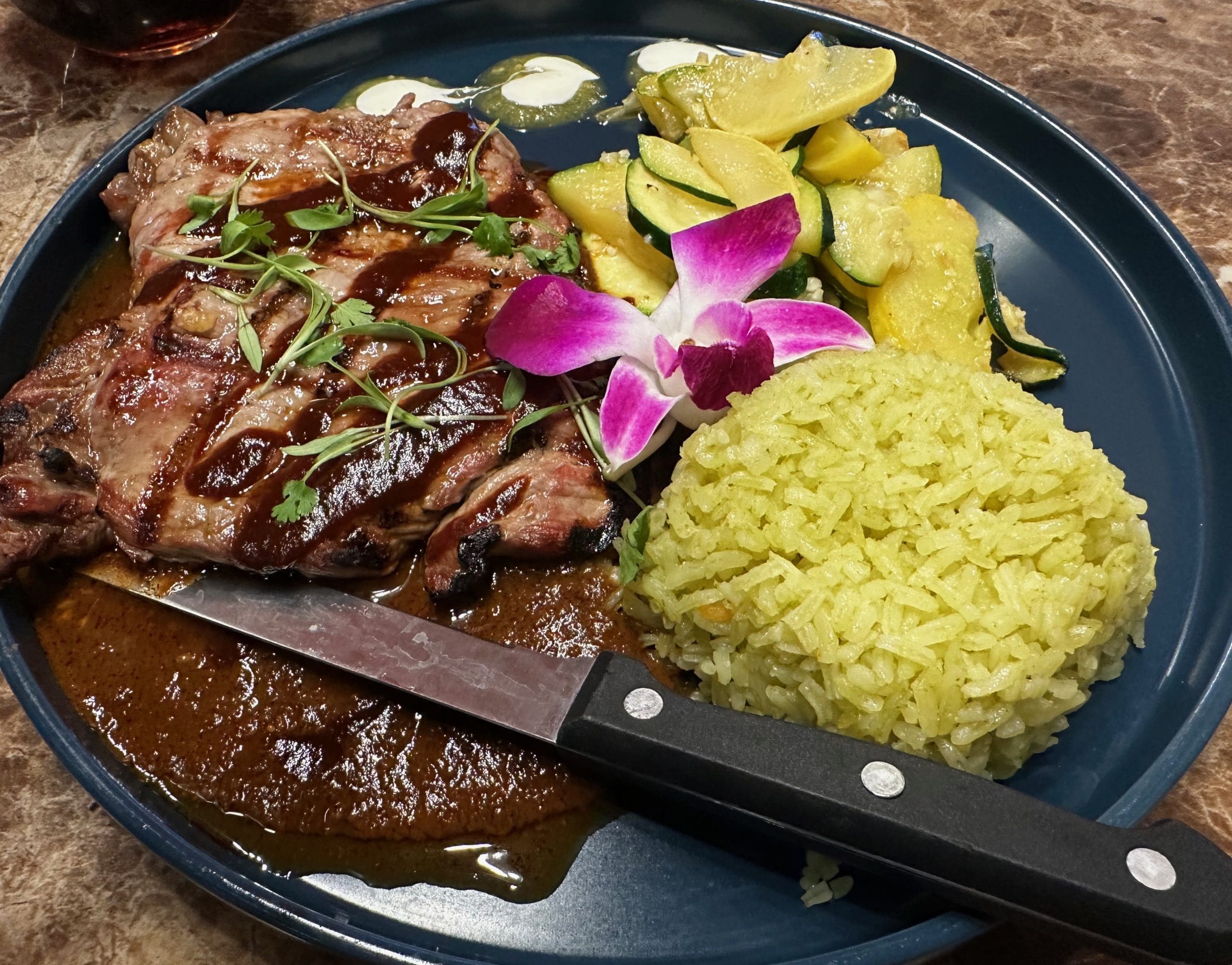
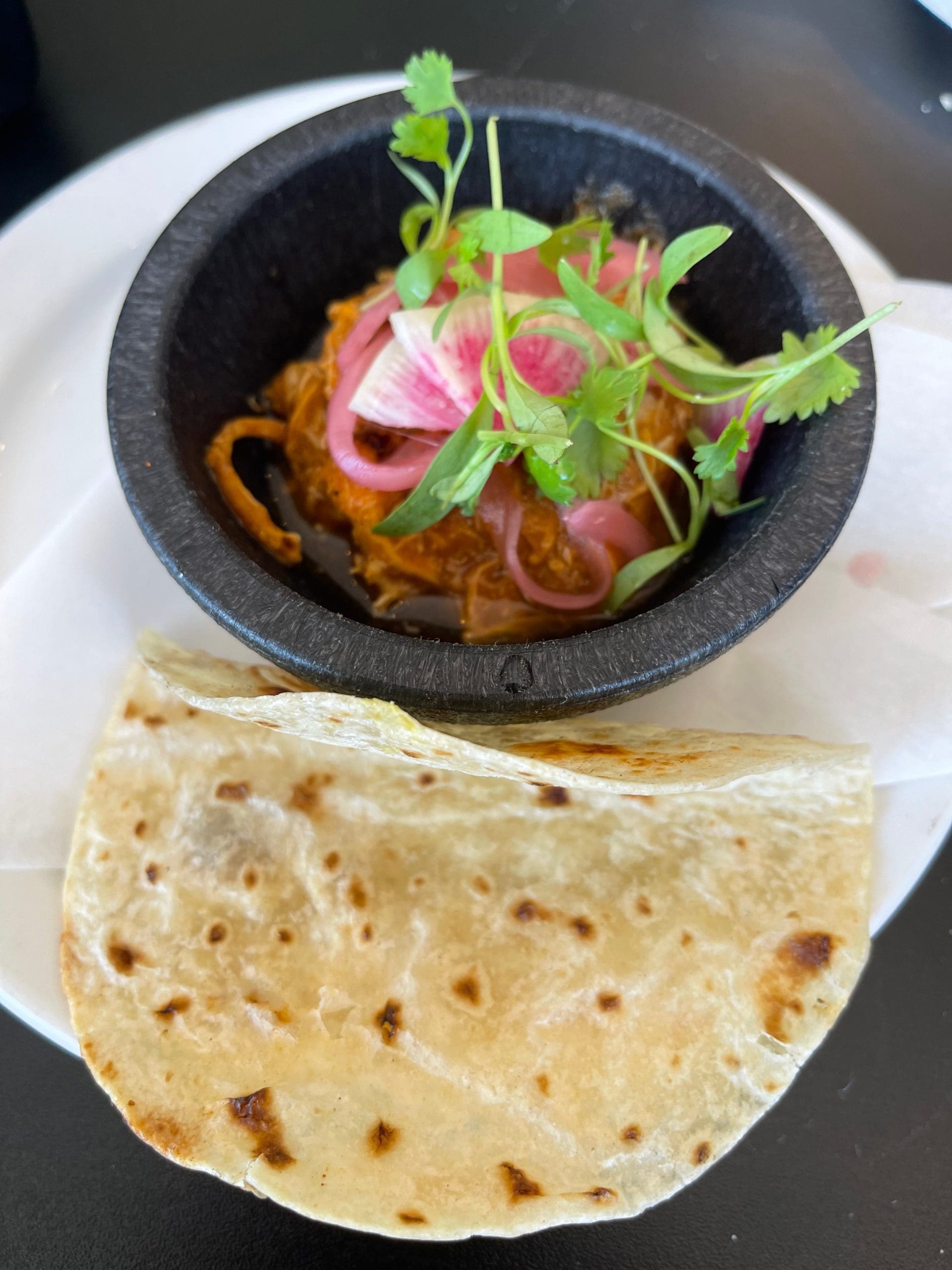
At Calavida Cantina, you’re invited to “party like the dead.”  If you haven’t partied like the dead, you’re probably not well acquainted with the Mexican tradition of “El Dia De Los Muertos,” the Day of the Dead.  During this Mexican holiday, the profusion of skeletons of all sizes performing day-to-day activities signifies the return to this world of the dead who remain who they were when they lived, doing what they did.  For example, skeletal figures depicted on the artwork at Calavida Continue would have been party animals when they graced this earthly plane.  Therefore in death, they remain party animals–eating, drinking and being merry.   At Calavida, the party animals of a past life mingle with party animals of today in a milieu that’s the antithesis of a morgue or mortuary. When we first espied the Calavida Cantina, I worried my Spanish vocabulary was diminishing with age (I’m 39) and lack of practice.  It was a relief to learn that Calavida isn’t an actual word, but a portmanteau blending calavera (skull) with vida (life), “a nod to the Día de los Muertos belief that joy and remembrance can—and should—coexist.” Calavida “toasts to the past, celebrates the present, and crafts liquid stories for the…

Twisters Burgers & Burritos – Albuquerque, New Mexico

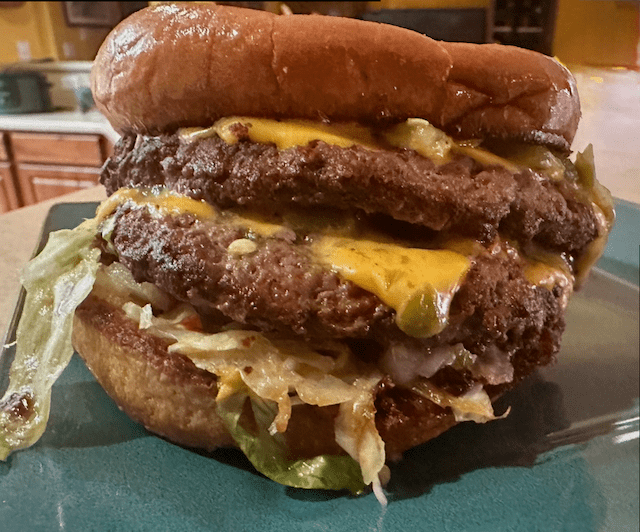
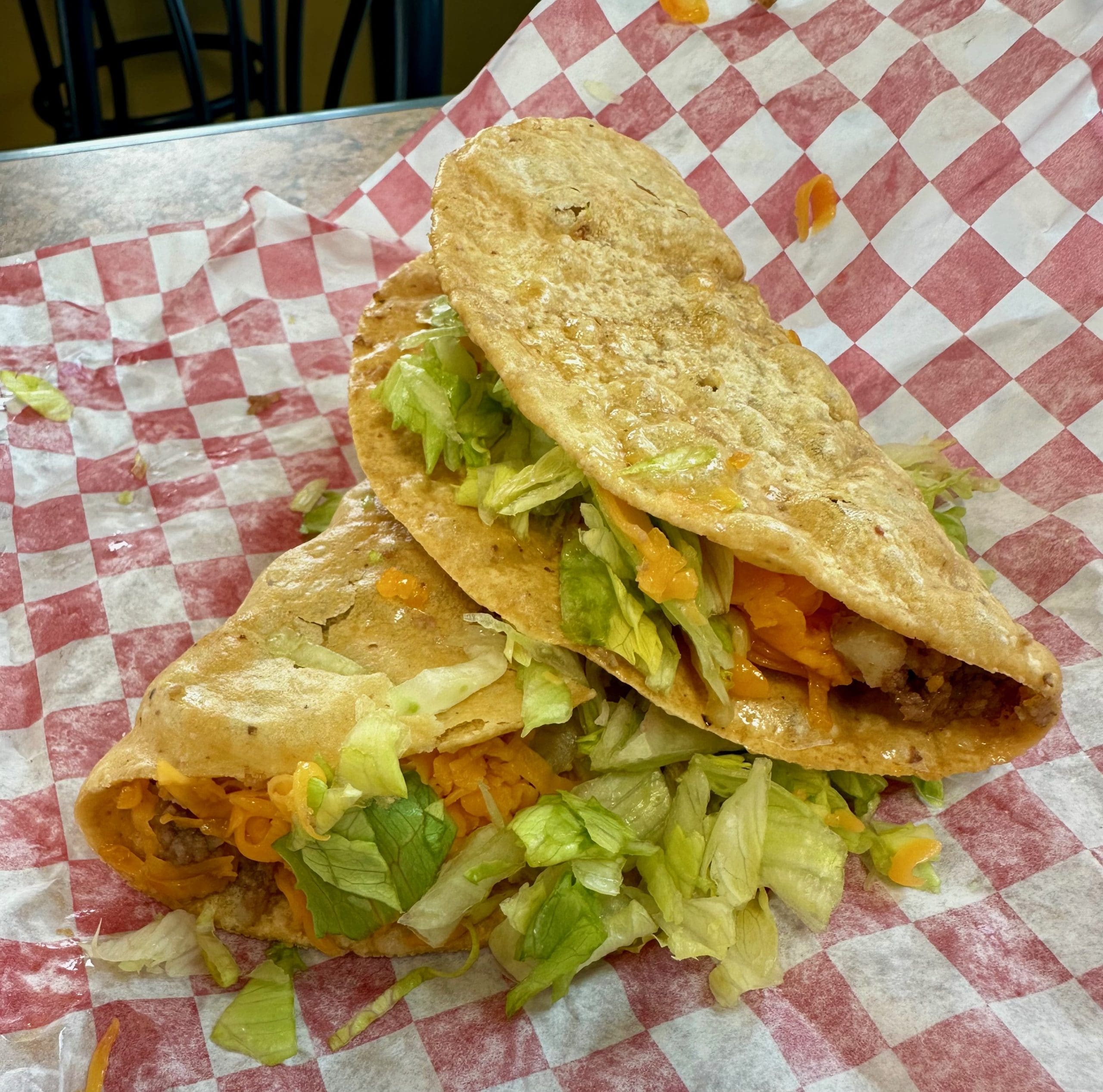
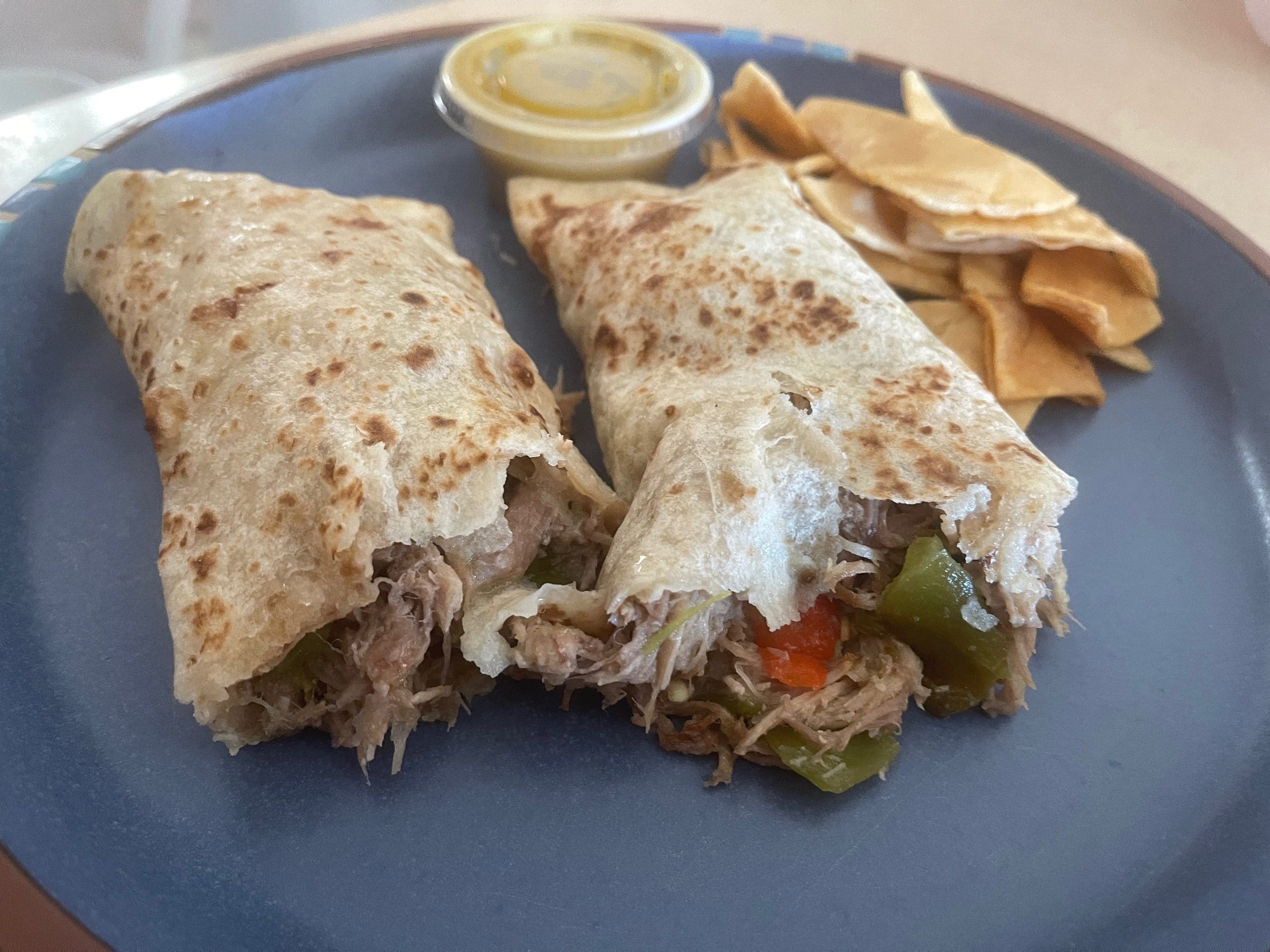
One of the sure signs of spring and summer in New Mexico is the presence of dust devils, those haphazardly whirling, dirty, dusty dervishes which seem to whip up out of nowhere to vacuum up all surface detritus on their unpredictable paths. Tumbleweeds, trash and soil spin skyward to heights of up to 100 feet only to be deposited–torn, tattered and worse for wear– sometimes great distances from their points of origin.  Normally lasting no longer than a few seconds, dust devils are nature’s hot wind temper tantrum, capable of wreaking havoc quickly and with tremendous force. At their worse, they can rip siding off buildings, snap power lines, overturn lawn furniture, send trash cans careening down the street and propel sheet metal through windows.  If a home isn’t well insulated, being on the path of a dust devil will mean a covering of fine sand throughout the home. A dust devil might not transport Dorothy and Toto to Oz, but it will certainly bug the heck out of them. As prominent a presence as dust devils are throughout New Mexico, they aren’t exactly popular.  You certainly won’t find any schools proudly proclaiming the Dust Devil as their mascot.  (Yet,…

El Guero Canelo – Tucson, Arizona

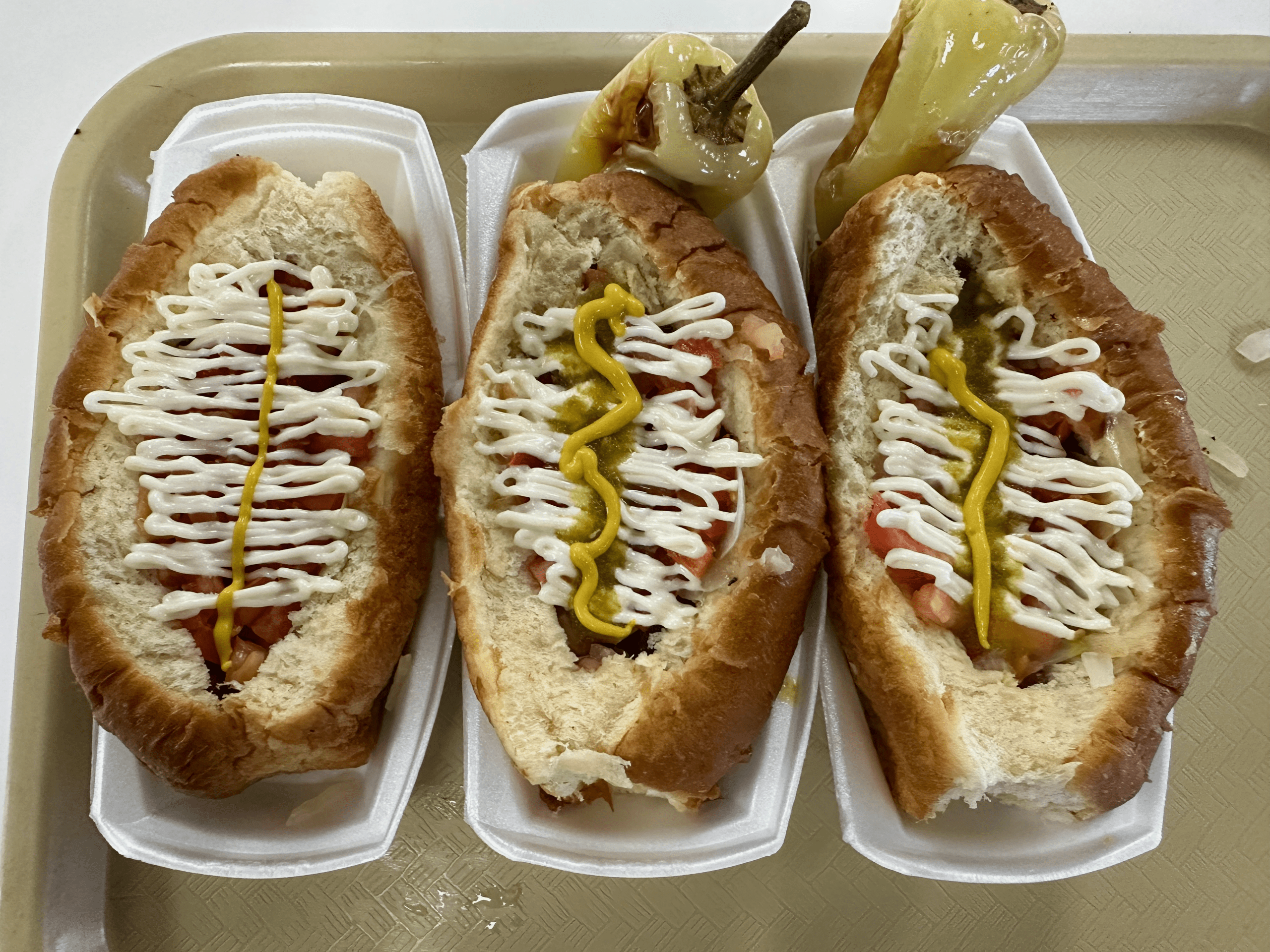
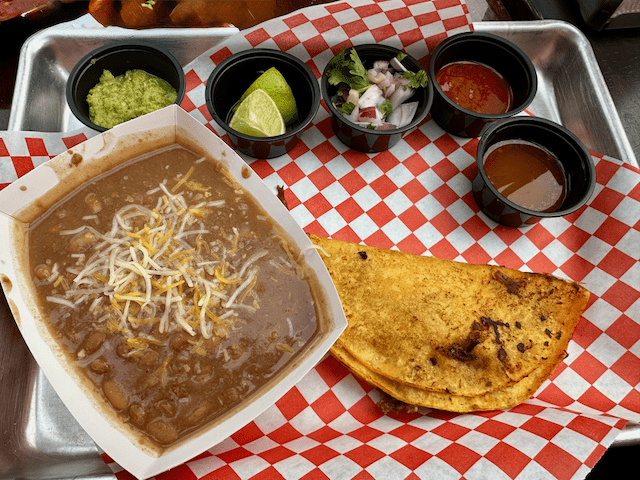
If asked to participate in a word association exercise, any well-traveled foodie undergoing psychoanalysis would find it easy to name the first food that comes to mind when a city is mentioned: Philadelphia – the Philly cheesesteak sandwich; Boston – baked beans; Chicago – Italian beef sandwiches; San Francisco – sourdough bread; Milwaukee – butter burgers; San Antonio, New Mexico – green chile cheeseburgers.  You get the point.  Some foodies might not know that Philadelphia is the birthplace of liberty, but they know about Geno’s and Pat’s King of Steaks and their decades-long battle for Philly cheesesteak supremacy. You might find it strange that seemingly pedestrian foods would be the defining cuisine of burgeoning cosmopolitan cities, historically significant metropolises and tiny hamlets in the desert, but it’s not solely foodies who associate foods with places. Anthropologist Maribel Alvarez of the University of Arizona says the “quintessential food of Tucson” is the Sonoran hot dog, explaining that instead of taking guests to high-end restaurants, locals will bring their out-of-towners to one of the city’s purveyors of Sonoran hot dogs. Hot dogs, like baseball and barbecue, aren’t exclusively the domain of Americans any more.  In fact, they never were. Before you call…

Juniper Coffee & Eatery – Farmington, New Mexico

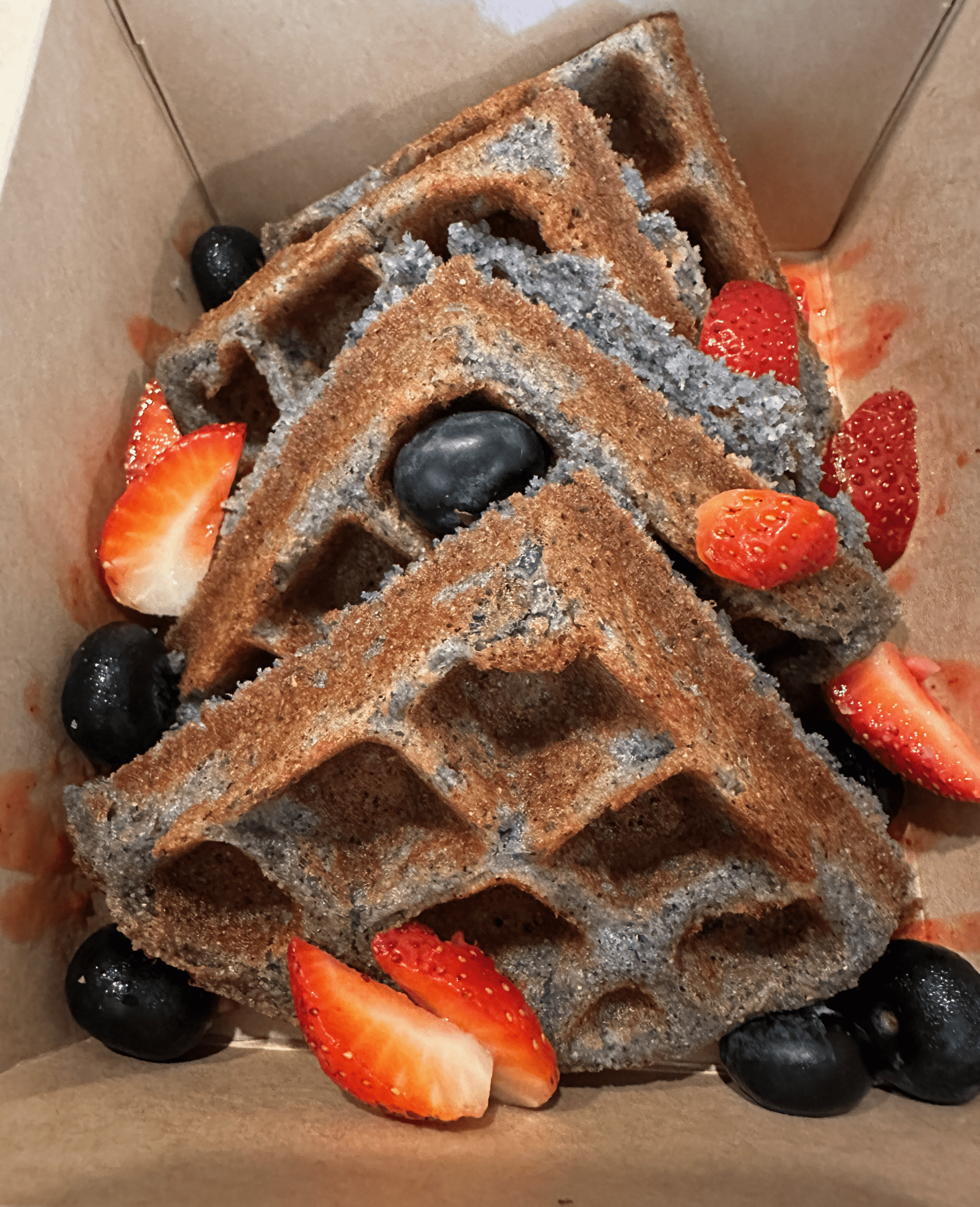
Before heading off for an overnight stay in Farmington back in February, 2023, I scoured the internet for suggestions on where to have breakfast.  My criteria was simple:  preferably a Navajo owned-and-operated eatery.  Restaurants who spell New Mexico’s official state vegetable “chili” wouldn’t be considered.  Yelp came through on its listing of the ten best restaurants for breakfast in Farmington.  At the very top of that list was Juniper Coffee and Eatery on College Blvd.  Little did I know how enthusiastically and overwhelmingly that choice would be endorsed later by people with whom I shared a dinner table and many laughs.  Serendipity certainly played a role in my breakfast venue of choice. Serendipity also played a role in that the address for the LorAmy’s Valentine’s Dining Experience presented by James Beard Award Finalist Justin Pioche and the address of Juniper Coffee and Eatery were one and the same.  Justin had borrowed the venue from his friends at Juniper for the exclusive one night Valentine’s Day extravaganza.  As the only unaccompanied diner at the event, I had the great privilege and blessing of being seated next to the great chef’s three aunts and one uncle.  When I asked them what Farmington restaurant…

La Posta De Mesilla – Mesilla, New Mexico

If only walls could talk, you’d want the adobe brick walls at La Posta (The Inn) to recount their impressions of the veritable “who’s who” of Western history who once sought shelter within its fortified walls.  You’d want those walls to reveal their thoughts of legendary outlaw Billy the Kid who hung out at La Posta on his road to notoriety.  You’d want those walls to tell you about the steely presence of General Douglas MacArthur, who commanded Allied forces in the Pacific Theater during World War II. You’d want those walls to share their account of Generalissimo Pancho Villa, another sojourner who sought shelter at La Posta.  Certainly no raconteur could provide the details known only to the walls at La Posta when it quartered controversial frontiersman Kit Carson or for then General, later President, Ulysses S. Grant. Built in the 1840s by Sam and Roy Bean, themselves  historical luminaries, La Posta was originally a freight and passenger service.  After the Civil War, it became part of the Butterfield Stagecoach line which ferried passengers and mail from eastern outposts in Memphis and St. Louis to California.  During the 1870s and 1880s, the sprawling edifice was home to the Corn…

Taco Santo – Albuquerque, New Mexico (CLOSED)

NOTE:  In July, 2025, Taco Santo ceased operating as a taqueria, reverting back to Holy Burger, long one of the city’s most popular burger joints. Jay Rayner, one of my very favorite restaurant critics and authors, has an inimitable gift for luring readers with reviews that go far beyond describing food.  His review of Santo Remedio, a Mexican restaurant in London, is one such example, starting with his astute   observation about the debate between authenticity and verisimilitude in culinary culture: “All too often in the food world, the war of expertise becomes a lumbering battle between the Real Thing and the Good Stuff. The Real Thingers have knowledge and experience on their side. They’ve eaten dishes in their place of origin, when you have not. By contrast, all the Good Stuffers have is enthusiasm. They don’t care whether these Korean chicken wings are as they would be in downtown Seoul. All that matters is that they taste good.” Raynor’s “the real thing” is represented by purists and traditionalists who have not only eaten dishes in their place of origin, but in the manner in which those dishes were originally created.  The “good stuff” is represented by chefs seeking not to emulate…

Herencia – Albuquerque, New Mexico

When he founded Los Equipales in 1996, restaurant impresario Henrique Valdovinos admitted “I wouldn’t have tried this ten years ago, but I think people are ready for it.”  As recently as a quarter-century ago, two types of Mexican restaurants existed across the fruited plain.  Most common were those sharing reciprocal expectations with diners who expected and received such stereotyped “Mexican” food as fajitas; hard-shelled tacos filled with ground beef, cheese, lettuce and sour cream; chiles rellenos made with bell peppers and enough yellow cheese to clog a dinosaur’s arteries.  Denizens under the spacious skies didn’t know any better and enjoyed the watered down versions of the real deal.  This “Mexican” food became mainstream. The other type of Mexican food restaurants might best be catgorized as “Mexican restaurants for Mexican people.”  These restaurants didn’t offer “dumbed down” cuisine and were primarily (though not exclusively) frequented by scions of Montezuma.  Among those which caught on across dining demographics were mariscos restaurants offering Mexican seafood options.  None of the ubiquitous and mostly shuttered chains (Chi Chi’s, Don Pablo’s, Pancho’s, El Torrito, etal)  served seafood.   Mexican mom-and-pop restaurants began sprouting and having success by serving the foods enjoyed by Mexican families. When he launched…

Kathy’s – Albuquerque, New Mexico

In 2001, the Alibi staff declared Kathy’s Carry-Out the “best hamburger in the Duke City.” Surely,” nay-sayers retorted, “this had to be a mistake.” How, after all, they reasoned, could a ramshackle garage sized building with a kitschy purple facade and garish orange trim possibly compete with the flamboyant chains and their glitz and glamor or even with the anointed local purveyors in the more well-beaten, well-eaten paths throughout the city? Kathy’s Carry-Out lived up to its name, emphasis on the “carry-out” portion of its name. Carry-Out was the only option available for the phalanx of diners eager to bite into those bodacious burgers. Ensconced in an Isleta Boulevard neighborhood seemingly zoned as much for more residential than commercial purposes, Kathy’s Carry-Out certainly wouldn’t win any awards for esthetics and it probably violated every feng shui principle for harmony, not that hungry diners noticed. Savvy burger aficionados from the South Valley frequented Kathy’s for its wonderful New Mexican cuisine and a burger so good it’d convert staunch vegans. It took one visit to convince my Kim and I you can’t judge a burger by the dilapidated facade of its place of origin. Kathy’s does serve one of, if not THE…

Birrieria Y Tacos Alex Tijuana Style – Albuquerque, New Mexico

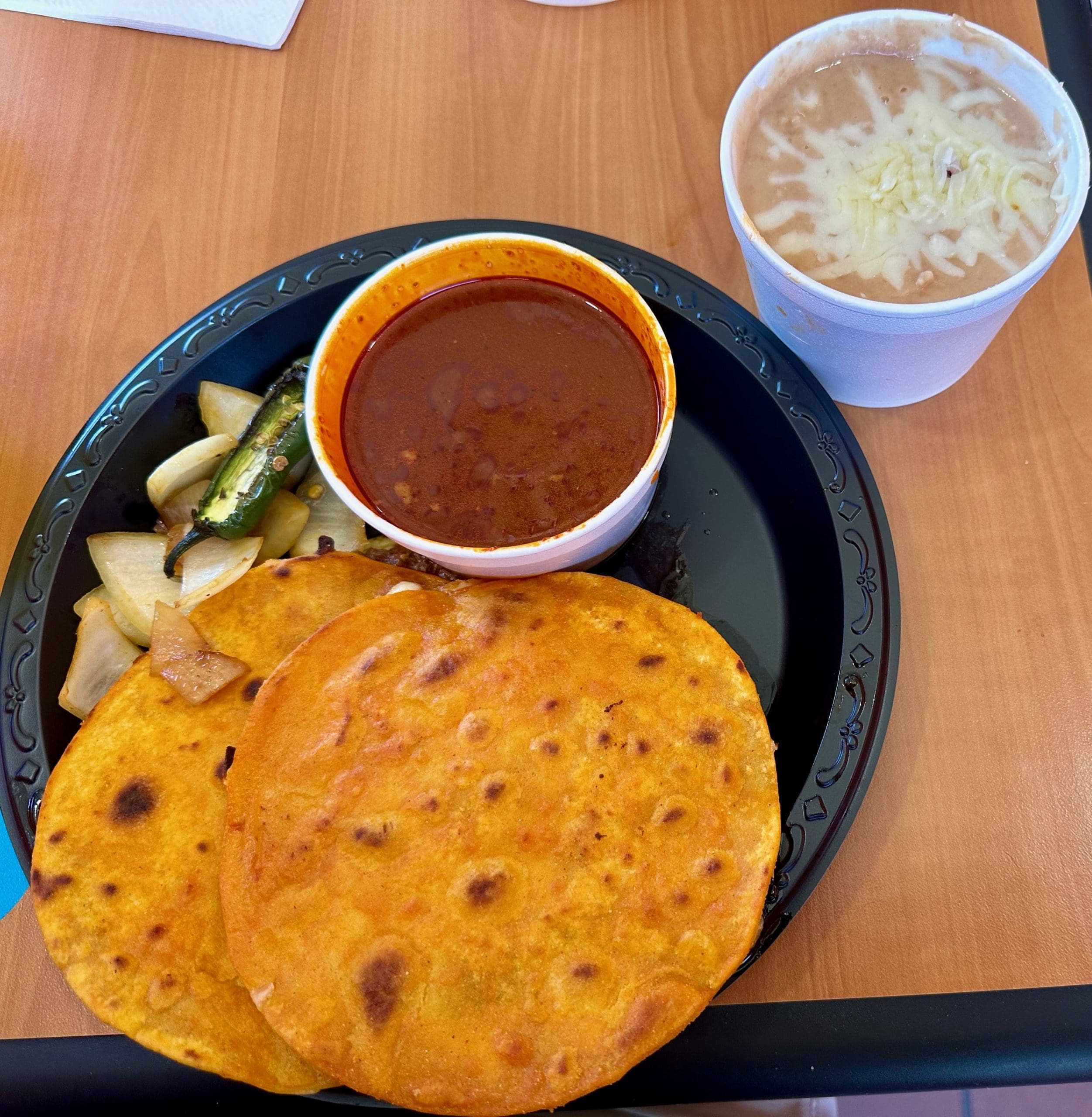
If you’ve noticed an increase in the number of recent visits on this blog to Mexican restaurants, credit much of that to Pati Jinich, ebullient host of the James Beard Award-winning and Emmy nominated PBS series Pati’s Mexican Table   Although we record the Saturday airing of Pati’s Mexican Table, we don’t usually watch it until Sunday…right before lunchtime.  It’s no wonder, therefore, that what we’ve been craving for lunch is Mexican food. It’s nigh impossible not to be utterly charmed (if not outright besotted) by the lovely Pati Jinich.   Her huge likeability quotient is the byproduct of a genuine warmth and self-effacing humor which come across with her every thickly-accented utterance.  She’s down-to-Earth and genuine, taking absolute joy in  broadening and sharing her expansive knowledge about the colorful tapestry known as Mexican cuisine.  In every episode, Pati embarks on an educational and entertaining journey.  Each dish she encounters serves as a launching point into explorations of the rich and diverse history and culture of her country of birth. In season eight (episode 811), which aired in January, 2019, Pati explored Sinaloa, “Mexico’s Bread Basket,” which produces about 40% of the meat and produce consumed in all of Mexico.  Inspired…

El Cotorro – Albuquerque, New Mexico (CLOSED)

There’s a scene in the 2006 lucha libre (Mexican professional wrestling) comedy film Nacho Libre in which Nacho’s ectomorphic tag team partner Esqueleto (“the skeleton”) orders two grilled, buttered and chile-dusted elotes (corn-on-the-cob) from a street vendor. Esqueleto graciously attempts to hand one to Nacho who rebuffs the offer, knocks the elotes to the ground and bellows “get that corn out of my face!” That antagonistic act so enraged Esqueleto that he leaped on Nacho’s back and attempted to throw his corpulent partner to the ground. The sight of the two golden elotes tinged with red chile on the ground was funny at the time, however, after consuming the elotes at El Cotorro, we would consider knocking elotes to the ground an act of sacrilege and sheer madness. It’s no wonder Esqueleto was so upset. Sure we’ve had elotes elsewhere…plenty of elotes at a plethora of elsewheres, in fact, but only at El Cotorro have elotes made us swoon in appreciation. El Cotorro, which translates to “the parrot” in English is not what you might expect from a Mexican restaurant of that name. It’s not a restaurant named for the stereotypical squawking “Polly wants a cracker” parrot mascot some kitschy…

Ruby’s Tortilleria – Bernalillo, New Mexico

“A tortilla can be the, I would say, the most meaningful, the symbol of the Mexican cuisine, it’s the heart of the Mexican cuisine, the soul … the most recognizable element of the Mexican cuisine.” ~ Hugo Ortega James Beard Nominated Chef In 1519, when Hernan and his Spanish conquistadors arrived in Mexico, the indigenous people had never seen anyone like the bearded strangers attired in imposing armor made of iron.  These light-skinned strangers, some of whom had eyes of blue or green, arrived in “floating mountains” significantly larger than the canoes used by the natives.  The arrival of the strangers coincided with an Aztec prophecy, leading Montezuma, the Aztec ruler, to believe that perhaps Cortés was the Aztec god Quetzalcoatl, the “feathered (bearded) serpent.”  According to legend, Montezuma convened his most sage advisors who counseled their leader to proceed with caution.  They dispatched emissaries to greet the strangers and offer them two types of food:  the food of the gods, covered with the blood of human sacrifice; and the food of humans, including avocados, turkey and soft, flat corn breads they called tlaxcalli (from the verb “ixca” (to cook [on a comal: grill or griddle]).  The Spaniards chose the…