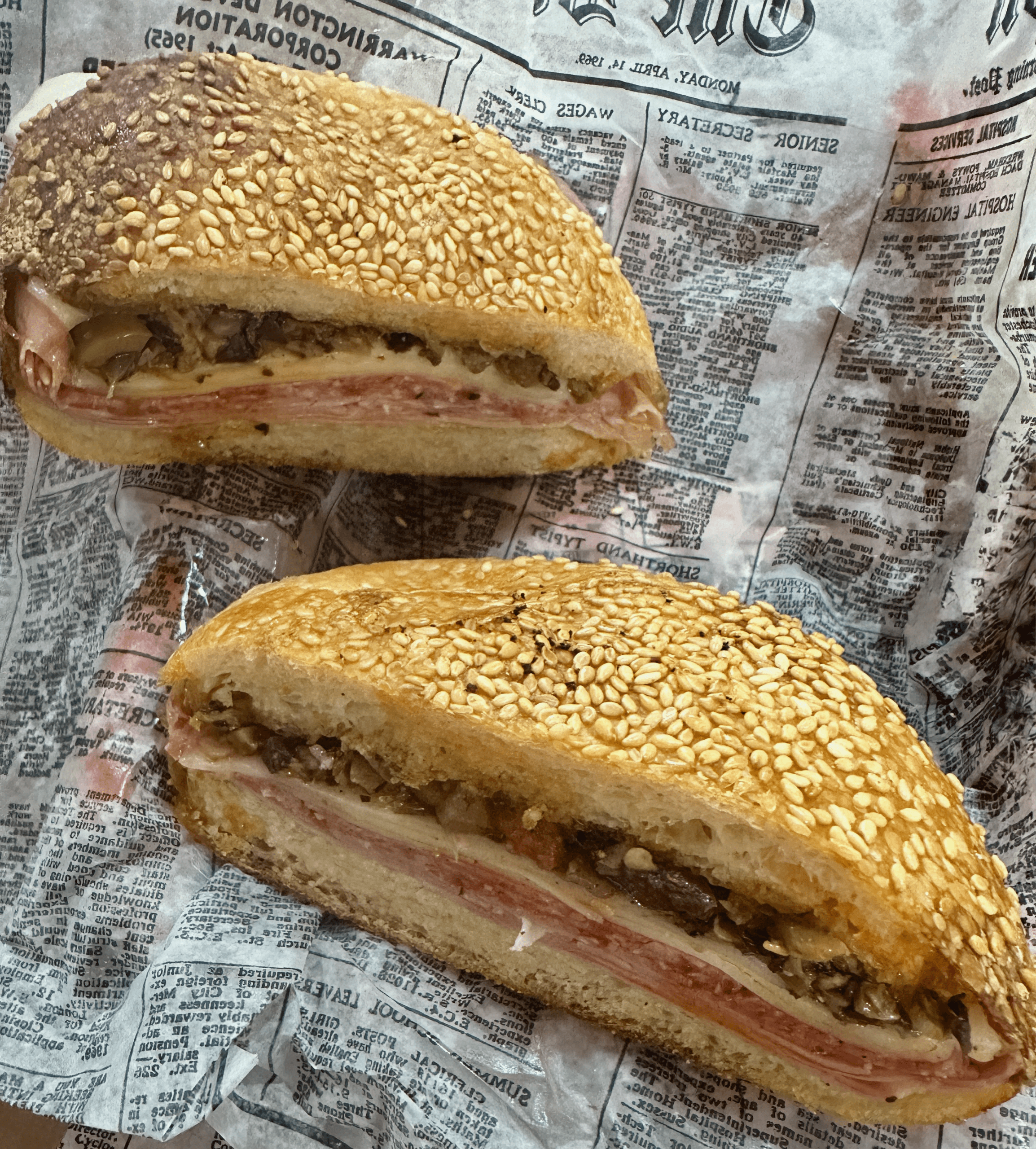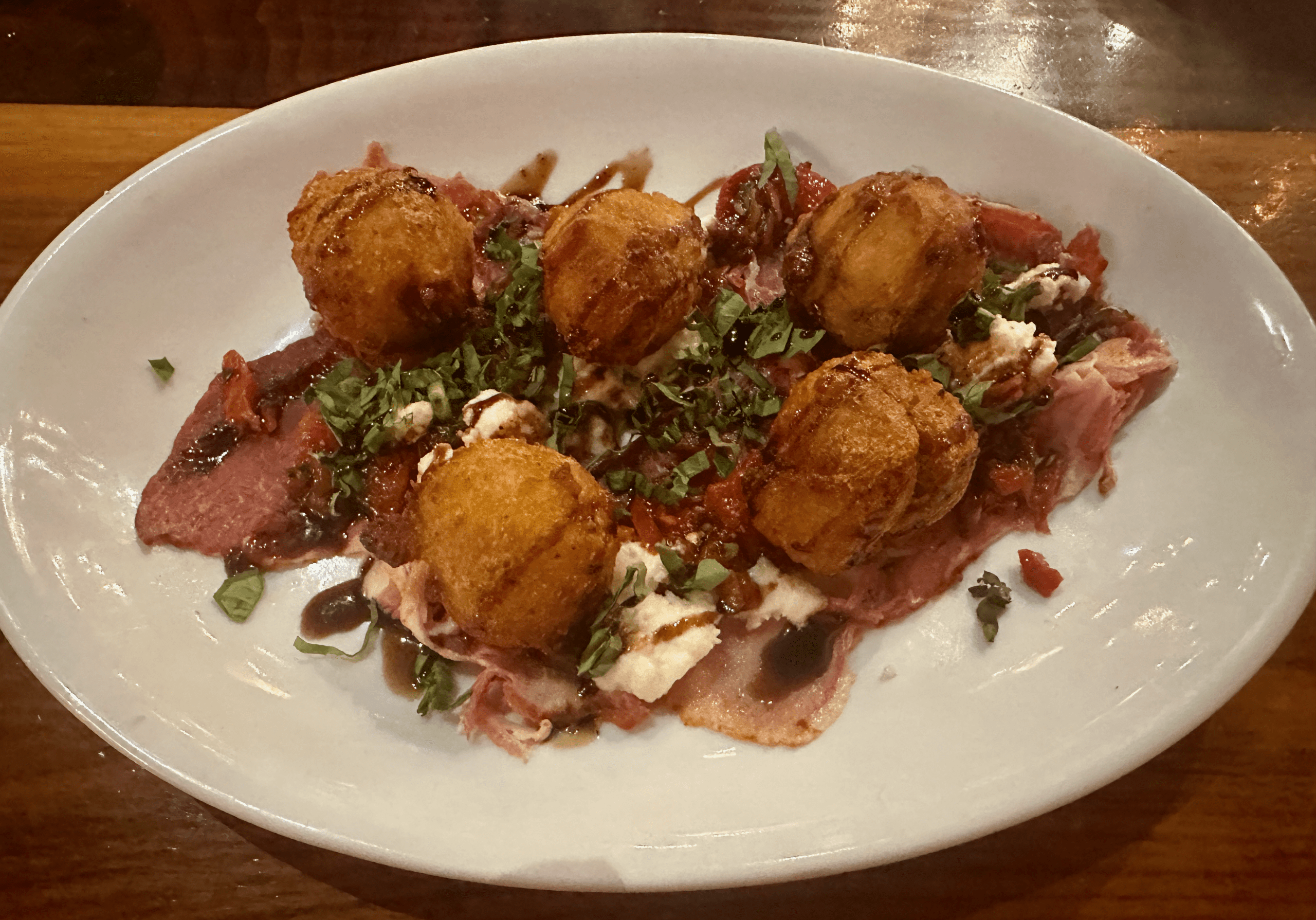
M’tucci’s Italian Restaurant – Albuquerque, New Mexico

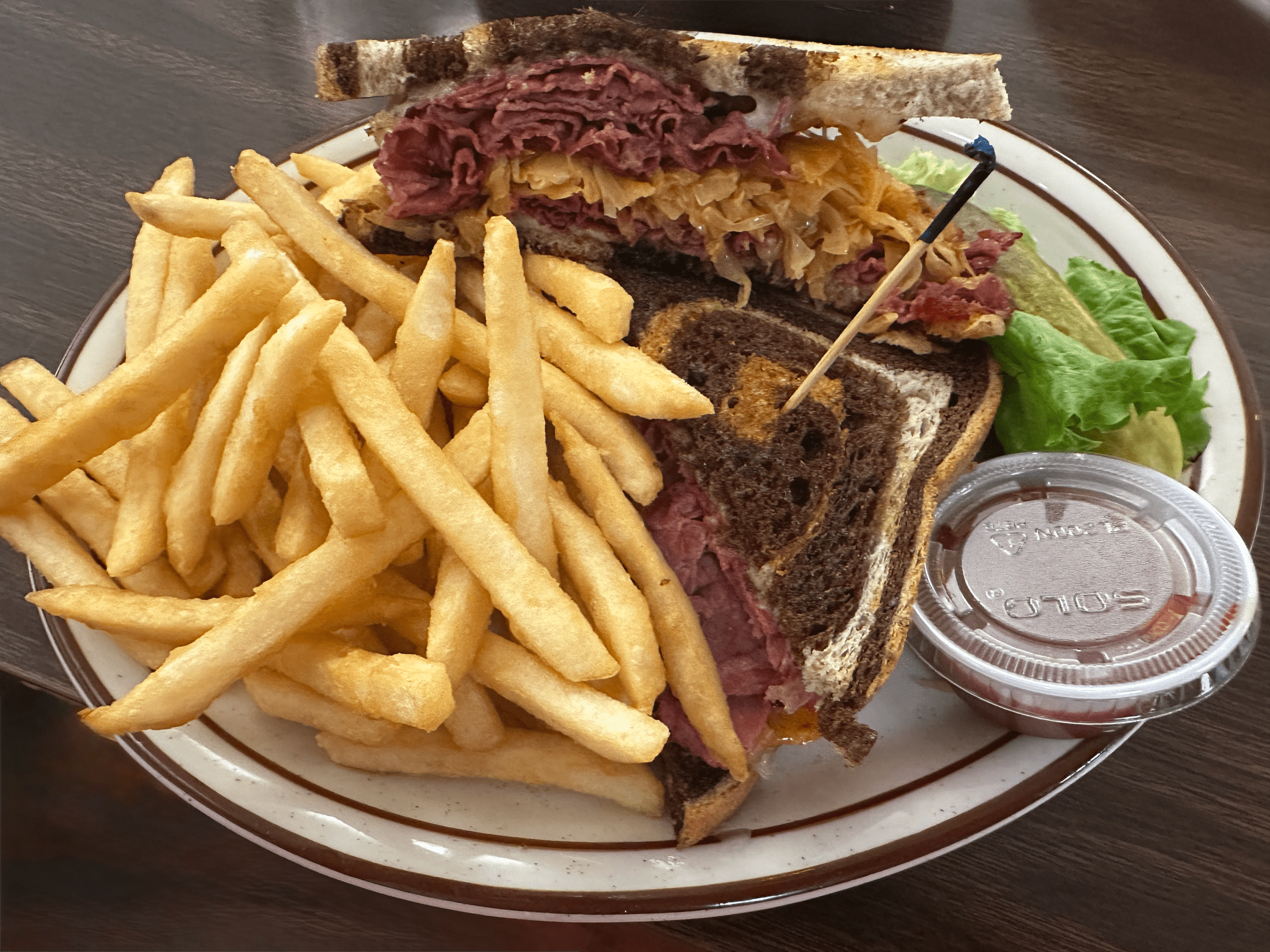
“Sometimes the spaghetti likes to be alone..” —Stanley Tucci as Segundo in Big Night With a name like M’Tucci’s Italian Restaurant, you might wonder if the Italian restaurant on the intersection of Coors and Montano is named for Academy Award nominated actor Stanley Tucci. After all, Tucci co-starred in Big Night and Julie & Julia, arguably two of the very best food movies in recent years. Initially christened M’tucci’s Kitchina, the “Kitchina” part of the restaurant’s name was obviously a whimsical play on “cucina,” the Italian term for kitchen, but was spelled more similarly to Kachina, the Hopi ancestral spirits. In any case, if the amusing name and fun, casual ambiance don’’t ensnare you, the food certainly will. Step into the expansive dining room and the playfulness hinted by the restaurant’s original name continues. Our immediate impression was “Laissez les bon temps roulette” (let the good times roll) as in New Orleans Mardi Gras. That impression was gleaned from the colorful Mardi Gras-like masks on several walls and a life-sized alligator on another. Then there’s the pergola–large enough to accommodate a table of four–with an ominous lizard crawling down the roof. There’s something to pique your interest everywhere you turn.…
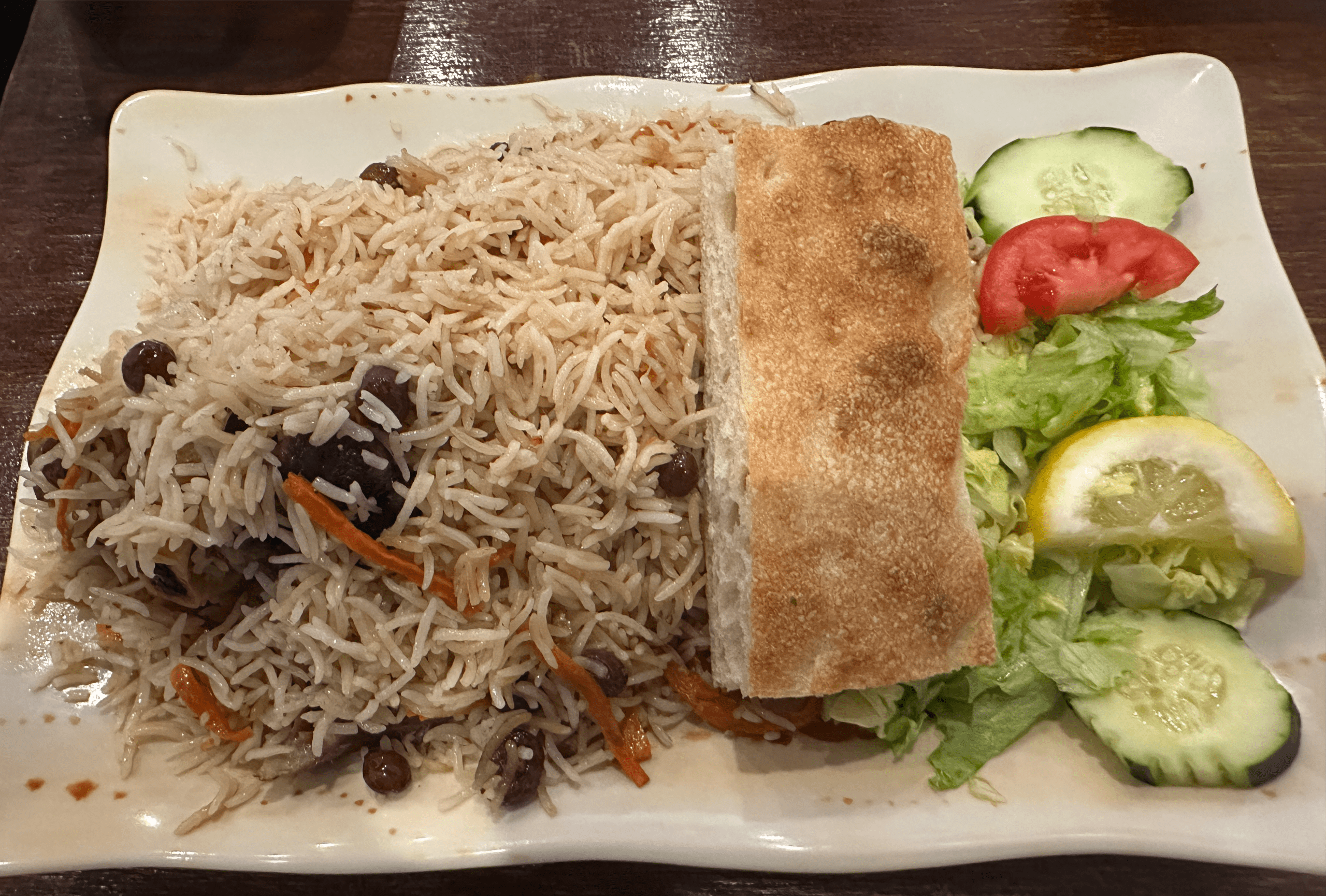
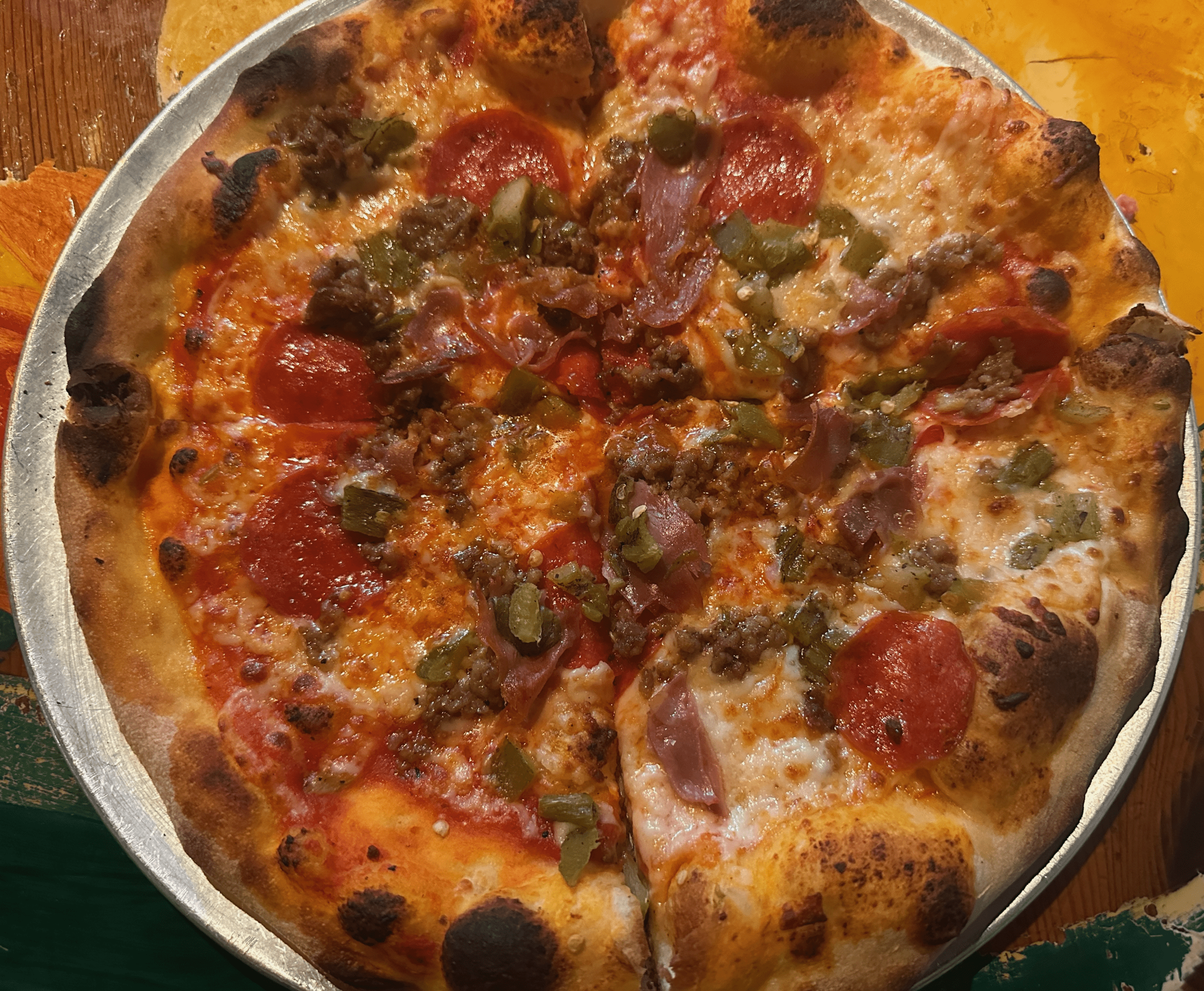
Afghan Kebab House – Albuquerque, New Mexico

The juxtoposition of beauty, humanity and tragedy may best be exemplified by a photographic portrait taken in 1984 that graced the cover of National Geographic.  Christened “Afghan Girl,” the photograph depicted Sharbat Gula, a 12-year-old Afghan refugee in Pakistan during the Soviet-Afghan War.   Widely described as the “First World’s Third World Mona Lisa,” the image became a rallying cry for compassion among the Western world for the attrocities being committed in Afghanistan.  CNN called it the world’s most famous photograph.  A framed photograph of the green-eyed Afghan girl hangs prominently on one wall of Albuquerque’s Afghan House. Since 1979 when the Soviet Union invaded Afghanistan, more than four-million people have fled the violence and crossed over the border into neighboring Pakistan.  Among them was the Hussaini family which fled their Kabul home for the relative safety of Pakistan.  Most of the ten member family–five boys, three girls, two parents–remained in Pakistan for five years before emigrating to the United States in 2016.  One son, who had served as an interpreter and translator for U.S. troops, preceded the family by four years, settling in New Mexico.  With Afghanistan under Taliban control, family connections to the U.S. military meant the family risked…

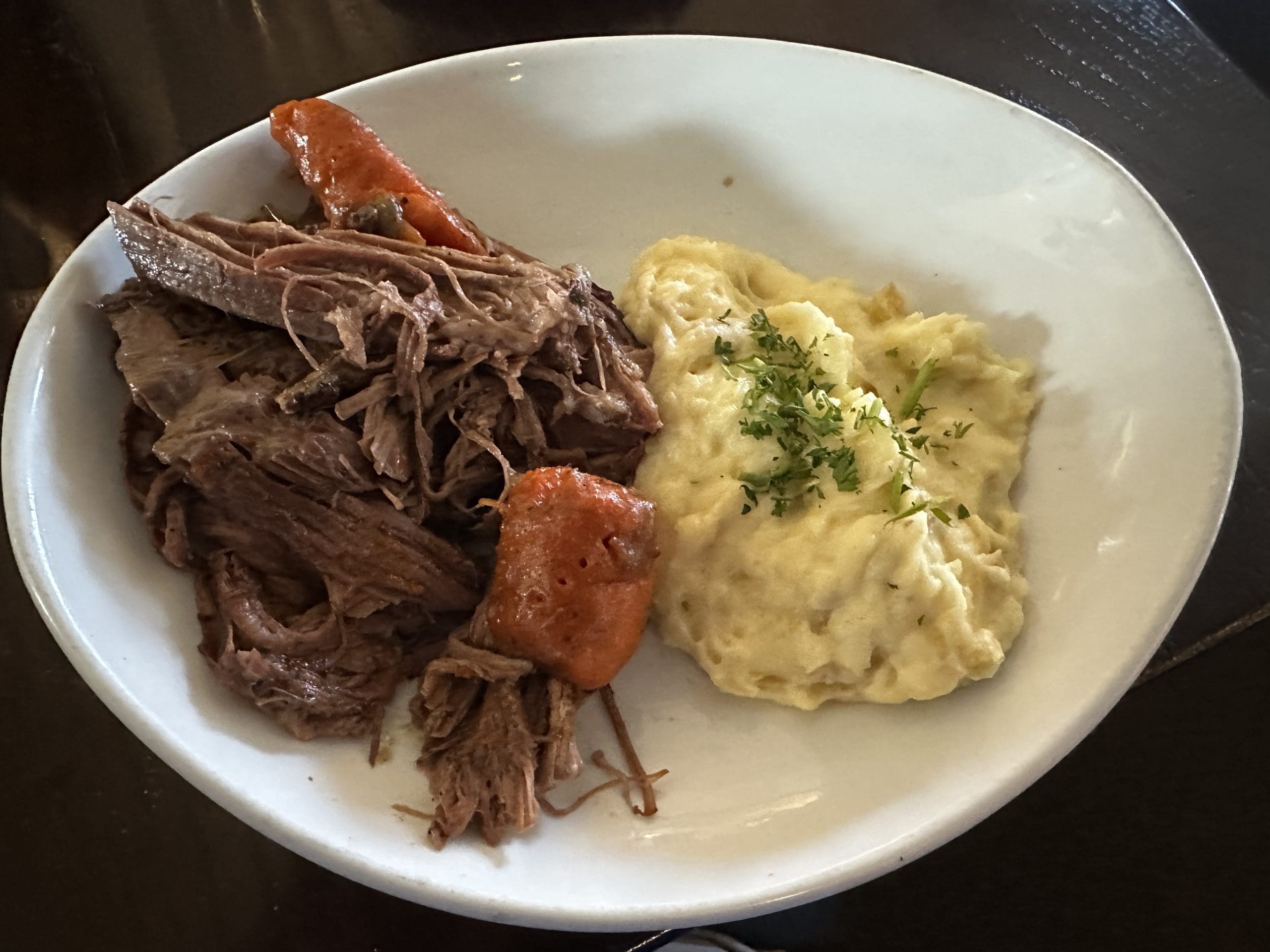
Harry’s Roadhouse – Santa Fe, New Mexico

Roadhouses–great inns and restaurants located near major highways traversing the country–once dotted America’s fruited plain, offering respite and sustenance to weary or hungry travelers. Renown for serving great comfort foods, they have been an important part of America’s heritage though with the advent of fast food restaurants and chains, fewer authentic roadhouses exist today.  Harry’s Roadhouse may be a bit more sophisticated and eclectic than its roadhouse brethren, offering several kinds of pizza, sandwiches, burgers, salads, pastas, Cajun and Asian cuisine as well as American comfort food standards that give it a feel and taste of home. To say it’s a popular dining destination is an understatement.  Perhaps the only Santa Fe event which exceeds the number of cars parked at Harry’s is Zozobra.  If you don’t get there early, you may have to wait to be seated despite the restaurant’s sprawling multi-room capacity. Even during peak hours, however, the efficient wait staff will likely have you seated within half an hour.  The light blue trimmed restaurant has several dining rooms, each with a different decor. There’s a room with an atrium-like ambience and windows to maximize light and one with an artsy Southwestern room replete with mismatched tables. Ask…

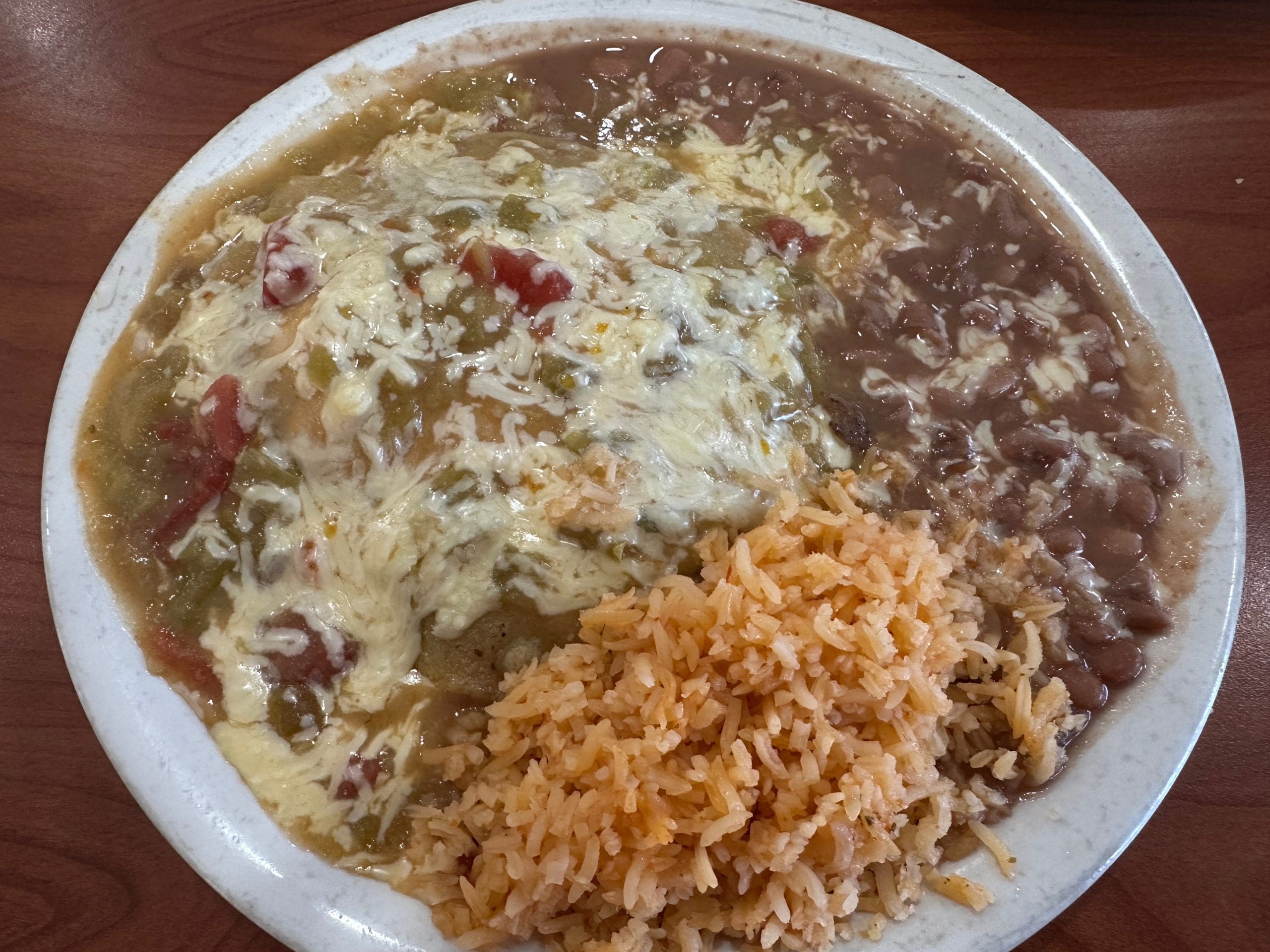
MARY & TITO’S CAFE – Albuquerque, New Mexico

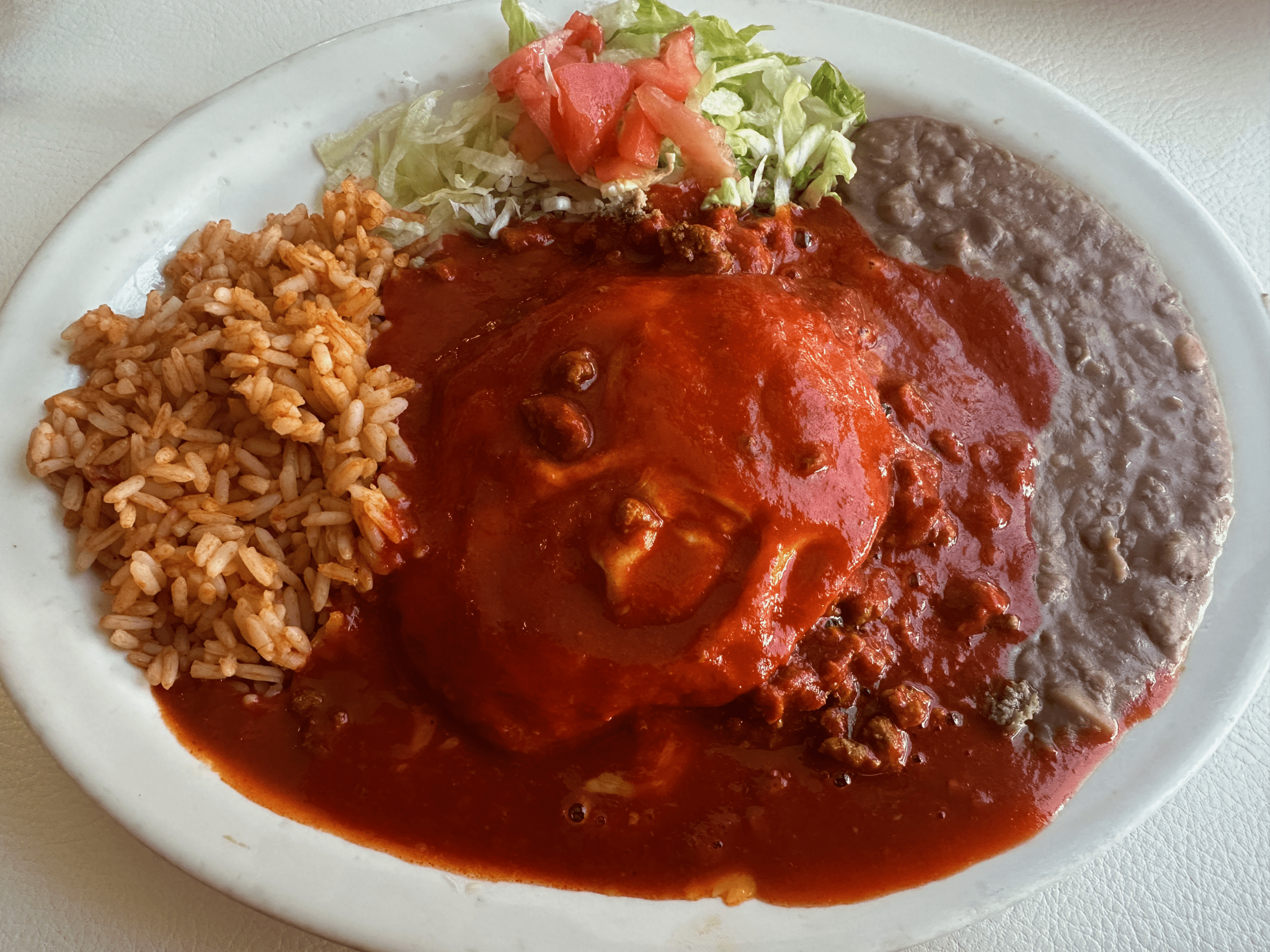
Old-timers whose opinions I respect consistently rate Mary & Tito’s as Albuquerque’s best restaurant for New Mexican food, a restaurant that has been pleasing the most savvy and indoctrinated palates alike since 1963. It takes a lot to impress some of those old-timers, none of whom see much substance in the flash and panache of the nouveau restaurants and their pristine veneer and effusive, over-the-top flamboyance. These guys and gals are impressed only by New Mexican food the way their abuelitas prepared it–unadorned, authentic and absolutely wonderful. If you want to evoke their ire, take them to one of the chains. Worse, try sneaking some cumin into their chile. Just how good is Mary & Tito’s? In a span of two days, three people whose opinion on food I value weighed in, prompting me to ponder that question and not just take for granted that it’s “one of” the very best restaurants in New Mexico.” World-travelers Randy and Bonnie Lake experienced an epiphany during their most recent visit, marveling at just how much better Mary & Tito’s legendary red is than other red chile they’ve ever had. Bill Resnik who’s authored a cookbook on New Mexican cuisine was more to-the-point,…

L&L Hawaiian Barbeque – Rio Rancho, New Mexico

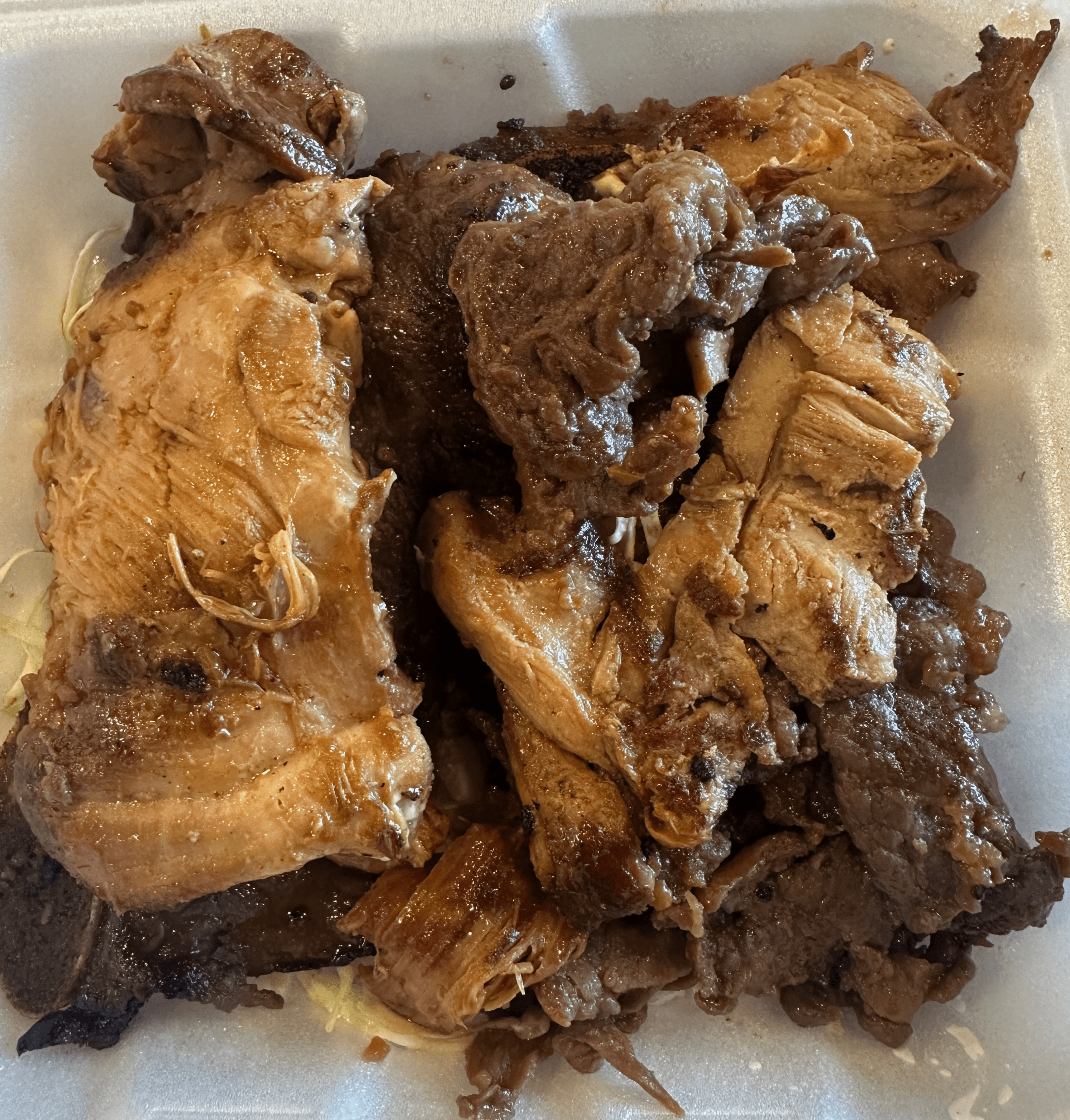
It’s amusing to reflect back on what children of my generation considered funny during the prehistoric days before Nintendo, iPhones and even before color television.  As children were apt to do, we found humor in terms related to scatalogical and bodily functions such as caca, poo poo, pee pee and moco.  The latter is the Spanish term for booger.  Our reaction to learning that Hawaiians actually ate “loco moco” (which translates from Spanish to  “crazy boogers”)  would have beeen simultaneously raucous and nauseating.  Sure, most of us grew up eating chicharrones, menudo and morsillas, but only a crazy person would admit to eating boogers. Hawaiians do indeed eat loco moco, but it has nothing to do with boogers, crazy or sane.  Loco moco is a contemporary (circa 1949) and simple Hawaiian dish consisting of rice, a hamburger patty, and an egg smothered in a savory gravy.  As to the genesis of the name, the loco moco was named for a Hawaiian boy nicknamed “Loco.”  “Moco” was added simply because it rhymed and sounded mellifluous.  During my perigrinations across the country, I’ve had loco moco a number of times.  Though palatable enough, it never struck me as particularly memorable.  “If only,”…

Vic’s Daily Cafe – Albuquerque, New Mexico

“When you wake up in the morning, Pooh,” said Piglet at last, “what’s the first thing you say to yourself?” “What’s for breakfast?” said Pooh. “What do you say, Piglet?” “I say, I wonder what’s going to happen exciting today?” said Piglet. Pooh nodded thoughtfully. “It’s the same thing,” he said.” Unlike the great philosopher Winnie the Pooh, many Americans, it seems, don’t equate breakfast with excitement. Studies show that far too many of us fuel our bodies with a “gobble and go” mentality that typifies our frenetic lifestyles. In 2007, one food service industry research firm concluded that most Americans spend no more than three minutes shopping for breakfast (at such paragons of nutritional virtue as McDonald’s and Starbucks).  Too many of us it seems would just as soon wait for lunch, our hunger being reason enough to overindulge. A food and health survey of Americans showed that 92 percent of respondents consider breakfast the most important meal of the day, yet fewer than half (46 percent) of them actually ate breakfast seven days a week. The most frequently cited reasons for not eating breakfast every day include “not being hungry after waking up” (59 percent) and “not enough…

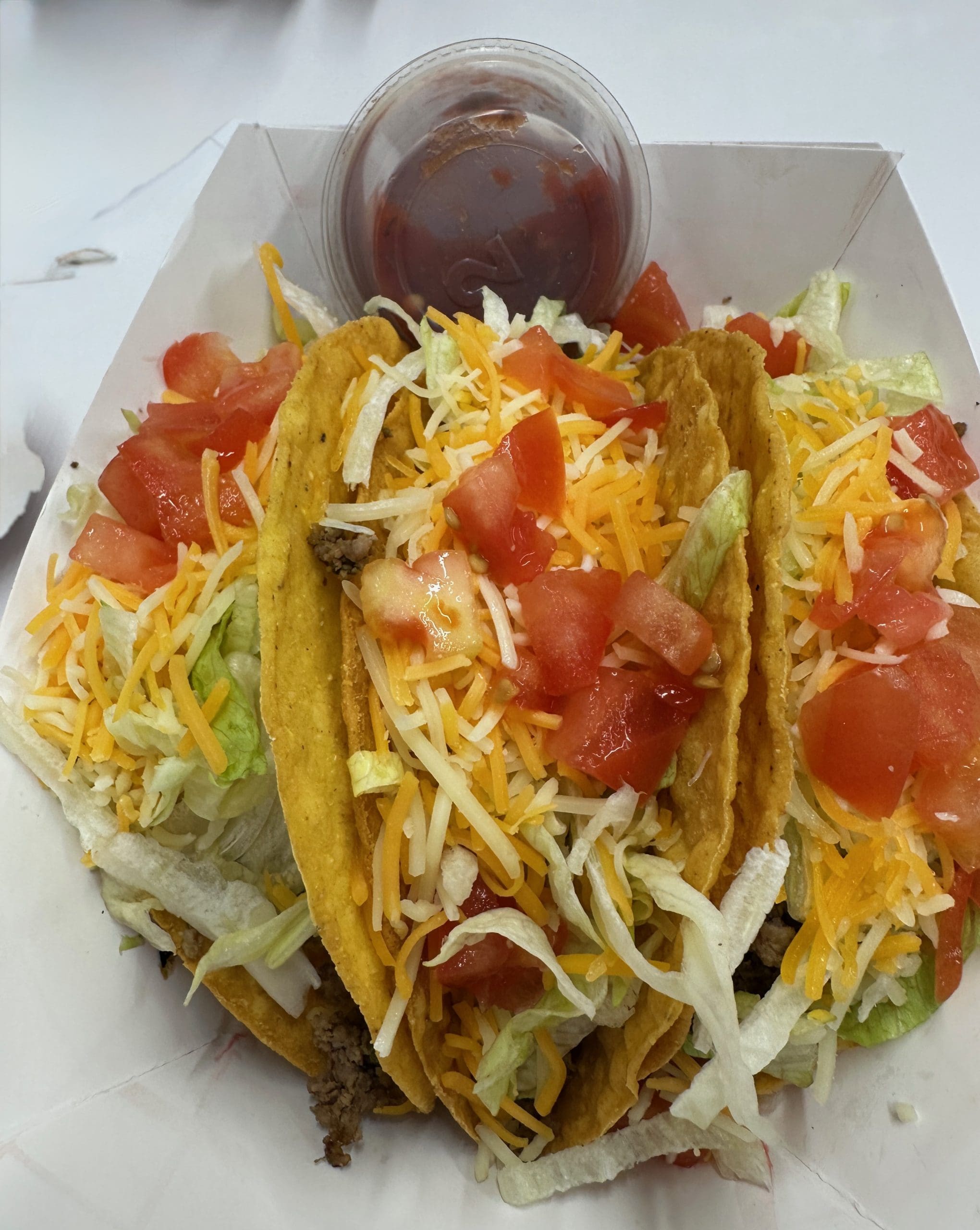
Duke City BBQ – Albuquerque, New Mexico

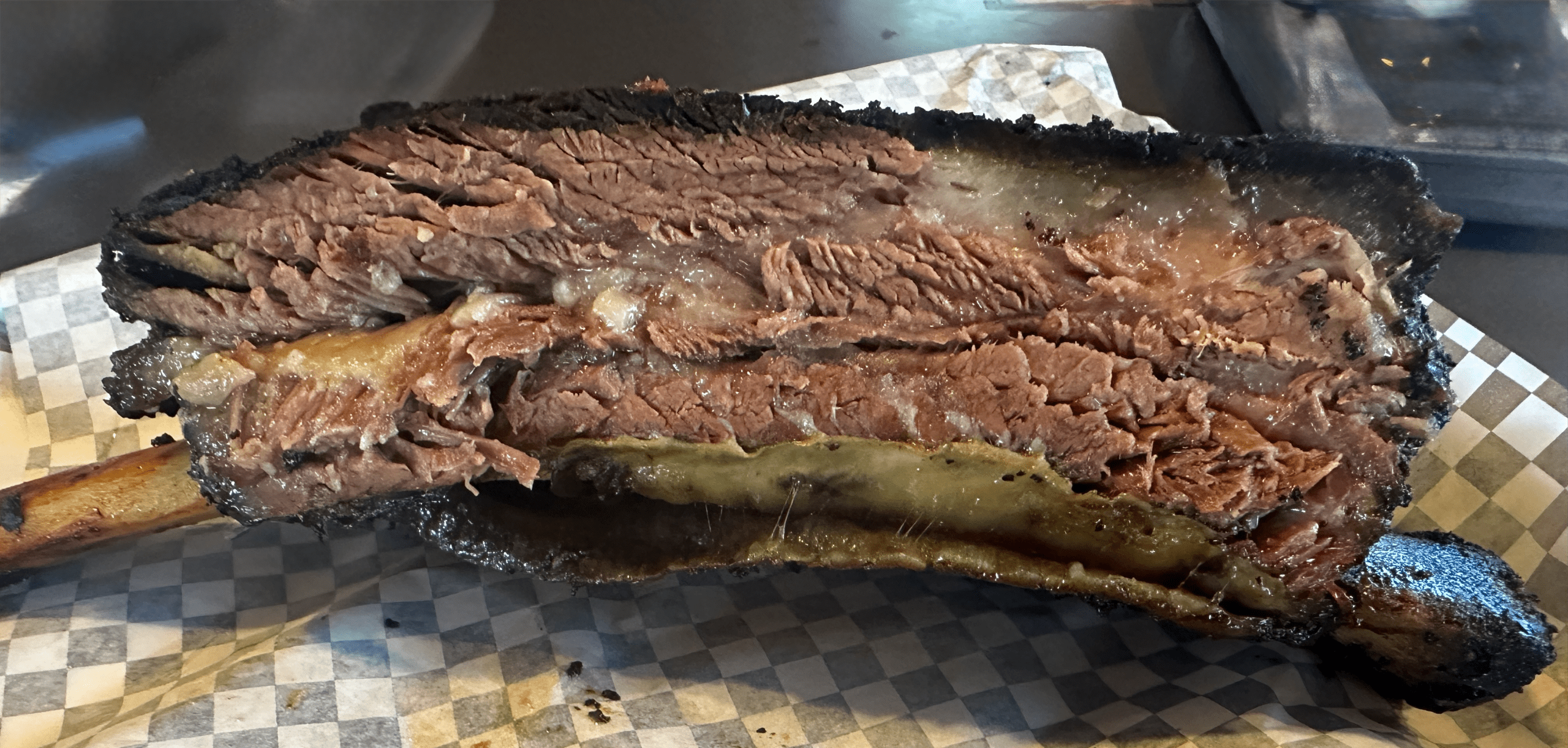
During a 2016 campaign event in Phoenix, Arizona, Latinos for Trump founder Marco Gutierrez warned that if the country did not adopt tighter immigration standards as proposed by Republican nominee Donald Trump, there would be “taco trucks on every corner.”  For many of us, the only conceivable retort was along the lines of “what could possibly be wrong with that?”  Tacos (Mexico) have become as American as pizza (Italy), apple pie (England), French fries (Belgium), hot dogs (Germany), peanut butter (Ancient Inca and Aztec civilizations) and barbecue (Caribbean).  These foods may not have been invented in the good ol’ USA, but we’ve adopted them.  They’re part of the fabric of what makes this country fat…er, great. It’s likely that if you didn’t grow up hearing the adage “as American as apple pie,” you may have heard a version in which barbecue takes the place of or is included with apple pie.  Barbecue, in fact, has supplanted apple pie as the proverbial All American gastronomical delight.  It’s practically a cult in some parts of the fruited plain.  At the very least, it represents a pop culture microcosm.  Americans make pilgrimages to famous pantheons of barbecue to partake of meat cooked low…

Sergio’s Bakery & Cafe – Albuquerque, New Mexico

In Italy, the oft-used idiom “Senza il pane tutto diventa orfano” translates to “without bread everyone is an orphan.” That’s how important bread  is in Italian culture.  Is it any wonder bread consumption in Italy is higher than in any other European country, even France. Many loaves are made by artisan bakers operating out of family-owned and operated bakeries.  Most work on a small scale and are heavily influenced by family recipes and regional traditions.  Those secrets and techniques have been handed down from baker-to-baker over the years. Family is essential to retaining the continuity of bread-making excellence in Italy.  Whether baking bread for home or operating a panetteria  and (or) a panificio, traditions are passed on from one generation to another.  Note:  In Italy, a panetteria is a shop that sells bread while a panificio is a place where a baker bakes bread.  Those lines , however, are often blurred, and the two places may be the same, called a forno (a term which also means oven).   Many of Italy’s bread-baking traditions have largely transcended the distance between the old world and the fruited plain. One readily apparent example in the Land of Enchantment is Sergio’s Bakery and Cafe. …

Lescombes Winery & Bistro (Cottonwood) – Albuquerque, New Mexico

Years ago when my job at Intel required frequent travel to the Phoenix area, I marveled at the desert landscaping at Phooenix’s Sky Harbor Airport.  Its xeriscaping approach uses  native, drought-resistant flora arranged in ways that promote efficient water usage.  Towering saguaros and spindly, spine-covered ocotillos greeted sojourners as they vacated the airport.  Not only does this xeriscaping save the city $400,000 annually and reduce water usage by more than five-million gallons per year, it gives visitors a welcome respite from the sun-baked asphalt and cement jungle that is the Valley of the Sun. Driving away from Albuquerque’s Sunport provided a stark contrast to the affable reception of the Sky Harbor.  While the latter was like a warm (scorching) embrace, the former seemed to affirm the popularly-held opinion that New Mexico’s state flower was the ubiquitous weed (or the pervasive orange cone).  Until  more recent xeriscaping and beautification efforts, my colleaugues and I were ashamed of the sights that greeted visitors to our fair state.  Leave it to my friend Dan to express a more positive spin on the contrasts between New Mexico and Arizona: “At least we can produce wine here.”  As you might expect, Dan is an oenophile. …

Los Altos Grill – Albuquerque, New Mexico

For almost four and a half decades, Charlie Elias, an avuncular septuagenarian with the energy of a teenager,  greeted his customers at Charlie’s Backdoor, his eponymous Northeast Heights restaurant.  On a hot sunny day, there was probably no more welcome respite from the sun’s blinding rays and scorching heat than Charlie’s. The minute you walked in, the temperature seemed to drop 20 degrees thanks to the restaurant’s subdued lighting and heat.  On cold winter days, there was no surcease of warmth courtesy of Charlie’s friendly and welcoming nature which made guests feel right at home   As Charlie began to wind down his lengthy career, his son Jamie, became the restaurant’s official ambassador, a smiling presence who met and greeted all patrons with the same homespun, genuine friendliness as his father. Charlie’s Backdoor shuttered its doors in 2014, the same year Charlie passed away.  His passing and the restaurant’s closure were events warranting an apron hanging at half mast.  Not only would Duke City diners miss one of our favorite restaurant personalities, we would miss some of our favorite New Mexican food.  Charlie’s menu was a unique blend of American and New Mexican favorites with unique takes on both.  Not to mention…

Dandy Burger – Española, New Mexico

Back in my halcyon youth as a multi-sport athlete at Peñasco High School (when I could consume half a million calories a meal at no detriment to my then svelte physique), Dandy Burger in beautiful downtown Española was a frequent dining destination–particularly after the then “not so mighty” Peñasco Panthers suffered a loss (and there were many of them).  On the rare occasion in which we actually won a game (usually over Escalante), our coaches would “treat us” to chicken fried steak at some “fancy” restaurant. We didn’t have the heart to tell them we preferred Dandy Burger.  Frankly, I still do.  It’s hard to resist stopping for a green chile cheeseburger and a bit of nostalgia every time we drive through Española. The food at Dandy Burger was never quite good enough to lessen the pain of a loss then and is even less capable of doing so today when the losses I experience are more costly (as in a poor performing 401K…or is that now 4.1K). Still, I always have a contented sense of nostalgia when I see the familiar anthropomorphic burger that symbolizes this popular neighborhood hangout. Dandy Burger’s “mascot” is a cartoonish, mustachioed and chapeau-wearing, burger-headed…