Witch’s Brew – Albuquerque, New Mexico (CLOSED)

“Double, double toil and trouble; Fire burn, and cauldron bubble. Fillet of a fenny snake, In the cauldron boil and bake;” ~Macbeth Act 4 Scene 1 Each of the lunch ladies at the Peñasco Elementary School cafeteria undoubtedly earned a pair of wings, a harp, and a halo for all they were subjected to from the recalcitrant kids who lined up for our daily gruel. Whenever (and it was quite often) something unappetizing was served, we would burst into a chorus of “double, double, toil and trouble. Dump this slop on the double.” Most of us were six or seven years old and had certainly never heard of the three witches immortalized in the Shakespearean tragedy Macbeth. We’d improvised the little ditty from something we’d heard on an episode of Bewitched (or was it Gilligan’s Island?), a situation comedy of the 1960s. It wasn’t those sainted lunch ladies who first came to mind when I espied the sign for “Witches Brew,” a coffee house in the Altura Park neighborhood. Now much more geriatrically advanced (and ostensibly more “grown up”) I tried to recall the remarkably precise and detailed incantation (was it “eye of newt, toe of frog, wool of bat,…

Hartford Square – Albuquerque, New Mexico (CLOSED)

“The discovery of a new dish does more for human happiness than the discovery of a star.” ~ Anthelme Brillat-Savarin Dante Alighieri’s 14th century poem Divine Comedy postulated the existence of nine circles of Hell, each circle appropriate to the sins of the damned. The fourth circle, for example, is reserved for hoarders and wasters whose punishment is to spend eternal life rolling giant boulders at one another. While gastronomy is a virtue and not a sin, were there to have been a circle in Hell for gastronomes, there’s no doubt it would have been to spend eternity eating in chain restaurants where we would be subjected to the tedium and monotony of forevermore eating homogeneous foods. It would certainly make prophetic my words “I’ll be damned if I ever eat at Chili’s or Applebee’s.” Gastronomes need the spice of life that is variety. Unlike gluttons who eat and drink excessively or voraciously, (and therefore spend eternal life in the fourth circle of Hell where they wallow in muck and mire) gastronomes need not consume food in large quantities. Instead, we (and I’m including the faithful readers of this blog here) need the diversity that comes from foods with varying…

Nosh Jewish Delicatessen & Bakery – Albuquerque, New Mexico (CLOSED)

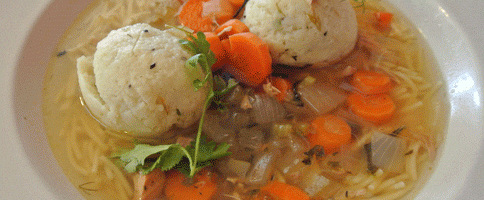
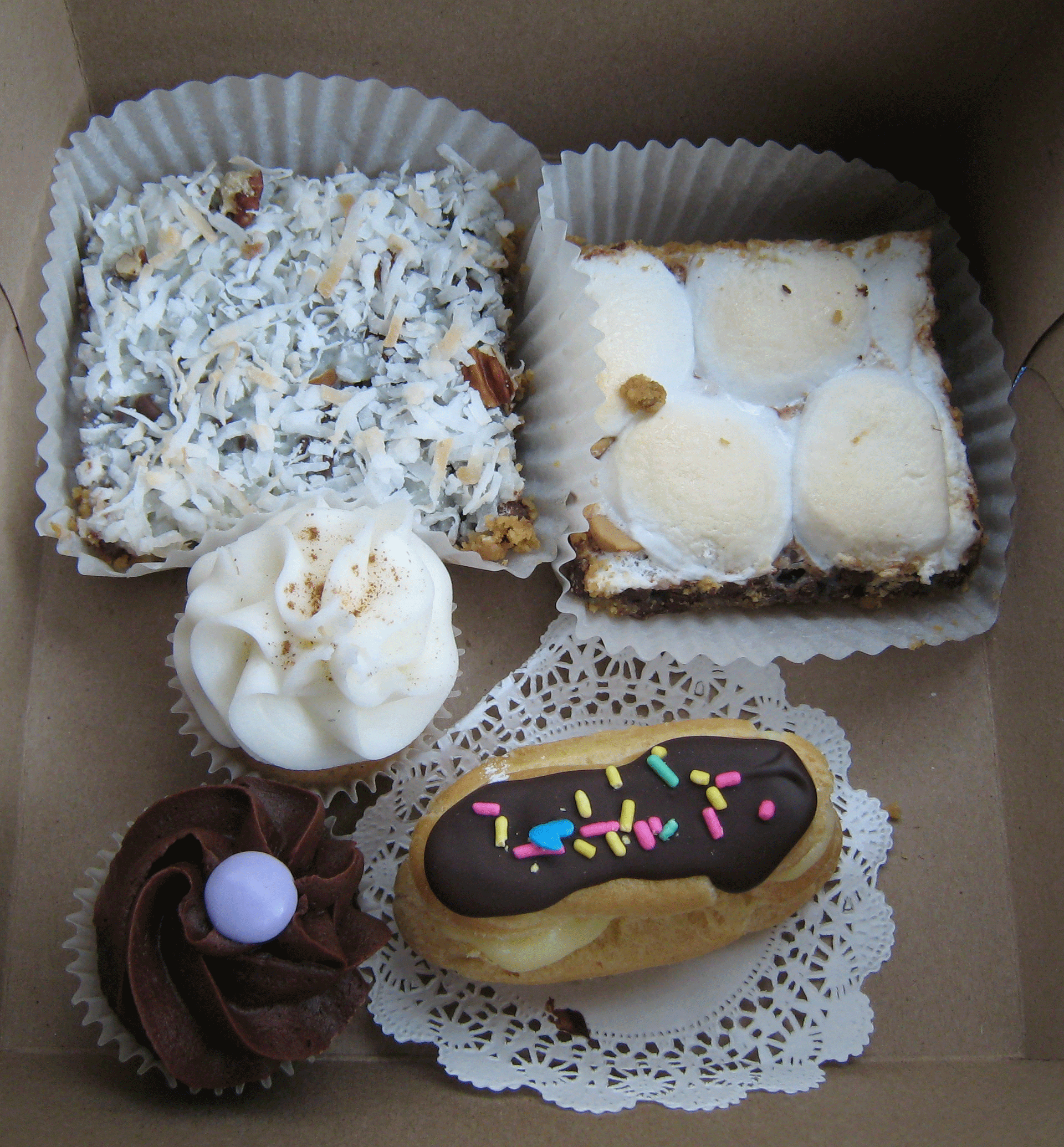
You see, Elaine, the key to eating a black and white cookie is that you wanna get some black and some white in each bite. Nothing mixes better than vanilla and chocolate. And yet still somehow racial harmony eludes us. If people would only look to the cookie, all our problems would be solved. ~Jerry Seinfeld While creative personnel and television promos touted Seinfeld as the “show about nothing,” the truth is every episode of the half-hour comedy offered a number of complex plots, sub-plots and plot twists. So much of the hilarity centered around food moments that readers of Chow declared Seinfeld the “show about food.” It makes sense. In its nine year run, Seinfeld introduced or reintroduced into American pop culture and vernacular such foods and food terms as pastrami, the most sensual of all the salted, cured meats; the really big salad; make and bake our own pizza; vegetable lasagna; Papaya King hot dogs; the soup Nazi and many, many more. While Albuquerque has become increasingly cosmopolitan, it wasn’t until the August, 2013 launch of Nosh Jewish Delicatessen & Bakery that Duke City diners could discover for themselves some of the iconic foods mentioned on the “show…

Just A Bite! – Albuquerque, New Mexico (CLOSED)

An April, 2009 article in the Taos News reveals just how much cultural attitudes have changed in the county in which I grew up toward men in the kitchen.  The article profiled a Taos High School culinary arts team–comprised of three boys and one young lady–which triumphed over 16 other New Mexico schools in a state-wide cooking competition to earn a berth on the national stage. In the dark ages when I attended high school, any male student deigning to admit to enjoy cooking would have been dismissed as a (select your own pejorative) and might even have incurred physical harm.  When I enrolled in Home Economics as a senior, I spared myself merciless taunting and possibly painful beatings by telling my friends it was solely so I could eat the food prepared by the female students (not surprisingly my pals thought it was a good idea, too).  As if by malevolent design, the first semester of the class was dedicated to sewing, a torturous ordeal for which my profound lack of interest proved an early undoing. I quit well before semester’s end. My next flirtation with participating in the culinary arts came when I enlisted in the Air Force.  With vocational aptitude scores…

Dagmar’s Restaurant & Strudel Haus – Albuquerque, New Mexico (CLOSED)

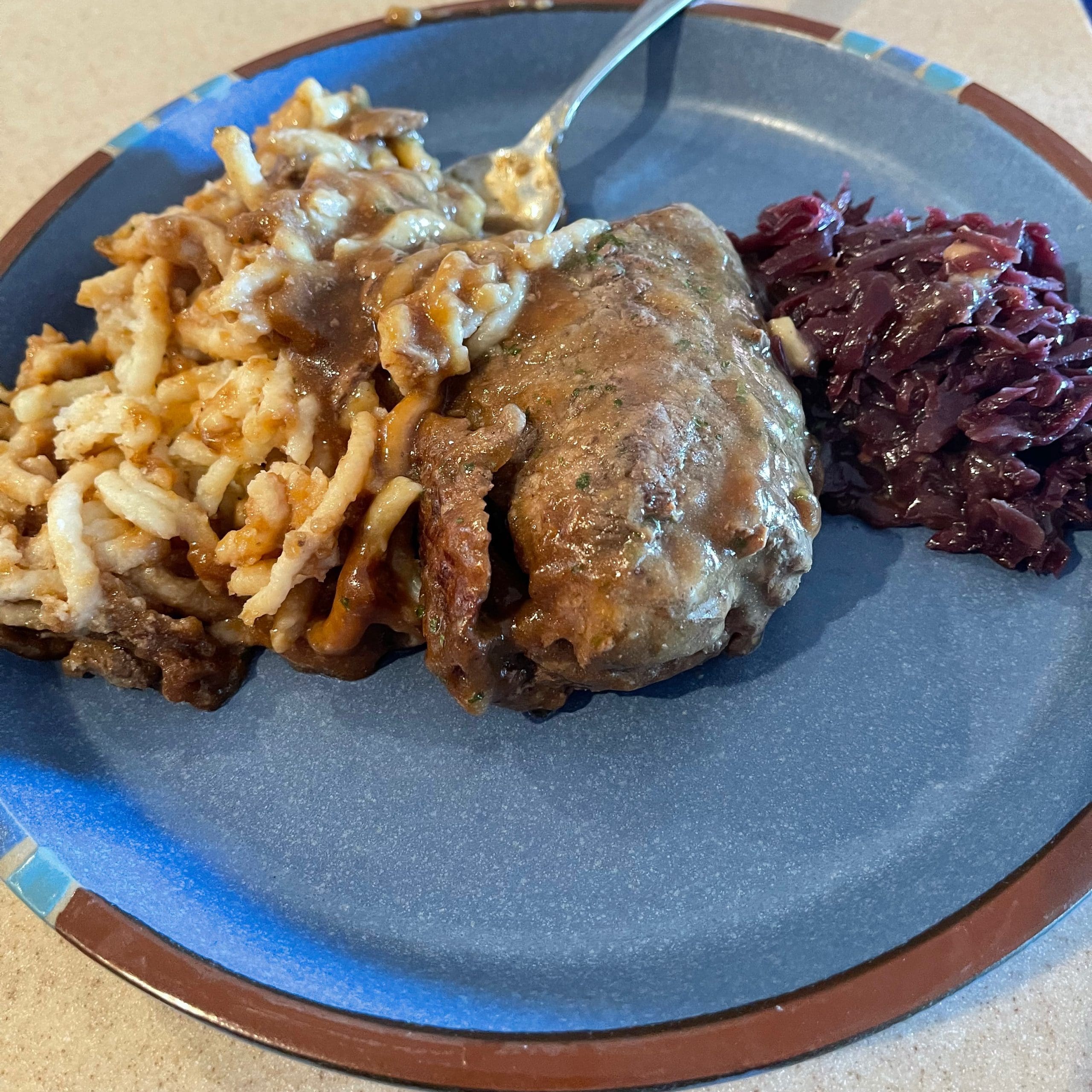
According to the 2000 United States Census, there are 47 million Americans of German ancestry, making them the largest self-reporting ethnic group in the country. German Americans represent 16 percent of the total U.S. population.  With such a large ancestry group, you might wonder why German cuisine isn’t as popular as the cuisine of its European neighbors Italy and France.  It’s a question which also seems to baffle the National Restaurant Association which posits that Americans characterize German food as “rich, indulgent foods; good, hearty portions; and irresistible desserts.”  With reasons like those, you might expect that there would be more German restaurants across the fruited plain (and more than one German restaurant in the Land of Enchantment).  Bon Appetit‘s restaurant and drink editor Andrew Knowlton gives hope that this will change, “In a refreshing departure from the Italian comfort food craze, America is enjoying a Germanic cuisine boom.  I chalk it up to the perfect storm of craft beer and charcuterie and the overall pork-obsessed times we live in.” If you grew up in the Midwest where German is the most reported ancestry, chances are you’re well acquainted with German food. My Kim grew up in Chicago where she…

Dragonfly Cafe & Bakery – Taos, New Mexico (CLOSED)

In 1989, the tarantula hawk wasp was designated the official state insect of New Mexico, joining the roadrunner (state bird), whiptail lizard (state reptile),  spadefoot (state amphibian), Sandia Hairstreak (state butterfly),  Rio Grande Cutthroat Trout (state fish) and the black bear (state animal) as official symbols of our great state.  Ostensibly the state legislature put aside partisan politics and selected these symbols after carefully weighing all options.  A case could certainly have been made for the dragonfly to represent New Mexico.  Not only is the dragonfly a ubiquitous presence–flitting fluidly and gracefully like tiny fairies attired in wardrobes of many colors–they are omnipresent in local lore and legend.  In The Boy Who Made Dragonfly A Zuni Myth retold by New Mexico’s eminent author Tony Hillerman, the dragonfly represents a messenger between children and the gods.  The Zuni consider the dragonfly a shamanistic creature with supernatural powers while to the Navajo, the dragonfly represents pure water. Anyone who’s ever observed these multi-colored frequent fliers as they perform such spectacular aerial feats as loop-the-loops and flying backwards can’t help but be held spellbound by their grace and beauty.  It’s no wonder so many birdwatchers have  become dragonfly watchers that dragonflies have come…

Mike’s Pastry – Boston, Massachusetts

Ralph Waldo Emerson, the founder of the Transcendentalist movement of the 19th century, called America the “Utopian product of a culturally and racially mixed “smelting pot.”  Melting pot rapidly became one of the most frequently used metaphors for describing America.  The term describes the fusion of different nationalities, ethnicities, religions and cultures to form a new, ostensibly better community, a heterogeneous whole. Implicit in the term melting pot is the way ingredients in the pot combine so as to subord (but not lose entirely) their discrete identities, yielding a final product with a more uniform flavor and consistency, but which is distinctly different from the original components.  It’s the reason Italian neighborhoods in America have some semblance to, but aren’t exactly like their tight-knit counterparts in the mother country. It’s the reason Italian food in America bears an unmistakable likeness to Italian food in the old country, while being discernibly different. It’s a tribute to the miracle of Democracy called America that entire cultures can integrate into the whole while retaining proud vestiges of their past.  One such example is Boston’s North End, sometimes called “Little Italy,” a vibrant and thriving neighborhood replete with restaurants, most of them Italian. Boston’s…

Calico Cantina & Cafe – Los Ranchos de Albuquerque, New Mexico (CLOSED)

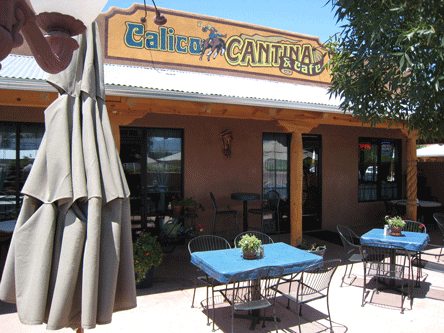
The first time my friends and I visited the Calico Cafe at its original Corrales location, we wondered if the restaurant suffered from an identity crisis. Exterior signage read “Calico Cafe” but the menus indicated we were dining at “Cowgirl’s.” Apparently the restaurant was initially christened Cowgirl’s, but a name change was court-ordered after a naming dispute with Santa Fe’s long-established Cowgirls BBQ restaurant. On December 2nd, 2004, the popular and intimate lunch and breakfast restaurant owned by Corrales residents Vernon and Angel Garcia, was consumed by fire. In 2006, the Calico Cantina & Cafe launched in a new and much expanded location, the 19,000 square foot Village Shops at Los Ranchos–in the heart of the original Route 66. Coupled with outdoor seating in a spacious patio, the Cafe now accommodates as many as 189 diners. The Village Shops at Los Ranchos is a burgeoning complex usually beset by the parking woes of popular destinations. The Calico Cantina & Cafe is an anchor tenant along with its sister restaurant Vernon’s Hidden Valley Steakhouse, located directly behind the Cafe’s bakery. Vernon’s, patterned after a probation era speakeasy, can be accessed through the Los Ranchos Liquors store. Thematically, the Calico Cantina &…

Bode’s General Merchandise Deli & Bakery – Abiquiu, New Mexico

Mention food and convenience store in the same sentence and the first thing likely to come to mind is one of those perpetually rotating, alutaceous hot dogs seared to a leathery sheen under a heat lamp inferno. Not even a large slushie spiked with your favorite adult beverage would make that hot dog palatable. Mention food and gas station in the same sentence and all of a sudden that leathery hot dog at the convenience store sounds like a gourmet meal. Salty, cylindrically shaped dry meat snacks with the texture of sawdust and air-filled bags of Cool Ranch Doritos are typical gas station fare. Now mention New Mexican food and gas station in the same sentence and the likely image conjured is scatological, having more to do with “gas” than food and we’re not talking petroleum here. In 2007, Sarah Karnasiewicz, senior editor of Saveur, trekked back to New Mexico to discover some of  the Land of Enchantment’s best “filling stations,” service stations in which you can actually find food that is not only fit for human consumption, it’s quite good, too.  She observed that, “we know of no other state in the Union where you can so consistently find…

Paradise Donuts – Bosque Farms, New Mexico (CLOSED)

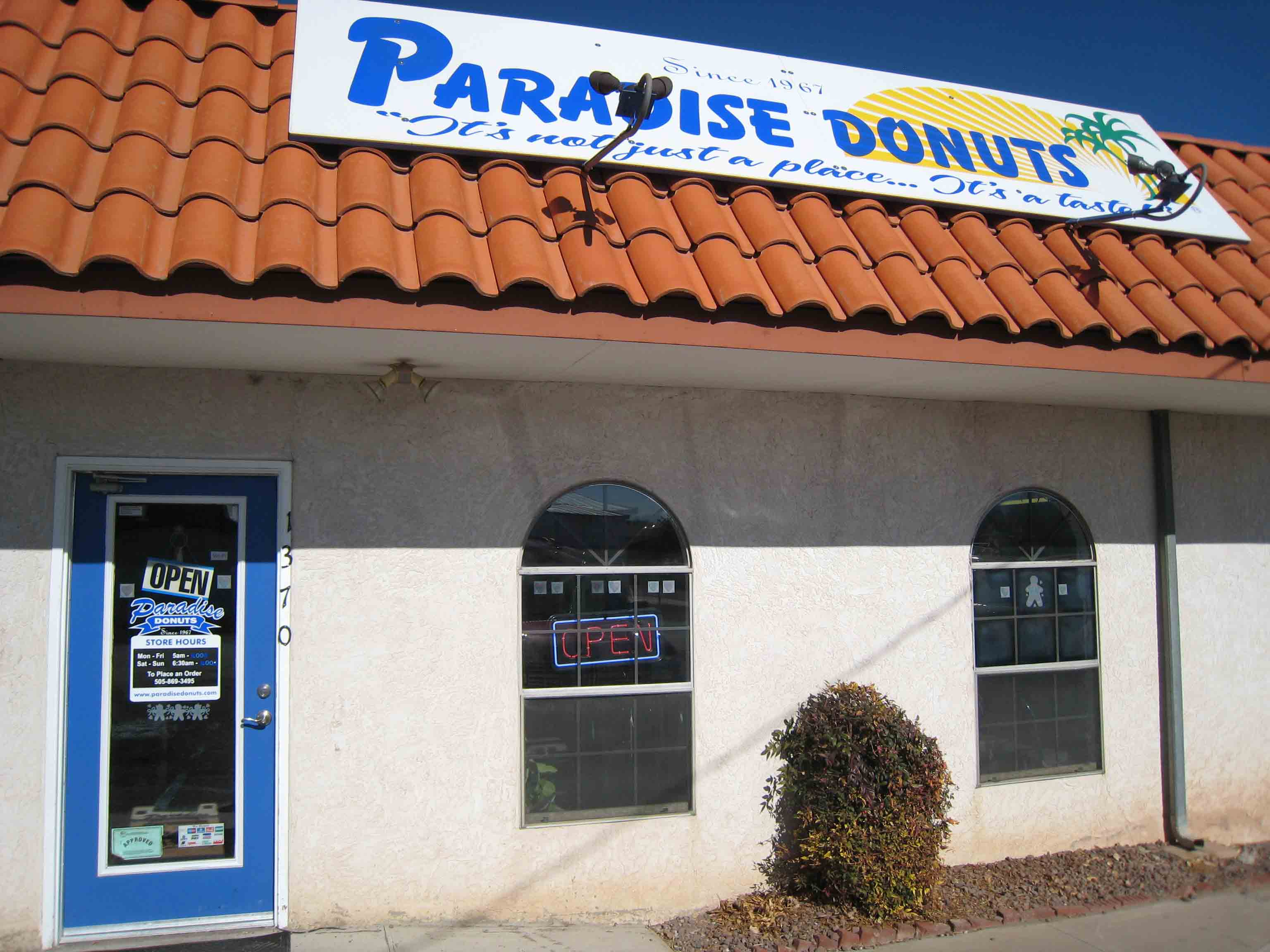
Though often boorish and crude, America’s favorite everyman philosopher Homer Simpson is prone to occasional bouts of insight. Who can argue with such Homeric sagacity as, “donuts, is there anything they can’t do.” At first browse that statement may appear clouded, make that glazed, but it’s a statement replete with credibility–and not solely with police officers. Cultural anthropologist Paul R. Mullins posits that one of the best ways to examine a culture is by looking at its eating habits and regional cuisines. He reasons that Americans don’t really have a culinary culture we can call our own, that the American culinary experience is an amalgam of appropriated customs and cooking techniques. The best evidence of this, in his mind, is the donut whose lineage can be traced to the Chinese, French, Germans and Dutch. In his terrific tome Glazed America: A History of the Doughnut, Mullins examines the evolution of the donut and juxtaposes the rise and fall of its popularity against the development of America’s consumer culture. He exploits the negative stereotypes and perceptions surrounding donuts (think indolent cops and Homer Simpson’s obesity), detailing how the donut has been equally regaled and reviled, the latter often without merit. When…

Michael’s Kitchen – Taos, New Mexico

Murphy’s Law postulates that “if anything can go wrong, it will.” This rather pessimistic and oft-quoted expression has become a catch-all when everything seems to go askew. Murphy’s Law is blamed when you’re in the slowest line at a grocery store behind people who can’t find their checkbooks. It’s the reason the toast you accidentally drop off the table lands butter side down. It’s why the loudest and rudest people always sit in front of you at a movie theater. Murphy’s Law is also the reason the restaurant you brag most about will invariably have an “off night” on the day people you most want to impress visit. It never fails! This immutable law works like compound interest. The more you brag about a restaurant, the worse it will be for your guests. My brother George whose opinion on everything I value had told me for years that Michael’s Kitchen was one of the best restaurants in northern New Mexico. He appreciated its portion size, value and the quality of its New Mexican food (which the menu listed as “Spanish”). Our inaugural visit was compounded by mistakes. Going out on a rainy July night in 2003 when the Taos fiestas…