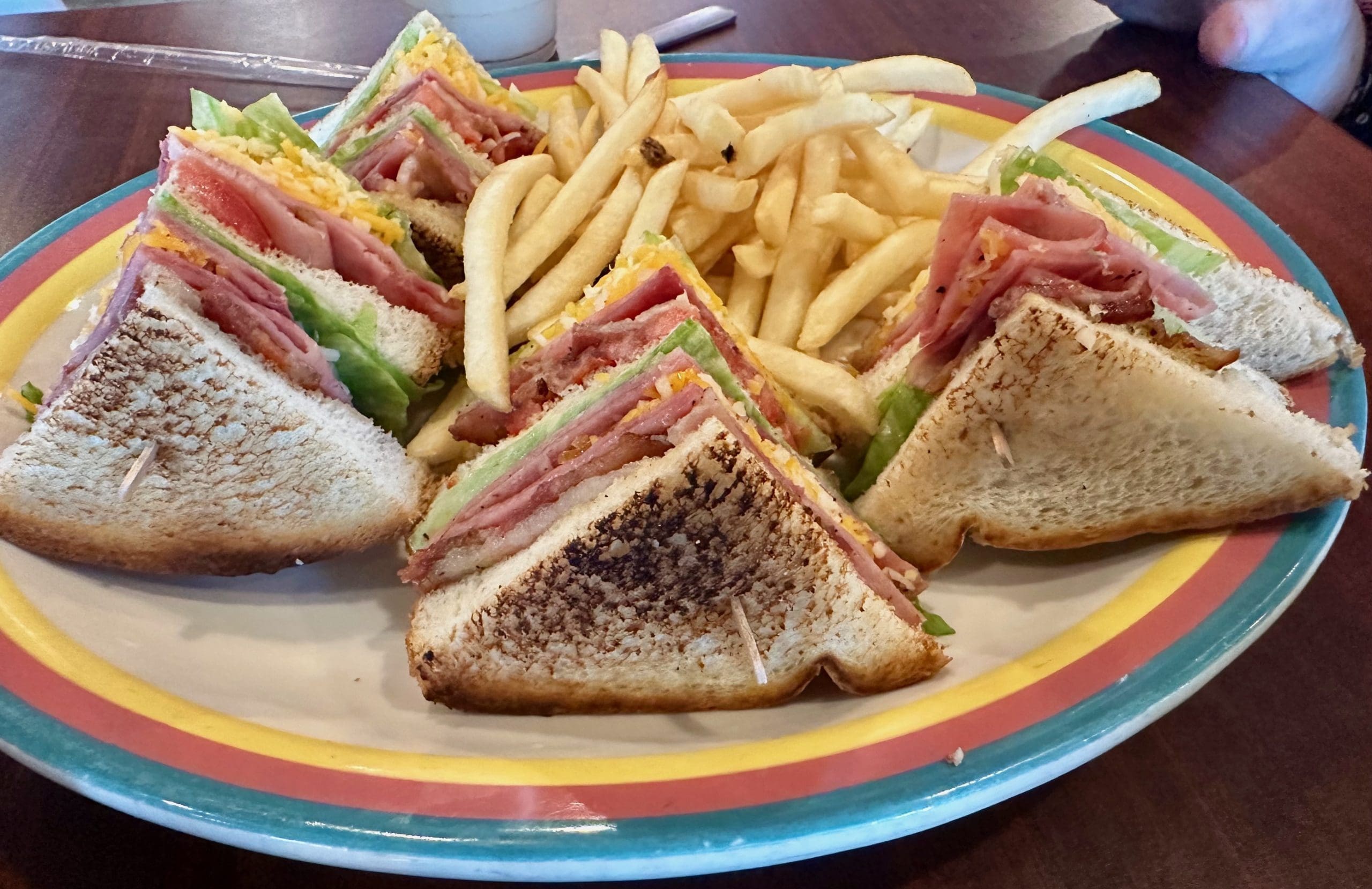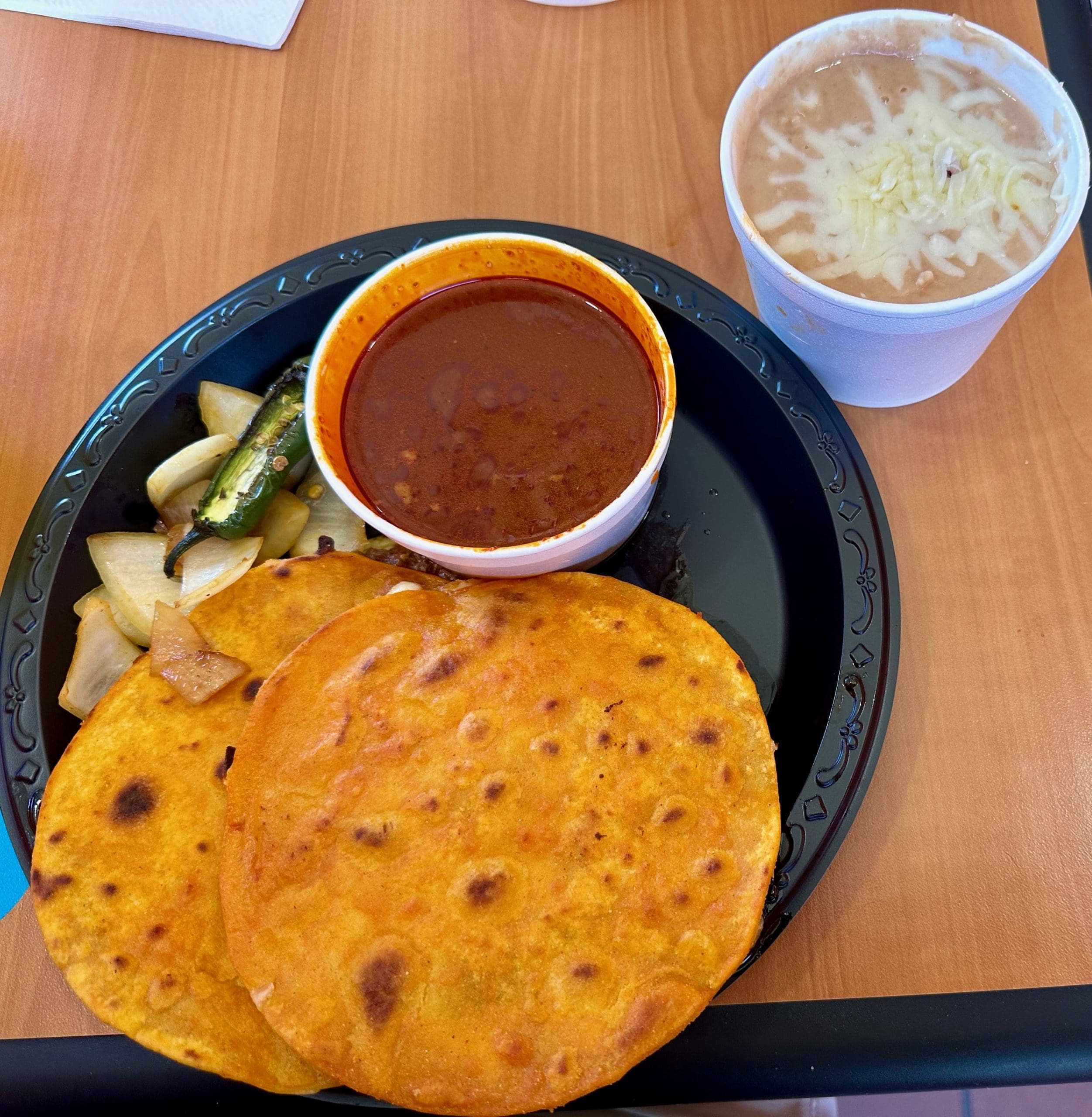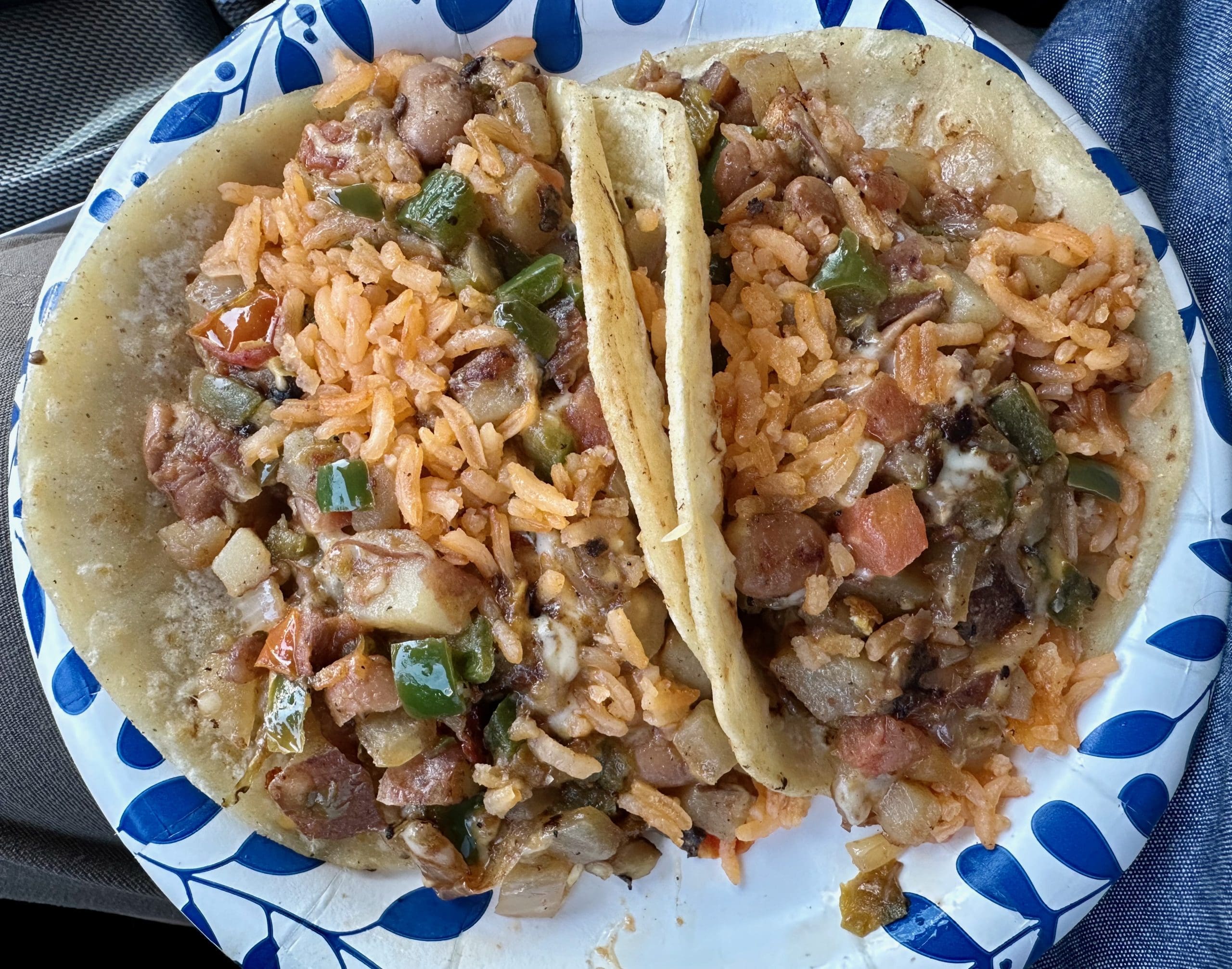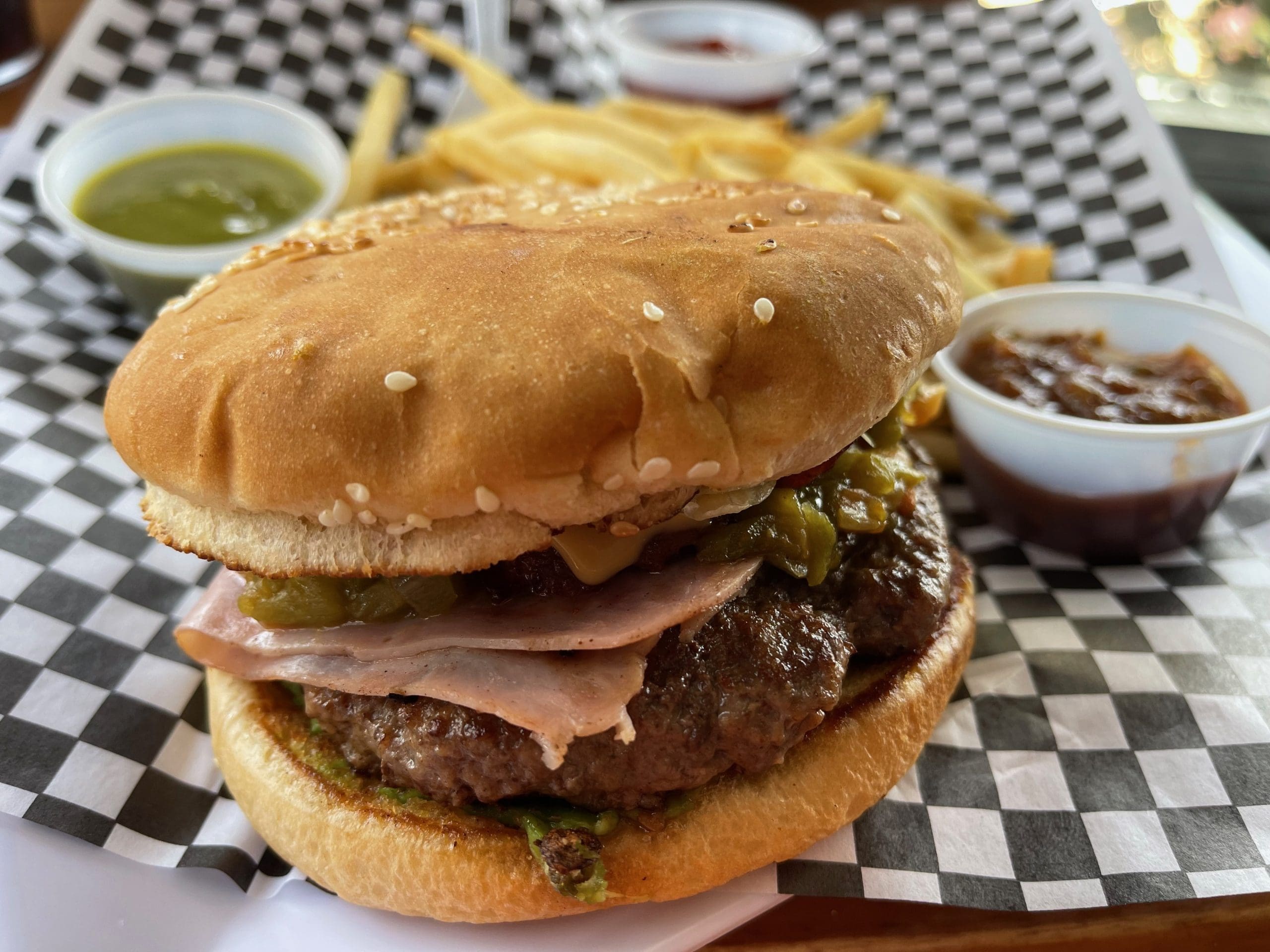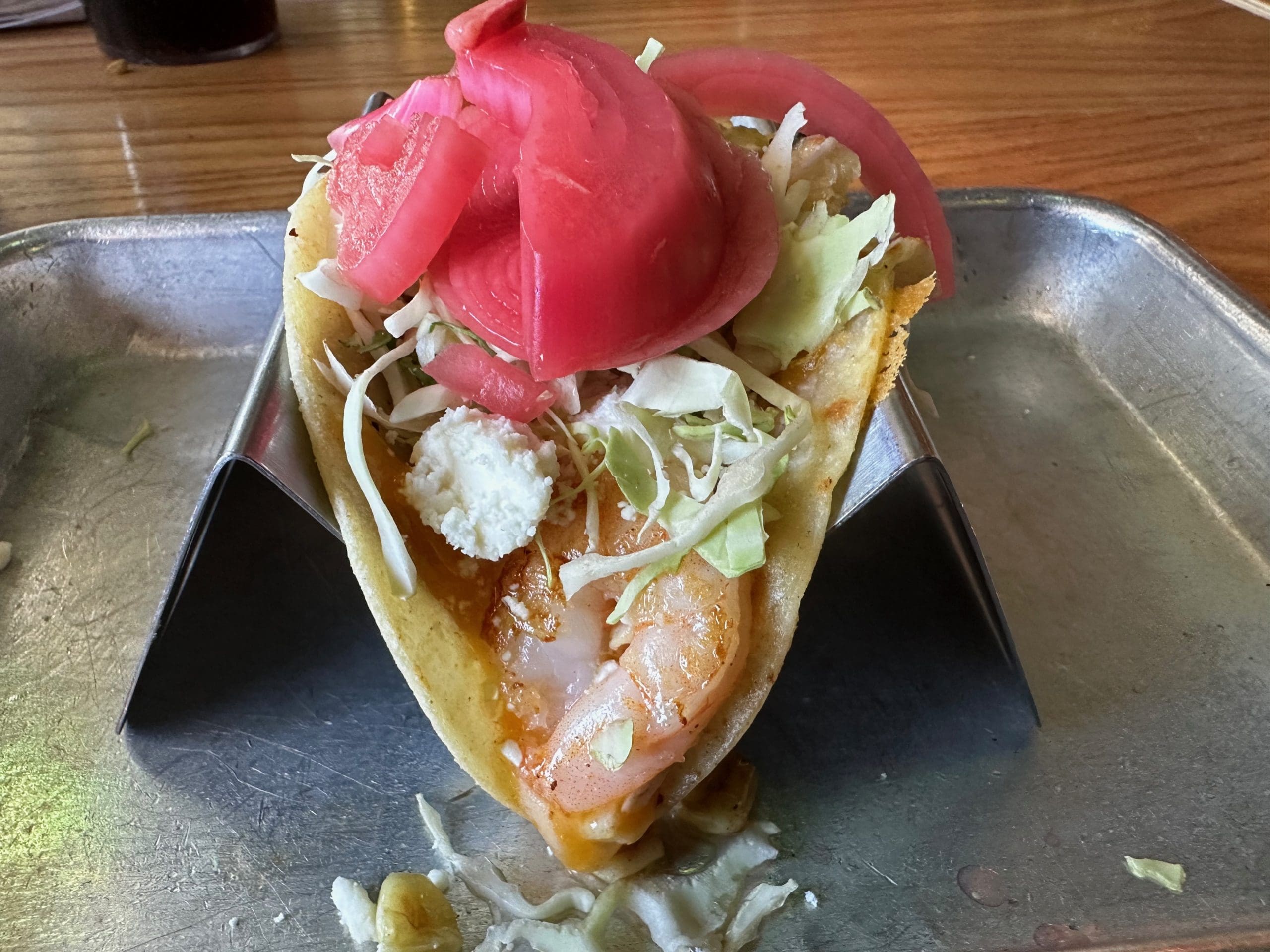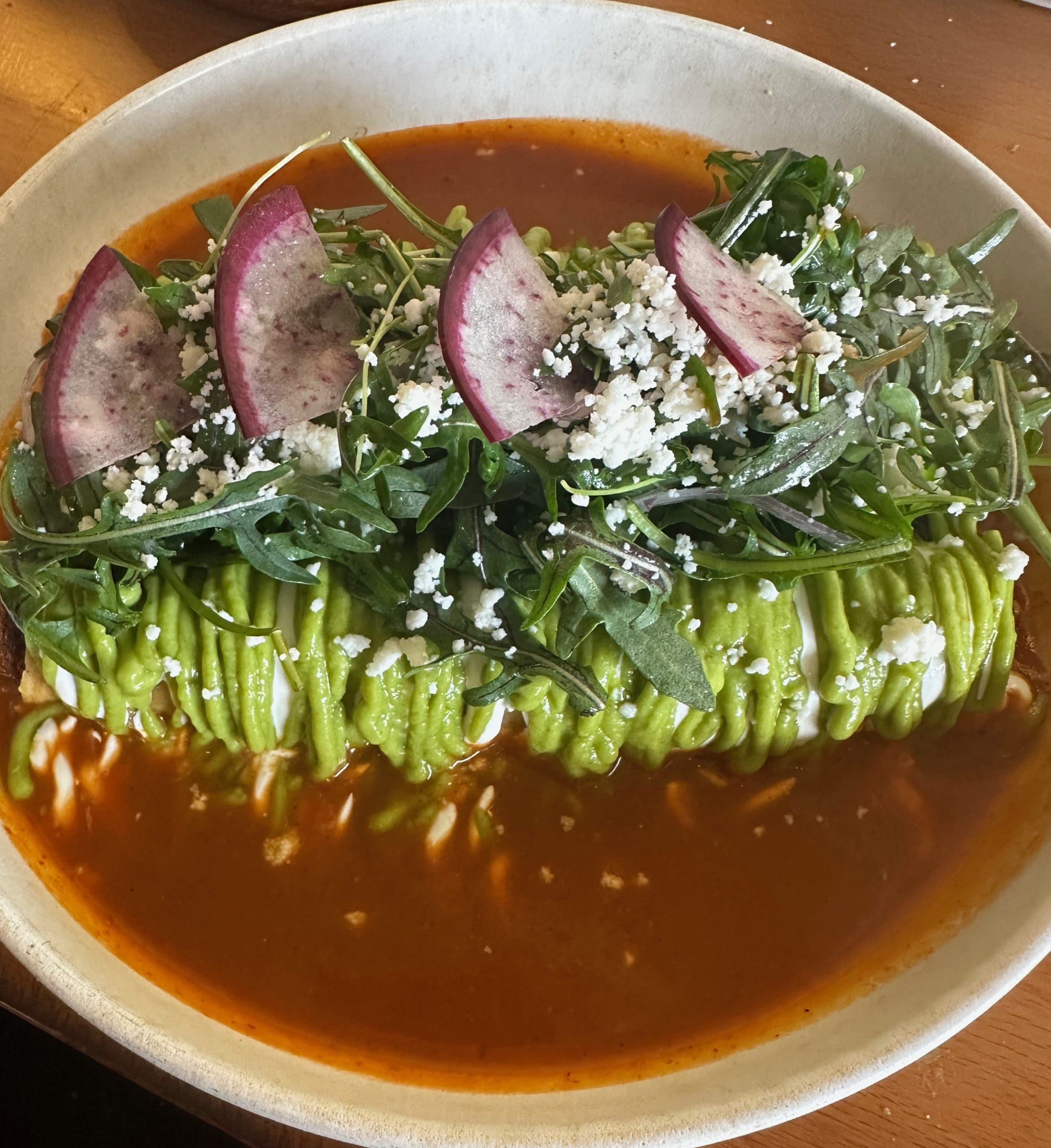
Nixta Taqueria – Austin, Texas

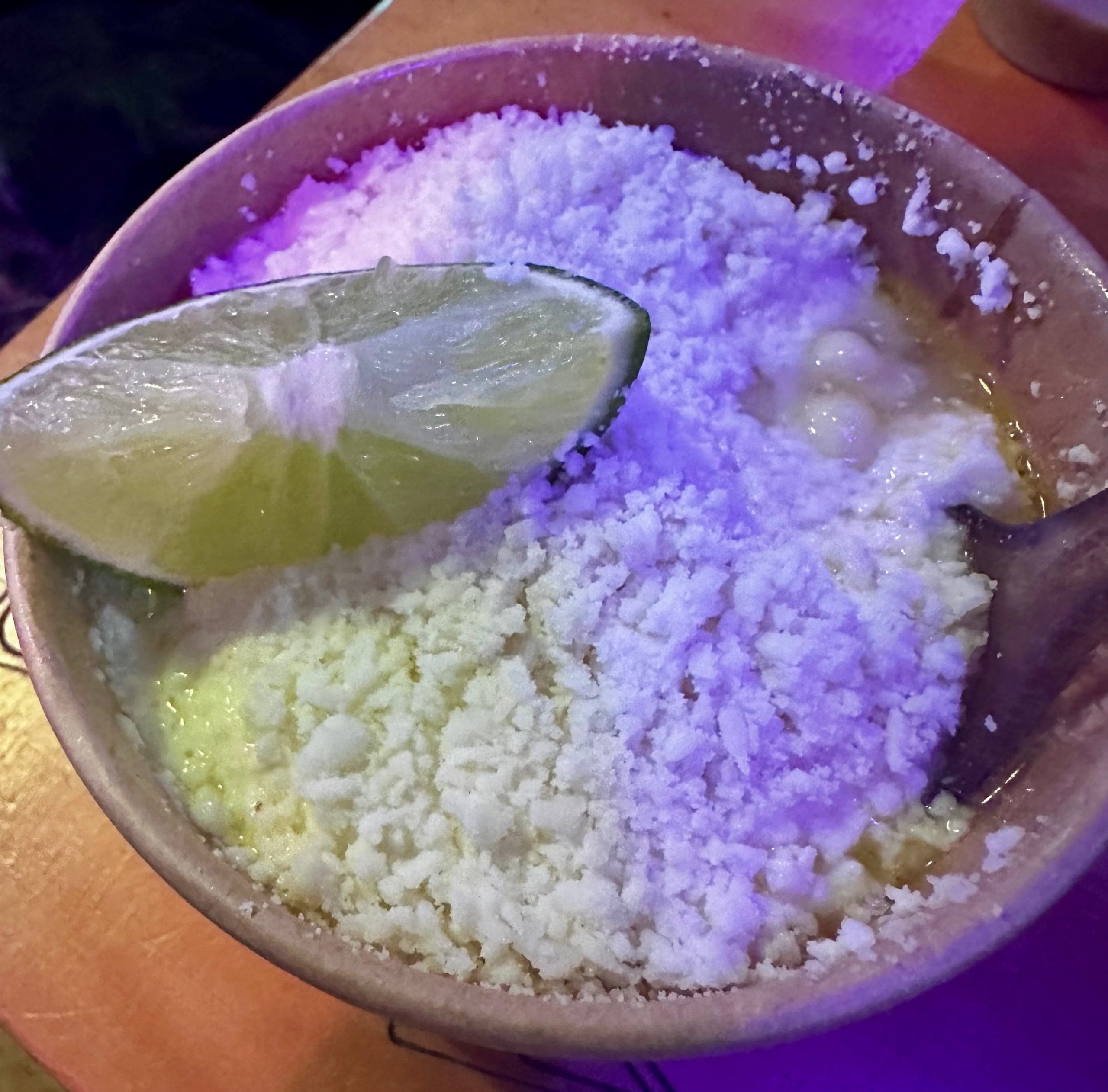
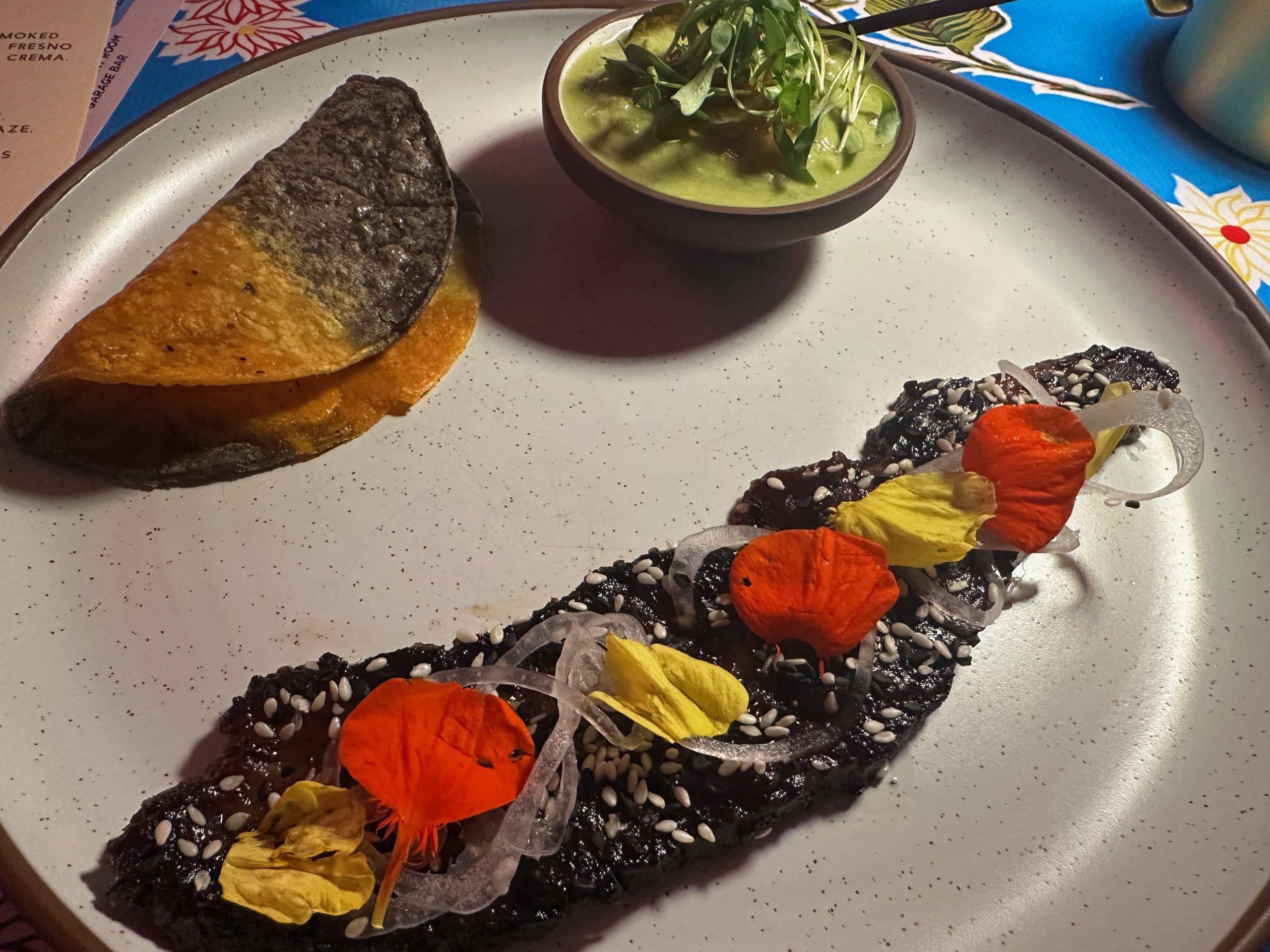
Man cannot live on barbecue alone–not even in Austin, Texas where the world’s very best barbecue is to be found.  To limit one’s self to barbecue–as transformative as it may be–is to deprive yourself of some of the best Mexican food and best fried chicken in the known world.  Though the primary purpose of my week-long visit to the City of the Violet Crown was to visit Michelin starred barbecue restaurants, to have done so have been “going deep,”  exploring just one segment of the Central Texas culinary Utopia.  “Going wide” meant exploring options beyond barbecue–options such as some of the aforementioned Mexican food joints for which Austin is renowned. At the very top of my list was Nixta Taqueria which was ranked tenth among the 50 best tacos in Texas.  That compilation was put together by Texas Monthly’s “Taco Editor” Jose Ralat who “traversed the state from the Rio Grande Valley to the Panhandle to find the most superb tacos and taquerias.”  Along the way, he discovered that “More than ever, chefs, cooks, and taqueros—often Mexican immigrants or first-generation Mexican Americans—are crafting nostalgic dishes from their blended cultures and incorporating native Texan ingredients.”  He calls the movement “New Tejano.”…

Escondido – Santa Fe, New Mexico

“For nothing is hidden that will not be made manifest, nor is anything secret that will not be known and come to light.” ~Luke 8:17 “Escondido (which translates from Spanish to “hidden”) sure proves that Bible verse wrong,” I lamented as I cursed Google Maps for having led me to a nondescript residential neighborhood in Santa Fe.  Though not as execrable as the time Google Maps insisted I make a left onto a crude and rocky dry wash when trying to get to Kayenta, Arizona, I nonetheless took Google’s name in vain then followed my instincts.  Fortunately, crossing over Agua Fria onto another neighborhood shed light on my quandrary.   There in front of me was Escondido, the restaurant destination I sought.  I still won’t forgive Google Maps for having led me astray.  Unlike in horseshoes, close doesn’t count. True to its name, Escondido is well hidden–or at least off the well-beaten and well-eaten path.   What isn’t hidden is the reputation of Chef Fernando Ruiz, a formidable chef with a colorful past and an efulgent future.  His is a story sadly not oft repeated, a tale of determination when recidivism is the path others in his shoes might have taken.  At…

Sobremesa Restaurant & Brewery – Albuquerque, New Mexico (CLOSED)

In June, 2021, Eater.com published a list of “the 21 Essential Restaurants in Albuquerque.” Unlike so many “clickbait” articles from national publications purporting to tell New Mexicans which restaurants across the Land of Enchantment serve the “best this” and the “best that,” the Eater feature was penned by Justin De La Rosa who actually knows this state very well.  In fact, in 2015 Justin earned a “Local Hero Award” from Edible New Mexico as “best food writer.” If you’re wondering what constitutes an “Essential Restaurant,” Eater’s erstwhile national critic Bill Addison defined the term to mean “indispensable to their neighborhoods, and eventually to their towns and whole regions,” to “ultimately become vital to how we understand ourselves, and others, at the table.”   In other words, restaurants accorded the “essential” designation by Eater are more than among the best restaurants in their town.  They are transcendent presences that feed the soul as well as the stomach. It’s a virtual certainty that Mary & Tito’swould make the list after having been named one of America’s 38 Essential Restaurants in 2018<.  It’s also no surprise that restaurants (Campo at Los Poblanos and Frenchish) helmed by multiple-time James Beard Foundation Chef of the Year…

La Zenita – Albuquerque, New Mexico

In his immortal play Romeo and Juliet, William Shakespeare used two lines to convey that the naming of things is irrelevant: “What’s in a name? That which we call a rose by any other name would smell just as sweet.”   My friends Bruce and Loren Plata like to remind me that in Hebrew, the name “Gil” represents a “small goat,” an animal that definitely doesn’t smell quite as fragrant as a rose.  My retort, of course, is that “goat” is an acronym for “greatest of all time.”  So, relevant or not, names do have meanings and can provide a lifetime of notoriety.   Most of us just hope our names aren’t something that can be made fun of. In Hebrew, the name “Zenita” means “gift of God.” Now, that’s one lofty name to aspire to.  Someone christened with that name would probably be expected to have pretty divine qualities. A restaurant bearing that name might be expected to serve food that’s heavenly. No, not manna and quail, but food that’s delicious and filling.  When I asked about the genesis of the name, the restaurant’s personable owner explained that the name is a play on two words.  First, it’s a…

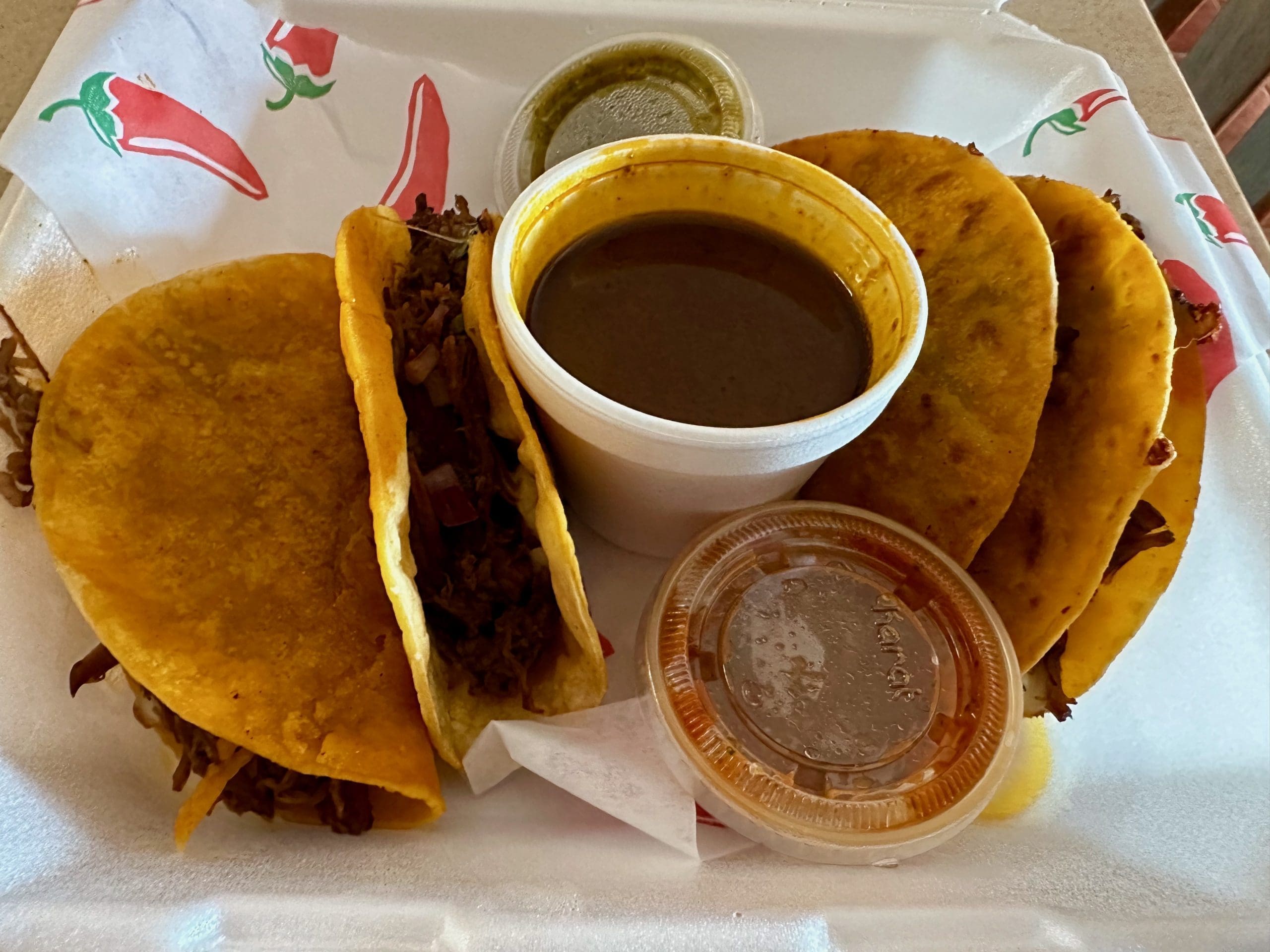
Birrieria Y Tacos Alex Tijuana Style – Albuquerque, New Mexico

If you’ve noticed an increase in the number of recent visits on this blog to Mexican restaurants, credit much of that to Pati Jinich, ebullient host of the James Beard Award-winning and Emmy nominated PBS series Pati’s Mexican Table   Although we record the Saturday airing of Pati’s Mexican Table, we don’t usually watch it until Sunday…right before lunchtime.  It’s no wonder, therefore, that what we’ve been craving for lunch is Mexican food. It’s nigh impossible not to be utterly charmed (if not outright besotted) by the lovely Pati Jinich.   Her huge likeability quotient is the byproduct of a genuine warmth and self-effacing humor which come across with her every thickly-accented utterance.  She’s down-to-Earth and genuine, taking absolute joy in  broadening and sharing her expansive knowledge about the colorful tapestry known as Mexican cuisine.  In every episode, Pati embarks on an educational and entertaining journey.  Each dish she encounters serves as a launching point into explorations of the rich and diverse history and culture of her country of birth. In season eight (episode 811), which aired in January, 2019, Pati explored Sinaloa, “Mexico’s Bread Basket,” which produces about 40% of the meat and produce consumed in all of Mexico.  Inspired…

El Chile Toreado – Santa Fe, New Mexico

Until 2008, the notion of gourmet culinary offerings being proffered by a mobile conveyance was unheard of.  Prior to then, food trucks were (often rightfully so) known as “roach coaches” or even worse “barf buggies.”  Roach coaches were an eyesore, a medium of last resort usually parked at construction sites, manufacturing plants, public parks or basic military training bases where captive trainees had no alternative.  Roach coaches were a pure convenience with no pretense to gourmet (or even good) cuisine.  Most of them hawked simple fare such as hot dogs and tacos as well as potato chips, cigarettes, candy and chewing gum. During the era of “convenience stores on wheels,” food trucks weren’t worried about building a brand.  Nor were they concerned with repeat business or customer loyalty. There was no such thing as social media at the time and there were no Yelp reviews. These unsightly vehicles (many with actual roaches in tow) were in business to serve a location for a short time period. After at construction job ended at one site, for example,  they would simply move onto the next profitable location and the process would continue.  These “convenience stores on wheels” served a purpose, but during…

Burger Bro’s – Albuquerque, New Mexico

Such advanced human traits as complex symbolic expression, art as an aesthetic visual form and elaborate cultural diversity emerged mainly during the past 100,000 years or so.  That’s more than four-million years after humans gained the ability to walk on two legs. By comparison, the ubiquitous All-American burger has evolved in the blink of time.  Most culinary historians believe the burger as we know it today was invented somewhere between 1885 and 1904. Even most of us who have lived three or more decades have seen significant changes in the burger.  Many of those changes have occurred during the 21st century–the last twenty years or so. Think about it.  For the most part, the predominant burger many “seasoned” eaters across the fruited plain enjoyed until recent years was relatively unadorned save for the burger’s essential and defining elements: a soft, toasted bun (sesame seed buns were popularized by the Golden Arches in the 60s); sweet, vine-ripened tomatoes; crisp, cool, crispy lettuce; a smear of pungent yellow mustard; maybe some chopped white onions and in the middle of it all, a juicy, seasoned all-beef patty.  To be sure, additional ingredients–cheese in the 1920s or 1930s and in New Mexico, green chile in the 1940s–eventually…

The Skillet – Las Vegas, New Mexico

A man comes home after a long day.  His wife then hits him in the back of the head with a frying pan.  He clutches his head in pain asking her, “Honey why? Why did you do that?” She answers, “When I was doing your laundry I found a receipt in your pocket with a woman’s name on it.” He responds, “That’s why you hit me? Honey, Mary-Ann is a horse I bet on.  That’s the receipt for my bet.” She accepts that and apologizes and they make up.  Next week the same thing happens. He comes home and is struck in the back of his head with a frying pan. The husband asks, “AGAIN? You hit me in the head with a frying pan again, why?!”  The wife looks at him and says, “Your horse called.” Believe it or not, in the 50s and 60s (long before my time), wives bashing their husbands on their heads with frying pans passed for humor.  Banner Graphic confirms this gallows humor trend: “The image of an angry woman hitting her uncooperative husband over the head with a frying pan is usually a cartoonishly laughing matter.  After all, it’s a staple of comic…

Tio’s Kitchen – Bernalillo, New Mexico

I may not have much respect for the national media or for politicians, but I sure do respect the elderly (unless they’re members of the media or politicians).  My parents engendered among their six children, respect for our elders.  None of us would ever consider addressing an elder by their first name.  We would never use the pronoun “tu” (you) when speaking with someone older than us.  We always use “usted,” also a Spanish term for “you,” but used in a formal manner for people we respect and always for our elders.  We were raised with the type of respect for seniors that is practiced in India, Thailand, Somalia, Indonesia and other nations who venerate their elderly.   Being raised in Peñasco (which is within the confines of the Picuris Pueblo reservation), we witnessed respect for seniors quite often. Similar to the aforementioned nations, many Native American cultures across the fruited plain are exemplars in how to treat their elders.  In the Lakota culture, grandfathers are viewed as “the elders of the tribe and in many ways personify the sacredness of the goodness and wisdom of the Great Spirit. Grandfathers carry the spirit of the people. Grandmothers are even more…

Zacatlán – Santa Fe, New Mexico

As a naive and impressionable child with a vivid imagination, my most frightening weekly ordeal was walking home from Catechism, especially when teachings centered around the devil and his demons. For some reason we weren’t taught about a loving God. Instead it was drilled into us that if we’re not “good” we’d go to Hell.  Strangely such concepts as forgiveness and goodness were described rather abstractly while the devil (undoubtedly a progenitor of today’s elected officials) and sin were made real enough to traumatize us all.  The devil was everywhere waiting to ensnare us into sin and drag us (wailing and gnashing our teeth) into Hell. Walking home at twilight after another fire and brimstone lesson made me long for the safety and security of home.  It made me quite unhappy that Adam and Eve were expelled from Eden for disobeying God.  Eden is described in Genesis as “the garden of God.”  Our Catechism teachers taught us Eden was a peaceful place in which we were all intended to live contented and innocent lives.  Unfortunately, rather than focus on the beauty and serenity of Eden, we were petrified by descriptions of the serpent who tempted Eve to partake of the…

¡Ay Mi Mexico! – Albuquerque, New Mexico

One syllable, one word, one simple expression…yet there probably is no more expressive interjection,  heart-rending cry or honest exclamation in the Spanish language than the simple word “Ay.” This–one of the most  diminutive among all words–can say and mean so much.  Depending on the context, “Ay” is used to express such emotions as: <happiness: think “¡Ay, Chihuahua” when Despicable Me patriarch Gru espies a black villain suit he covets; surprise: ¡Ay, Cabron! what are you doing home in the middle of the day?; exasperation: ¡Ay, Que Lastima! <pain or dismay: Bart Simpson’s ¡Ay, caramba!” when he saw his parents having sex. The versatility of “ay” is virtually unparalleled (though you can usually tell what meaning or mood a speaker is ascribing to that oh, so simple and powerful expression). Informally, “ay” may preface other words in place of curse words in order to make a phrase sound less harsh.  In essence “¡Ay, caramba!” and “¡Ay, Chihuahua!” are Mexican equivalents of “oh, shoot,” “darn” or “shucks.”  Perhaps the most famous use of the term is in the immortal Mexican song Cielito Lindo whose refrain exhorts “Ay, ay, ay, ay, canta y no llores.”  Some English dictionaries translate this as “oh, oh,…