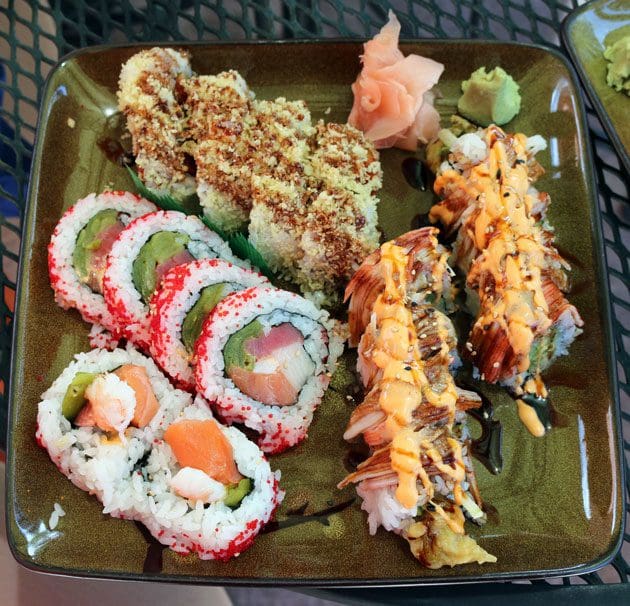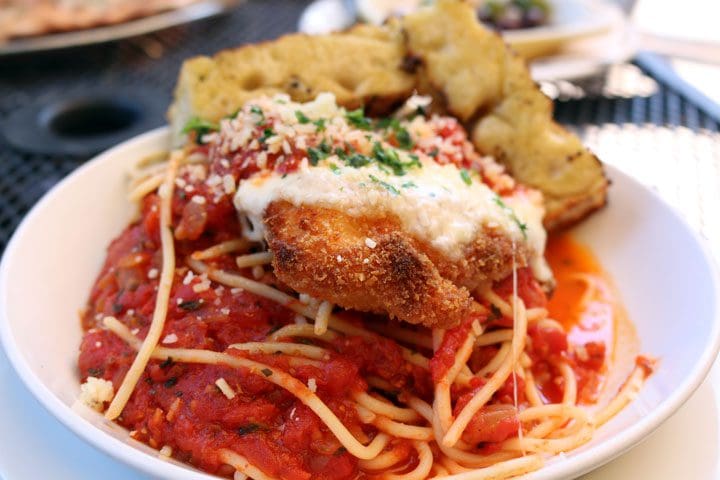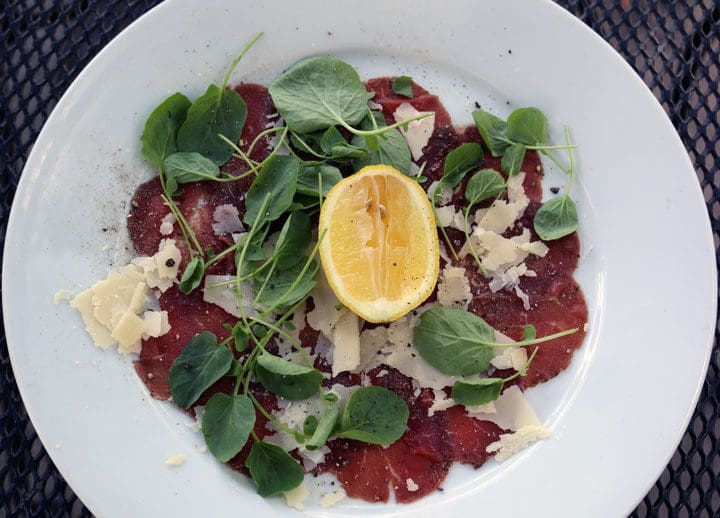
Scalo Northern Italian Grill – Albuquerque, New Mexico

CAVEAT EMPTOR:  The following review is based on visits prior to 2019 when Scalo shuttered its doors.  Scalo has since reopened. When we moved back to New Mexico on May 15, 1995, our first priority wasn’t where to live, but where to eat. Having been away for the better part of 18 years, there were so many old favorites with which to reacquaint ourselves and so many exciting new prospects we just had to try. By year’s end, we had visited 75 different restaurants (no chains). One of our favorite sources on where to eat was Albuquerque Monthly, a very well written publication which celebrated the Duke City’s culinary scene with an Annual Restaurant Guide and a “Best of Albuquerque”…

Lollie’s New Mexican Food – Albuquerque, New Mexico (CONVERTED TO FOOD TRUCK)

NOTE:  Lollie’s New Mexican Food is now operating out of a food truck.  In the frontier wilderness of New Mexico–long before the advent of culinary schools and home economics classes–a cook’s credentials weren’t bestowed by some accredited institution of higher learning. Instruction in the culinary arts was most often imparted lovingly by mothers. Recipes were passed on from one generation to another, using ingredients often grown in the family farm and livestock raised locally. “Credentials” were earned by reputation and the word of mouth of satisfied diners (most often family members, neighbors and visitors). A good cook was known about far and wide. Lollie Padilla can relate to the New Mexican culinary traditions of yore, having worked next to her…

Papaburgers – Los Ranchos De Albuquerque, New Mexico (CLOSED)

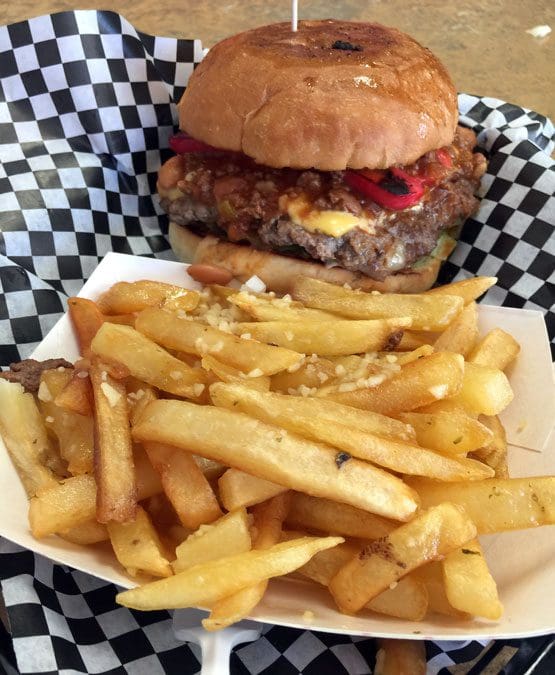
Back in the 1960s, A&W’s Papa Burger was a rite of passage for me. By age nine, I had surmounted the phased progression through A&Ws burger family–Baby Burger, Mama Burger and Teen Burger–and was ready to prove my mettle with the largest of A&Ws burger family, one beefy behemoth only my dad, a paragon of masculinity, had ever ordered. Earning the right to order one was acknowledgement that I was growing into a man. Polishing one off brought newfound respect from my younger brothers, both of whom longed for the day my dad would order a Papa Burger for them. In the 1960s, A&W’s burger family signified a formidable line-up of burgers served in more than 2,000 A&W restaurants throughout…

Fareast Fuzion – Albuquerque, New Mexico

A Journal of Consumer Research study published in 2012 revealed that consumers equate eating meat with their concept of masculinity. To the dismay of spinach-lovers like Popeye, respondents indicated meat has a more masculine quality than vegetables. Study participants considered male carnivores to be more masculine than their vegetarian counterparts (ostensibly Bill Clinton was more masculine when he scarfed up Big Macs than he is now that he’s a vegetarian). “To the strong, traditional, macho, bicep-flexing, all-American male, red meat is a strong, traditional, macho, bicep-flexing, All-American food,” wrote the researchers. “Soy is not. To eat it, they would have to give up a food they saw as strong and powerful like themselves for a food they saw as weak…

Farina Alto – Albuquerque, New Mexico (CLOSED)

FROM FARINA ALTO’S WEBSITE:  A new chapter of Italian dining is coming to the Northeast Heights this December. Cantina Hospitality Group, the team behind beloved New Mexico restaurants like Brekki Brekki, Poki Poki Cevicheria, Tamashi, Thai Boran, and Sushi King, has announced its latest concept: Pazzi Ristorante Italiano — set to open in the former home of Farina Alto. Much thought, deliberation and market research usually goes into the naming of a business, but every once in a while, one linguistic aspect or another isn’t fully explored to the nth degree. Take for example Chevrolet’s problems marketing the Nova in Latin America where the term “no va” means “it won’t go” in Spanish. Even though the Nova sold quite well, the…

Rolls & Bowls – Albuquerque, New Mexico (CLOSED)

“The banh mi sandwich is really the only good argument for colonialism.” ~Calvin Trillin By most historical standards, the banh mi is a rather new entrant in the world culinary stage. Its evolution into the revered sandwich we know and love today began in 1859 with the French arrival in Saigon. Along with military occupation, the French brought their c’est delicieux cuisine to Southeast Asia…although to be clear, the colonial rulers never had the benevolent intent of introducing the Vietnamese to their more “refined” cuisine. The French, in fact, initially forbade their subjects from partaking of such stables as bread and meat, believing the Vietnamese diet of fish and rice kept them weak. In time, wealthy Vietnamese who embraced French…