Kamikaze Kitchen – Albuquerque, New Mexico (CLOSED)

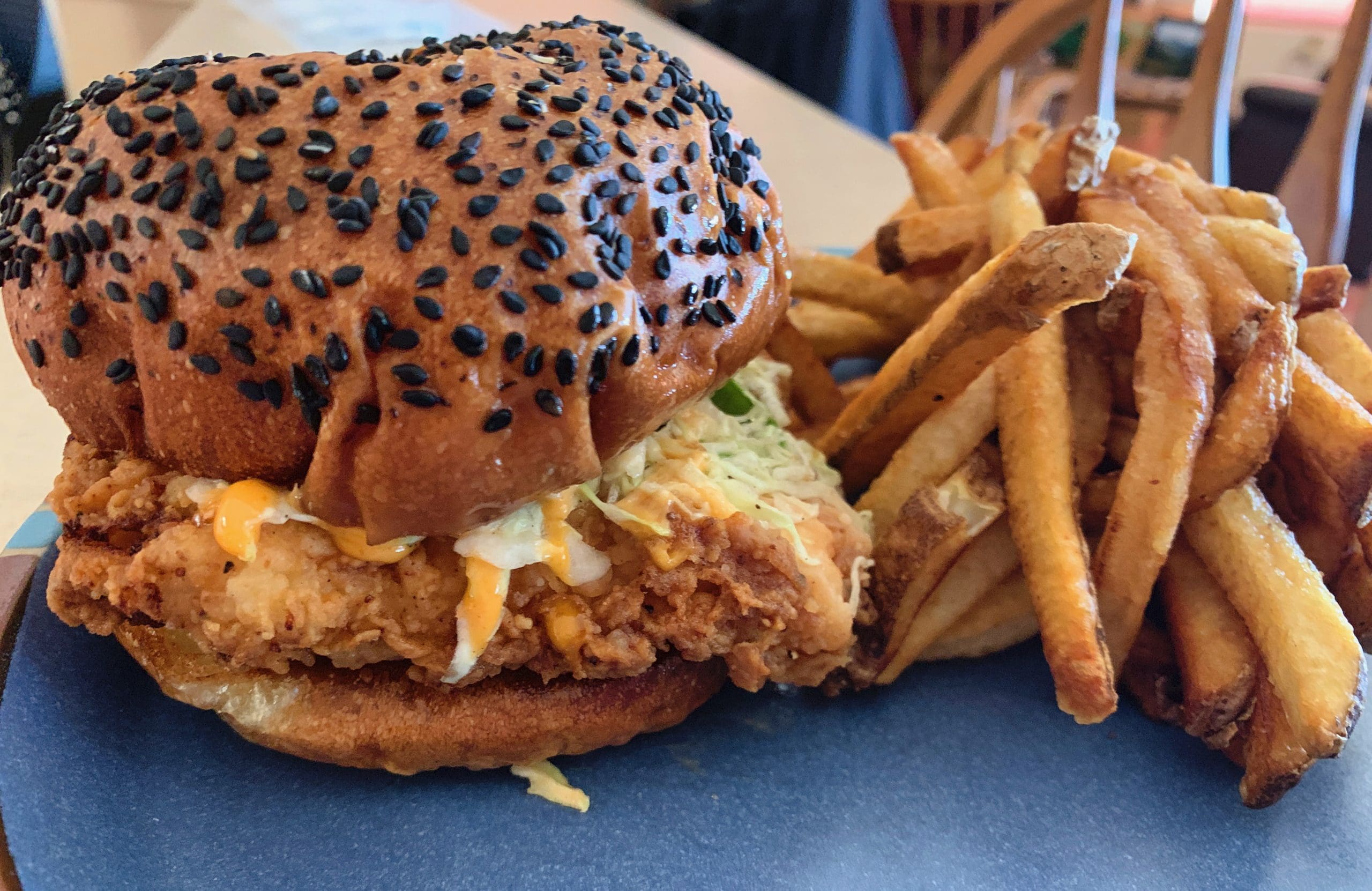
NOTE: In early January, 2024, Kamikaze announce the closure of its brick-and-mortar location. The owner said increasing rent and years of vandalism played a large role in the decision. In the 1970s and 1980s, Reese’s Peanut Butter cups commercials consisted of a series of vignettes. Each vignette depicted the collision of two daydreamers–one eating peanut butter and the other eating chocolate. The peanut butter eater would exclaim “you got chocolate on my peanut butter.” The one eating chocolate would retort “you got peanut butter on my chocolate.” The two would then sample the mix of chocolate and peanut butter and burst out in wide-eyed surprise with “Delicious!” A godlike narrator would then proclaim “Two great tastes that taste great together.” My mention of “fusion cuisine” once brought about the retort “you mean like chocolate and peanut butter” from my former colleague Matt Mauler.  For Matt that magical melding of chocolate and peanut butter is probably as far as he would ever go in culinary exploration.  My counter-argument fell on deaf ears–that cuisine across the world has been made significantly more interesting by the intermingling of culinary cultures.  Moreover, I argued, the convergence of cooking techniques, spices, ingredients and recipes has…
Heaven Dragon – Rio Rancho, New Mexico

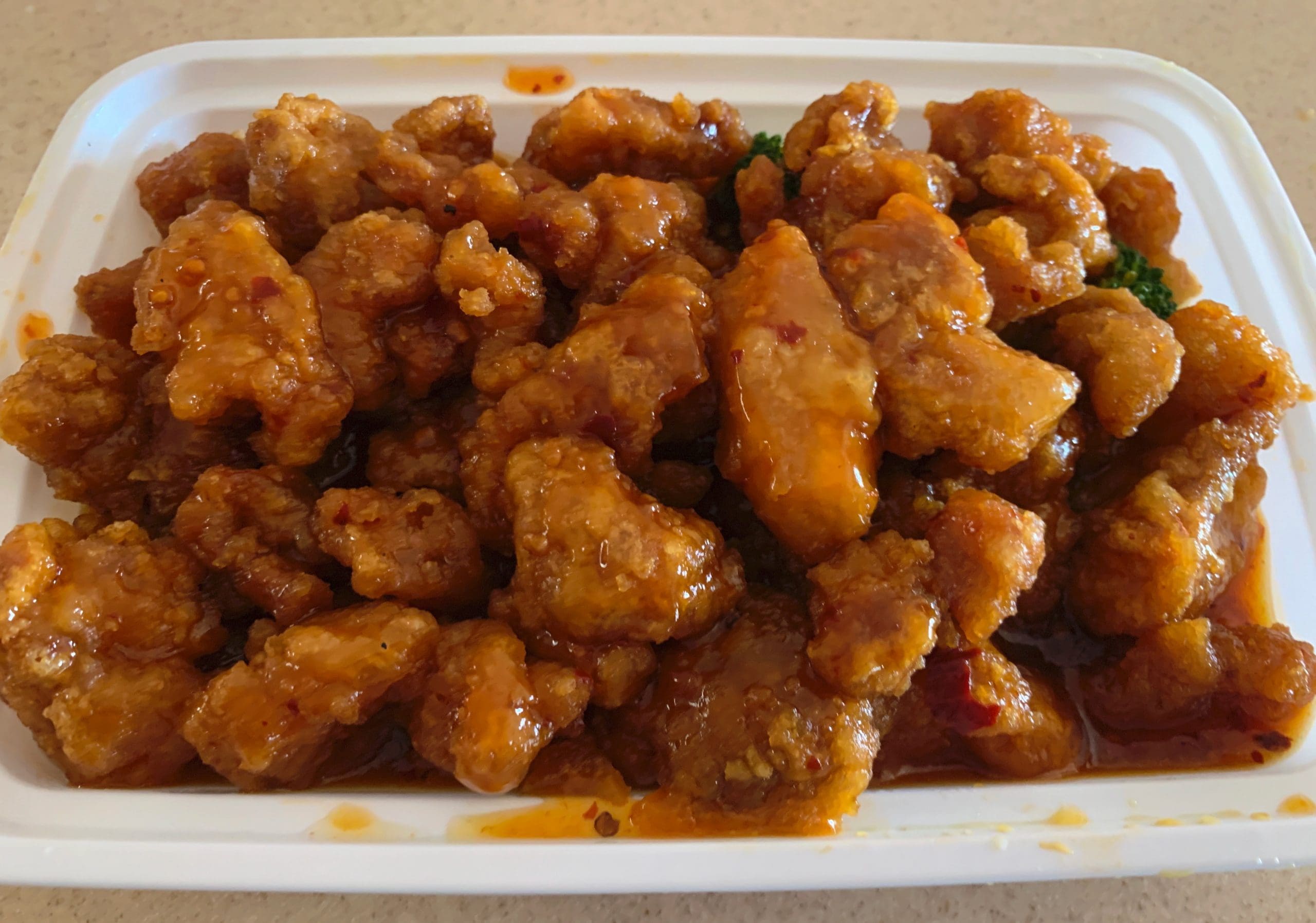
From Norbert, the Norwegian Ridgeback of Harry Potter lore to Smaug, the greatest and most powerful of all dragons in The Hobbit, dragons are a familiar icon in modern literature, movies, music and pop culture.  Dragons are symbols of fantasy, whimsy and magic, often representing ancient legends and far-off lands.  They range from the malevolent, fiery tempered, scaly fire-breathers (insert your favorite mother-in-law reference here) to the affectionate benefactors of mankind.  What could possibly explain the popularity of dragons?  Could it be because dragons once existed?  Stories of dragons are pervasive in such ancient cultures as the Chinese, Australian aborigines, Babylonians and Welsh.  Ancient Chinese cosmogonists actually defined four types of dragons.  The Heaven, Heavenly or Celestial Dragon (Tianlong) guarded the heavenly dwellings of the gods.  The Earth Dragon (Dilong) controlled the waterways while the Spiritual Dragon controlled the rain and winds.  The fourth, Fuzanglong, was the dragon of hidden treasure.   The Heaven Dragon of Chinese mythology may have looked down from its celestial perch as emperors of the Ming and Qing dynasties visited Beijing’s Temple of Heaven to pray for a good harvest.  The Temple of Heaven is one of two large, colorful photographs (the other is of…

Placitas Pizza – Placitas, New Mexico

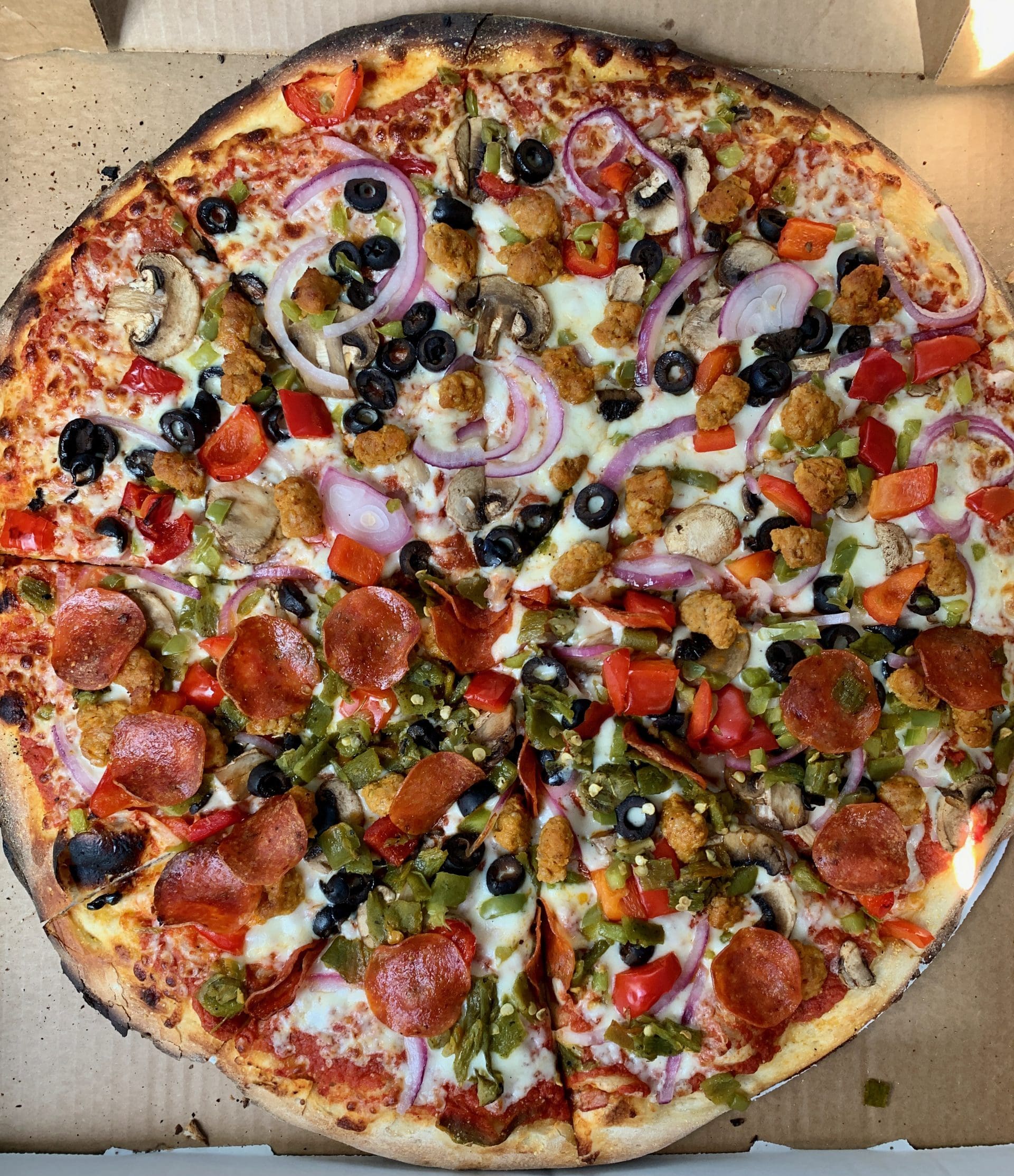
Back in the 1960s before the world was “woke” a catchy television jingle painted a pretty bleak picture: “Aunt Jemima pancakes without her syrup.  It’s like the spring without the fall.  There’s only one thing worse in the universe.  That’s no Aunt Jemima at all.”  Frankly, there’s one thing worse than Aunt Jemima pancakes without her syrup.  That would be a village with no pizza.  A Village With No Pizza.  Doesn’t that sound like a horror story about a dystopic place where residents are haunted by insatiable cravings for an essential food group?  In actuality, that horrific situation described the village of Placitas where, for generations, residents had to find pizza elsewhere. As in all clichéd horror movies, escape to an idyll that proffers pizza was fraught with obstacles.  Thankfully instead of axe wielding killers and cars that don’t start, those obstacles included having to drive to Pizza 9 in Bernalillo or Davido’s in Rio Rancho.  Only the Israelites wandering in the dessert for forty years seemed as long as driving through Bernalillo where perpetual construction of Highway 550 remains a twisting and turning, stop-and-go nightmare.  The alternative (and probably quicker than driving through Bernalillo) is driving to Albuquerque, some 25…

AK Pizza – Albuquerque, New Mexico (CLOSED)

“I hate it. I think it’s an abomination. There are so many awesome things here, I don’t know why that should be featured. It’s leading with your weakness. So much other great stuff.” ~Anthony Bourdain What could have rankled the ire of the world renowned celebrity chef, master raconteur and social activist?  Was it an injustice in dire need of exorcising?  Dystopian horrors in a faraway third-world country?  Devaluation of life?  Bringing to light those suffering in the dark?  No, my friends.  It wasn’t the broken world Bourdain railed against.  It was something much more apolitical…unless you’re talking about the politics of pizza, specifically between the warring factions of New York and Chicago.  What Bourdain found so appalling was Chicago’s deep-dish pizza. Chicago deep-dish pizza is the Rodney Dangerfield of pizza.  Outside the Windy City, it gets no respect.  Cynics malign it as “not a pizza.” Others, such as Bourdain and former “Daily Show,” host Jon Stewart simply love to hate it.  In a particularly vitriolic rant, Stewart called it everything from a “fricking casserole” to “an above-ground marinara swimming pool for rats” and worse, much worse.  He suggested it would be complete with canned onion rings on top.  Even…

Street Food Sensations – Albuquerque, New Mexico

Restaurant Insider, which touts itself as “your source for restaurant news, trends, information, tools and conversation” has observed that one of the catalysts most instrumental in driving a changing culinary landscape are Generation Z (anyone born between 1997 and 2010) diners.  With a spending power of over $29 Billion, Gen Z diners make up a quarter of all the people going out to eat, accounting for 14.6 billion restaurant visits in 2018.  Gen Z is increasingly influencing restaurant industry trends, prompting savvy restaurateurs to take a real hard look at their current menus. And just what do Gen Z diners want?  According to Technomic’s  2019 College & University Consumer Trend Report, “42 percent of Gen Z-ers want street food on the menu.”  Not just the street food more geriatrically-advanced citizens among us might think of, but food fashioned by the fusion of culinary cultures and ingredients.  Because Gen Z constitutes the most ethnically diverse of all generational cohorts, the traditional definition of “American” food is rapidly evolving, with ethnic tastes and foods becoming even more mainstream.  Gen Z wants—and expects—more mash-ups combining multiple ethnic influences, a blurring of lines between ethnic menus. As we perused the menu at Street Food…

Taco Cabana – Albuquerque, New Mexico

In 1972, English author Diana Kennedy, the doyenne of Mexican cuisine, penned The Cuisines of Mexico, a Mexican cookbook in which she described Texas’s Mexican food as “inauthentic,” coining the term “Tex-Mex.”  Kennedy essentially drew a line of demarcation between the foods of her beloved Mexico, what she viewed as “the real thing” and the foods prepared North of the Border. Her assertion was that most Mexican food in America is technically of Tex-Mex derivation (yes, that includes New Mexican cuisine). Meghan McCarron’s feature on Tex-Mex cuisine for Eater seems to indicate Kennedy’s low regard for Tex-Mex cuisine is rather widespread: “The standard narrative about Tex-Mex is that it’s an inauthentic, unartful, cheese-covered fusion, the kind of eating meant to be paired with unhealthy amounts of alcohol or to cure the effects thereof. There’s a lot of easy-melt cheese, the margaritas are made with a mix, and the salsas come from a bottle.”  Just what is Tex-Mex and why does it inspire such rancor?  According to Serious Eats, Tex-Mex cuisine “ is rooted in the state’s Tejano culture (Texans of Spanish or Mexican heritage who lived in Texas before it became a republic) and also Mexican immigrants who hailed largely…

Duke City Taco – Albuquerque, New Mexico (CLOSED)

Observer: You’ve said that you can do anything with a taco, except put ketchup on it? Danny Trejo: That’s it! [Laughs]. Observer: Do people try to do that? Danny Trejo: Yeah, some people think that ketchup is good on a taco. Maybe if you’re 10-years-old, you might want to put ketchup on a taco. Observer: But that’s sacrilegious! Danny Trejo: I know, right? Over the years, putting ketchup on a hot dog has been cussed and discussed ad-nauseam, the consensus being that adults and sane people should never put ketchup on hot dogs.  Actor cum restaurateur Danny Trejo contends it’s just as wrong to put ketchup on a taco.  When “Machete” speaks, you’d do well to listen and not only because he can kick your butt(ered tortilla).  Trejo, a prolific actor who’s been in about three-hundred movies and famously served a prison sentence, owns and operates several restaurants in the Los Angeles area, including the eponymous Trejos Tacos. As an independent observer of the taco condition, I’ve often marveled at the versatility of the taco.  There appears to be no limit to what you can put between corn tortillas, flour tortillas and even lettuce leaves and still call them tacos. …

Sharky’s Fish and Shrimp – Albuquerque, New Mexico (CLOSED)

Never mind your tired, your poor or even your huddled masses yearning to breathe free. Carlos Zazveta, the effusive proprietor of Sharky’s Fish & Seafood told us to bring our dogs, our cows and our goats next time we visit. That was after we explained we didn’t bring our children because they’re of the four-legged variety that barks. He was just kidding, of course. Carlos does that a lot. When he espied me taking pictures of the Sharky’s complex, he flashed a toothy grin and flexed his pecs from within the confines of the oyster bar he was manning at the time. In New Mexico, Sharky’s just may be the closest you’ll get to being in a Mexican coastal resort—not because of proximity, but by virtue of look and feel. The overhanging corrugated metal roof and lower half of the building’s walls have the tincture of deep azure, harkening to mind the clear Pacific waters of Puerto Penasco in the Mexican state of Sonora. Sonora is where Carlos calls home and where he cultivated his deep love of Mexican cuisine, especially the type of mariscos he’s sharing with his adopted hometown of Albuquerque. There are other elements to Sharky’s that…

Cafe Lush – Albuquerque, New Mexico

Urban Dictionary, that oft hilarious, veritable cornucopia of slang, jargon and streetwise lingo, defines “lush” as “someone who drinks a lot.” (Actually, there are several pages of similar definitions for “lush” in the “peoples’ dictionary,” but this one was the best fit for this PG-rated blog.) When I asked Sandy Gregory, a self-admitted “food industry lifer” and co-owner of Albuquerque’s Cafe Lush why the name Lush, she laughingly kidded “because we like to drink a lot.” Seeing that her response left my mouth agape, she winked and corrected herself, “because our food is luscious.” You’ve got to love a restaurant owner with whom you can engage in witty repartee. At Cafe Lush, you’ve got two of them. Sandy’s husband and business partner Tom Docherty explained why they launched their restaurant venture: “We’re too poor to retire and too old to work for someone else.” With nearly a combined eight decades in the restaurant business, Tom and Sandy want to make Cafe Lush a cafe in which “food for the senses” is more than just a clever but empty slogan. It’s a formula for success and one which garnered “best chef” accolades from Alibi readers for Chef Docherty in the magazine’s…

Master Food Truck – Santa Fe, New Mexico

Drive eastward on Airport Road in Santa Fe toward Cerrillos and you just might wonder if you accidentally traipsed into the Twilight Zone and somehow found yourself in Los Angeles.  At the very least, you might find yourself declaring “I knew I should have made that left turn in Albuquerque.”   “What is this madness,” you ask.   As we found out, on weekends Airport Road is home to a veritable cavalcade of taco trucks, the overarching term for food trucks of all types in Los Angeles.  Prowling the mean streets of the City of Angels are more than 3,000 licensed taco trucks and carts.  Street food has become a billion-dollar industry in L.A. According to Yelp, there are only 42 food trucks in Santa Fe, a far cry from the 3,000 plus in Los Angeles.  On one particular Saturday in October, we marveled at just how many of those 42 food trucks were stationed in parking lots, vacant lots and cozy tree-lined spots on Airport Road. Most of them it seemed, proffered the Mexican food that made Los Angeles the mecca for street food.   Our quest was to experience the reputed best at El Queretano. That quest took us past…

C3’s Bistro – Corrales, New Mexico (CLOSED)

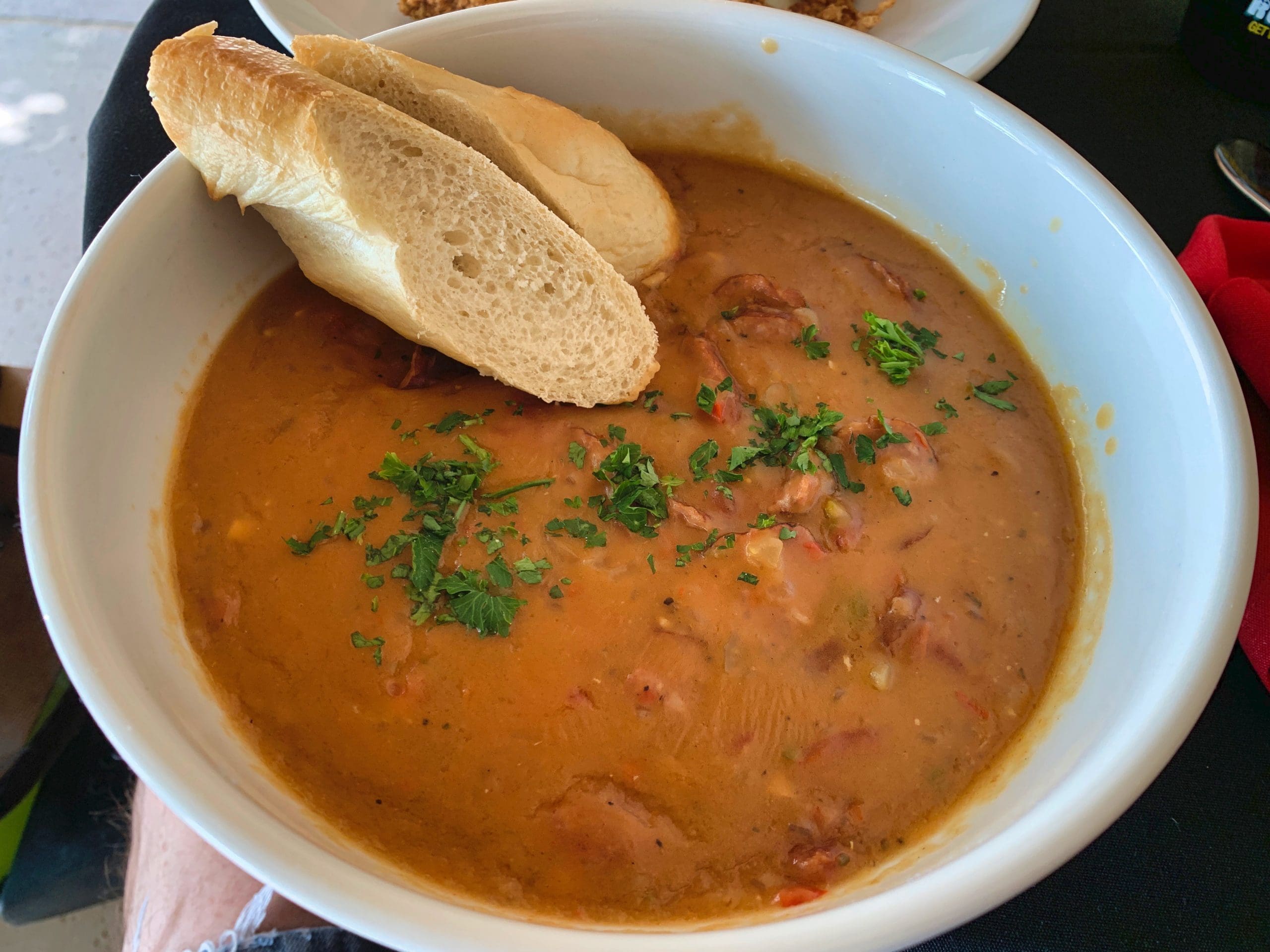
FROM 3C’s BISTRO’S FACEBOOK PAGE: We regret to announce our final closing. We fought hard and we appreciate all of you who came alongside us. February 5th will be our last day serving from 9am-6pm. A case could be made that “Don’t Let Me Be Misunderstood,” the name of a 1977 hit by Santa Esmeralda, could well be a lament about New Mexican cuisine (in addition to being the background music during the classic sword fight between Uma Thurman and Lucy Liu in Kill Bill I).  As frequently chronicled on Red or Green: New Mexico’s Food Scene is on Fire, national print, online and onscreen media continue to refer to the Land of Enchantment’s sacrosanct cuisine as “Mexican food.”  The same media talking heads also insist on spelling our state’s official state vegetable as “chili.”  Maybe it’s not fake news, but it’s pretty darn lazy journalism. Right about now, denizens of the Bayou State (that’s Louisiana for you Yankees) are saying “you think you’ve got it bad.”  For decades, most of us–laypeople and media alike–don’t recognize that Louisiana actually has two nationally renowned regional cuisines: Cajun and Creole.  And if we know about Louisiana’s two distinct and prominent cuisines, most…