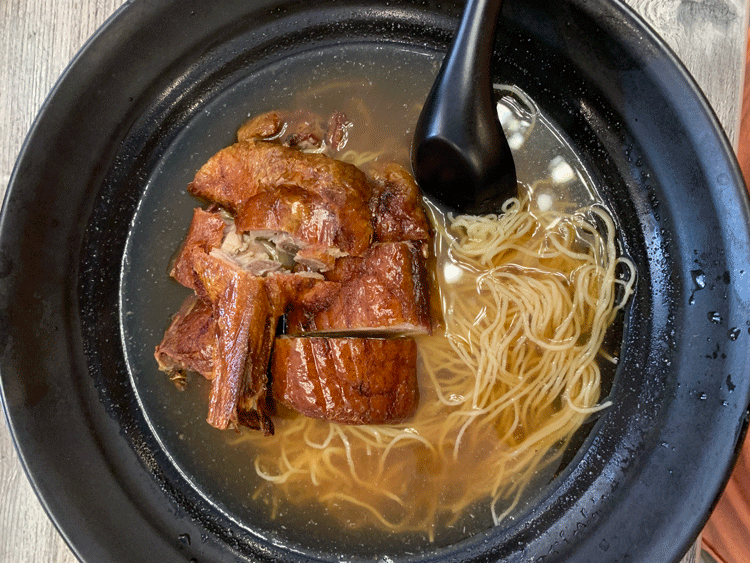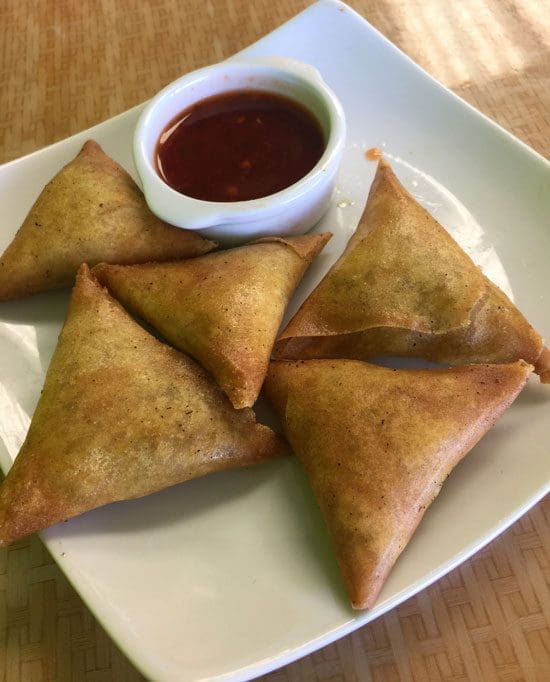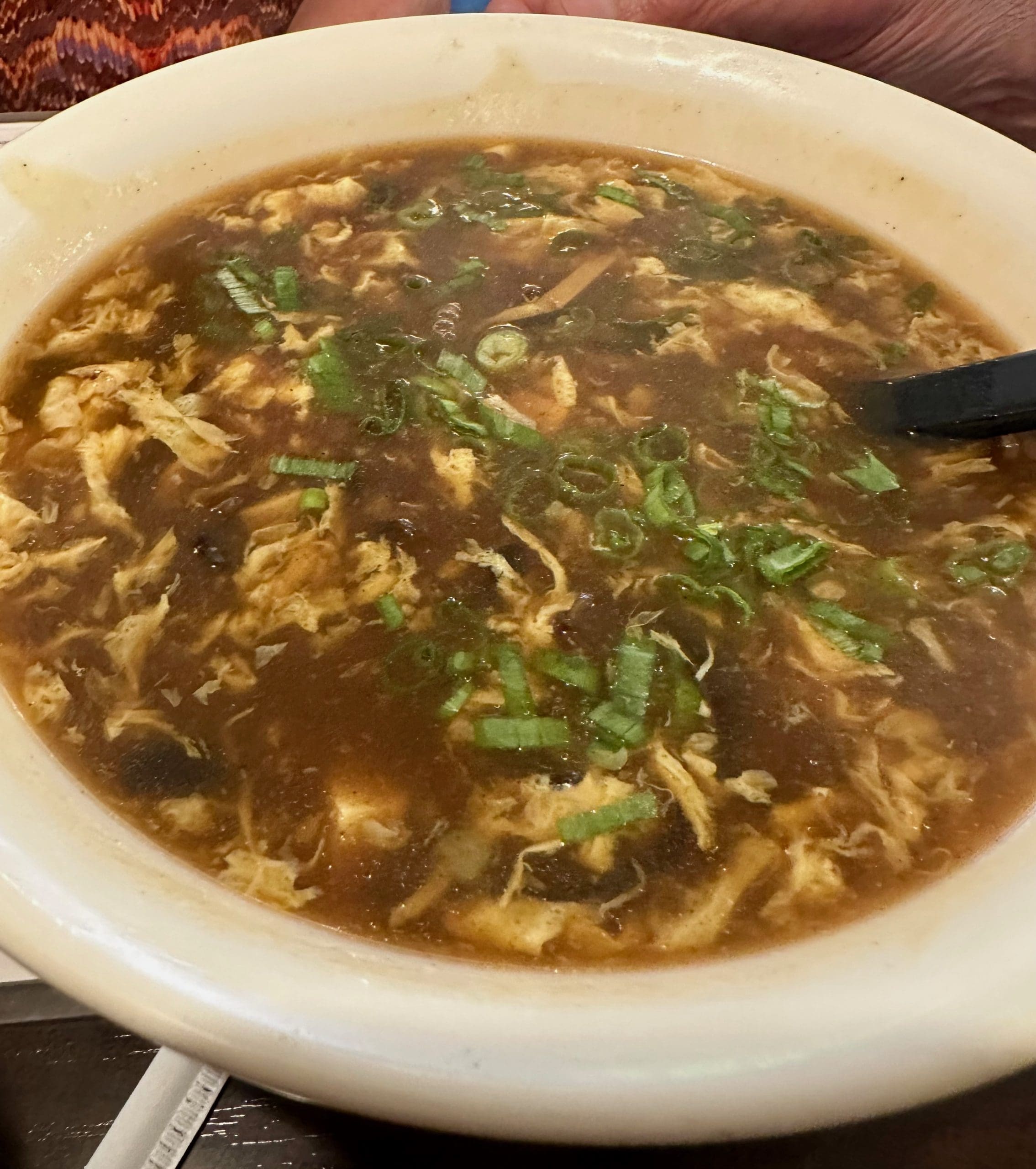
Kwok’s Bistro – Reno, Nevada

While some foodies chase restaurants featured on Diner’s, Drive-Ins and Dives, I’m not a Fieri Fanatic (or Guy Groupie, if you prefer).  Not every restaurant featured on his Food Network program ranks very high on my list.  I am, however, an unabashed follower of restaurants which earn James Beard Foundation (JBF) honors.  Over the years the JBF judges have selected truly worthy restaurants and chefs for accolades.   Strict criteria and a diligent vetting process ensures awards are granted only to those exemplifying the JBF mission:  “to recognize exceptional talent and achievement in the culinary arts, hospitality, media, and broader food system, as well as a demonstrated commitment to racial and gender equity, community, sustainability, and a culture where all can thrive.” Reno, Nevada happens to fall in JBF’s Southwest region, the same as New Mexico, Arizona and Oklahoma.  It’s a very tough region in which to compete for regional and national honors.   Within its own state, Reno has to compete with Las Vegas, a  bastion of formidable restaurants and world-class chefs.  Other populous metropolitan areas consistently in contention for regional and national honors are Phoenix, Tucson, Oklahoma City and Tulsa…not to mention New Mexico’s own Albuquerque and Santa…

China Luck – Albuquerque, New Mexico (CLOSED)

A few years ago,  The Daily Meal, an online resource which purports to produces more culinary content than any other resource published a feature entitled “Chinese Food You Won’t Find in China.” The list was replete with many popular favorites you’ll find at virtually every Chinese restaurant in America: General Tso’s Chicken, Crab Rangoon, Fortune Cookies, Chop Suey, Sweet and Sour Pork, Egg Foo Yong, Orange Beef and even Egg Drop Soup. Many of these dishes were, in fact, invented in the United States.  You can’t accuse Americanized Chinese food of being subtle.  Brash, gaudy and maybe even over-the-top, but never subtle. In fact, the flavor profile of Americanized Chinese food is generally so gunked up with MSG, sugar, salt and vinegar that by comparison, authentic Chinese food (invented in China) may come across to unacculturated diners as comparatively bland or boring. When Daniel Wilcox recommended a visit to China Luck, my initial inclination was to dismiss the restaurant as yet another in the pantheon of Albuquerque’s Americanized Chinese restaurants.  That dismissal was based on previous visits to both the now defunct China Luck restaurant in Rio Rancho and the also now defunct China Luck in Albuquerque’s Montano Plaza Shopping…

ABC Cajun Seafood & Noodle House – Albuquerque, New Mexico

Although popular myth attributes the introduction of pasta in Italy to Marco Polo, pasta’s origins in Lo Stivale can be traced back as far as the 4th century B.C.  That’s when the Etruscan civilization-which existed in the Tuscany region from the 8th to the 3rd century BCE–began the centuries old love affair between Italians and pasta.  Culinary historians agree that pasta’s earliest roots begin in China, during the Shang Dynasty (1700-1100 BC), where some form of pasta was made with either wheat or rice flour. Pasta also appears to have been part of the ancient Greek diet in the first millennium B.C.  Africa also had its own form of pasta (made with the kamut crop). Despite being first to create pasta, you don’t often hear the term “pasta” associated with China.  That’s because there’s a difference between pasta and noodles.  The National Pasta Association defines pasta as being “a dough made from durum wheat and water and stamped into different shapes.”   Noodles, on the other hand, aren’t linked to one particular grain.  Nona Lin, a wonderful website explains: “From buckwheat noodles to rice noodles, yam noodles, and wheat flour noodles, there’s no shortage of choice. Noodles can be crafted from…

Hanmi Korean-Chinese Fusion – Albuquerque, New Mexico

Popular culture is defined as “commonly known information that briefly holds the public interest. It is typically discussed in various mass media, including TV and the Internet, and becomes a topic of everyday conversation (what used to be called a “water cooler conversation” before that term fell from popularity).  Apparently you’re out of touch with pop culture when you believe Game of Thrones is a video game and that Taylor Swift is a sprinter, the female equivalent of Usain Bolt. Approaching forty years of youth, I’d probably be completely out of touch with pop culture were it not for our interns at UNM Information Technology.  They do their best to educate this old fogey on what’s lit, cool, on fleek or whatever their generation’s version of groovy may be.  My lack of pop culture knowledge puts me in the same company as their parents and grandparents, all of whom are clueless as to what’s important.  While they might be less patient with their parents, they find my ignorance humorous.  For example, when I walked in on a conversation they were having and overheard the term K-Pop, I asked if it was a Korean dish similar to bibimbap.  I still haven’t…

Nio Szechuan – Albuquerque, New Mexico

Several years ago Mike Muller, my friend and former colleague at Intel was sent to Chengdu, the capital of the providence of Szechuan in Southwest China.  It was an assignment I would have loved.  Unfortunately I could barely spell the name of the enterprise asset management application Mike would be training our Chinese counterparts how to use.  From an application and business knowledge perspective, Mike was the perfect man for the job.  From the perspective of culinary culture, Intel should have sent me.  Our counterparts may not have learned much about the asset management tool, but we would have had a great time feasting on the incendiary delights for which the Szechuan region is famous. Mike is “bizarro Gil,” my polar opposite when it comes to dining.  He’s absolutely brilliant, hilariously funny and a great family man, but to him adventurous dining would be using honey mustard on his chicken nuggets instead of barbecue sauce.  Mike often joked about creating a blog in which he would publish reviews of all his favorite chain restaurants:  Olive Garden, Applebee’s, Mimi’s and the like.  He nearly broke my heart when he told me about a trip to Santa Fe which culminated in a…

Zu Hot Pot – Albuquerque, New Mexico

“You have tattoos and others have piercings, but for me, there’s nothing that says more about me than the food I choose to carry every single day. As a kid trying to maintain my identity in America, my Chinese was passable, my history was shaky, but I could taste something one time and make it myself at home. When everything else fell apart and I didn’t know who I was, food brought me back and here I was again.” ~Eddie Huang, Fresh Off The Boat Food: It triggers memories that provide a sense of identity and belonging. It feeds the soul and nourishes the body. It impacts the environment and geopolitical politics. It inspires song, art and lore. It affects virtually every facet of our lives each and every day. Food has been a topic of debate and conflict and entertainment and fascination over the millennia. Despite its importance and the modern obsession with celebrity chefs that have been increasingly shaping America’s palate, the actual study of the history of food is a relatively new field. Shortly after Thomas Jefferson founded the University of Virginia, I was a bumpkinly wide-eyed 19-year-old student who couldn’t grasp how differential calculus could possibly…

Dragon House – Albuquerque, New Mexico

Admit it–every time you dine at a Chinese restaurant, you peruse the Chinese Zodiac paper placemats at your table describing the characteristics of people based on their birth year. Every new year of the lunar calendar is represented in Chinese mythology by one of twelve animals, only one of which is mythological. That would be the dragon. People born on the year of the dragon are considered very fortunate as presumably a long, happy life awaits those with a dragon birth year. So that you don’t have to look it up, the last six years of the dragon were 2012, 2000, 1988, 1976, 1964 and 1952. If you were born before 1952, simply subtract 12. Long before Hungarian Horntails, Swedish Short-Snouts and Norwegian Ridgebacks ran roughshod over the wizarding world of Harry Potter, giant-winged, fire-breathing reptiles were carving a niche in the rich history of China. Unlike the malevolent maiden-stealing, village trashing, knight incinerating creatures of old European mythology, dragons in China were viewed as benevolent entities capable of bringing rain to a parched land. The dragon signified power, strength and good luck. Starting with the Han Dynasty (206BC – 220AD), Chinese emperors assumed the symbolism of the dragon, hoping…

Heaven Dragon – Rio Rancho, New Mexico

From Norbert, the Norwegian Ridgeback of Harry Potter lore to Smaug, the greatest and most powerful of all dragons in The Hobbit, dragons are a familiar icon in modern literature, movies, music and pop culture.  Dragons are symbols of fantasy, whimsy and magic, often representing ancient legends and far-off lands.  They range from the malevolent, fiery tempered, scaly fire-breathers (insert your favorite mother-in-law reference here) to the affectionate benefactors of mankind.  What could possibly explain the popularity of dragons?  Could it be because dragons once existed?  Stories of dragons are pervasive in such ancient cultures as the Chinese, Australian aborigines, Babylonians and Welsh.  Ancient Chinese cosmogonists actually defined four types of dragons.  The Heaven, Heavenly or Celestial Dragon (Tianlong) guarded the heavenly dwellings of the gods.  The Earth Dragon (Dilong) controlled the waterways while the Spiritual Dragon controlled the rain and winds.  The fourth, Fuzanglong, was the dragon of hidden treasure.   The Heaven Dragon of Chinese mythology may have looked down from its celestial perch as emperors of the Ming and Qing dynasties visited Beijing’s Temple of Heaven to pray for a good harvest.  The Temple of Heaven is one of two large, colorful photographs (the other is of…

It Dim Sum – Albuquerque, New Mexico

Shortly after “moving on up to the east side, to a deluxe apartment in the sky,” George Jefferson was uncharacteristically late returning home.  Knowing George had gone to a Chinese restaurant after work, his dutiful wife Weezy asked neighbor Tom Willis what Chinese restaurant George might have visited.  Ever the gourmand, Tom asked what style of Chinese food George liked then proceeded to rattle off five different types of traditional Chinese cuisine available in the neighborhood: Mandarin, Sichuan, Hunan, Cantonese and Shandong.  Until that very moment I had no idea there were so many different styles of Chinese cuisine, wrongly believing there was only Chinese food period. That’s pretty much what most Americans believed even back in the 80s when that particular Jefferson’s episode aired…especially those of us who didn’t live in a populous, cosmopolitan city.  In our naivete, we also believed such favorites as crab Rangoon, orange chicken, chop suey and even the ubiquitous fortune cookie to have originated in China.  It didn’t dawn on us that many Chinese dishes were “invented” to cater to American tastes.  We also had no idea how significantly Chinese dishes in China differed from those adapted to American tastes.   Some of us even…

528 Sushi & Asian Cuisine – Albuquerque, New Mexico (CLOSED)

“No lady likes to snuggle and dine accompanied by a porcupine.” “He lit a match to check gas tank. They call him skinless Frank.” “A man, a miss, a car, a curve. He kissed the miss and missed the curve.” “Within this vale of toil and sin, your head goes bald but not your chin.” “Henry the Eighth sure had trouble. Short-term wives, long-term stubble.” Some of the more seasoned among us might remember that one of the best ways to break up the drudgery of traveling long distances on monotonous two-lane highways was to look for Burma Shave billboards. Humorous five-line poems adorned red signs one line at a time, each line in white capitalized blocked letters about 100-feet apart. The last line of each poem was the much anticipated punchline followed by a sign bearing the obligatory name of the then-popular shaving cream. New Mexico was one of a handful of states not to benefit from this highly visible and very successful advertising medium. Apparently our highways and byways were deemed to have insufficient road traffic to warrant the billboards. As a precocious child yet to revel in hours-long explorations of the family encyclopedias, my limited knowledge of…

Rising Star Chinese Eatery – Albuquerque, New Mexico

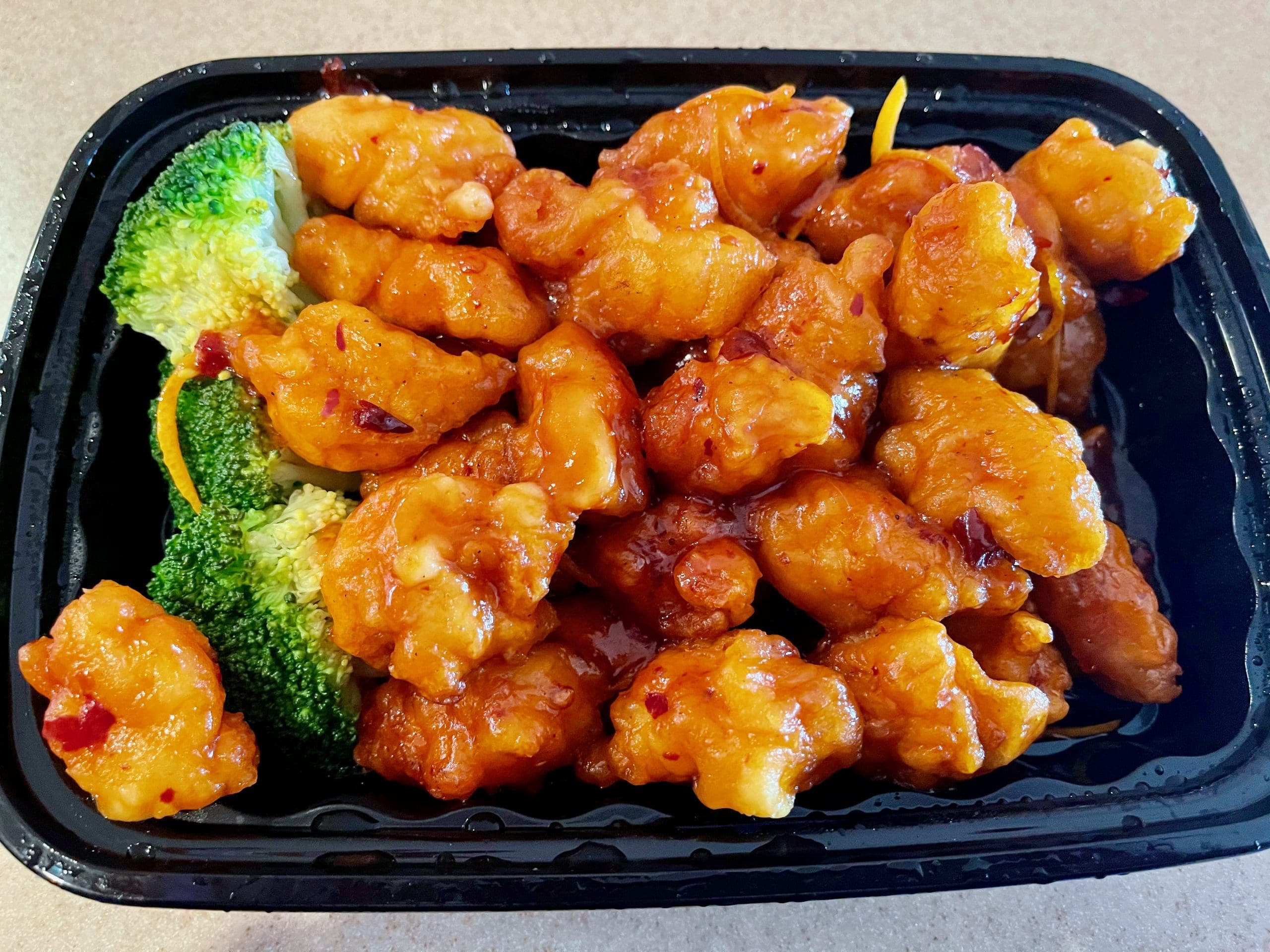
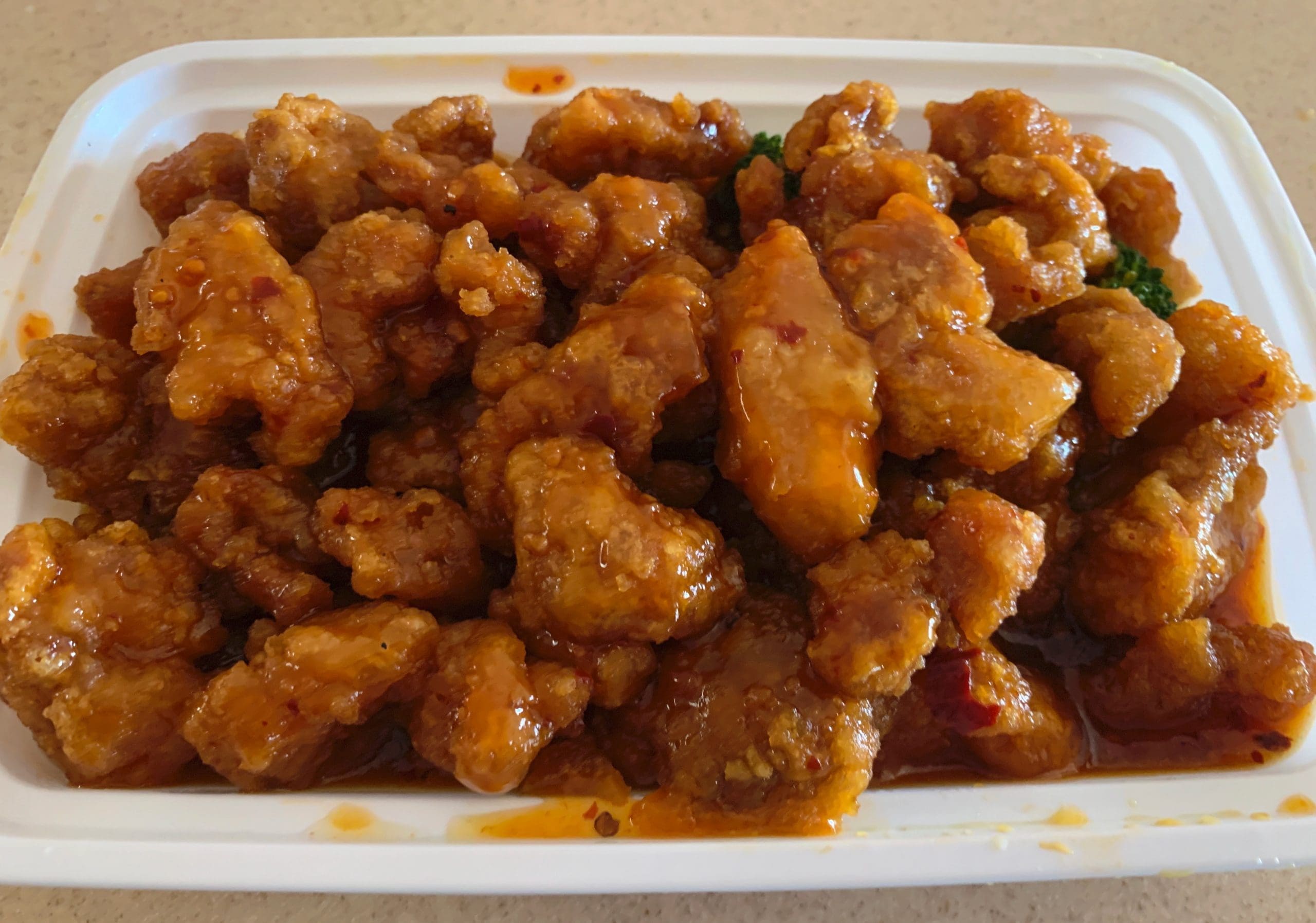
Let’s get one thing straight. General Tso’s chicken is not some weird cold war Chinese one-upmanship response to Colonel Sanders’ Kentucky Fried Chicken. In other words, China did not deliberately seek to outdo the United States by creating a chicken dish and naming it for a General, a rank superior to the rank of Colonel. Not even close! Back in the early 50s, Colonel Harlan Sanders actually did create a revolutionary way of preparing poultry (pressure fried, eleven herbs and spices, yada, yada, yada). General Zuo Zongtang (romanized as Tso Tsung-t’ang), on the other hand, did not create the dish named for him. Nor did he ever eat it. In fact, he never even heard of it. It wasn’t even invented in China…or at least, not in mainland China. So, just who was General Tso and why does America love his chicken? General “Tso” was a war hero who expelled thousands of rebels from China during its fourteen year civil war. It could be said the rebels turned chicken and ran, but that’s about as close as the General ever got to the battered and sauced chicken dish bearing his name. If anything, you can credit another Chinese leader, the…