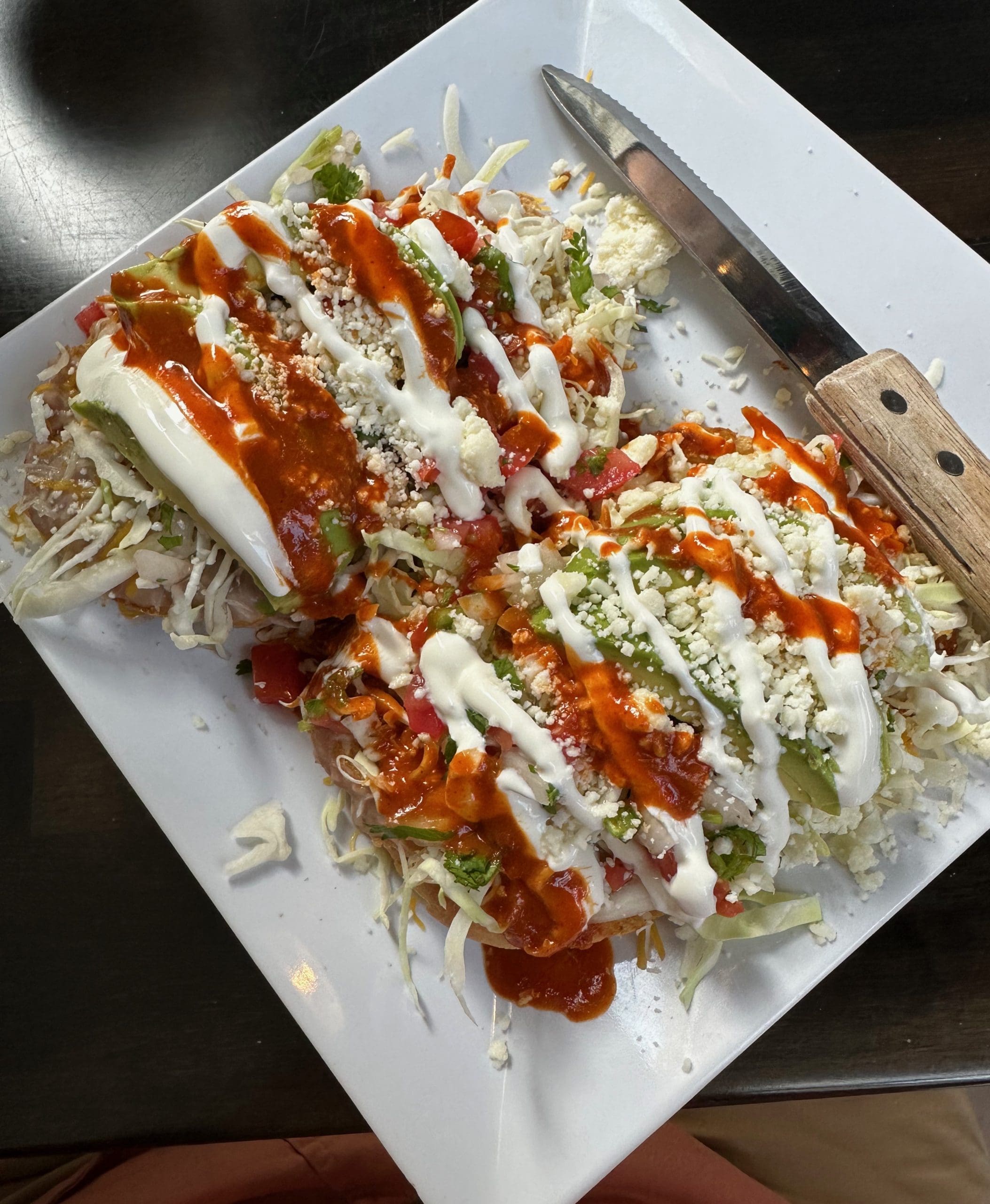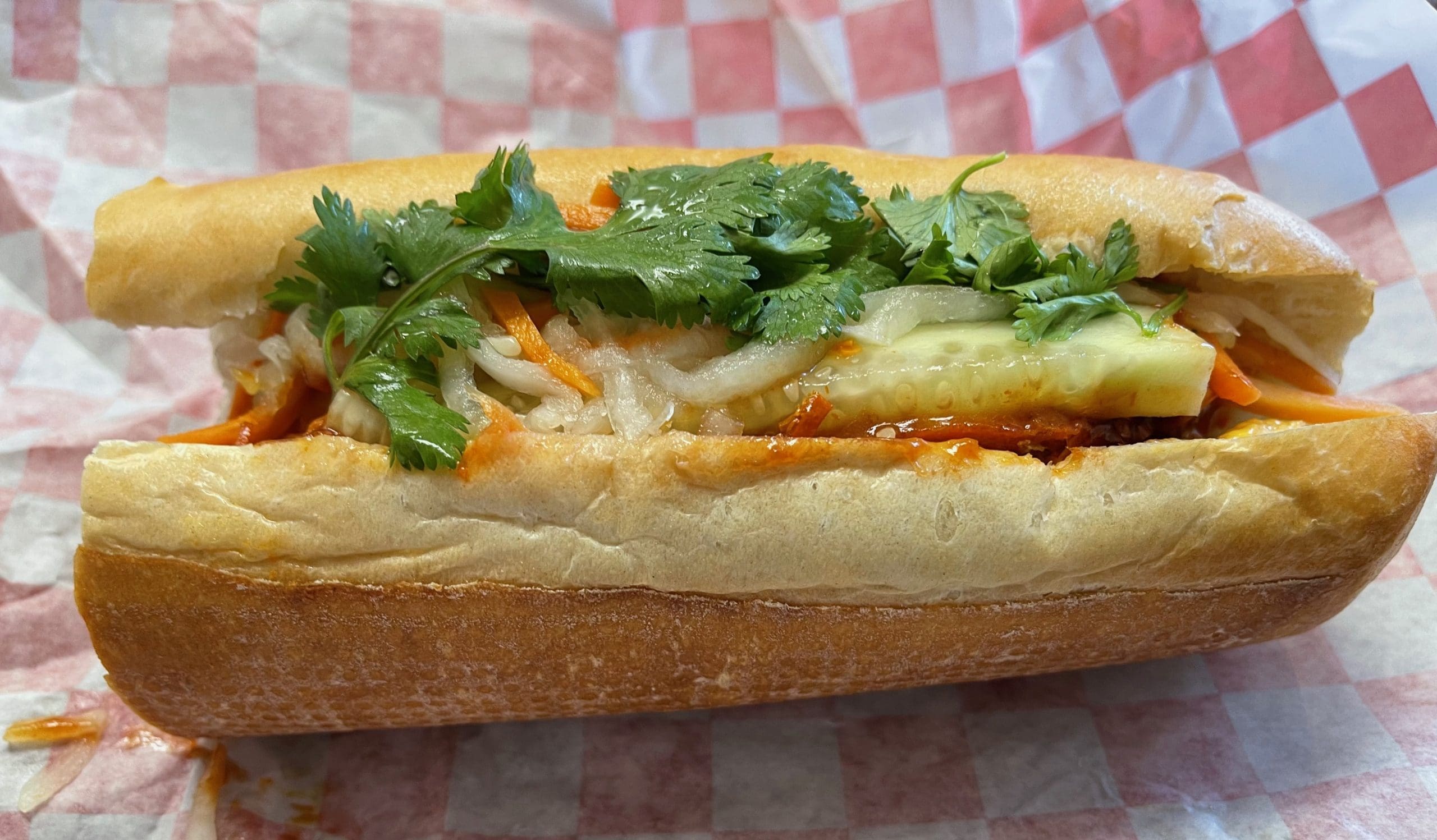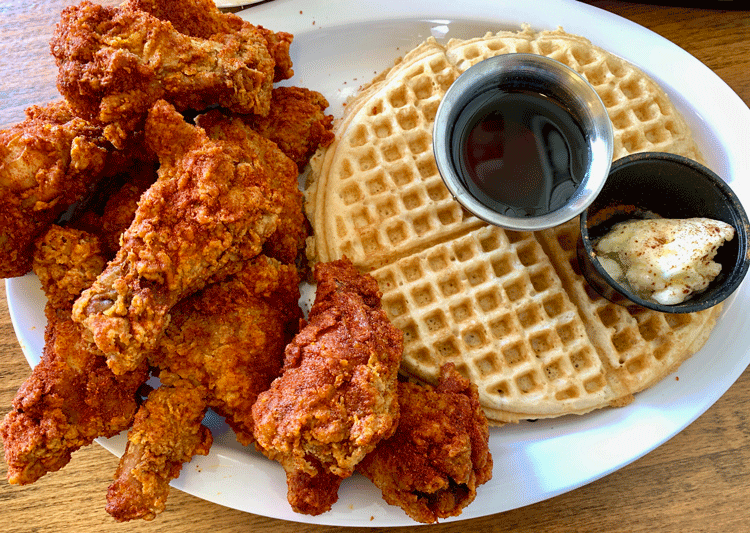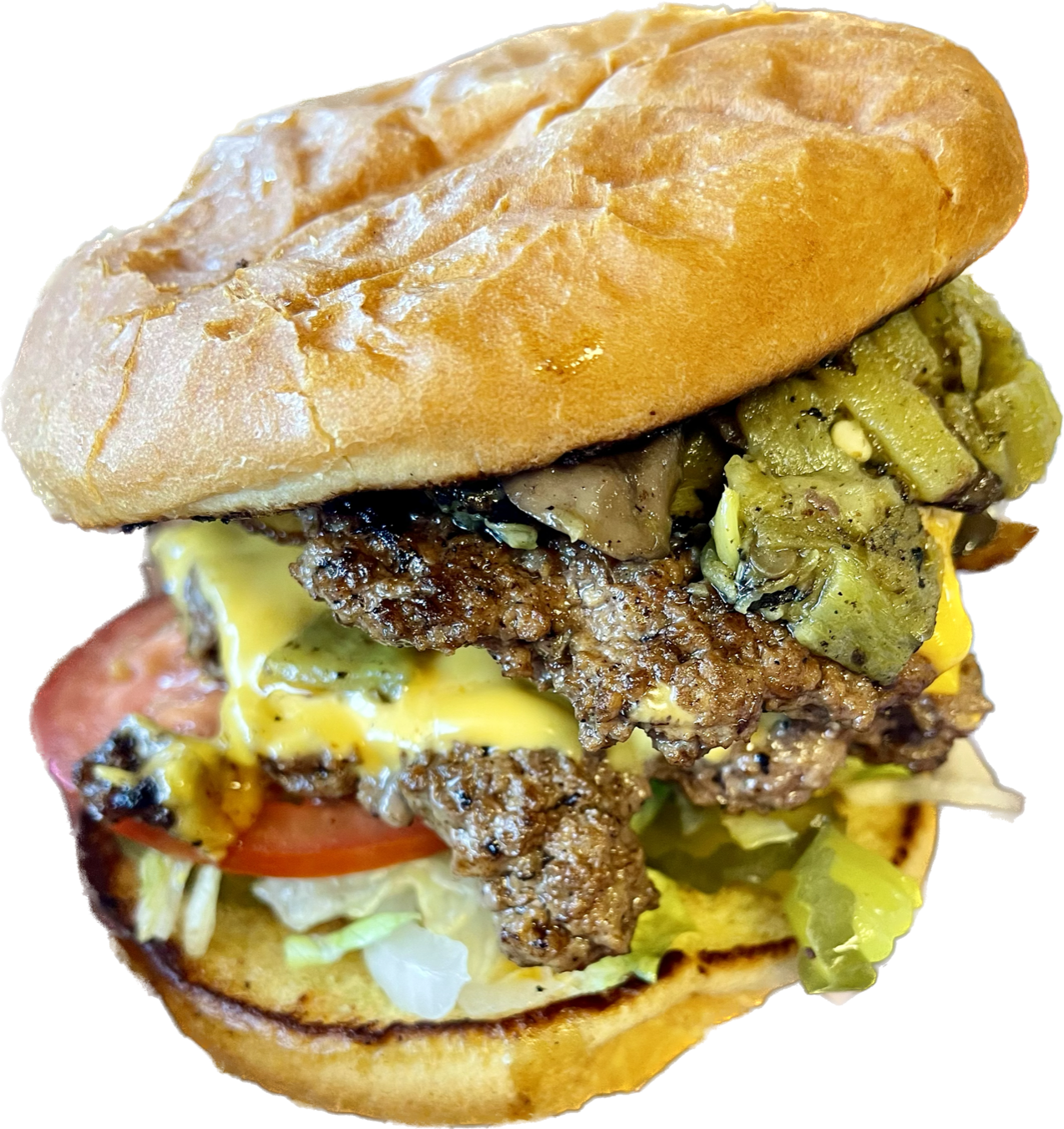
Scalo – Albuquerque, New Mexico (CLOSED)

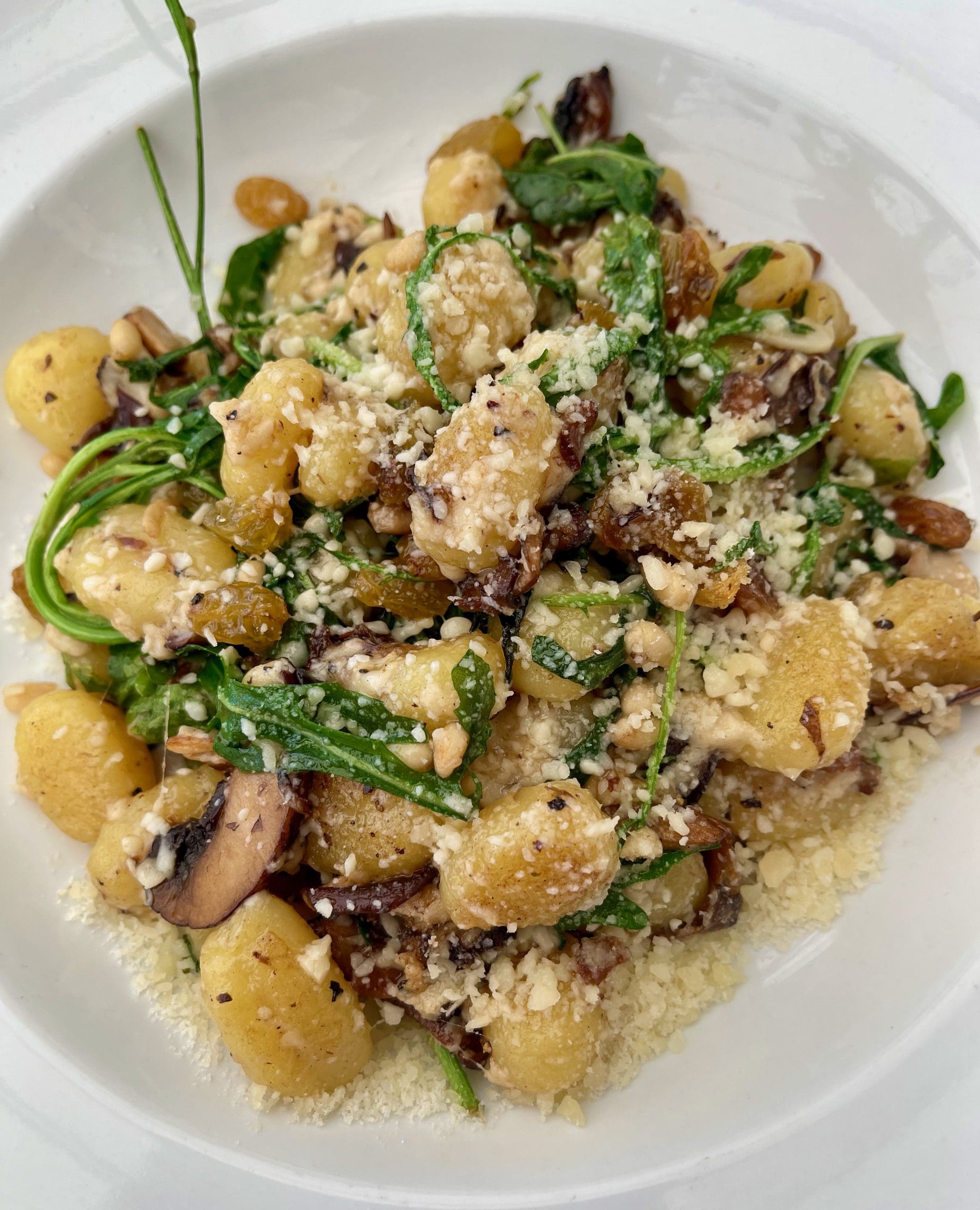
Contrary to popular belief, Scalo was not already a Nob Hill fixture in 1706 when Don Francisco Cuervo y Valdés, governor and captain general of New Mexico, named a new settlement for the Duke of Alburquerque, then viceroy of New Spain.  Scalo didn’t actually open until December, 1986, but during its lengthy tenure it has such a degree of permanence in our memories and taste buds that it’s hard to believe it wasn’t one of the fabled paradors (an establishment where travelers could seek lodging, and usually, food and drink) along the Camino Real.  It would make sense because the word “Scalo” itself translates from Italian to “stopover.”  Then there’s Scalo’s revered spot on the now defunct Albuquerque Monthly.  On its tenth anniversary, the magazine created a “Best Of” Hall of Fame, listing the ten establishments–restaurants, bars, card stores, clothing stores, computer stores, galleries and more–which had received more “best of” votes during the decade of the 90s than anyone else. The first establishment listed was Scalo Northern Italian Grill, which was also perennial selection on the magazine’s annual listing of the city’s top ten fine-dining restaurants (other mainstays still serving the city include the Artichoke Cafe, Prairie Star and…

Spring Rollin’ – Albuquerque, New Mexico

Reclusive American poet Emily Dickinson insisted a light exists in spring that’s not present at any other time of year. If you’ve ever spent a winter in the Northern Hemisphere at a latitude of 42° or more, you know what it’s like to long for that light. You can relate to the irritability and restlessness of having fewer than eight hours of sunlight during winter months. You know what it’s like to head to work in the dark and return home in the dark. You know the confinement of cabin fever when persistent rain or snow keep you indoors for prolonged periods of time. If you’ve experienced long, dark winters, you celebrate the return of spring. In northern climates, the advent of spring is celebrated as a return to warmer weather, new growth and increased daylight. While most countries celebrate spring festivals a couple of weeks after the much loathed Daylight Savings Time, China’s Spring Festival (better known as the Chinese New Year) begins somewhat earlier. Generally falling on a day between January 21st and February 20th in the Gregorian calendar, this spring festival is the grandest festival in China. China’s spring festival is a seven-day long holiday in which…

66 Diner – Albuquerque, New Mexico

Known as “America’s Highway” and celebrated by author John Steinbeck as the “Mother Road,” the legendary Route 66 meandered across 2,448 miles of the fruited plain, crossing three time zones and eight states as it traversed from Chicago to Los Angeles. For many—especially destitute sharecroppers fleeing Oklahoma’s devastating Dust Bowl—Route 66 held the promise of a better life. For others, Route 66 brought a sense of connectedness with parts of America previously considered difficult to reach. For them, Route 66 engendered a frontier spirit of adventure, greatly expanding their vacation options and travel opportunities. For hundreds of communities strewn along the two-lane blacktop, Route 66 was also an engine of economic prosperity, creating tremendous opportunities for entrepreneurs large and small. The service industry fared especially well with roadhouses, motels and restaurants springing up, offering respite and sustenance to weary and hungry travelers. Since the halcyon days of Route 66, neon signage has been a prominent and vital part of the Mother Road as it winds through Albuquerque. From the foothills of the Sandias in the east to the parched desert expanse of the west, Route 66 is festooned with vibrant neon signage that cuts a luminous swath through the city.…

Viet Cốm – Albuquerque, New Mexico

The name on the signage is Viet Cốm, not Viet dot com.  The difference is more than semantic.  In Vietnamese the term “Cốm” (with an accent denoting a high rising pitch when vocalized) translates from Vietnamese to a green sticky rice or green rice flakes. Cốm is a delicacy made only in autumn and cherished by all Vietnamese.  You learn a lot when you visit a Vietnamese restaurant and are interested enough to ask a lot of questions.  If Misty Do is your server, ask her about the family restaurant and you’ll learn quite a bit. We learned, for example, that the family owned and operated eatery opened in June, 2020, just a couple of months after the Cabrona Virus shut down the world.  Viet Cốm is indeed a family operation.  Misty’s dad is the cook.  Her stepmother, older sister and younger brother all help out, but it’s Misty who appears to be the face of the restaurant as you’ll learn should you peruse the restaurant’s Yelp review.  We learned also that we shouldn’t have assumed that because Misty’s last name is “Do,” the family name must also be Do.  Misty clarified that in accordance with Vietnamese traditions, women don’t…

The Farmacy – Albuquerque, New Mexico (CLOSED)

In this age of “fake news,” biased media slants and unabashed tell-alls, the one recent headline which has pleased me most comes from Bloomberg. Splashed in bold typeface was the eye-catching lead “Mom-and-Pop Joints Are Trouncing America’s Big Restaurant Chains.” Elaborating on this contention, the first paragraph reads: “Americans are rejecting the consistency of national restaurant chains after decades of dominance in favor of the authenticity of locally owned eateries, with their daily specials and Mom’s watercolors decorating the walls.” The numbers bear this out–“annual revenue for independents will grow about 5 percent through 2020, while the growth for chains will be about 3 percent.” Fittingly, I read this article during my inaugural visit to The Farmacy, a Lilliputian lair of luscious food then located on the southeast corner of the Mountain Road-Eighth Street intersection. If big restaurant chains and their well-heeled operations are the proverbial muscle-bound beach bullies who kick sand in the face of scrawny kids, The Farmacy embodies the small underdog who fights back with the only weapons at its disposal: great food and friendly service at an affordable price. The Farmacy is David to the Philistine’s Goliath, the plodding tortoise to the overly confident hare, unknown…

Firenze Pizzeria – Albuquerque, New Mexico (CLOSED)

Name a pizza joint “Florence Pizzeria” and public reaction would likely be dubious:  “Who the heck is Florence?”  “Can someone named Florence possibly have a clue how to make pizza?”  Now translate “Florence” to Italian and all of a sudden, “Firenze Pizzeria” has instant credibility.  Never mind that most of the pizza in Florence (er, Firenze), Italy is of the Neapolitan variety.  The name Firenze is a perfect fit for a pizzeria.  Even the name inspires visions of a fire-breathing Italian oven preparing a waifishly thin pizza in just about a minute. Steven Meyer, owner-operator of Albuquerque’s Firenze Pizzeria knows a thing or two about fire-breathing ovens and waifishly thin pizzas.  In 2011, he pioneered portable pizza in the Duke City, toting an Italian-made oven throughout the city.  Being booked every weekend for nearly two years for special events, catering and a semi-permanent gig at the Downtown Growers’ Market at Robinson Park facilitated the decision to seek a permanent venue.  He found the perfect spot at 900 Park Avenue, S.W., just across Central Avenue to Robinson Park. The two-story edifice Firenze called home for nearly nine years had plenty of character and personality.  One of its neighbors was the lair…

El Chamo Arabe – Albuquerque, New Mexico

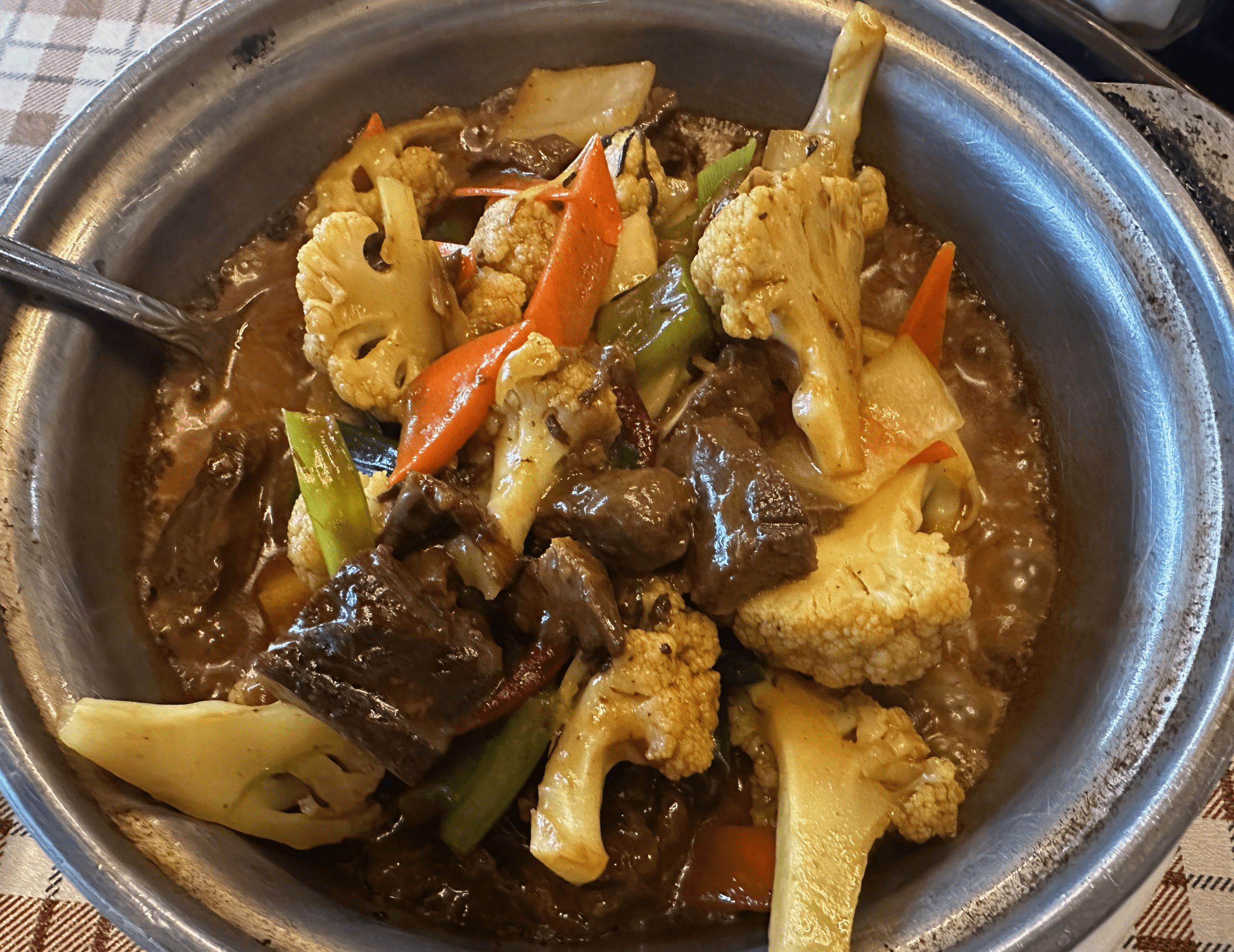
According to the New York Post, the beleaguered South American nation of Venezuela may be the easiest place on Planet Earth in which to become a millionaire.  Of course, a million Bolivars in the inflation-ridden nation is worth only about fifty-three cents.  In 2018, Venezuela’s Central Bank actually began printing $1,000,000 bills.  Years of hyperinflation devours the income of Venezuelans, leaving them hungry and struggling to buy food and medicine.  Many Venezuelans scour through garbage to find food while millions of others fled the country to build new lives across South America and beyond.   You wouldn’t know life in Venezuela is so difficult if you speak with Maria Laura, a perpetually smiling server at El Chamo Arabe. Maria Laura has reason to smile.  She’s been in the United States for only a month.  She’d prefer to extol the virtues of her country and its beautiful people rather than focus on Nicolás Maduro, the autocrat and dictator who has ruled Venezuela since 2013.  Maria Laura’s cousin Paola Maried co-owns El Chamo Arabe along with Ibrahim Jamaleddin.  Both are also immigrants who escaped Venezuela six years ago to make a better life for themselves in the United States.  Paola’s background is…

The Cornivore Popcorn Company – Albuquerque, New Mexico

“Popcorn for breakfast! Why not? It’s a grain. It’s like grits, but with high self-esteem.” ~James Patterson The planet’s very first known popcorn aficionados may have expressed the sentiment “to the batcave”  long before Batman, the Caped Crusader uttered the words to Robin, the Boy Wonder.  After long days of hunting and gathering, foraging and fishing, our primitive progenitors–nearly six-thousand years before the advent of Netflix–would adjourn to a cave to enjoy popcorn (which, ostensibly, was delicious even without butter, caramel and Cheddar). Contrary to popular opinion, the world’s oldest popcorn did not come from the same movie theater which also houses the world’s oldest hotdog, a perpetually rotating hot dog seared to a leathery sheen under a heat lamp.  The oldest known popcorn to date was actually discovered in a dry cave in West Central New Mexico.  Dubbed the “bat cave,” it yielded several individually popped kernels as well as a trove of unpopped corn.  These kernels were carbon-dated and shown to be approximately 5,600 years old. During his ransacking of Mexico, Spanish explorer Hernando Cortes was among the first Europeans to glimpse popcorn. In addition to enjoying it as a snack, Aztecs used popcorn to decorate ceremonial headdresses,…

Milly’s Restaurant – Albuquerque, New Mexico

Until rather recently, if there was a wide diversity of opinion about Albuquerque’s restaurant scene, it wasn’t widely shared. Albuquerque’s two daily periodicals, the Albuquerque Journal and the Albuquerque Tribune as well as a number of alternative publications published weekly restaurant reviews, but opinions and observations expressed therein were rather one-sided. It wasn’t until about 2008 that crowd-sourced restaurant reviews really took off in the Duke City. Published in such online mediums as TripAdvisor (founded in 2000), Yelp (launched in 2004) and Urbanspoon (debuted in 2006), crowd-sourced review venues gave everyone an opportunity to become a “critic.” More than ever before “Joe and Jane Diner” had license to express rather colorful (sometimes bordering on libel) versions of their truth. One of the predictable outcomes of this open, honest and direct culture became the wide swath of differing opinions. This illustrated how different people can have distinctly different perceptions—each a snapshot of time–of their experience at a restaurant. Reviews for some restaurants run the gamut with some reviewers extolling every aspect of their visit as “fabulous” while others lambaste every facet of their experience. It’s almost as if two different restaurants are being reviewed. The differences are sometimes so very pronounced…

Quarter Celtic Brewpub – Albuquerque, New Mexico

In 1913, French mathematician Émile Borel introduced a thought experiment that has come to be known as the infinite monkey theorem. Essentially, the theorem posits that a single monkey hitting keys at random on a typewriter keyboard for an infinite amount of time will eventually type a given text, such as the complete works of William Shakespeare. Espying a sign bearing the name Llanfairpwll-gwyngyllgogerychwyrndrob-wllllantysiliogogogoch when we visited the island of Anglesey in Wales, we wondered if that monkey had been set loose on the sign bearing the village’s name. When Kim asked me to try pronouncing the 58-character name (which actually translates to “Saint Mary’s Church in the hollow of the white hazel near a rapid whirlpool and the Church of St. Tysilio of the red cave”), I told her locals just called it “Llano” for short. As soon as she remembered Llano is actually a “suburb” of Peñasco, she had a few short names for me. Our visit to the “Welsh Llano” came to mind when our debonair dachshund, The Dude and I visited the Quarter Celtic Brewpub. If Welsh naming conventions hold true, I had to wonder if its full name would translate from Welsh to “the Quarter…

Tortilla Kitchen – Albuquerque, New Mexico (CLOSED)

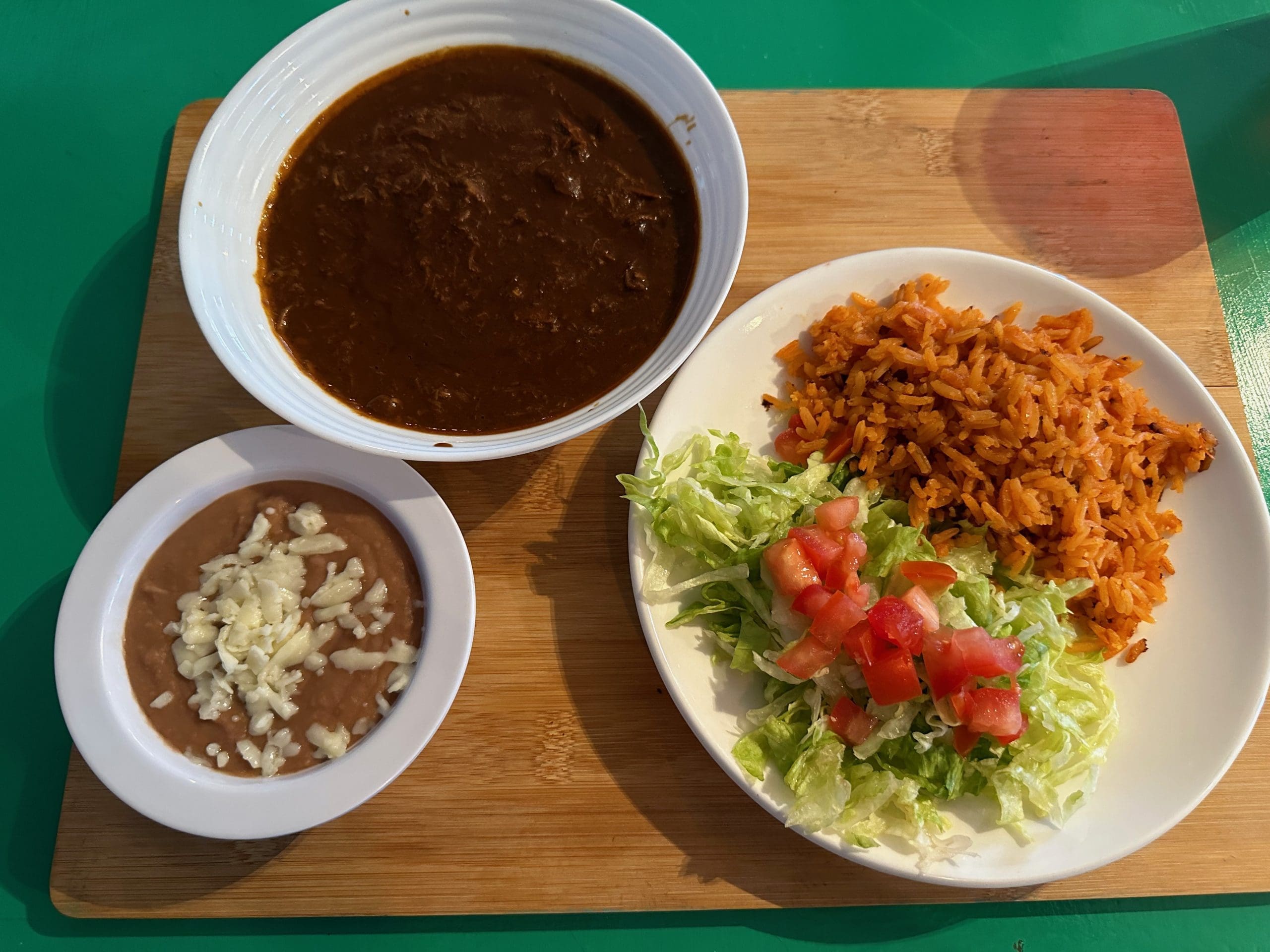
A sure sign Spring has arrived In rural New Mexico is the annual ritual of cleaning the acequias, the community operated ditches used to irrigate fields, gardens and lawns. Early in the morning, property owners or their designated paid representatives would convene at appointed spots to begin the effort. Work crews typically consisted of grizzled veterans, most of whom acted as “mayordomos” (bosses) and young bucks like me with strong backs. Not surprisingly, distribution of work was…shall we say, quite inequitable. The old-timers would order us around, shouting out instructions like elderly drill sergeants. Most of us youngsters didn’t mind. During frequent breaks we got to hear some of the most ribald and raunchy stories from highly respected elders. One I’ve never forgotten is when a thrice-married viejito was asked by a colleague “Do all women look alike?” “I’ll tell you honestly,” he responded “not even their tortillas look alike.” While the question was designed to elicit a response about a certain female, er…anatomical part, my take-away had everything to do with tortillas. My mom was (and still is) the very best tortillera in the Penasco valley. Her tortillas were on the thin side with beautiful pinto pony char spots.…