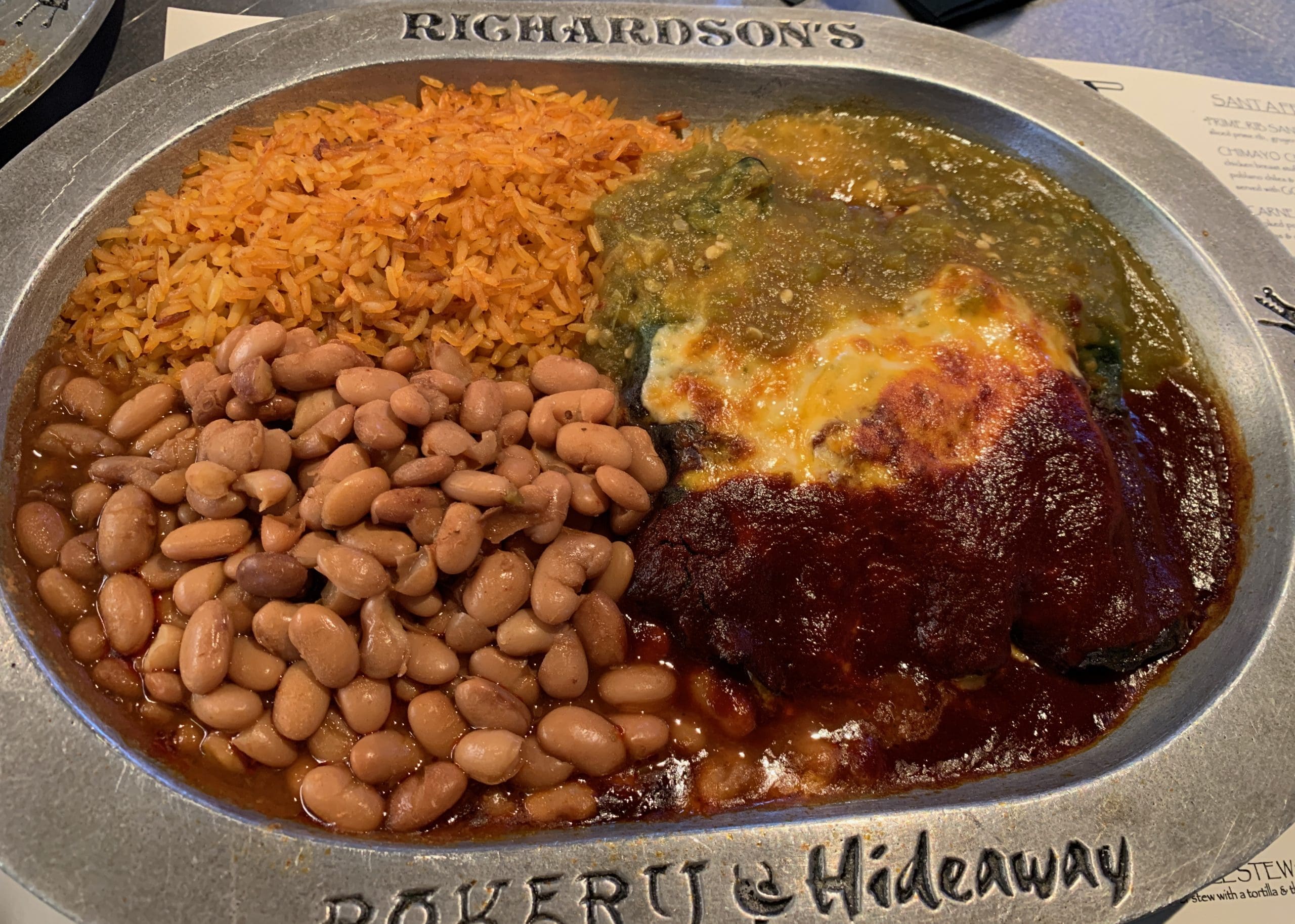
Richardson’s Cuisine of New Mexico – Phoenix, Arizona

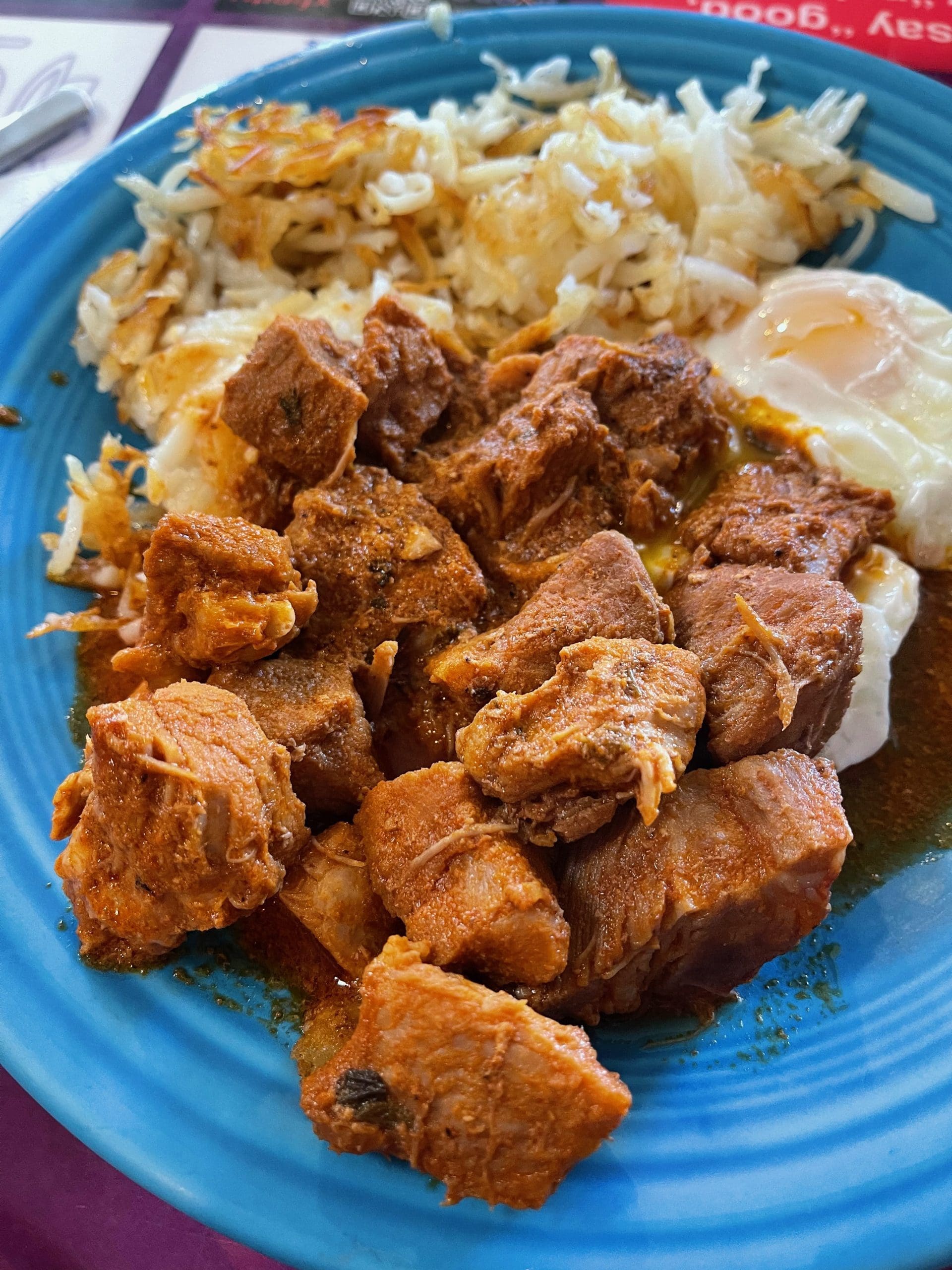
My friend and former Intel colleague Steve Caine will forever rue the day he asked me to help him with an expense report for a business trip he made to Portland, Oregon. His itemized expense report indicated he had dined twice at Chevy’s, a middling quality Americanized Mexican restaurant which wouldn’t survive in the tough Albuquerque market.   I teased him mercilessly. Worse, when my boss saw what the commotion was all about, he immediately put Steve on double-secret probation. Steve has never lived down visiting a Chevy’s in Portland where he could have had some of the country’s freshest and best seafood. When the din died down, Steve admitted somewhat sheepishly that after two days in Portland, he was missing New Mexican food so desperately that he visited the closed facsimile he could find. It was either Chevy’s or a restaurant named Machissimo Mouse (seriously).  In truth, I’ve been there, too…well, not to Chevy’s and definitely not to Machissimo Mouse, but at a point in my business travels where the craving for New Mexico’s inimitable cuisine strikes like an addict’s need for a fix. We New Mexicans are understandably proud, maybe even haughty about our cuisine. We don’t think…

Cornish Pasty Company – Scottsdale, Arizona

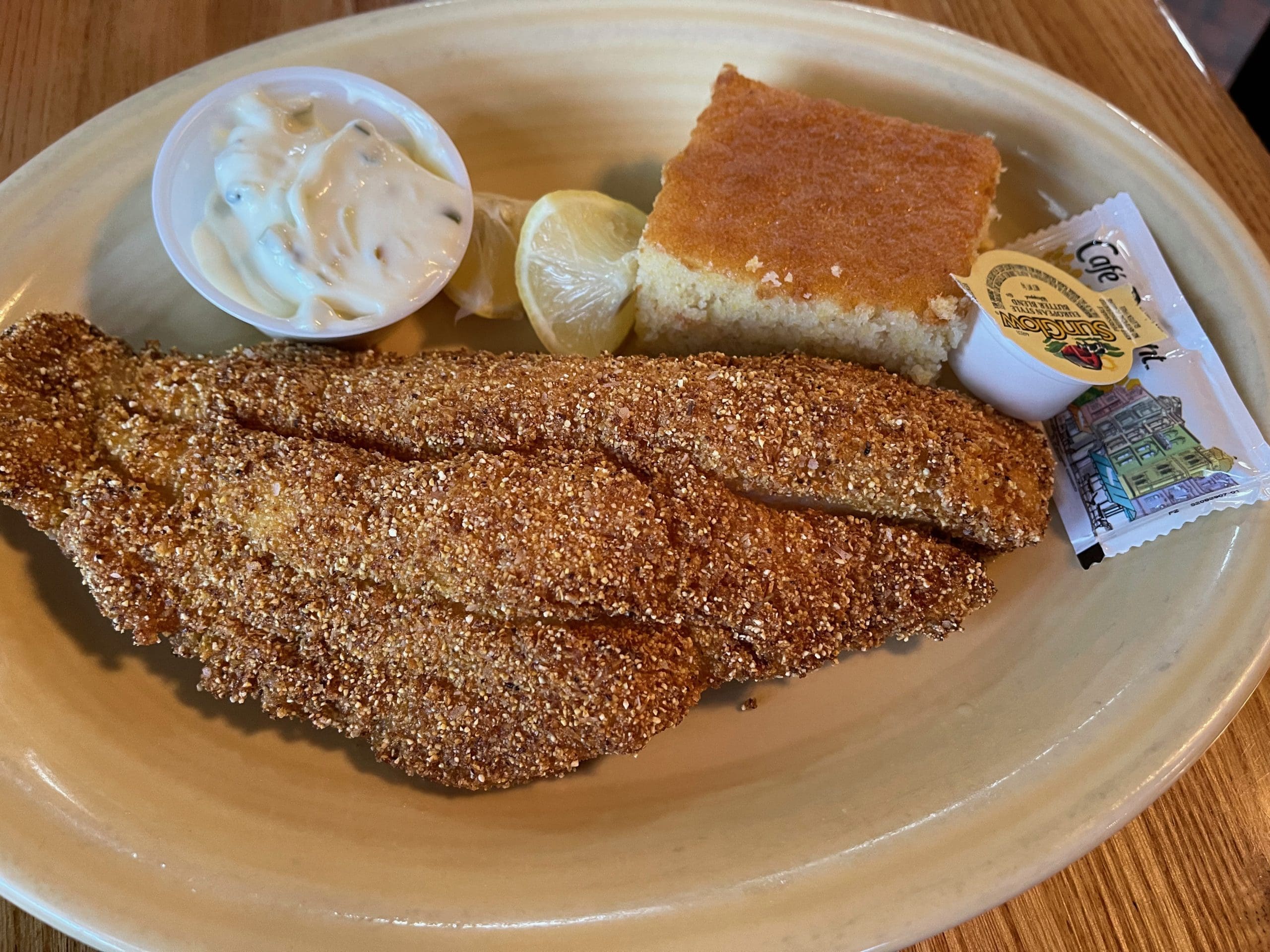
There’s a European joke that uses stereotypes to deride British cooking, among the most maligned cuisines in the world culinary stage. As the joke goes, in the European conception of heaven, the French are the chefs, the British are the police, the Germans are the engineers, and so forth, while in the European conception of Hell, the Germans are the police, the French are the engineers and the British are the chefs. Rodney Dangerfield got more respect than British cuisine. While fish and chips are probably what most Americans would answer if asked what constitutes traditional British food, the truth is British food is as diverse as its many regions. During the three plus years we lived in England, we made the most of our opportunities to explore the mystical land of mystery and lore.  We experienced not only much of its renown pub grub, but classic high-end cuisine that is as good as any in America. At the pubs, we consumed many a ploughman’s lunch (consisting of crusty bread, various pickles, a wedge or two of local cheese and sometimes salad) and ate steak and kidney pudding (with a suet crust) like locally indigenous personnel (a MASH term that…

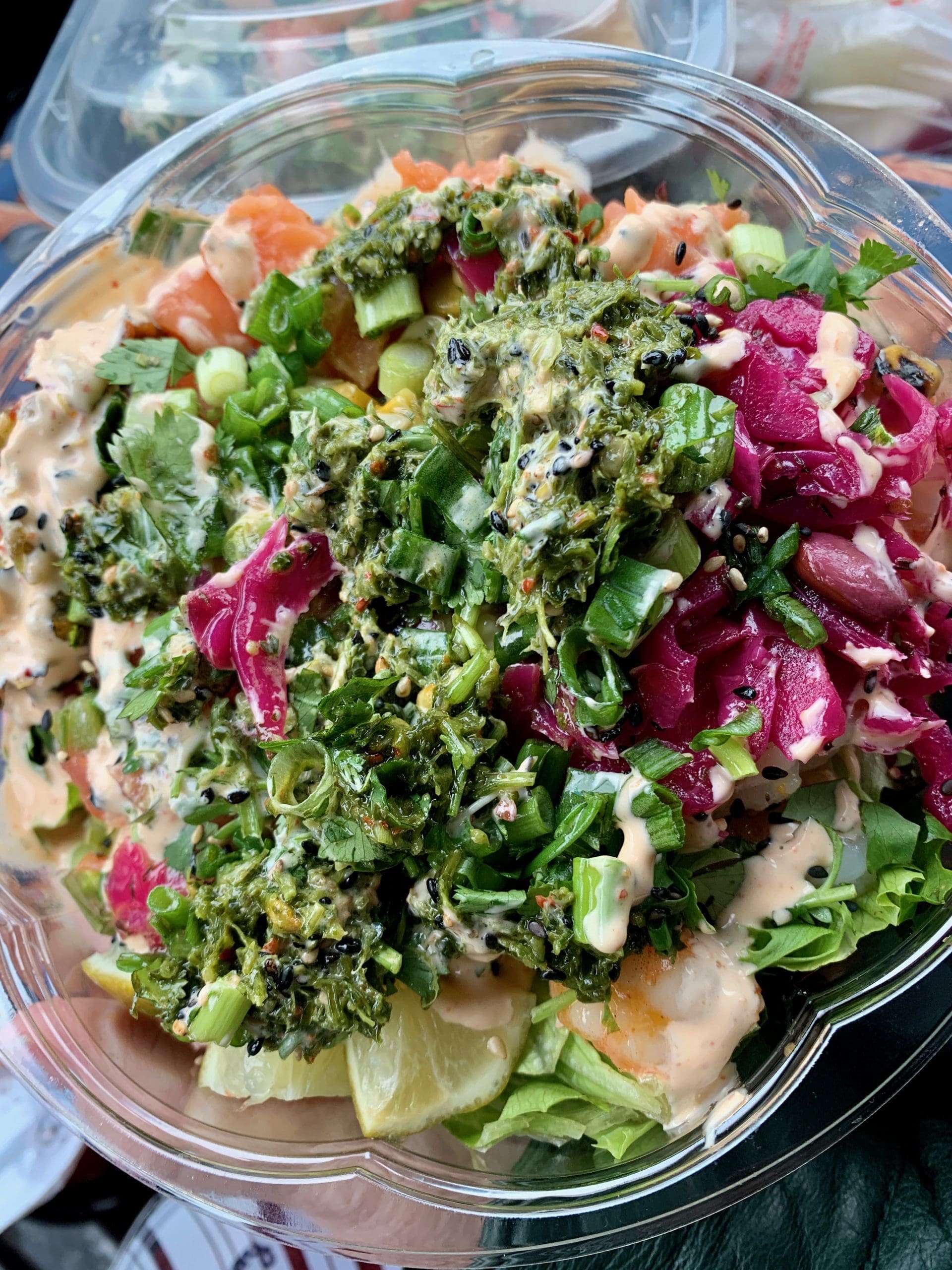
Poki Poki Cevicheria – Albuquerque, New. Mexico

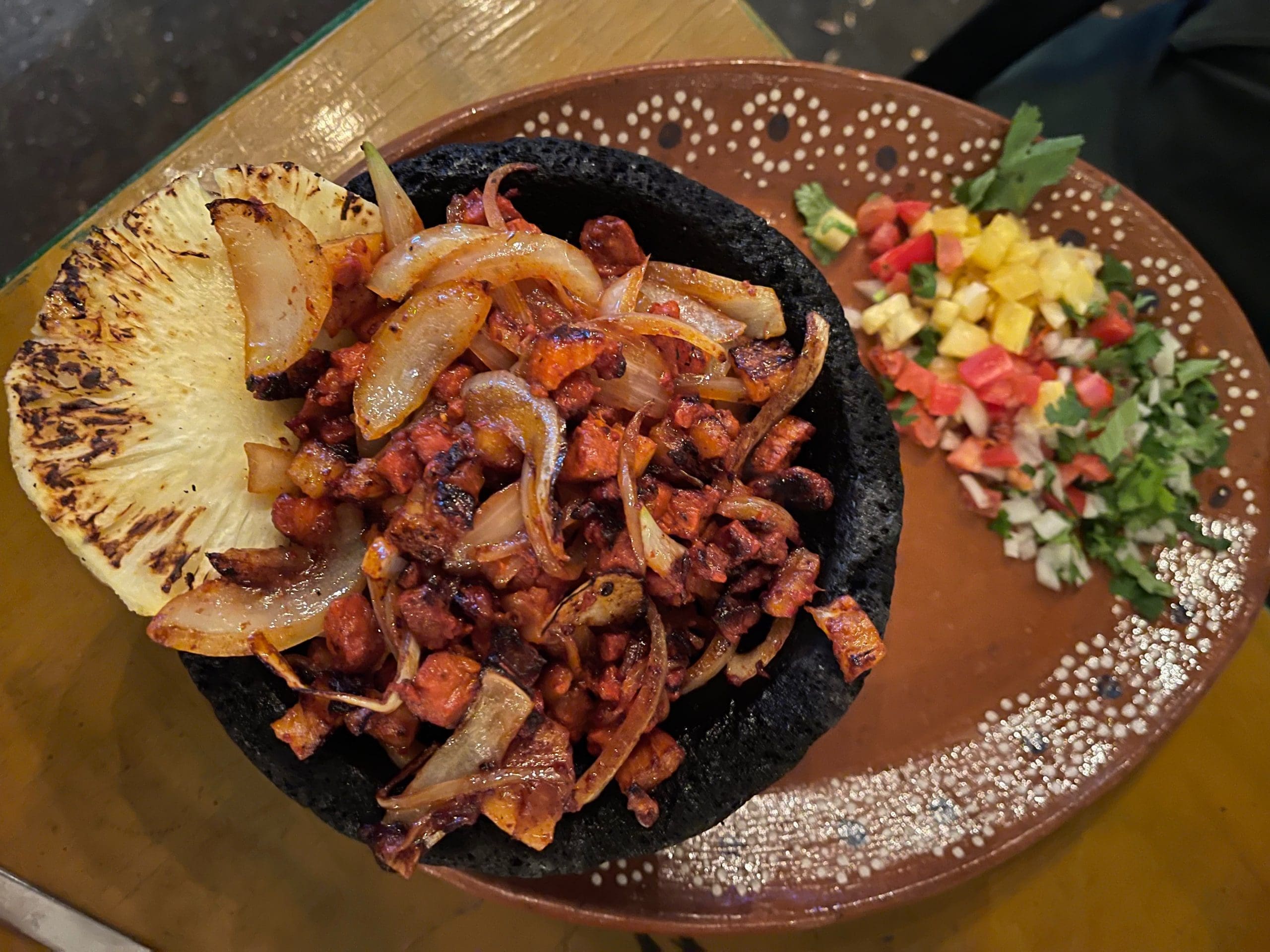
Having settled comfortably into middle age (perpetually 39-years old), my favorite participatory sports of basketball and tennis have been replaced by more sedentary, safe and slothful pursuits. Instead of getting my shot rejected (almost as often as the cheerleaders in Peñasco spurned my offers of a burger at Victor’s Drive-in), I now delight in catching every grammatical faux pas, malapropism and inaccuracy uttered by the media–not a difficult challenge since the legendary and near infallible anchor Dick Knipfing retired. Instead of double-faulting on my serve eighteen times in a row, it’s answering questions which stump Jeopardy contestants that now gets my adrenaline pumping. Alas, as a fogey who believes music died in the 70s pop culture questions are my downfall.   I could not, for example, answer a question about Hollywood heartthrob Ryan Gosling but count among my very favorite people, the Albuquerque Adonis, Ryan “Break the Chain” Scott.  Another case in point, “Barney the Purple Dinosaur” was my answer to a recent question about a video game franchise from Japan. The correct answer, of course, was Pokemon. Pokemon? I could have answered nearly all there is to know about Poke, the Hawaiian culinary craze that’s sweeping the mainland, but had…

Cafe Lush – Albuquerque, New Mexico

Urban Dictionary, that oft hilarious, veritable cornucopia of slang, jargon and streetwise lingo, defines “lush” as “someone who drinks a lot.” (Actually, there are several pages of similar definitions for “lush” in the “peoples’ dictionary,” but this one was the best fit for this PG-rated blog.) When I asked Sandy Gregory, a self-admitted “food industry lifer” and co-owner of Albuquerque’s Cafe Lush why the name Lush, she laughingly kidded “because we like to drink a lot.” Seeing that her response left my mouth agape, she winked and corrected herself, “because our food is luscious.” You’ve got to love a restaurant owner with whom you can engage in witty repartee. At Cafe Lush, you’ve got two of them. Sandy’s husband and business partner Tom Docherty explained why they launched their restaurant venture: “We’re too poor to retire and too old to work for someone else.” With nearly a combined eight decades in the restaurant business, Tom and Sandy want to make Cafe Lush a cafe in which “food for the senses” is more than just a clever but empty slogan. It’s a formula for success and one which garnered “best chef” accolades from Alibi readers for Chef Docherty in the magazine’s…

Whoo’s Donuts – Santa Fe, New Mexico

When my corporate group had its employees, a high-performing contingent of information technology professionals, take a strengths assessment, the results were contrary to the stereotypes often painted about techno-geeks. None of us, for example, were profiled as Megadeath tee-shirt-wearing introverts who live in our mother’s basement and play World of Warcraft online against disembodied “friends.” Most of us were correctly pegged as being high achievers with healthy interpersonal skills and altruistic inclinations. The employee who defied the IT stereotype most was my friend and fellow Peñasquero Antonette whom the assessment categorized as a “Woo” for her naturally recurring patterns of thought, feeling or behavior. Even though Antonette was a cheerleader in high school, Woo in this case, is not a cheer or an onomatopoeia of excitement. Woo is an acronym for “winning others over.” In the world of a Woo, there are no strangers, only friends you haven’t met–lots of them. Woos relish the challenge of meeting new people and derive satisfaction from making personal connections. Woo fits Antonette to a tee, but it’s admittedly not a characterization one would ascribe to me, a pretty plebeian guy. To me, woo (or woot as my friend Andrea Lin has been known…

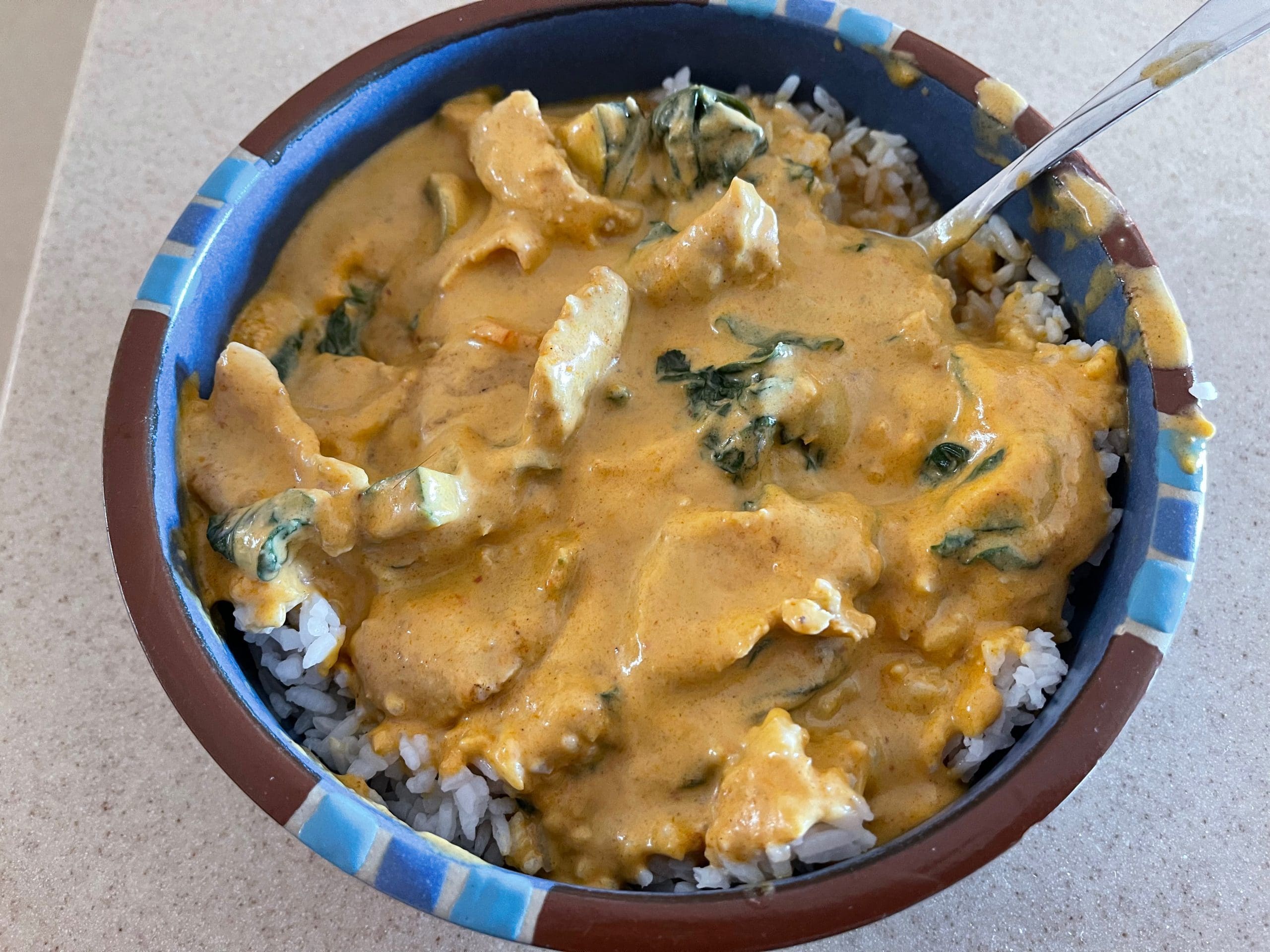
Curry Leaf – Albuquerque, New Mexico

Leonard: Is it racist that I took you to an Indian restaurant? Priya: It’s okay, I like Indian food. Leonard: Or as you probably call it back home, food. ~Big Bang Theory (Season Four, Episode 18) Queen Rania of Jordan cautioned against judging “through the prism of our own stereotypes.” Ill-founded stereotypes were very much in evidence after my team successfully landed an especially challenging project at Intel…and as with most stereotypes, they were based on faulty assumptions, overarching generalization and lack of experience. When we deliberated where to celebrate our achievement, my suggestion that our repast be held at an Indian restaurant was met with such comments as “Indian food is…too spicy, too rich, too much curry, too vegetarian” and worse, it “causes heartburn and (to put it mildly) gastric distress.” Prying more deeply revealed only one of my colleagues had ever actually ever tried Indian food. In truth, when it comes to Indian food, if we don’t subscribe to such stereotypes, even the most open-minded among us tend to generalize about it. Much as we do with Italian food, we compartmentalize Indian food as either “Northern” or “Southern,” generalizations which are inaccurate and which don’t do justice to…

Bristol Doughnut Co. – Albuquerque, New Mexico

While most people speak with fond nostalgia about their first ride on a double-decker bus, the memories of our inaugural trip are tinged with horror that traumatizes us to this day. As with most visitors making their first excursion to London, we wanted to take in all the sights with the best vantage point you can have. That meant sitting on the top deck of a double-decker. These bi-level behemoths ride higher than almost everything else on the road save for those noisy articulated lorries ( what we Yanks call semi-trailer trucks). Despite the congestion that typifies London’s streets, double-deckers provide spectacular, mostly unobstructed views of the city. Though we arrived early to ensure we got seats on the coveted top deck, a couple dozen early birds got there earlier. As we climbed the stairs to our lofty perch, the portly fellow in front of us “let ‘er rip,” emitting the most noxious effluvia imaginable. Our eyes began to water as we coughed and sputtered at the malodorous “silent but deadly” emanation. Surely this odoriferous rank was equal to or more potent than the sulfuric gates of Hell. Congestion at the top slowed our ascent and heightened our suffering. Then,…

Flamez Bistro – Albuquerque, New Mexico (CLOSED)

Hold the pickles Hold the lettuce Special orders don’t upset us All we ask is that you let us serve it your way In 1974, Burger King introduced its most successful and long-standing advertising campaign, the heart of which was “Have It Your Way,” a catchy jingle designed to contrast just how flexible Burger King is compared to its largest competitor, the ubiquitous McDonalds. The earworm-inspiring jingle told us we could have burgers made especially for us—tailor-made, customized, prepared any way we want them. It implied that unlike its rigid and inflexible competitor, Burger King recognizes our uniqueness and they celebrate it with burgers that reflect our individuality, lifestyles and dietary considerations. There are, Burger King tells us, 221,184 ways to have the Whopper made our way. It’s hard to fathom that nearly a quarter-million combinations are possible from a burger whose basic constituents are a flame-grilled quarter-pound beef patty, sesame seed bun, mayonnaise, lettuce, tomatoes, pickles, ketchup and sliced onion. Only a fuzzy-math-proficient government accountant could possibly appreciate and explain how a Whopper can be made your way so many ways. Whataburger, which prides itself on delivering each customer’s burger made-to-order, advertises 36,864 different ways to make a Whataburger and…

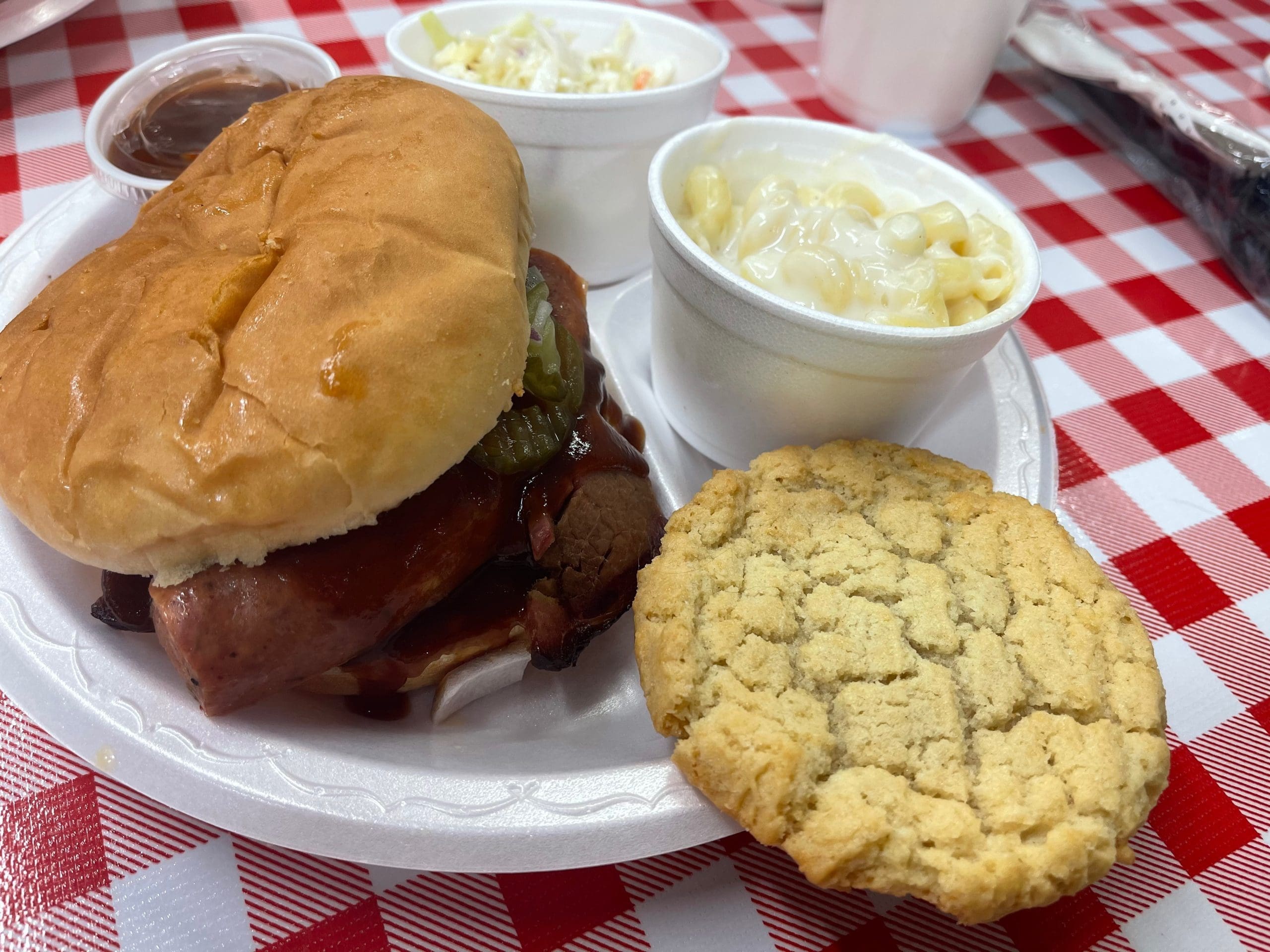
The Cowgirl BBQ – Santa Fe, New Mexico

Cowgirl” is an attitude really. A pioneer spirit, a special American brand of courage. The cowgirl faces life head-on, lives by her own lights, and makes no excuses. Cowgirls take stands; they speak up. They defend things they hold dear. ~Dale Evans In a 1980s commercial for Pace Picante sauce, several hungry cowboys threatened to string up the cook for brandishing a foreign-made (translation: not made in Texas) salsa.  “Why, this here salsa is made in New York City!”  “New York City?  Gil a rope!” With such a xenophobic attitude about New York City, you would think those cowboys would have raised a ruckus when a restaurant named the Cowgirl Hall of Fame launched in New York City.  “New York City?  Git a rope!”  The restaurant’s raison d’être was to promote the culture of the American cowgirl through the foods of the American West and Southwest.  On 1 June 1993, the second instantiation of the Cowgirl Hall of Fame opened its doors, this one in a hundred-year-old building in the historic Guadalupe district of Santa Fe.  Known today solely as Cowgirl BBQ, this quaint restaurant celebrates Cowgirls thematically and attitudinally. A portrait library is replete with photographs of National Cowgirl…

Pig + Fig Cafe – White Rock, New Mexico

In its eighth season, the brilliant sitcom Seinfeld helped introduce casual comic book fans to the concept of Bizarro world, a setting which is weirdly inverted or opposite of expectations. In other words, a Bizarro world is a mirror image of conventionality, logic and reality, everything being reversed. Jerry Seinfeld’s polar opposite Kevin, for example, was depicted as kind, selfless and reliable in contrast to Jerry’s indifference, self-absorption and forgetfulness. Gene was quiet, studious, polite and giving while his Bizarro counterpart George was loud, obnoxious, cheap and slovenly. Some people believe there’s a polar opposite—a Bizarro version—of every one of us. I met “Bizarro Gil” while stationed at Keesler Air Force Base in Biloxi, Mississippi. While I (all modesty aside) consider myself a bit of a renaissance man, Derwin was atavistic, a throwback to the days of Ralph Kramden when men were short-tempered, disparaging and chauvinistic. He couldn’t understand why I would take my Kim out for dinner so often when there we had a perfectly good stove at home. It galled him that Kim often picked where we’d eat. His retort to that grievous affront was “The last time women decided what to eat, they doomed humanity for eternity,”…

Tia Betty Blue’s – Albuquerque, New Mexico (CLOSED)

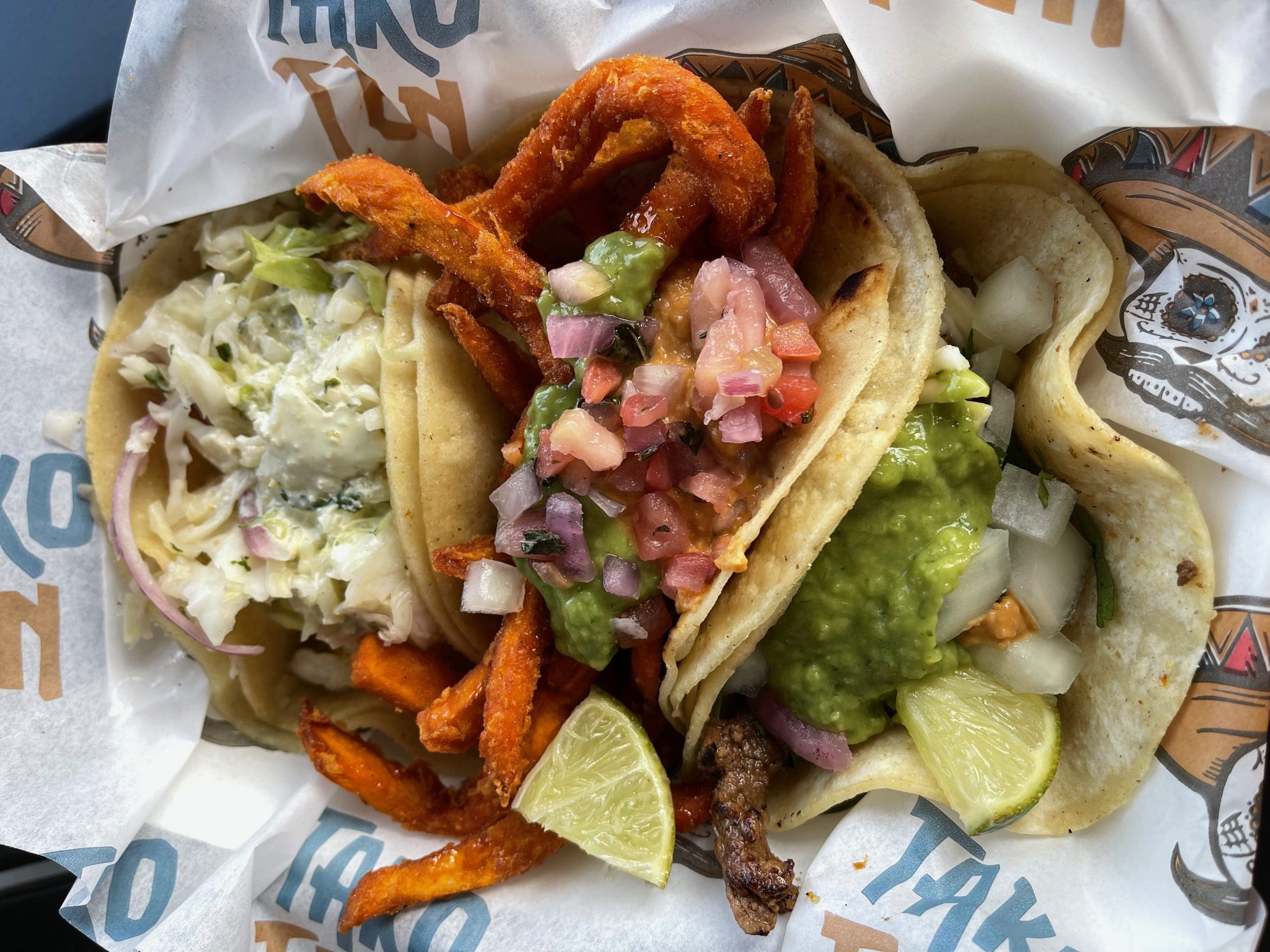
Tia Betty.  If the name conjures images of a dowdy old woman, a face etched with wrinkles and thinning grey hair pulled back neatly into a bun, you’re probably not alone.  Not even the youthfully ribald nonagenarian Betty White can alter the contemporary stereotypes ascribed to the increasingly anachronistic name Betty.  It wasn’t always the case.  In fact, there was a time  Betty was one of the most popular girl’s name in America and not just as a diminutive of Elizabeth or Bethany. According to the Social Security Administration, Betty was the fourth most popular girl’s name in the 1920s with more than 283,000 babies so christened.  Betty was an even more popular name in the 1930s when it ranked second among all girl’s names and was given to more than 300,000 infant girls.  The name declined in popularity in successive decades–from 11th in the 1940s, 35th in the 1950s,  102nd in the 1960s–before dropping from among the 200 most popular girl’s names cataloged by the federal government. There was also a time the name Betty conveyed images of voluptuous sexiness, especially on the big screen (though not even animated features were exempt).  The most enduring sex symbol of the…