Juan’s Broken Taco – Albuquerque, New Mexico (CLOSED)

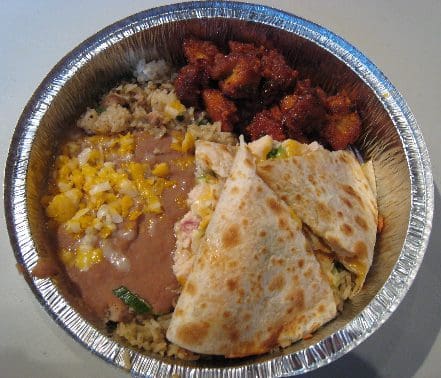
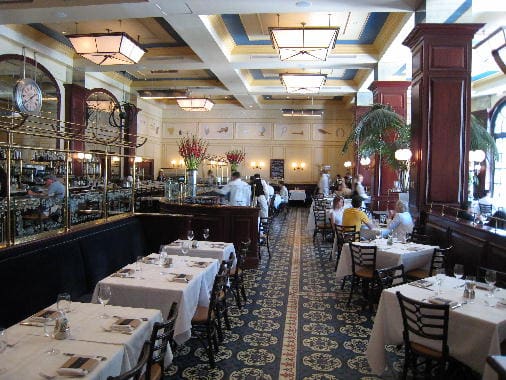
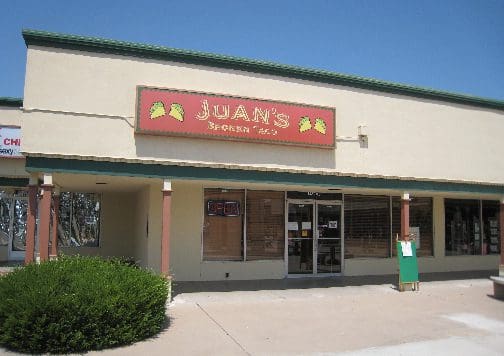
Fusion–the inventive combination of diverse, sometimes disparate culinary traditions, elements and ingredients to form an entirely new genre–has yet to become commonplace in the Land of Enchantment Some restaurants in New Mexico have dabbled in their conception of fusion, primarily by offering dishes from several southeast Asian countries alongside one another as well as dishes that are “inspired” combinations of those countries’ cuisines. In large metropolitan areas, particularly in California, restaurants featuring the melding of French and Chinese cuisine are especially popular. Here’s one fusion I’ll bet you’ve never heard of, much less tried–New Mexican and Romanian. Albuquerque has one restaurant in which that rarest of fusion can be found. To be honest, it’s not the wholly disparate cuisines of New Mexico and Romania that are featured. The fusion is in the ambience at Juan’s Broken Taco. Juan’s Broken Taco is housed in the edifice which once served as the home of Baciu’s Bread and Wine, the popular European style restaurant operated for years by Romanian expats Nellu and Elena Baciu. When the Bacius abandoned their restaurant, they also left behind many of their unique decorating touches. The Bacius not only offered a more relaxed pace of dining and exceptional…

Chow’s Asian Bistro – Albuquerque, New Mexico (CLOSED)

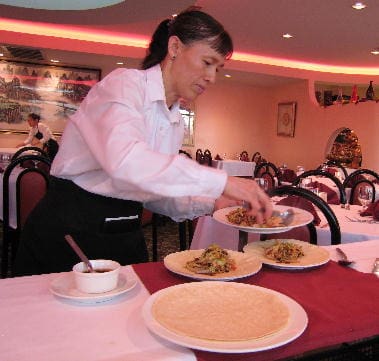
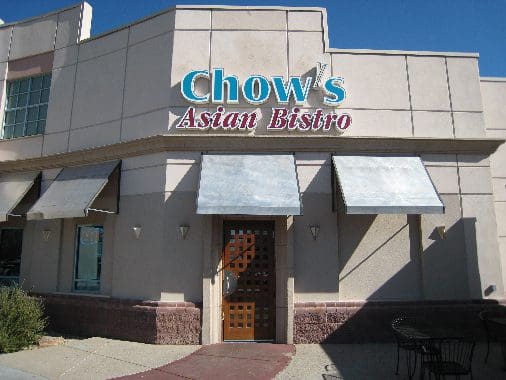
With but few exceptions, the Duke City’s Chinese restaurants have a boring sameness (perpetuating the stereotype that all Chinese food tastes the same) with an increasing emphasis on super-sized portions of Americanized Chinese food (fried, breaded and candied meats of poor quality).  One of the few Chinese restaurants which does not perpetuate that stereotype is Chow’s Chinese Bistro in Albuquerque’s Cottonwood Mall which launched in Albuquerque’s Cottonwood Mall in November, 2005. Chow’s motto is “gourmet, not buffet.” The Web site promises slight variations in the menu among its restaurants, claiming those variations are suited to the taste buds of the community. That must mean Chow’s patrons like it either very sweet or extremely salty (more on that below). Chow’s has been the most popular Chinese restaurant in the City Different (not that there’s much competition) practically since it launched in 1992. Accolades festoon the restaurant’s walls. 2005 was a banner year for the Chow’s restaurant family. Not only was the Cottonwood restaurant launched, but the Santa Fe restaurant was voted one of the top 100 Chinese restaurants in America by the Chinese Restaurant News, the only New Mexico based Chinese restaurant to earn that distinction. Chow’s Web site also indicates…

Sunshine Cafe – Albuquerque, New Mexico (CLOSED)

Sunshine on my shoulders makes me happy Sunshine in my eyes can make me cry Sunshine on the waters looks so lovely Sunshine almost always makes me high -John Denver A gloomy, gray winter day in Minnesota was the inspiration for John Denver’s number one song “Sunshine on My Shoulders.” During a visit to the Gopher State in 1974, he experienced the type of “cabin fever” with which many New Mexicans are familiar after one gloomy winter day after another (ask anyone from Chama).  Minnesota, as we know, is a far cry from New Mexico when it comes to winter warmth and sunshine. Still, after the winter of 2007-2008, many New Mexicans are able to empathize with Denver’s being ready for spring and wanting to go outdoors again where the sun itself can make you feel good. Albuquerque boasts of 310 days of sunshine, making it an ideal milieu for outdoor activities year-round. With a mile-high elevation, ours is a penetrating sun made warm and bright thanks to our rarified, thin air.  It’s a rare season in which Duke City residents are stranded indoors for too long without the life-giving, Vitamin-D imparting rays of our sun.  Even when the thermometer…

Chino Bandido – Chandler, Arizona (CLOSED)

Gustavo Arellano has the right idea. The brilliant and hilarious author of Ask A Mexican, a widely syndicated alternative newspaper column, confronts the “bogeymen of racism, xenophobia, and ignorance” with humor. In his weekly column, he defeats stereotypes and those who wield them by using deprecatory wit to exaggerate those stereotypes to the point of the ridiculous. In the Language chapter of his uproarious book, he provides a list of commonly used Mexican terms and phrases so that “you, too, can become a Mexican.” The book defines a “Chino” as “literally “Chinese,” but the catchall phrase Mexicans use for all Asians regardless of nationality.” This is clarified with the example: “Vietnamese food is my favorite Chino cuisine.” I found it deliciously ironic when my friend and fellow gastronome Bill Hanson told me about a Phoenix restaurant named Chino Bandido which supposedly takes “fusion” cuisine to a new level.  Fusion cuisine is the inventive combination of diverse, sometimes disparate culinary traditions, elements and ingredients to form an entirely new genre. In large metropolitan areas, particularly in California, the fusion of different cuisines is commonplace. Restaurants featuring the melding of French and Chinese cuisine are especially popular. The joining of Mexican and…

Milton’s Family Restaurant – Albuquerque, New Mexico (CLOSED)

In a 2002 column Jason Sheehan, one of the best in a succession of outstanding Alibi restaurant critics assembled a dream menu of the best foods he had ever eaten, a “desert-island top ten” from which he’d choose if ever asked the question, “If you could eat only one thing every day for the rest of your life, what would it be?”  His top ten list included the phenomenal red chile breakfast burritos from Milton’s Family Restaurant in Albuquerque. As a restaurant critic I’d flatter myself disingenuously if I compared myself to Sheehan, but at least in terms of our mutually high opinion of Milton’s breakfast burritos, we’re completely simpatico. I first discovered those tortilla encased treasures when stationed at Kirtland Air Force Base in the late 1970s. Milton’s burritos are simplicity itself–grilled tortillas enwrapping eggs and potatoes then smothered in some of the best, most earthy red chile (or alternatively, a savory, fruity green chile that’s just as wonderful) as any served anywhere in New Mexico. Make sure to order these burritos “Christmas style” so you can have both red and green chile. These breakfast burritos (pictured at left) are a truly mellifluous marriage of great ingredients prepared uniquely…

Leona’s Restaurante de Chimayo – Chimayo, New Mexico

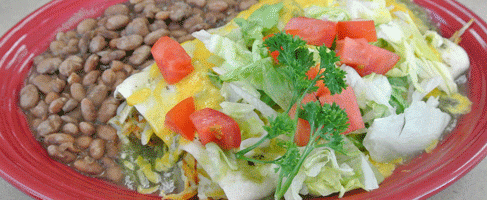
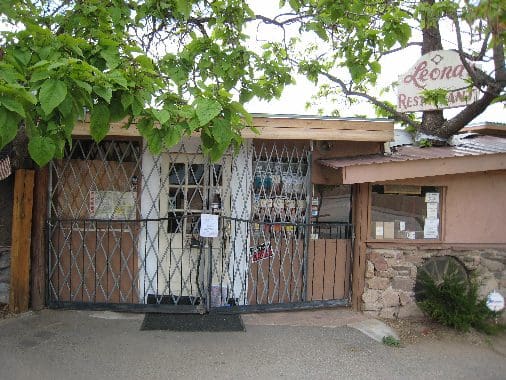
In his book Authentic Happiness, Dr. Martin Seligman posited that there are two kinds of smiles. The first is called the Duchenne smile, named for its discoverer, French neurologist Guillame Duchenne. This is considered a genuine smile in which the corners of the mouth turn up and the skin around the corners of the eyes crinkle (ala crow’s feet). This type of smile may sometimes begin with laughter that generates a wide smile which causes the skin around the eyes to crease. The Duchenne smile is very hard to fake and is therefore often used to detect sincerity. The other type of smile, called the Pan American smile, is named after the smile airline stewardesses (or at least those on television commercials) supposedly gave their passengers. The Pan American smile is considered a courtesy or perfunctory smile. It is deliberately formed by contorting one’s mouth into the shape of a smile. It’s both easy for most people to slap on or to detect a Pan American smile. You get the impression that when Leona Medina smiles, it’s as warm and genuine as the chile she prepares in her small restaurant situated just feet from the world famous Santuario de Chimayo.…

The Old House Gastropub – Corrales, New Mexico (CLOSED)

There’s a European joke that uses stereotypes to deride British cooking, one of the most maligned cuisines in the world culinary stage. As the joke goes, in the European conception of heaven, the French are the chefs, the British are the police and the Germans are the engineers while in the European conception of hell, the Germans are the police, the French are the engineers and the British are the chefs. When it comes to the culinary arts, England is the Rodney Dangerfield of Europe; its cuisine receives absolutely no respect. English food is regarded as bland and unimaginative, especially when compared with the haute (and haughty) cuisine of France. Having spent three years in England and having partaken of wonderful food throughout the Isles, I rise to the defense of this nation’s maligned food. We found English food to be inventive and delicious. We left England about four years before the term “gastropub” was coined, but the concept had actually already started to be practiced and proliferated. A gastropub is a British term for a public house (pub) which specializes in high-end, high-quality food. The term gastropub, a combination of pub and gastronomy, is intended to define food which…

Chicago Beef – Albuquerque, New Mexico (CLOSED)

Ask any Chicago transplant in Albuquerque or anywhere else to list the five things they miss most about the Windy City and it’s a good bet the list will include Italian beef sandwiches, a staple in Chicago. Citizens of the Toddlin’ Town are almost as passionate about this sloppy sandwich as they are Da Bears. Chicagoans grow up worshipping at high counters on which they prop their elbows as they consume Italian beef sandwiches–sometimes because the restaurant has no tables, but more often than not, because no matter how careful they are, they’re bound to spill shards of beef, bits of giardiniera and drippings of spice-laden beef gravy onto their clothing. The authentic Italian beef sandwich is, according to Pasquale Bruno, the Chicago Sun-Times dining critic and contrary to the opinion of some purists, a spin-off of the French-dip sandwich. It is never (and I mean ever) made with marinara sauce. You won’t find one in all of Italy, in fact. It is as uniquely Chicago as deep-dish pizza (which you also won’t find in Italy) and hot dogs with sport peppers and green tomatoes. An Italian beef sandwich is made with roasted sirloin tip which is massaged with a…

Bellagio Buffet – Las Vegas, Nevada

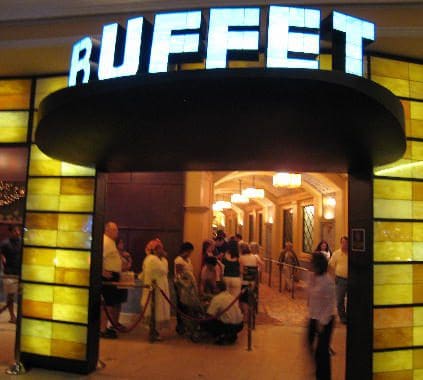
Comparing the Bellagio Buffet to the buffets proffered at other casino hotels isn’t quite akin to comparing a Bacchanalian festival to a swinish feeding troth, but it might be close.  That’s because the difference in quality between the Bellagio Buffet and its nearest competitor is several degrees of magnitude. It’s the one buffet in Vegas in which you might actually see the gentrified and the affluent condescend to mingle with the rabble.  It’s also the one buffet in which some of the patrons don’t look like they parked their hay wagons in front of the casino and walked in. Being the very best, the Bellagio Buffet seemingly brings out the best behavior among its dining patrons who at other casinos might jostle and push their brethren just like European tourists do (and by the way, some of them put the much-maligned and stereotyped “ugly Americans” to shame). There are many other Vegas buffets which offer greater variety, but where the Bellagio stands out is in its lavish presentation of cuisine as opposed to chow, fine dining as opposed to smorgasbord and culinary creations as opposed to caloric caches. While other buffets have action stations usually featuring thematic (such as seafood)…

Bouchon – Las Vegas, Nevada

Thomas Keller is the owner and chef of one of the world’s most highly acclaimed and famous restaurants, but despite all the accolades and honors the French Laundry has garnered over the years, he isn’t nearly as famous or popular as his celebrity protégés. One protégé is a provincial rat named Remy whose aspirations to become a great chef despite a lack of formal culinary training mirror Keller’s own path.  Remy’s focus and fastidious attention to detail are known to be patterned after Keller.  To make the restaurant scenes as realistic as possible, the film’s producer interned in the French Laundry kitchen.  Other members of the film’s creative braintrust studied at length to channel the master’s style and passion.   Keller served as the key consultant for all cooking done in the movie, hence the authenticity. Keller was also the creative genius behind the “world’s greatest sandwich” as prepared by another celebrity protégé, Adam Sandler in the film Spanglish.  The sandwich is an embellishment of the BLT, but the way Keller taught Sandler to prepare it, it is far from a pedestrian BLT.  It would seem that Keller is a celebrity chef behind the celebrities, but it might be more accurate…

Amlee Gourmet Restaurant – Las Vegas, Nevada (CLOSED)

There’s a Cantonese saying that translates to “anything that walks, swims, crawls, or flies with its back to heaven is edible.” The Chinese diet counts as delicacies some things which would repulse the more sensitive American palate.  It’s not just the Chinese who will imbibe, ingest and intake what we might consider sundry strangeness. Each culture, including American, has foodstuffs other cultures find shocking. One culture’s strange and inedible is another’s traditional favorite. Take cheese, for example. Until rather recently, few Chinese would eat cheese, considering it the fetid spoils of milk. As it grows smaller, the world has become increasingly fascinated by watching the consumption of the bizarre–bizarre in this case being a voyeuristic term that doesn’t apply to the culture in which the food is enjoyed. The Travel Channel’s Bizarre Foods With Andrew Zimmerm chronicles the adventures of an intrepid eater who will try any and everything put in front of him, regardless of how much it writhes, palpitates or squirms as he puts it in his mouth. It’s televised shockfest at its most appealing to those of us who think we’d try just about anything. Compared to Zimmerm, most of us are rank amateurs. Thousand year old…