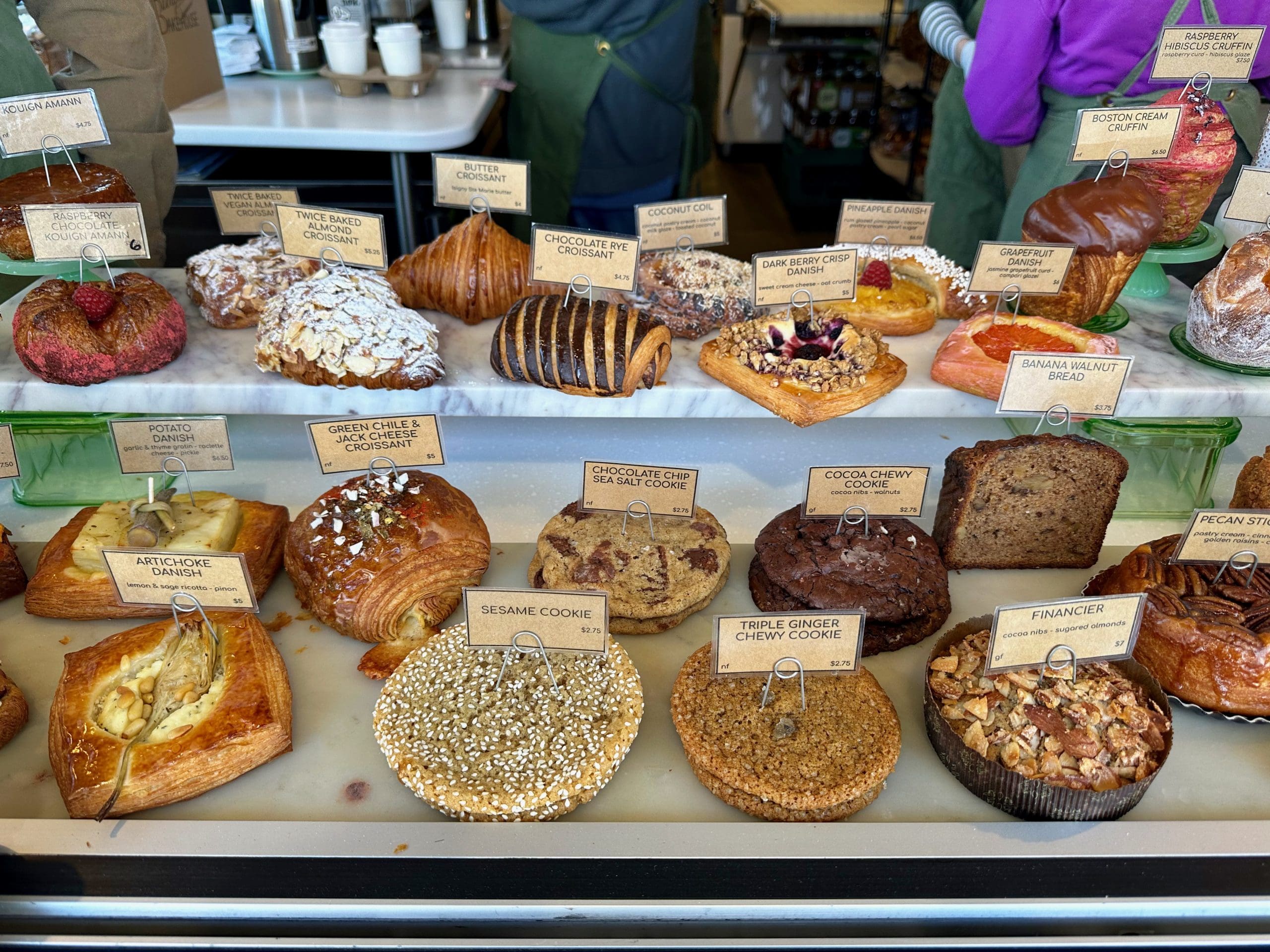
Burque Bakehouse – Albuquerque, New Mexico

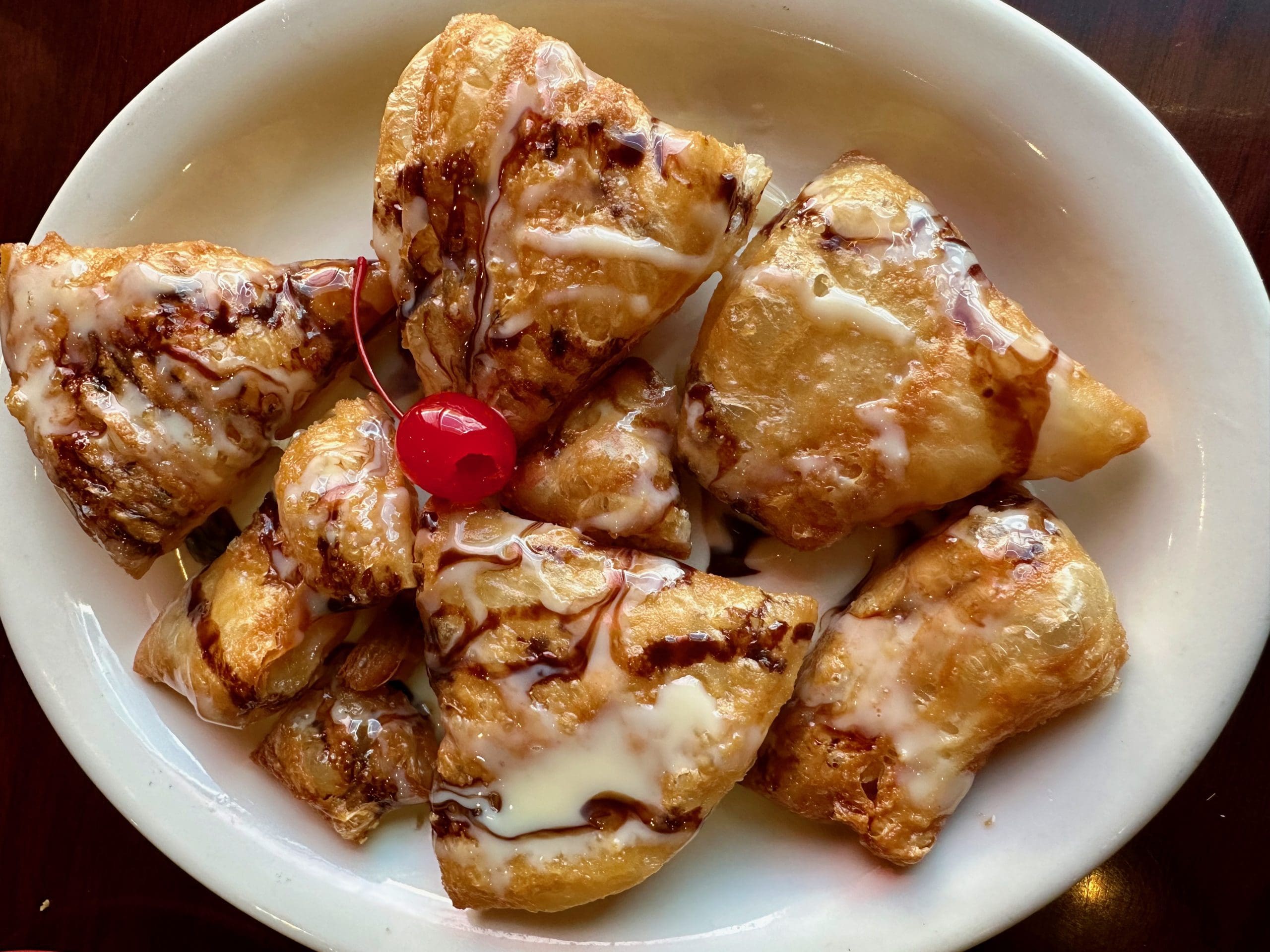
In 2023 Psychology Today profiled an Albuquerque baker who knows the mind-body connection very well.  Pratt Morales, long-time co-owner (with his son Chris) of the Golden Crown Panaderia believes he’ll live to be 130 years young.  You’ll believe it, too, after reading the profile.  Mr. Morales is an 85-year-old going on 22 who’s as spry and fit mentally as he is physically.  At an age when our couch potato lifestyles will mean an early grave for many of us, he can perform one or two hand cartwheels.  The secret of his longevity, he says is a focus on flexibility exercises and watching his diet. Chinese philosopher Confucius  is credited with an idiom that defines Mr. Morales: ““Choose a job you love and you will never have to work a day in your life.”   It’s not a job many of us would–and can–do.  It’s a job that takes a physical, mental and emotional toll on body and mind.   It’s a job that starts each day long before sunrise and ends after most of us have gone home.   Day in and day out, bakers are on their feet under extreme heat: bending, lifting, kneading, calculating and pushing on under the weight of a task…
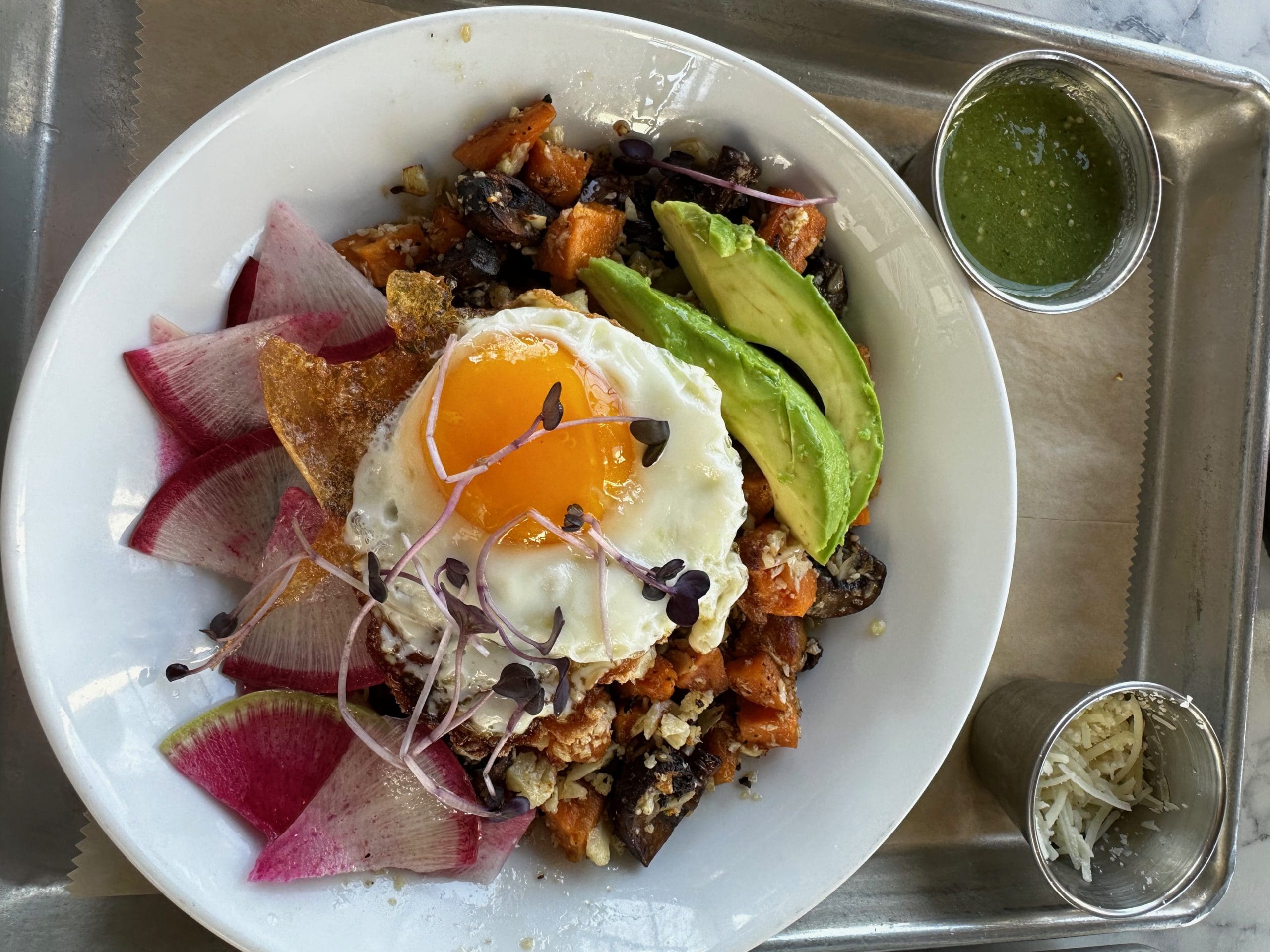
The Grove Cafe & Market – Albuquerque, New Mexico

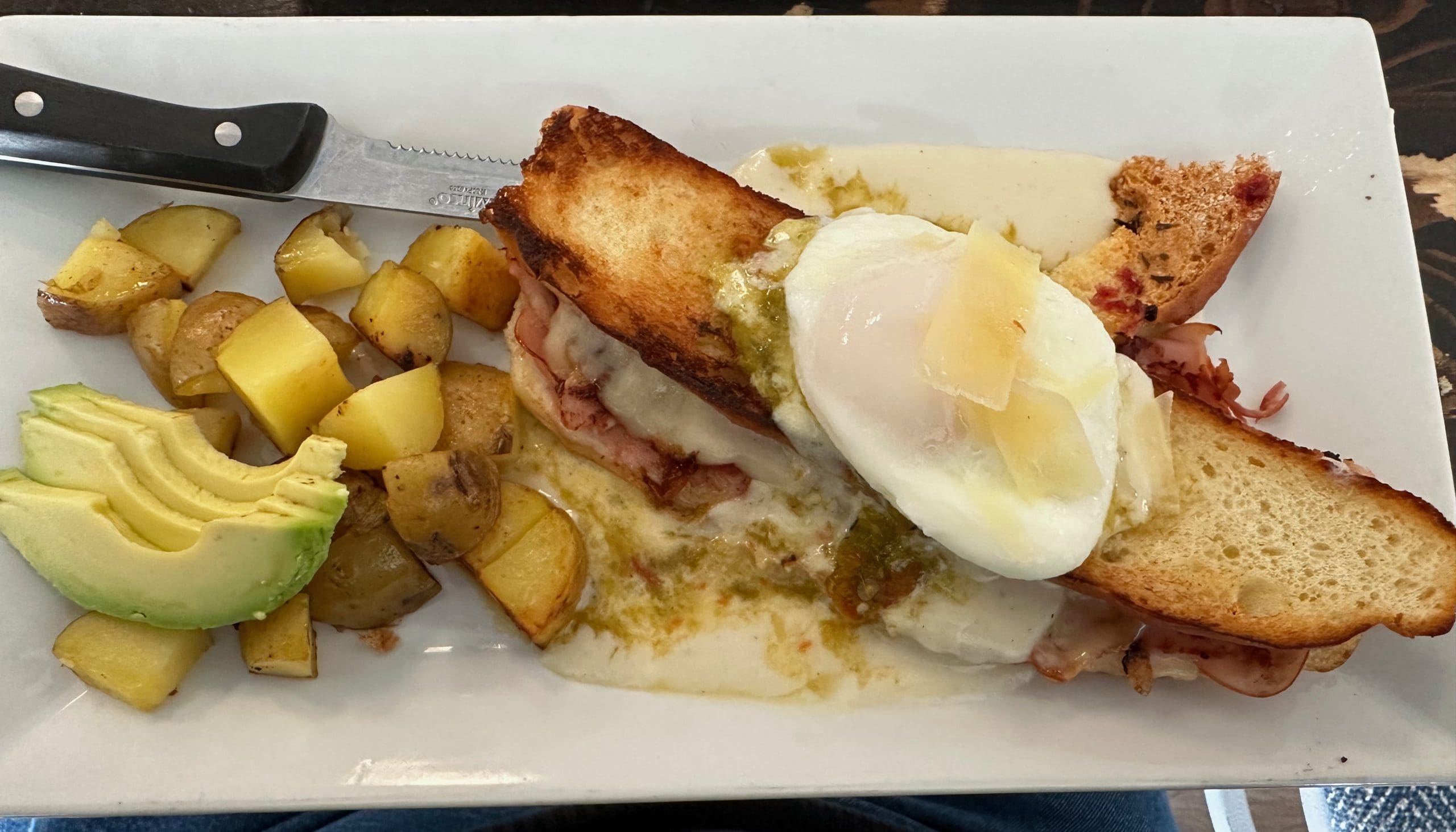
Voracious readers*, avid aficionados of art and those aflame with a musical ardor know that great books, art and music are imbued with the power to transport them to another time and place. A recent influx of contemporary restaurants in Albuquerque also has that power. If you think about it, having a meal at most Duke City restaurants–transcendent though some may be–is just so…Albuquerque. There’s an almost boring consistency and sameness about many local restaurants. Their sole distinctiveness comes from the foods they serve. It’s very difficult, for example, to picture yourself on the beaches at Cabo San Lucas while sipping on a margarita at Garduño‘s. Noshing on mussels at the Indigo Crow just doesn’t feel like a leisurely repast on a sidewalk cafe in Paris. With the advent of the millennium, a new dining trend emerged in Albuquerque that has something to do with the type of cuisine, but perhaps even more to do with the “look and feel” of the dining experience. New restaurants emerged that can transport you from the dour sameness of Duke City dining. Restaurants such as the Slate Street Cafe and perhaps most of all the Grove Cafe & Market are so un-Albuquerque that…

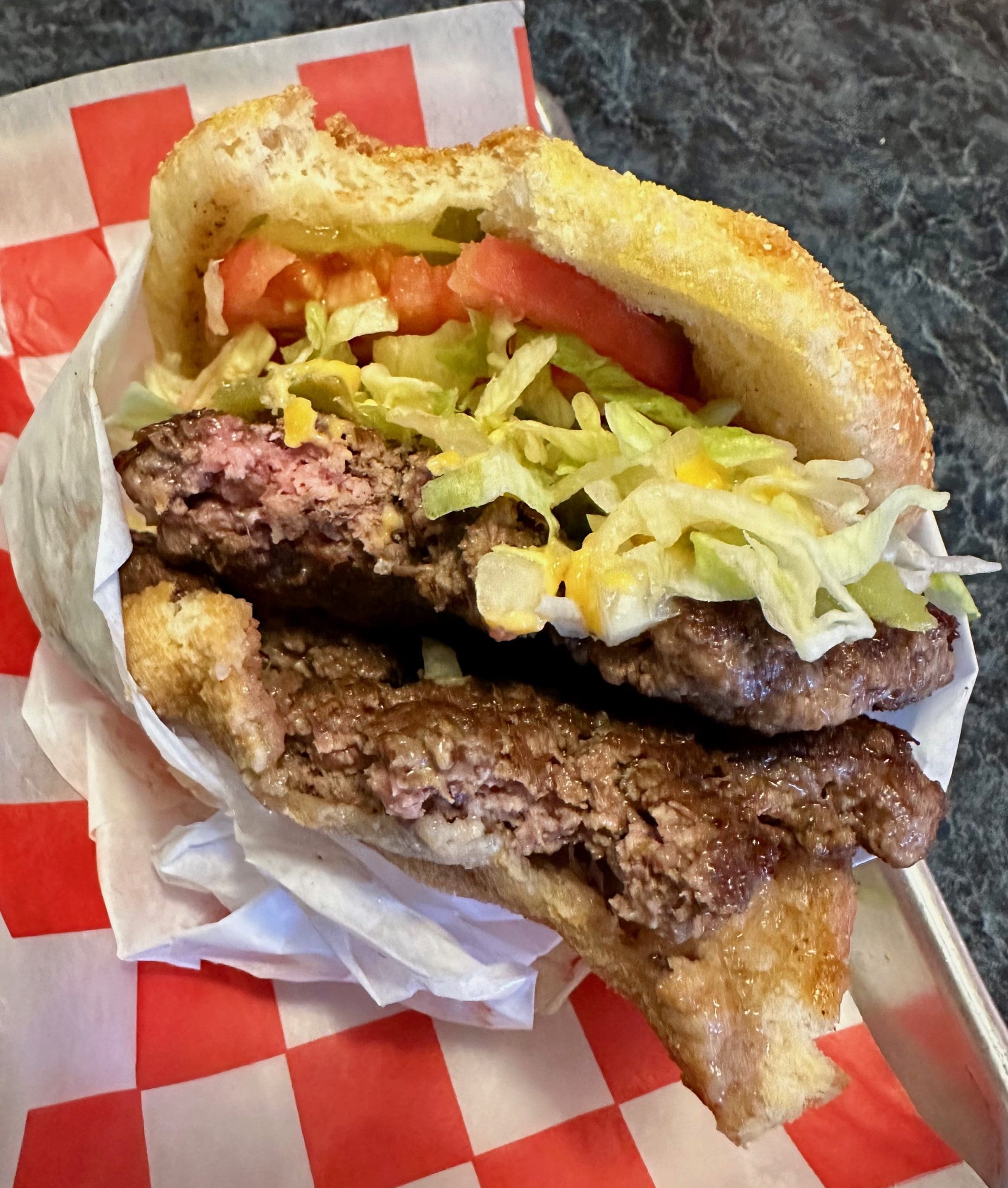
Spinn’s Burger & Beer – Albuquerque, New Mexico

Like him or not, few would disagree that former New Mexico Senator Pete Domenici was one of the most effective legislators on either side of the aisle. Since his election to the United States Senate in 1972, “Saint Pete” as he is known by admirers and critics alike effectively directed the appropriation of significant federal largesse upon the Land of Enchantment. For many native New Mexicans, one of his shining moments came in 1983. During a debate about the spelling of the word (chili or chile), Domenici clarified for the Congressional record that “chili” is “that inedible mixture of watery tomato soup, dried gristle, half-cooked kidney beans, and a myriad of silly ingredients that is passed off as food in Texas and Oklahoma.” Motivated by Dominici’s impassioned plea, on November 14, 1983 the Albuquerque Journal declared “The I’s of Texas are no longer on us. ‘Chili is dead. The only time we will use “i” will be when we quote the written word of some Texan.” Not to be outdone, in January, 1988 a bipartisan bill was introduced in the New Mexico State Legislature threatening that any New Mexican who misspells “chile” as “chili will automatically be deported to Texas.…

ABC Cajun Seafood & Noodle House – Albuquerque, New Mexico

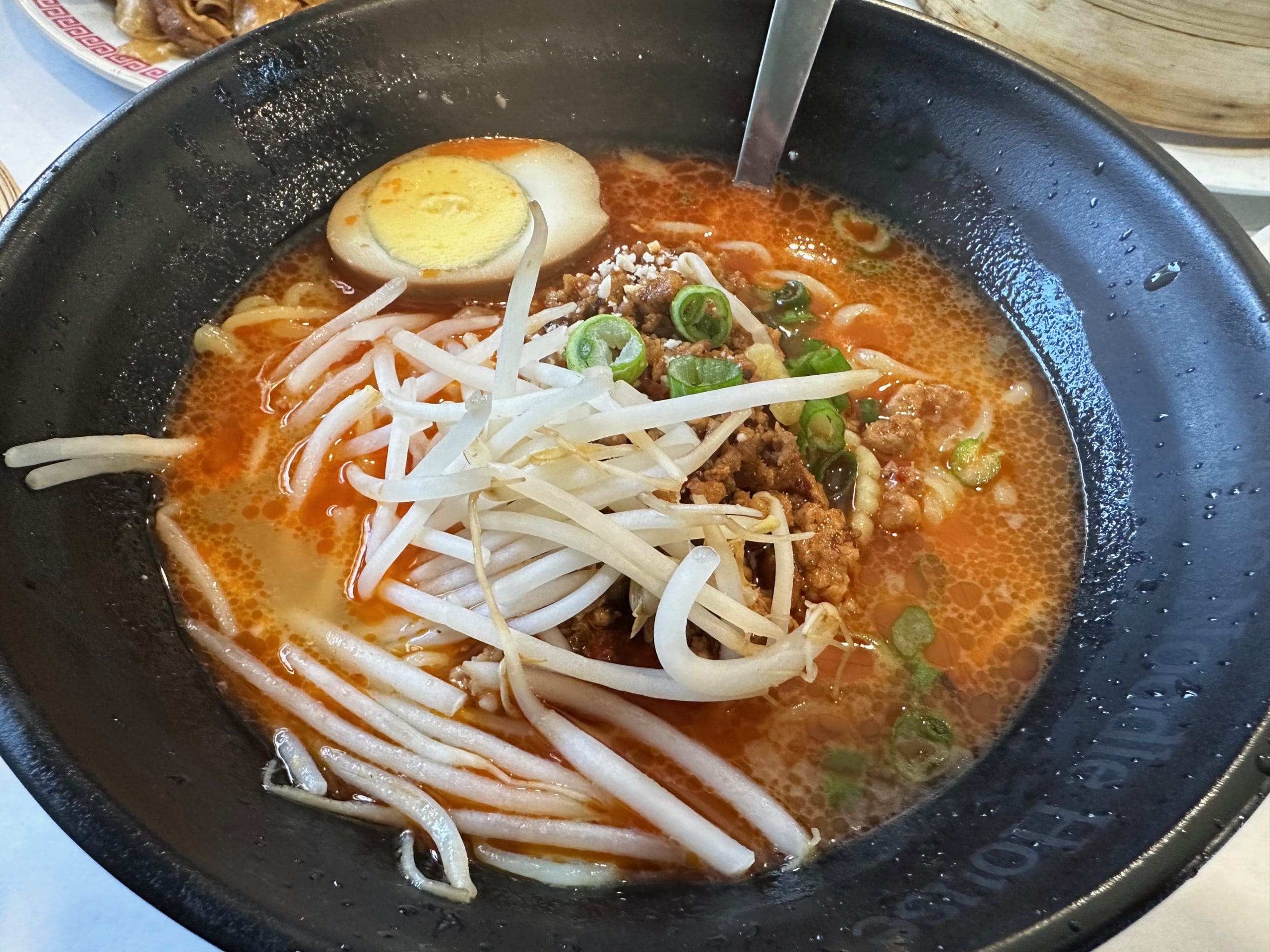
Although popular myth attributes the introduction of pasta in Italy to Marco Polo, pasta’s origins in Lo Stivale can be traced back as far as the 4th century B.C.  That’s when the Etruscan civilization-which existed in the Tuscany region from the 8th to the 3rd century BCE–began the centuries old love affair between Italians and pasta.  Culinary historians agree that pasta’s earliest roots begin in China, during the Shang Dynasty (1700-1100 BC), where some form of pasta was made with either wheat or rice flour. Pasta also appears to have been part of the ancient Greek diet in the first millennium B.C.  Africa also had its own form of pasta (made with the kamut crop). Despite being first to create pasta, you don’t often hear the term “pasta” associated with China.  That’s because there’s a difference between pasta and noodles.  The National Pasta Association defines pasta as being “a dough made from durum wheat and water and stamped into different shapes.”   Noodles, on the other hand, aren’t linked to one particular grain.  Nona Lin, a wonderful website explains: “From buckwheat noodles to rice noodles, yam noodles, and wheat flour noodles, there’s no shortage of choice. Noodles can be crafted from…

Dolina – Santa Fe, New Mexico

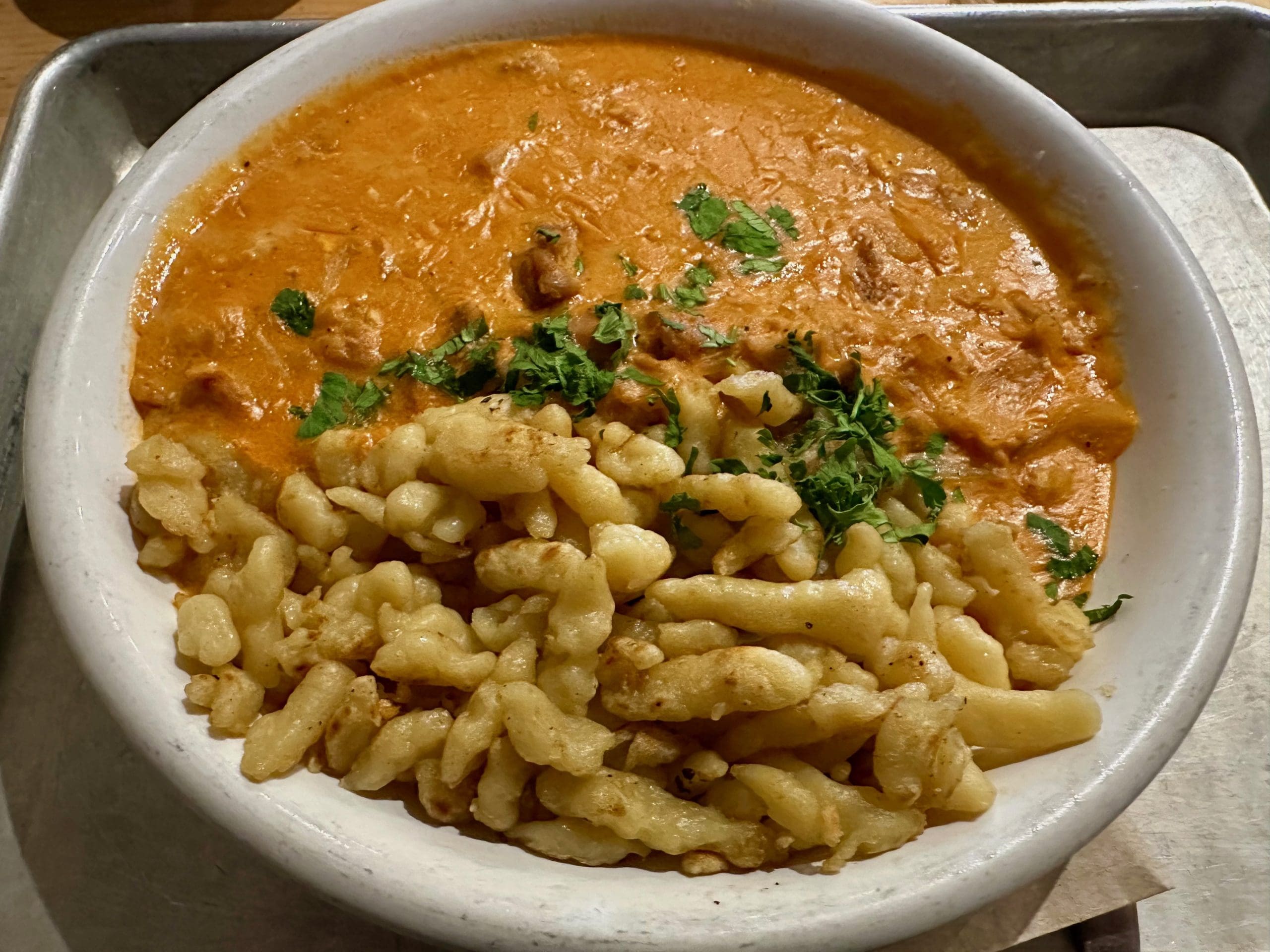
For my dad, a professional educator for thirty years, it wasn’t enough that his children learned how to spell cat, dog and all the other traditional first words kids learn to spell in school.  He taught us how to spell Czechoslovakia, rhinoceros, aesthetic and other multisyllabic words.  He also taught us what those words meant.  Being kids, we giggled when he taught us about Lake Titicaca in the Andes of Bolivia, but marveled at its size and altitude.  Because of his teaching, one of my sisters could (at age seven) recite the alphabet backwards as quickly as most people can recite it forward.  Two of my sisters were double-promoted and both finished high school as valedictorians. My dad didn’t teach his precocious brood so we could show off in school, but to inculcate a love of learning.  It’s served the six of us very well.  Every one of my brothers and sisters has been highly successful in their chosen professions and in life (I’m the family dunce).   You might think learning about Czechoslovakia didn’t have any value, but it gave me a lifetime of curiosity about other nations and cultures.  It’s a curiosity that extends to the cuisine of exotic…

Lily & Liam Bistro – Rio Rancho, New Mexico

Family owned restaurants have been called the heartbeat of a community, its pulse and its roots.  Beyond the tintinnabulation of silver spoons on ceramic coffee mugs and over the hum of conversation, restaurants become living links to the past and storehouses of memories.  They’re are a respite from the strife and stress of our daily vicissitudes.  They help us unwind, relax and catch up with friends and family.  In a sense, these beacons of comfort and repose often become family. Not all restaurants achieve this distinction, of course, and if they do, it usually doesn’t happen quickly.  Restaurants have to prove themselves over time with a combination of memorable food, a homey look and feel and mostly personable, attentive service.  To find the template for how a restaurant becomes the heartbeat of a community, you need look no further than Joe’s Pasta House, a paragon of service excellence and culinary deliciousness where all guests are treated like family. It may be early to know for sure, but it appears Lily and Liam Bistro in Rio Rancho has the potential to become a community heartbeat restaurant.  It’s been open only since November, 2019, but already there are telltale signs that it’s…

Thai Heritage & Vegan – Albuquerque, New Mexico

Who among us hasn’t learned at least one thing about Thai culinary heritage from The Big Bang Theory? In a 2011 episode, for example, we learned that according to Thai tradition the last morsel of food, the greng jie, goes to the most important person in the room. At least that’s what Sheldon tells Penny when she reaches for the last remaining dumpling. Thanking everyone for the honor, she devours the dumpling. Sheldon’s retort: “I’ve seen pictures of your mother. Keep eating.” Some of us learned that Thai food is meant to be eaten with forks not chop sticks though in Thailand, they don’t put the fork in their mouth. It’s simply a tool to put the food on a spoon which then goes into the mouth. We also learned that Sheldon, the quirky wunderkind with an obsessive compulsive tendencies orders mee krob and chicken satay with extra peanut sauce on Mondays. Every Monday! As an adventurous diner with polygamous culinary tendencies, the concept of ordering the same meal repeatedly is galling. When expressing my intolerance towards monogamous (monotonous?) diners to my Kim, she quickly knocked me off my high-horse, reminding me that whenever we dine at a Thai restaurant…

Bama’s 1865 – Albuquerque, New Mexico (CLOSED)

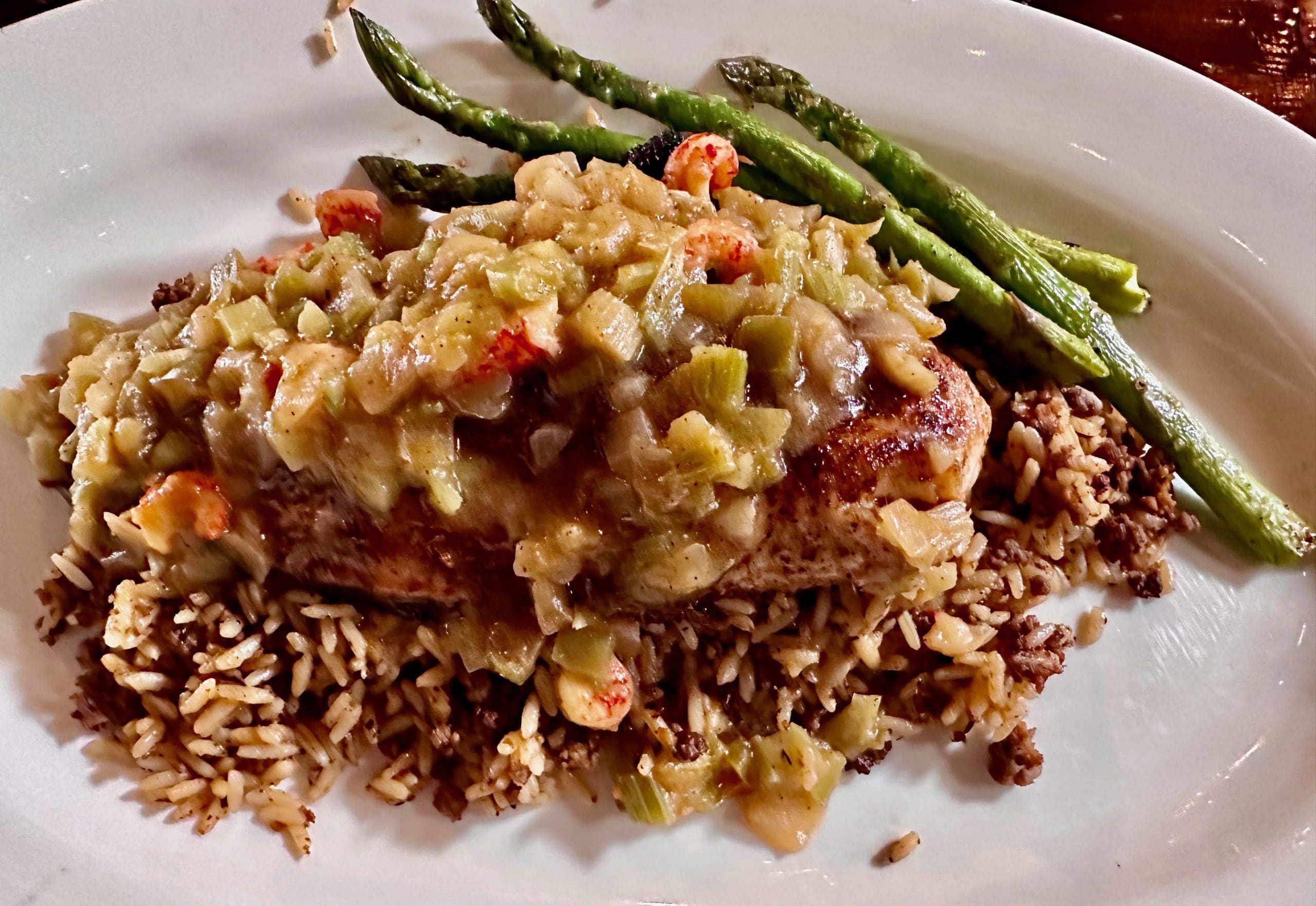
When we tell people we lived in Mississippi for eight years their typical reaction is something akin to “OMG, that must have been terrible.”  Lumping Alabama and Louisiana into their diatribes, they typically perceive we lived in a poorly educated, mostly rural and unabashedly racist region.  It surprises them to learn that New Mexico ranks below those three states among the least educated states in the country (only West Virgina ranked lower).  We lived in Ocean Springs on the Mississippi Gulf Coast, an almost contiguous metropolitan area from New Orleans to Mobile.  It’s as modern as you can get.   In terms of racism, the Deep South has made significant strides and isn’t as racist as the Boston area was when I lived there. Tragically, racism has always been a way of life in the Deep South.  It made me wonder if Bama’s 1865, Albuquerque’s newest Creole-Southern restaurant, was named for the turmoil that ravaged Alabama that fateful year.  Not only was Alabama left virtually destroyed by Union Forces, poor decisions during “Reconstruction” brought consequences that plagued the state for more than a century.  In 1865, Alabama  signed the Thirteenth Amendment (Amendment XIII) to the United States Constitution abolishing slavery…

La Sirenita – Albuquerque, New Mexico (CLOSED)

Our friends, John Martin and Lynn Garner and I couldn’t help but laugh. There before our very eyes was the depiction of a meme come to life. In the dining room of la Sirenita was a papier Mâché reproduction of the bottom half of a mermaid. It reminded us of a meme we recently shared.  That meme depicted a grizzled sailor marooned on a desert island.  On the first panel of the meme the sailor smiled lasciviously as a beautiful and buxom mermaid approached the island.  The second panel shows the sailor cooking the bottom half of the mermaid on a rotisserie.  Yeah, it’s gruesome, but come on, it’s funny, too. The bottom half of a mermaid wasn’t the only unique art on La Sirenita’s walls.  One framed painting depicted a rather disfigured Marilyn Monroe.  Another portrayed a black woman in the throes of a foodgasm.  More conspicuous than the artwork was the absence of other diners.  While the bar was packed, the only other diners in the capacious dining room were two eight-year old brothers, one of whom innocently asked if The Dude was a poodle.  Though our debonair dachshund was insulted (rightfully so), he has too much class…

Duran’s Central Pharmacy – Albuquerque, New Mexico

In an early episode of the Andy Griffith Show, while contemplating a job offer in South America, Andy tried to assuage his son Opie’s concerns about leaving Mayberry. Instead, he wound up confusing Opie by explaining that people in South America ate something called tortillas. Opie wondered aloud why anyone would eat spiders (tarantulas). Had Opie ever tasted the delicious, piping hot, just off the comal 10-inch buttered orbs at Duran’s Central Pharmacy, it’s unlikely he would ever confuse those grilled spheres with any arachnid. That’s because Duran’s features some of the very best tortillas of any restaurant in New Mexico. These are not the flavorless, paper-thin, production-line, machine-fashioned orbs you find at some restaurants (can you say Frontier Restaurant). Duran’s tortillas are made to order on a real comal and shaped by skilled practitioners using a well-practiced rolling pin. It’s the way abuelitas in New Mexico have done it for generations, a time-honored tradition Duran’s honors–with one exception. No lard is used on these tortillas; they’re strictly vegetarian. You can tell and appreciate the difference. In its annual Food & Wine issue for 2012, Albuquerque The Magazine awarded Duran Central Pharmacy a Hot Plate Award signifying the selection of…

Poké Serrano Asian-Latin Fusion – Rio Rancho, New Mexico (CLOSED)

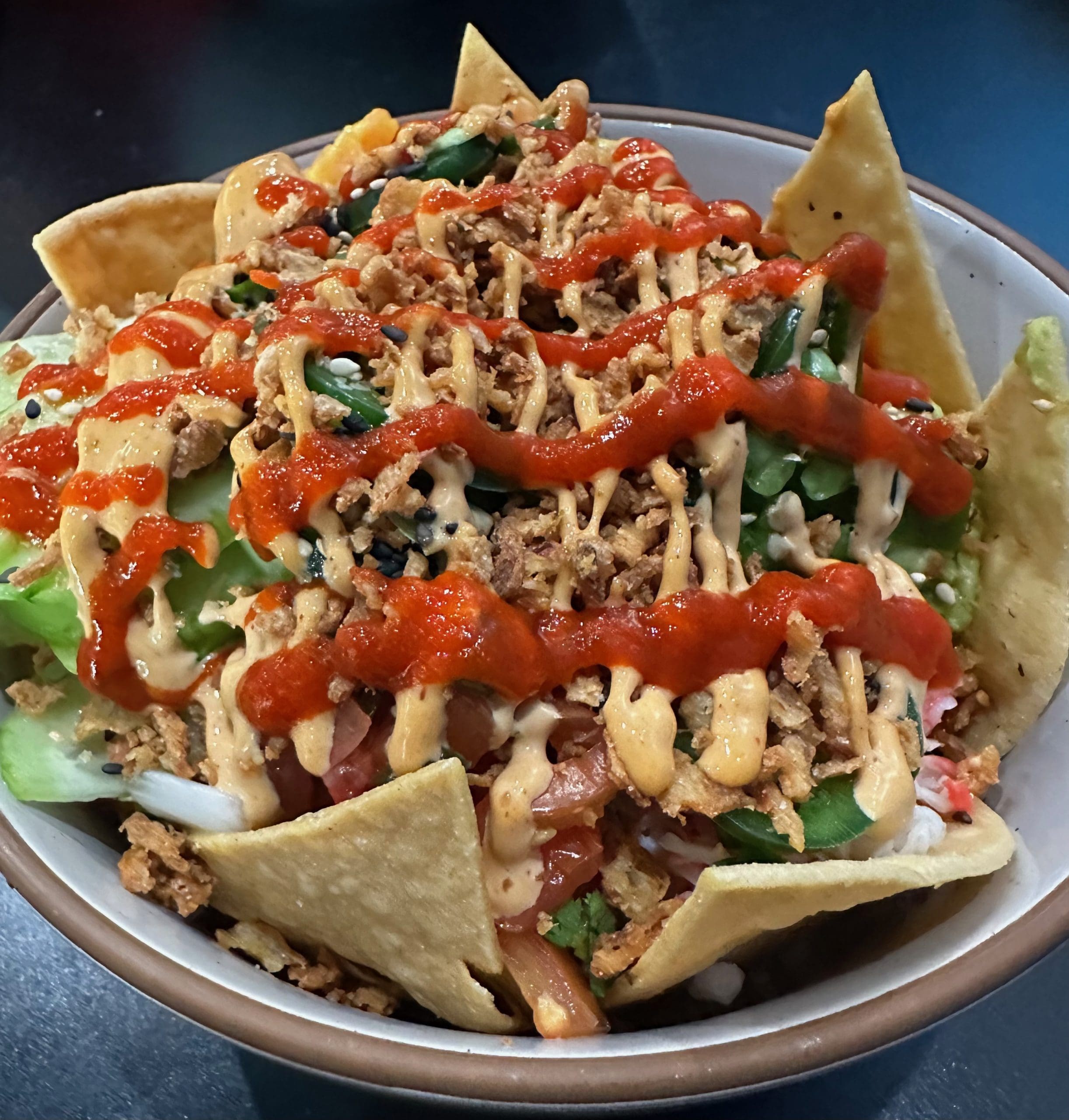
Ask most people what comes to mind when they think about Hawaiian food and the likely answer is Spam®.  No matter how much the Aloha State’s tourism department does to showcase the state’s diverse and exciting culinary culture, the stereotype that Hawaiians eat Spam® for breakfast, lunch, dinner and snacks in between meals is engrained in many of us.  Because Hawaiians do consume seven-million cans of  Spam® per year (with a population of 1.42 million residents in the Islands), it begs the question “Is it really a stereotype if facts bear out the fact that Spam® is so immensely popular in Hawaii.” Not everyone who spends time on the sandy beaches is as svelte as portrayed by media.  Widespread obesity plagues the Islands.  Some of that may be attributable to the quintessential canned ham product proudly made in Minnesota, a processed food  replete with salt and other “bad for you” things. Spam® became a vital part of the Hawaiian diet during World War II when rationing was a fat of life for its citizenry.  Hawiians figured out how to incorporate Spam® into their diet and figured out it’s a pretty versatile product.  Note: If you’re from Northern New Mexico and…