Royal Hyderabad – Albuquerque, New Mexico

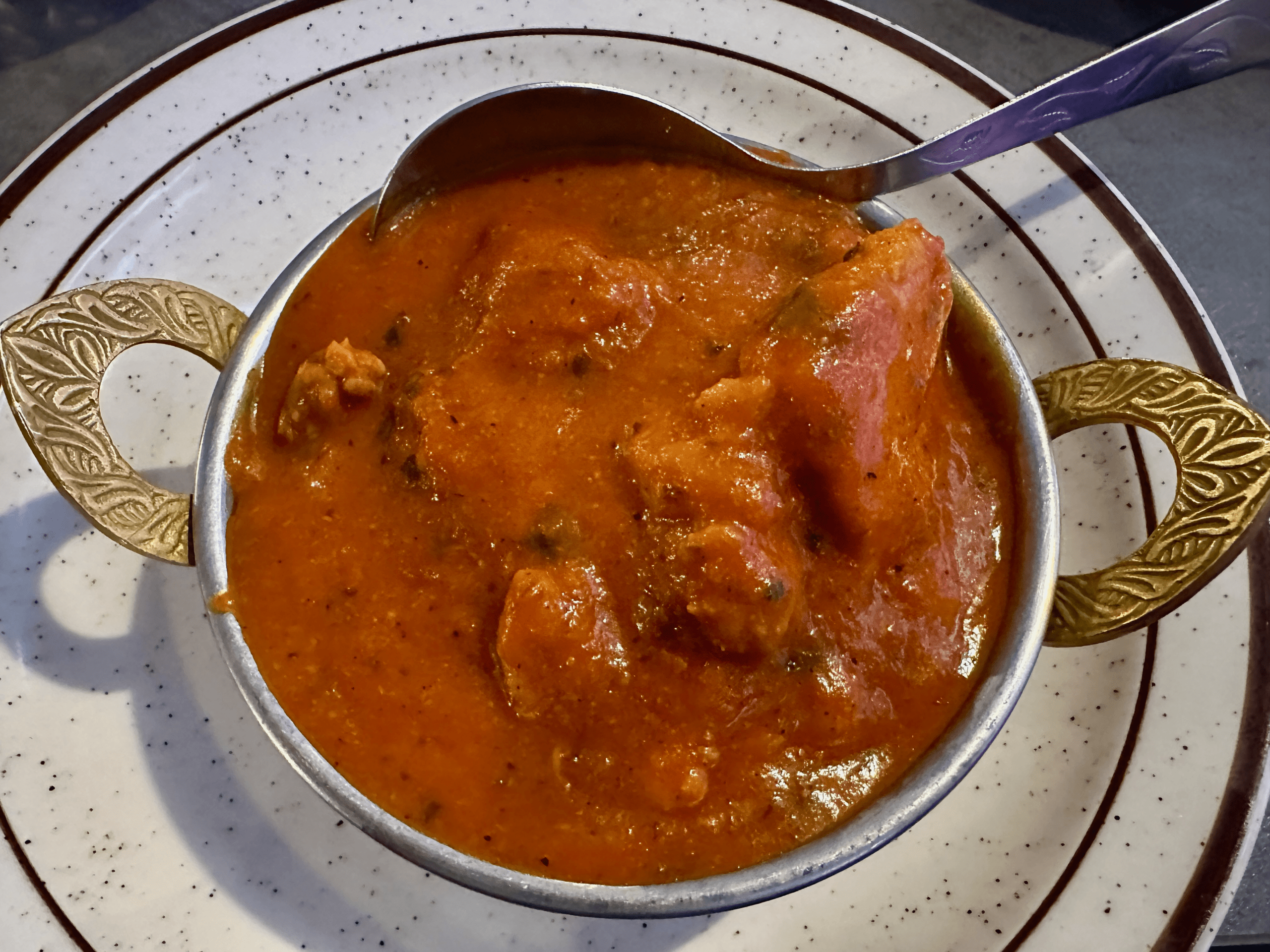
When the New York Times described biryani as “the Indian equivalent of arroz con pollo or paella,” legions of Southwest Asians and culinary cognoscenti cried “Fake News!”  The media  megalith with the masthead that boasts of “all the news that’s fit to print” may as well have declared the Taj Majal as the architectural equivalent of Randy’s Donuts in Los Angeles or the Longaburger Company Building  in Ohio.  It’s highly unlikely Latin America and Spain are nearly as passionate about arroz con pollo or paella as denizens of the exotic subcontinent are about biryani, a dish The Better India boasts “epitomizes the zenith of Indian cuisine.  Zenith–that means biryani is at the very top, as good as it can possibly be.  So there, New York Times! Just by its title the book Biryani: The King of Indian Cuisine gives you an idea how esteemed the dish is.  The inside cover explains “biryani is the most beloved dish in every corner of India and many parts of Asia.”  In India, biryani has achieved legendary or mythical heights.  Chef Suvir Saran believes, “Biryani is the mirror image of our population and as the clock is ticking, its a test of time. Biryani has survived longer than any Human being, it will live forever because…

Maharaja Indian Cuisine – Albuquerque, New Mexico

In his Netflix “23 Hours to Kill” special, comedian Jerry Seinfeld posed the question:  “What is the idea of the buffet?  Well, things are bad.  How can we make it worse?  Why don’t we put people that are already struggling with portion control into some kind of debauched Caligula food orgy of unlimited human consumption?”  Frankly, that’s a notion I’ve contemplated myself, but it’s not the only reason I don’t partake of buffets.  As an independent observer of the culinary condition, reviewing buffets–irrespective of how good they might be–is not a true indicator of a restaurant’s quality.   For that, you’ve got to order off the menu. Please don’t get me wrong.  I’m not anti-buffetite.   My Kim loves buffets.  So does our friend John Martin, a fellow trencherman.  During the height of the Cabrona virus, even culinary cognoscenti believed all-you-can-eat buffets were a thing of the past, just like sending Christmas cards.  The more fastidious among us were relieved that sanitation protocols would be the riddance of those too short plexiglass sneeze guards and the sharing of serving sporks and tongs.  Sadly, doing away with buffets–even if only for a short time–resulted in the permanent closure of such buffet favorites as…

Tula’s Kitchen (Pan American) – Albuquerque, New Mexico

“Pizza makes you a hero in the eyes of your kids. “Daddy got pizza!” You are higher status walking in the door with a pizza than if you were returning from a war with a Purple Heart.” ― Jim Gaffigan, Dad Is Fat Virtually since its inception, Dion’s Pizza has been a beloved Albuquerque staple–as much a Duke City institition as the Albuquerque International Balloon Fiesta, the Sandia Peak Tramway and the Albuquerque Isotopes.   Denizens of the Duke City love Dion’s, a prolific purveyor of pulchritudinous pies since 1978.  With thirteen locations in Albuquerque alone as well as several others throughout the state, Dion’s pizza has become a mainstay not only at the family home, but at business functions.  It’s not only dads who become heroes when they ferry this pizza home.  Every boss thoughtful and savvy enough to bring Dion’s to a party or meeting is instantly regarded as a great boss.   Great pizza will do that for you. Ironically, founders Jon Patten and Bill Scott didn’t set out to create New Mexico’s most dynastic and beloved pizza place.  After purchasing a small place called New York Pizza, Jon and Bill began to carry out the plans of turning the pizzeria…

Manhattan Avenue Deli – Santa Fe, New Mexico

I’ve been called many things, not all of them kind, but the name I’m most proud to hold is “Gil.”  It was my father’s name.  When colleagues from Intel’s manufacturing plant in Israel met me for the first time, they asked if I was Jewish.  Apparently in Hebrew, “Gil” means “joy,” “happiness,” or “gladness.” The name “Gil” is associated with celebration and optimism.  Gil can also be used a verb, with forms like gili (my joy) or related words meaning to “rejoice” or “be glad.”  The feminine version of Gil is “Gila.”  In my travels over 39 years on this planet, I’ve met several people named Gil, but until November, 2025 had never met anyone named Gila.  That is, until my visit to the Manhattan Avenue Deli in Santa Fe. A very vivacious young lady named Julia greeted and chatted me up as I walked into the Deli.  Not surprsingly, she asked if I was Jewish.   Julia regaled me with tales of her experiences in Israel, sharing that during her time in the Holy Land, she acquired the name “Gila.”  The name certainly fits.  Julia…er, Gila is one of the most genuinely effusive and optimistic people I’ve ever met.  Sporting…

Señor Murphy Candymaker – Santa Fe, New Mexico

There’s an ancient New Mexican cuento one of the Land of Enchantment’s most sacred traditions.  The cuento recalls a Texan and his family driving through one of New Mexico’s piñon-studded forests.  Seeing New Mexican families kneeling under piñon trees, he  commented about how devout New Mexicans are.  What he perceived as New Mexicans kneeling in prayer was actually New Mexicans kneeling on the ground to pick piñon.   All across Northern New Mexico, piñon pickers can be seen on their hands and knees, taking part in a tradition spanning generations.  It’s a laborious activity that brings entire families together. In the Land of Enchantment, piñon is as valuable as gold if not more, particularly in recent years when drought conditions have ravaged acres of piñon forests.  Piñon trees produce good harvests every two to seven years or so with the best bounties being found at elevations between six and eight thousand feet.  The roasted flavor of good piñon is intense–sweet with a subtle hint of pine that will transport your mind and taste buds to New Mexico’s pine forests.  The rewards of a family’s efforts and the soreness of kneeling on the ground all day long are tiny nuts which will…

Stackers Burger Co. – Rio Rancho, New Mexico

In baseball it’s called the “Triple Crown,”an incredibly rare achievement in which a player leads the league in average, home runs, and runs batted in.  To win the triple crown, a player must tremendous power to hit for distance as well as a very keen eye to hit baseballs thrown at nearly 100 miles per hour and place them on the field in positions that result in driving in runs.  In horse racing, the term Triple Crown represents a series of horse races for three-year-old Thoroughbreds, consisting of the Kentucky Derby, Preakness Stakes, and Belmont Stakes.  To win all three of these races is even more rare. There’s another Triple Crown competition that’s even more challenging and difficult to win.  That’s Edible’s Green Chile Cheeseburger Smackdown, an annual event held in Santa Fe every year since 2013.  This competition has one simple goal: to determine the best burger in New Mexico.  I would argue that the reason this competition is even more difficult to win than the aforementioned Triple Crowns is that the Smackdown is not an athletic achievement reliant on a coalescence of physical and mental skills.  This Triple Crown–Secret Judges’ Award, Reigning Chomp and People’s Choice–can be earned only if there…

Chopstix – Albuquerque, New Mexico

And I find chopsticks frankly distressing. Am I alone in thinking it odd that a people ingenious enough to invent paper, gunpowder, kites and any number of other useful objects, and who have a noble history extending back 3,000 years haven’t yet worked out that a pair of knitting needles is no way to capture food? ~Bill Bryson The precise date in which chopsticks were first used has been lost in time. Archaeological evidence found in burial plots indicates they are at least 3,200 years old though some scholars believe they’ve been around even longer than that. Even the evolution of chopsticks is in debate. Some surmise that chopsticks evolved from the practice of using wooden sticks to stir food as it cooked on large pots over an open fire. Others believe that hasty eaters broke twigs from trees to retrieve food as it cooked. Whenever their origin and whatever its genesis, chopsticks have, for thousands of years, been the main tableware of the Chinese. By the Fifth Century A.D., the use of chopsticks had even spread from China to present day Japan, Korea and Vietnam. The dualistic philosophies of Yin Yang that seek universal balance and harmony even posit…

Kaktus Brewing Company – Bernalillo, New Mexico

Most of us have known a wine snob or two. You know the type. They refer to themselves as oenophiles, a fancy way of saying “connoisseur or lover of wines.” They believe themselves to possess refined palates and won’t drink a wine that isn’t as cultured as they are. Even then, they first have to check the color and opacity of the wine. Then they twirl their glass for ten minutes or so before sticking their nose into the glass (like anteaters at an ant hole) and sniffing the wine noisily. They then proudly proclaim the wine has notes of oak, berries or butter. Their next step is to gargle with the wine, sloshing it between their cheeks and gums before finally imbibing of its delicate flavors and proclaiming it worthy. In recent years, another adult beverage snob has arisen to give oenophiles some competition in the haughtiness department. They’re called “cerevisaphiles,” a term that refers to beer enthusiasts. Cerevisaphiles turn their nose up at Pabst Blue Ribbon and other “pedestrian swill.” As with their oenophile counterparts, the cerevisaphiles pride themselves on their discerning palates. They will drink no beer before or after its time and are careful to note…

Cinnamon Sugar and Spice Cafe – Albuquerque, New Mexico

Back in the dark ages when I grew up–long before America became the kinder, gentler Utopia it is today (seething with cynicism)–it would have been inconceivable that boys and girls would receive trophies just for “participating.” Back then, we were expected to be competitive about everything. The battle of the genders was waged at home every night with my brothers and I pitting our brawn and bulk against the brains and gumption of our sisters, two of whom would go on to graduate as valedictorians and all of them much smarter than the recalcitrant Garduño boys. It rankled us to no end when our sisters reminded us constantly that “boys are made of snips and snails and puppy dog tails‘” while they were made of “sugar and spice and everything nice” even as they smashed our toy machine guns (undoubtedly in retaliation for us having drawn mustaches on their Barbie dolls before decapitating them). We sure made it challenging for our parents to be as generous with their affection as Dr. Benjamin Spock (the pediatrician, not the Vulcan) had advocated. Espying the curiously named Cinnamon Sugar & Spice Cafe on Juan Tabo rekindled memories of the “What Are Little Boys…

Earl’s Family Restaurant – Gallup, New Mexico

Two years after the end of the “second war to end all wars,”  a hamburger joint in Gallup first opened its doors.  What started out as a small burger place with scant seating (four stools and a couple of booths) has grown over the years to accommodate legions of loyal guests, some of whom have been frequenting Earl’s Family Restaurant practically since its inception.  Today, the seating capacity at Earl’s approximates 300.   That’s just barely enough to accommodate crowds during peak hours  Earl’s is open seven days a week fror breakfast, lunch and dinner. At nearly eighty years of serving Gallup residents and travelers along historic Route 66, Earl’s shows no signs of surcease. As you amble through the canopied walkway to the restaurant’s entrance, you’ll pass by several tables lining the walkway.  Stationed at those tables are several intrepid Native Americans hawking their wares, braving rain, snow and gloom of night to do so.   This is among the many charming aspects of dining at Earl’s.  You’ll enjoy occasional visits to your table by local artisans from the Native American community.  They’re never intrusive nor will they ever push you to purchase their wares (like some of annoying door-to-door vacuum…

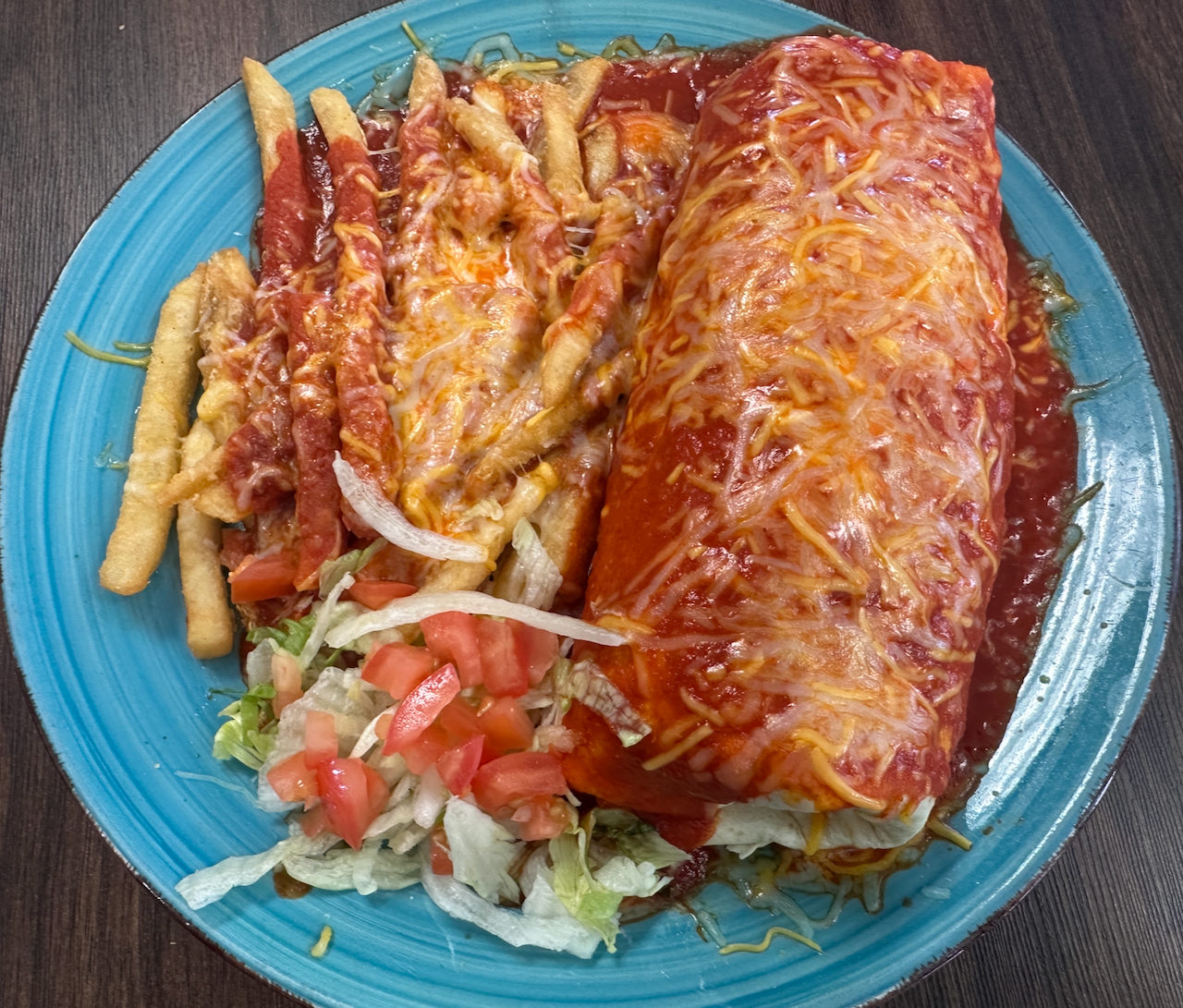
El Agave Mexican Restaurant – Rio Rancho, New Mexican

Even the teetotalers among us recognize the importance of agave in the production of tequila and mescal.   What most of us may not fully appreciate is  agave’s diverse cultural and culinary significance, particularly in Mexico.  For example, the drought-resistant succulent plant has been used in medicinal treatments such as treating wounds, digestive ailments, and even as a remedy for coughs and sore throats.  It’s a source of natural sweetener and a healthier alternative to refined sugars.  Restaurants in Mexico use it to prepare salsas, marinades, desserts and even some traditional dishes.  Agave even plays a prominent role in indigenous cultures where it’s revered and valued.  Many of us use it to xeriscape our yards throughout the Southwest. Since October, 2017, foodies in the City of Vision have recognized another type of agave for which to be grateful.  That would be El Agave, a delightful family-owned-and-operated Mexican restaurant.  If you haven’t seen El Agave during your own peregrinations in Rio Rancho, that’s because it’s recessed about a block from heavily trafficked Rio Rancho Blvd., the city’s main north-south drag.  Worse, it’s esconced in the Lujan Plaza, a timeworn shopping center that’s seen better days.  El Agave occupies a corner space diagonally…