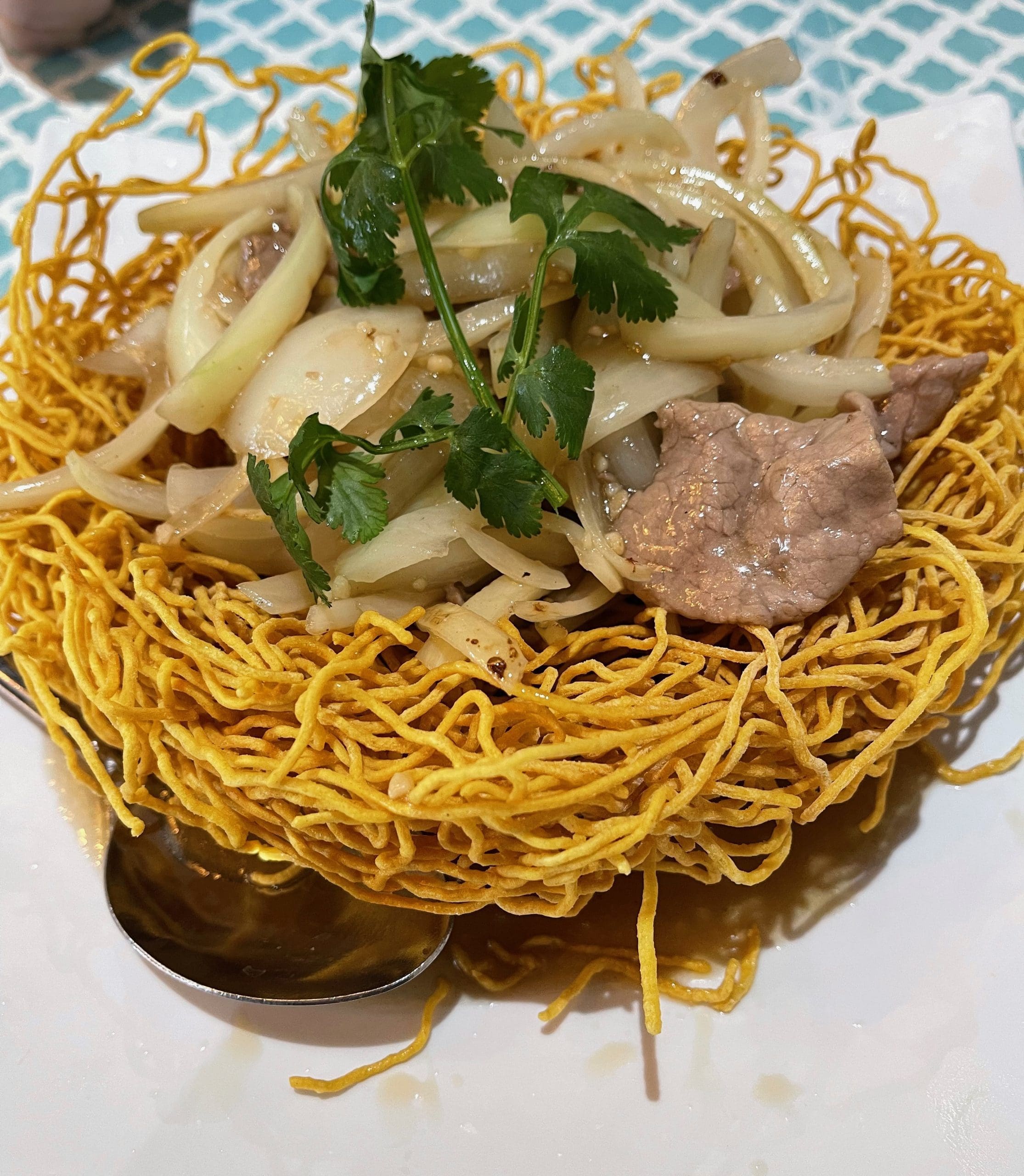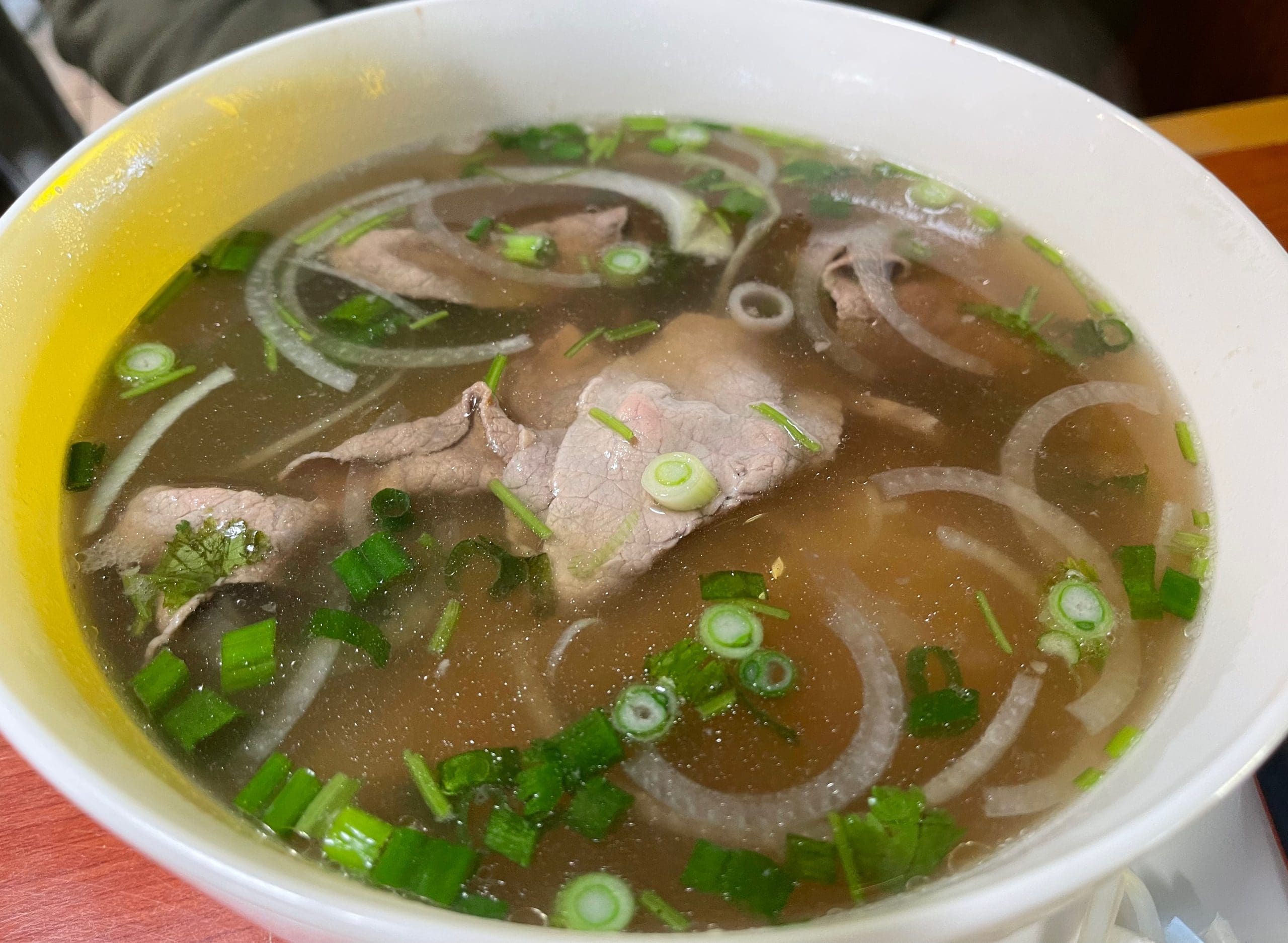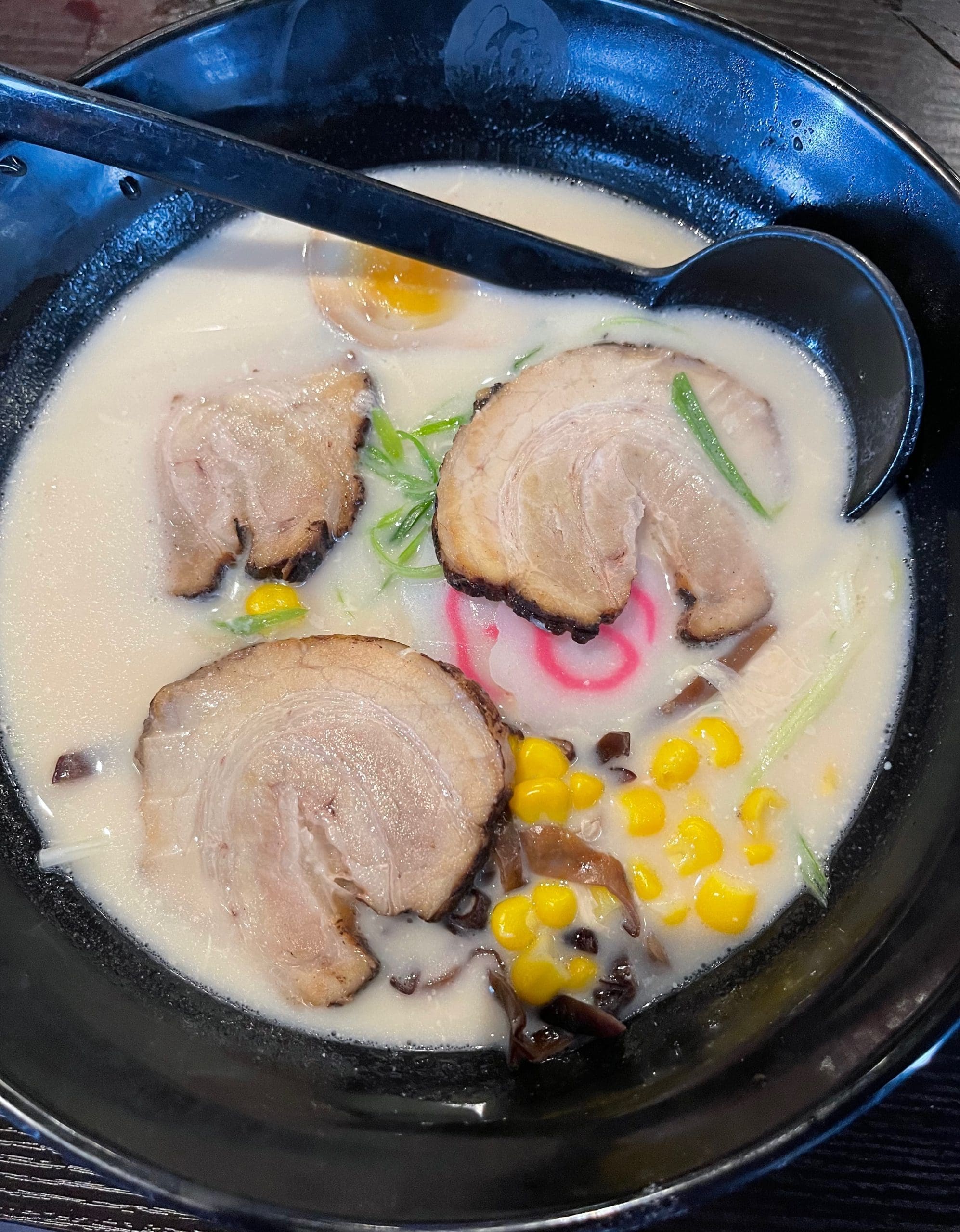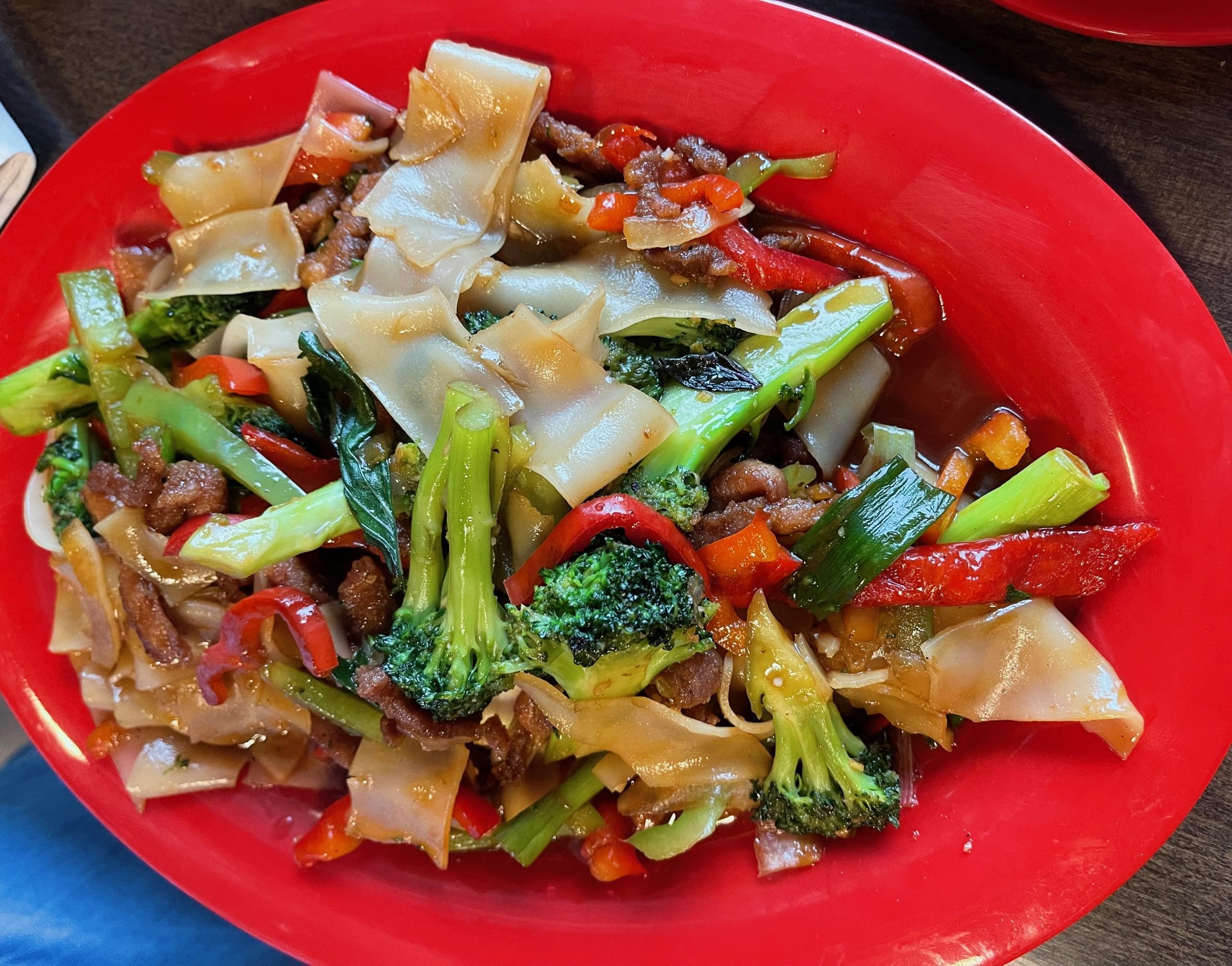
Pho 79 – Albuquerque, New Mexico (CLOSED)

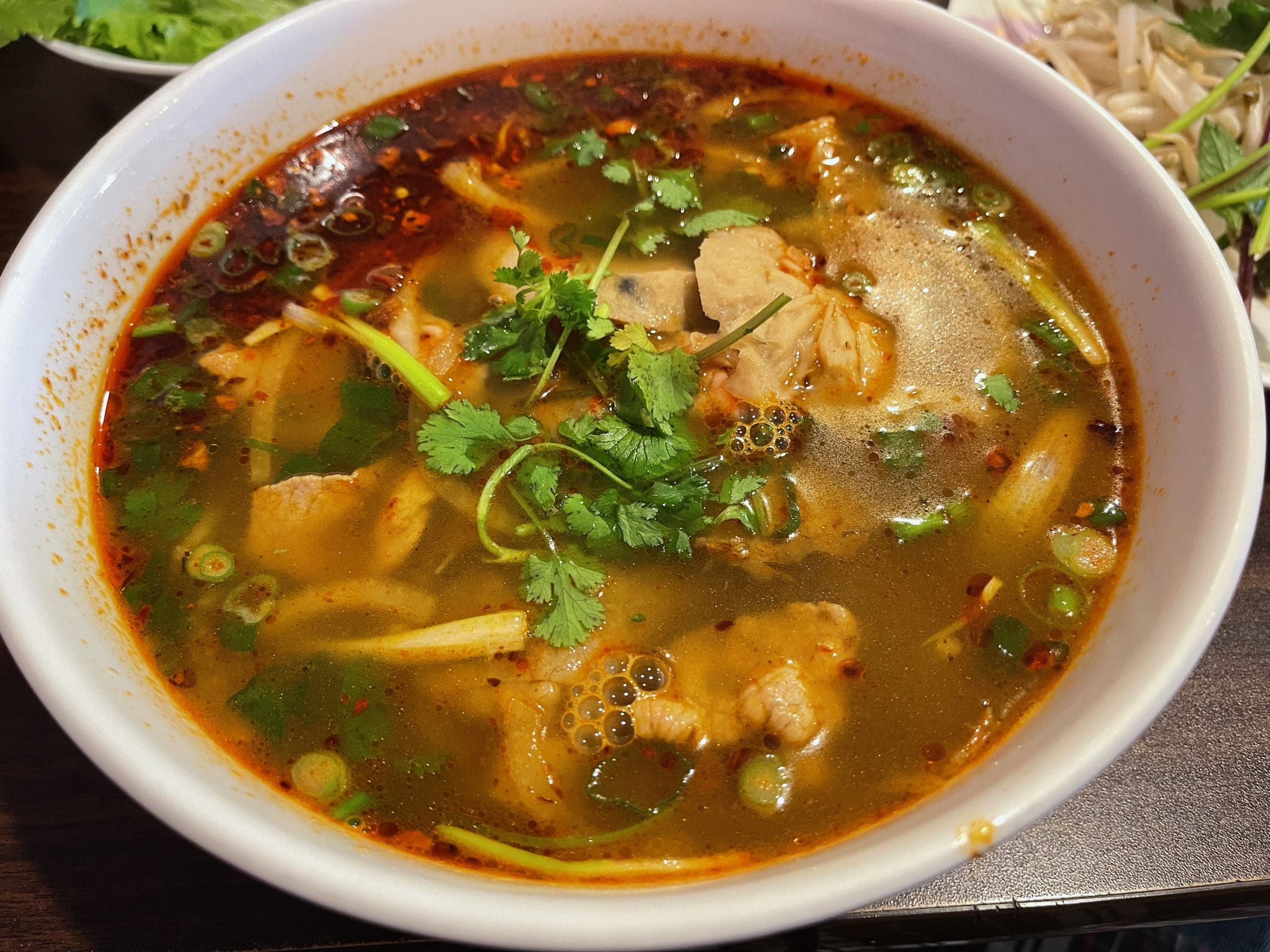
When the temperature dips and the Land of Enchantment’s ubiquitous winds howl with a vengeance, savvy diners revel in the knowledge that they can luxuriate in the familiar warmth of a steaming, swimming pool-sized bowl of aromatically alluring pho. Few things in life are as comfortable as snuggling up with a simple and no frills bowl showcasing a rich, spicy, nuanced broth with tangles of rice noodles, fresh herbs and vegetables and a veritable meat fest (rare steak, tendon, brisket, meatball). It’s the single best way to warm up from the inside-out on a bitterly cold day. With nearly forty Vietnamese restaurants gracing the Duke City, diners have no shortage of purveyors to frequent for this preternaturally pleasurable elixir. The…

Fun Noodle Bar – Albuquerque, New Mexico

By definition, many, if not most noodles are fun.  No, not fun as in luxuriating in a tub filled with ramen (albeit non-edible, synthetic noodles) with real tonkatsu (pork bone) broth.  Yeah, that really is a thing in Japan.  Nor does my contention that noodles are fun have anything to do with the Simpsons episode in which Bart was threatened with “forty whacks with a wet noodle.”  It doesn’t even have anything to do with the Beach Boys classic “Fun, Fun, Fun” song.  It especially has nothing to do with those buoyant polyethylene foam “noodle” tubes people bring to swimming pools. In a classic example of Gil style “swerve,”  Fun refers to Chinese noodles made from rice flour or some…

Thai Street – Albuquerque, New Mexico (CLOSED)

By chronological standards, Thai cuisine–especially as we know it today–is relatively new to the world culinary stage.  Culinary historians believe Thai cuisine may be as young as 1,400 years, coinciding with a mass migration of people from regions of China.  These settlers dined mostly on seafood, herbs and plants prepared mostly by stewing, baking and grilling (over time, stir-frying and deep-frying also became popular).  Large domestic animals such as water buffalo and oxen were too valuable to slaughter for food.  As such, meat was used very sparingly though considering the settlers’ propensity for seasoning, a small amount of meat went a long way.   While Chinese–particularly Szechuan–dietary practices were the most significant early influences, the introduction of other ingredients and…

TIKKA HUT PIZZERIA AND KABOB HOUSE – Albuquerque, New Mexico (CLOSED)

“I’ll give you three guesses to tell me what tabula rasa means,” I challenged my friend and Wordle phenom Carlos.  “That’s easy,” my erudite amigo proclaimed, “Tabula Rasa was a silent screen actress in the 1920s.”  “Close,” I replied, “but you’re thinking about Tallulah Bankhead.”  “I was just kidding,” he demurred, “Everyone knows tabula rasa is a Mediterranean salad.”  “You’re getting closer,” I joked, “but the Mediterranean salad you’re thinking about is tabouli.”  On his third attempt, Carlos gave me the right answer: “I’m drawing a blank.” Tabula rasa, in fact, translates from Latin to “blank slate.” In psychology as well as in epistemology (theory of knowledge), tabula rasa refers to the idea that we are solely the product of…

Saigon Restaurant – Albuquerque, New Mexico

According to some stereotypes, when you eat Chinese food, you’ll be hungry an hour later.    That stereotype is known as the “Chinese food paradox.”   One of the culprits behind that stereotype is rice, a very starchy food which metabolizes quickly.  Others blame monosodium glutamate (MSG) when hunger creeps in shortly after finishing a meal. Italian food is also shrouded in stereotype. “The trouble with eating Italian food,” according to British writer George Miller, “is that five or six days later you’ll be hungry again.” With Italian food–at least Americanized Italian food served in some of the ubiquitous chains–portions are often enough to feed a village in a developing country.  A plethora of pasta, tons of tomato sauce, mountains of…

Bamboo by Kulantro – Albuquerque, New Mexico

Hawaiian pizza, black licorice, blue cheese, anchovies, candy corn, cilantro…these are among the pantheon of foods Readers Digest says everyone either loves or hates. And by “everyone,” Readers Digest includes such culinary glitterati as Julia Child who expressed her loathing for for cilantro in a 2002 interview with Larry King.   The towering chef  proclaimed she detested cilantro, saying it has a “dead taste” to her.  Food Network personality Ina Gartner is even more blatant:  “I just hate it,” she related in a Munchie’s podcast.  “To me, it’s so strong and it actually tastes like soap to me, but it’s so strong it overpowers every other flavor.” Why then do some people have such a profound cattiness toward cilantro? According…

Cafe Nom Nom – Albuquerque, New Mexico (CLOSED)

NOTE:  Cafe Nom Nom no longer operates out of the Boxing Bear Brewery.  The Nom Nom Facebook page seems to indicate it now operates out of a food truck, but no information is provided as to days in which it is available to diners. “Nom nom.” It sounds innocent enough. Parents–yes, including parents of four-legged fur babies–utter it in baby talk intonations to get our children to eat something, especially when that something is “good for them” but doesn’t actually look or taste good. Nom nom was, of course, the favorite expression of Sesame Street’s Cookie Monster as he ravenously devoured a plate or six of cookies, a fusillade of crumbs flying from his chewing mouth. Grade school teachers use…

Thai Boran – Albuquerque, New Mexico

Many of us with a puerile sense of humor can probably recall giggling like silly school kids the first time we visited a Thai restaurant and perused a menu. We went straight into the gutter the first time we came across such foods as phat prik and fuktong curry. Even after learning that “phat prik” is actually a stir-fried chili dish and “fuktong curry” is a pumpkin curry, the sophomoric among us couldn’t order these dishes with a straight face. It gets even worse when we actually learned how to pronounce the names of Thai dishes. Not even Bob Newhart could order “cow pod guy” (chicken fried rice) or “cow pod moo” (pork fried rice) with his usual deadpan delivery.…

Zu Hot Pot – Albuquerque, New Mexico

“You have tattoos and others have piercings, but for me, there’s nothing that says more about me than the food I choose to carry every single day. As a kid trying to maintain my identity in America, my Chinese was passable, my history was shaky, but I could taste something one time and make it myself at home. When everything else fell apart and I didn’t know who I was, food brought me back and here I was again.” ~Eddie Huang, Fresh Off The Boat Food: It triggers memories that provide a sense of identity and belonging. It feeds the soul and nourishes the body. It impacts the environment and geopolitical politics. It inspires song, art and lore. It affects…

Roy’s Restaurant – Phoenix, Arizona

“Viejo El Viento,” one of my favorite songs during my youth in Peñasco asked “como vas a comparar el original con la copia?,” essentially how can you compare the original with a copy.  As our Christmas visit to Roy’s at the JW Mariott in Phoenix proved, sometimes the “copy” is so good that it becomes a life quest to see if the original matches up and sometimes there’s so little difference between the original and the copy that only the most discerning palate can tell the difference.  It appears a “backstory” is in order. In 2013, the featured special at the magnificent Blades’ Bistro in Placitas was black cod with a miso glaze, a dish Chef Kevin Bladergroen was taught to prepare by…

Pho Bar – Rio Rancho, New Mexico

“In food, as in death, we feel the essential brotherhood of man” – Vietnamese Proverb Western sensitivities cause even those among us who consider ourselves gustatorily open-minded to utter an “ick” or two at what is culinarily acceptable–even considered delicious–in other cultures. Some of us would recoil in disgust at the notion of eating grilled dog, roasted cat, grain-fed mice, beating cobra heart, soft-boiled fetal duck or silk caterpillars, but these are dishes an official Vietnam culture site considers “something special” when skilfully cooked. What the watered down American palate often considers disgusting may, in fact, have deep cultural underpinnings, some of the aforementioned “delicacies” even gracing the tables of royalty. Oftentimes things Americans consider inedible creepy crawlies are eaten…