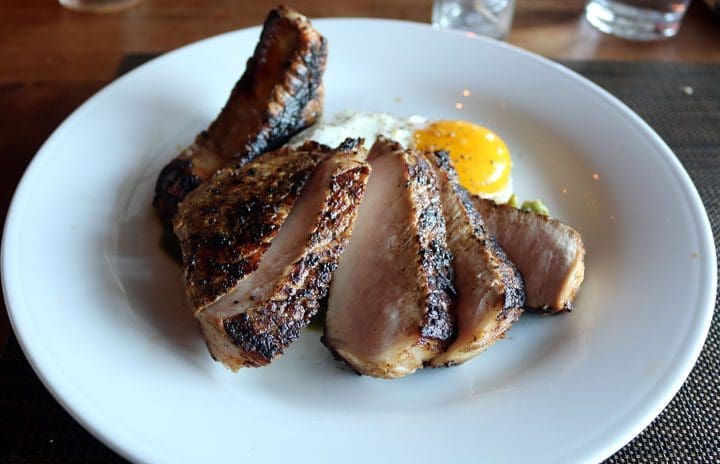
Gigi Italian Bistro – Albuquerque, New Mexico (CLOSED)

“If you can go through with what Gordon Ramsey puts you through there’s nothing much more you can do. I mean the berating from that guy is unbelievable, but the reward is even greater.” ~ Chef Robert Hesse Veni, Vedi, Veci (I came, I saw, I conquered):  Chef Robert Hesse, the superstar consulting chef who launched Gigi left Albuquerque in February, 2019. The review below was based on three visits to Gigi when Chef Hesse prepared our meals.  In light of his departure, I have removed the rating of “26” I accorded Gigi and will update my review accordingly after my next visit. Chef Robert Hesse isn’t the man he used to be. In fact, he’s literally and figuratively a shadow of his former self. Once tipping the scales at over 600 pounds and espousing the attitude that you should “never trust a skinny chef,” he’s now a svelte and fit 155-pound inspiration to caloric overachievers everywhere. I didn’t recognize him when he escorted The Dude and I to Gigi’s covered patio. Later when he dropped by and visited with The Dude, I thought “wow, Gigi’s host is really kind to dogs.” Even when he ferried over a plateful of…

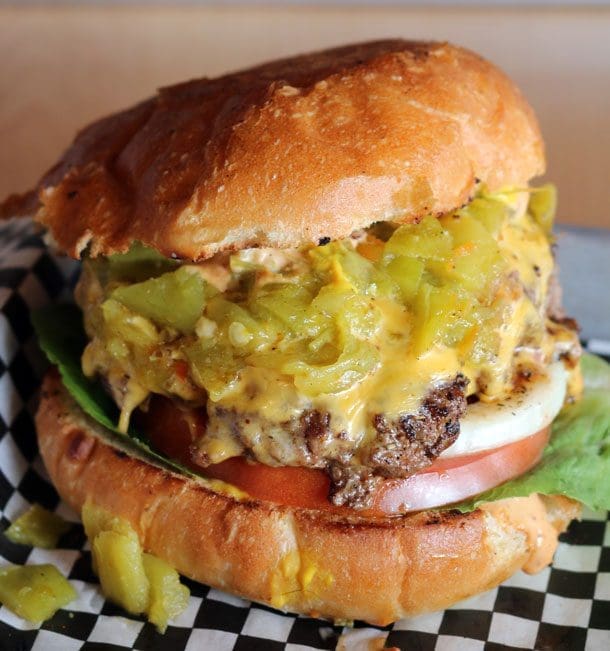
Bosque Burger – Albuquerque, New Mexico (CLOSED)

As much a social commentary as a realist novel, Grapes of Wrath by author John Steinbeck immortalized Route 66 as “The Mother Road”  and “the road to flight.”  The latter and lesser known sobriquet recalls the epic odyssey of nearly a quarter of a million people migrating to California to escape the despair of the Dust Bowl.  Route 66 not only succored Americans, it symbolized a renewed spirit of optimism and beginning anew just as the nation was coming off the Great Depression and World War I.  The 2,448 mile stretch of asphalt which traversed eight states connected remote and sparsely-populated regions with Chicago and Los Angeles, two of America’s most vital economic engines.  “The Main Street of America” also gave Americans a sense of adventure on the open road, introducing them to parts of the country theretofore found only in books.  That’s  especially true about the “wild west” of which New Mexico was a part. While most of us know that Route 66’s route through New Mexico meandered roughly east to west across the central part of the state, until 1937, Route 66 actually took a much lengthier detour.  Its initial alignment ferried motorists northward from Santa Rosa to…

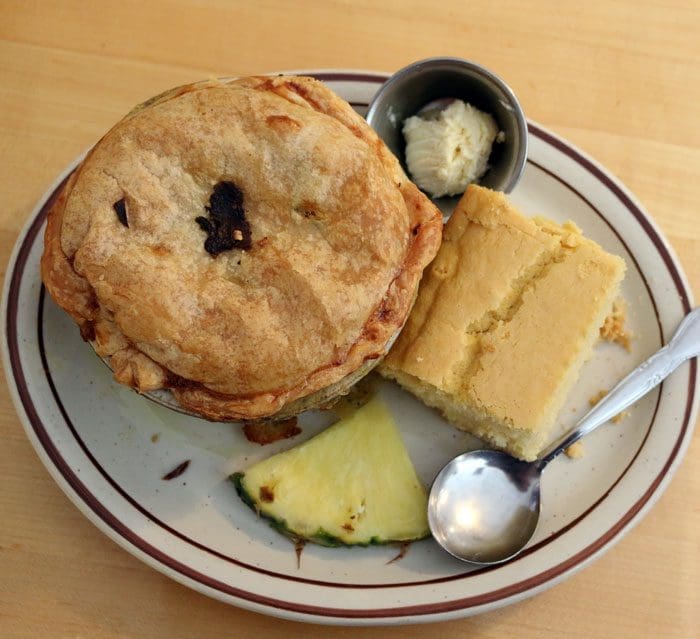
Copper Canyon Cafe – Albuquerque, New Mexico

“The Copper Canyon of northern Mexico–a place so huge and desolate that even today there are still some native people who have never seen an automobile.” ~Victor Villasenor Beyond Rain of Gold If you’ve ever watched the classic Humphrey Bogart movie Treasure of the Sierra Madre or read Victor Villasenor’s spell-binding tome, “Rain of Gold,” you’ve got at least a passing acquaintance with Mexico’s awe-inspiring Copper Canyon. Hidden in the Northern part of Mexico lies an astonishing system of gorges comprised of six vast canyons wider and deeper than the Grand Canyon. Although copper is mined in parts of the canyon, this geological wonder is named for the bronze-like patina of the canyon walls. The magnificent Copper Canyon landscape stretches 900 miles across Mexico and has become a very popular destination for adventurers.  Inquiries to friends and colleagues about the Duke City’s Copper Canyon Café gave me the impression it was as far distant and remote as the canyons for which it was named. My friend Bruce “Sr. Plata” Silver joked that perhaps because the Café is located in Albuquerque’s International District, diners may have surmised that a passport is needed to visit. A solid four star rating on 53…

Street Food Institute – Albuquerque, New Mexico

“The more street food we have, the more it’s embraced by every income strata, the better world we have.” ~Anthony Bourdain Jonathan Gold, the first restaurant critic to win the Pulitzer Prize for criticism, called food trucks “the new incubators of culinary innovation.” Indeed, chefs and entrepreneurs who ply their talents in food trucks and express themselves through  distinctively creative cuisine aren’t just fostering culinary trends.  They’re doing so at a rate at which their brick-and-mortar counterparts couldn’t conceive, much less execute. Food trucks are exposing consumers to unorthodox flavor combinations and ingredient fusions, creating a growing demand for more novelty and culinary diversity. Add fast and inexpensive to the mix and you’ve got a trifecta of reasons food trucks continue to expand. Every day across the planet, street food is consumed by 2.5 billion people. Across the fruited plain alone, food trucks generated 1.2 billion in revenue in 2015, a 12.4 percent growth over the previous five years. One industry publication projects an annual growth rate of about 9.3 percent for the next ten to fifteen years. Coupled with much lower start-up costs than brick-and-mortar restaurants, food trucks may sound like a lucrative proposition as well as a culinary…

Acapulco Tacos & Burritos – Albuquerque, New Mexico

Acapulco–just the name evokes images of pristine sandy beaches, translucent blue waters, a comfortable climate, luxury hotels, and world-class gourmet cuisine. There are many reasons Acapulco has earned its nickname of the “Mexican Riviera,” after the famous French resort area. It’s unlikely Albuquerque’s three Acapulco Tacos & Burritos restaurant will ever be mistaken for one of Acapulco’s pricey and sometimes pretentious three- and four-star restaurants. There’s absolutely nothing pretentious about Acapulco Tacos & Burritos. To the contrary, this humble denizen of deliciousness seem to symbolize the wonderful simplicity of Mexican food in the finest and most complimentary sense of the term. Okay, maybe the crossed palm trees and bright sun painted on the restaurant’s colorful facade might be a bit over the top, but that’s the extent of its veneer and polish. This restaurant is little more than a food stand specializing in take-out orders. Tiny picnic tables is where hungry patrons park themselves and wait for their orders to be filled. The restaurant truly lives up to its name with an extensive menu of homemade burritos and tacos. Wood signage boasts “our famous homemade burritos built our business!” It’s a business that’s been going strong for more than a…

Walker’s Popcorn Company – Albuquerque, New Mexico (CLOSED)

Who doesn’t love popcorn? Along with hot dogs, apple pie, hamburgers and barbecue, it’s been an American favorite–or should I say tradition–for generations. A humble treat, popcorn can grow in other parts of the world where other corn can’t. It was grown in the Americas, China, Mexico and India long before Columbus journeyed to America. According to urban myth, it was brought to the “first” Thanksgiving” (at least the one taught about in history books) by the Iroquois and since then, a tradition has existed of bringing popcorn to peace negotiations as a token of good will. Today Americans consume over seven billion quarts of popcorn every year. For generations, throngs of Chicago residents have stood in long lines to get the world’s best popcorn at Garrett Popcorn Shop. A resilient lot, they stand there regardless of frosty air, oppressive humidity, turbulent winds and every other way in which Mother Nature vents her wrath. The popcorn at Garrett is transformative.  It’s life-altering.  It’s a religious experience.  After each visit to Chicago, we crave Garrett for months and though there is no equal, Albuquerque has a popcorn shop which does  assuage our craving. Walker’s Popcorn Company has been serving Albuquerque since…

Plum Cafe – Albuquerque, New Mexico (CLOSED)

“The branches of the aspen plum To and fro they sway How can I not think of her? But home is far away,” – Confucius According to Urban Farm Online, “plums were domesticated in China more than 2,000 years ago and have figured in written documents since 479 B.C. These fruits were the plums Confucius praised in his writings and the ancestors of today’s Asian plums.” In China, plums symbolize good fortune while the blossom of the plum tree is considered a symbol of winter and harbinger of spring. The Taiwanese consider the plum blossom a symbol for resilience and perseverance in the face of adversity during the harsh winter. In both Korea and Japan, the plum blossom also symbolize spring while in Vietnam, the plum tree and its flowering blossoms symbolize feminine pulchritude. Despite its longevity, plums are not as significant on Asian dishes as one might expect, especially considering its versatility and complementary flavor potential. In excellent Chinese (Ming Dynasty) and Thai (Siam Cafe) restaurants throughout Albuquerque, plum sauce (sometimes called duck sauce) is a staple, a sweet sauce as thick as a jam with a slightly tart flavor which compliments egg rolls, spareribs and other appetizers and…

Cafe Nom Nom – Albuquerque, New Mexico (CLOSED)

“Nom nom.” It sounds innocent enough. Parents–yes, including parents of four-legged fur babies–utter it in baby talk intonations to get our children to eat something, especially when that something is “good for them” but doesn’t actually look or taste good. Nom nom was, of course, the favorite expression of Sesame Street’s Cookie Monster (Hi Darren) as he ravenously devoured a plate or six of cookies, a fusillade of crumbs flying from his chewing mouth.  Grade school teachers use nom nom as an example of an onomatopoeia, a word that imitates a sound.  My friend Michael Gonzales, the dynamic owner of Rio Rancho’s Cafe Bella uses it to describe great new restaurant finds. English majors recognize it as an expression used to convey pleasure at eating or at the prospect of eating.  It’s also a verb meaning “to eat something, typically with great enjoyment.” See anything wrong with the term nom nom?  Though it may never grace Gil’s Thrilling… in a descriptive manner, I don’t see anything wrong with it either.  So, if it sounds innocent and innocuous enough, why does the Huffington Post rank the word nom nom with “moist” as “the worst offender of words when it comes to…

Chello Grill – Albuquerque, New Mexico

Persian cuisine has been described as “poetry on a plate” and “a pretext to break into verse.” Persian history is replete with a large repertoire of literary quotes about food and drink. Even when the subject of a poem wasn’t about food, a poet’s appreciation for Persian cuisine often inspired the inclusion of culinary terms. Take for example fifteenth-century Persian poet Bu-Isaq of Shiraz who described his beloved as: “lithe as a fish, eyes like almonds, lips like sugar, a chin like an orange, breasts like pomegranates, a mouth like a pistachio” and so forth.” “Surely,” I thought, “contemporary poets can also be inspired to put to verse and song their sentiments about the loves of their lives using food in descriptive terms. Diligent searches revealed that the twain apparently doesn’t cross. I did, however, find an inspiring poem by Grammy award-winning hip-hop artist Busta Rhymes who pays tribute to his favorite food (and one of mine): “Mrs. Fried Chicken you was my addiction. Dripping with high cholest- Like Greeks with his falafel, Italian with his to-mato pasta. What roti is to a rasta. Trapping me; You and your friend mac’ and cheese. Candy yams, collard greens but you knocking…

Pho Linh Vietnamese Grill – Albuquerque, New Mexico

You always remember your first time…and if it’s good, it may set the standard by which you’ll forever measure every other time. I was a lanky lad of nineteen, away from home for the first time when “it” happened. As a precocious yet naive child growing up in bucolic Peñasco, New Mexico, I had been sheltered from the wiles and ways of the world and felt silly and embarrassed about being so inexperienced. All my new friends in Massachusetts seemed so sophisticated in comparison. Luckily I had a very patient and understanding teacher who taught me all its nuances and variations–how to appreciate its fragrant bouquet, taste the subtleties of its unique flavors and use my fingers as if lightly caressing its delicate features. To this day, I still compare all other Vietnamese meals against my first that balmy summer day in Massachusetts. I treasure the memories of my first fresh spring rolls; marinated, grilled beef served atop a bed of rice vermicelli and the fragrance of leafy basil wafting from my first steaming bowl of pho. The intoxicating aromas of Vietnamese cuisine remain a potent medium for conjuring up memories of my first time. A flood of memories greeted…

Little Anita’s New Mexican Food – Albuquerque, New Mexico

My friend Scott Pacheco may never forgive me for dining at Little Anita’s New Mexican Food in Old Town. Scott hates Little Anita’s, but not because of its food, ambiance or service.  He hates Little Anita’s for what he considers a traitorous act on the scale of Benedict Arnold and Judas Iscariot. To understand why Scott hates Little Anita’s so much, it might help if you know that there are two things in life he’s passionate about–the Denver Broncos and New Mexican green chile. If this isn’t making sense yet, recall that on February 2, 2014, the Seattle Seahawks demolished the Broncos 43-8 in Super Bowl XLVIII. Not only was this the largest margin of victory for an underdog, it was tied for the third largest point differential (35) in Super Bowl history. Scott was (and still is) incensed at the “dirty” Seahawks, the “blind mice” referees and “biased” announcers.  His beloved Broncos had no chance against such a stacked deck.  So what did Little Anita’s have to do with the Broncos loss?  Actually nothing, but in Scott’s mind Little Anita’s still committed an unforgivably (albeit unwitting) traitorous transgression.  As is  Super Bowl tradition, dignitaries from competing cities engaged in…