Chocolate Maven Bakery & Cafe – Santa Fe, New Mexico

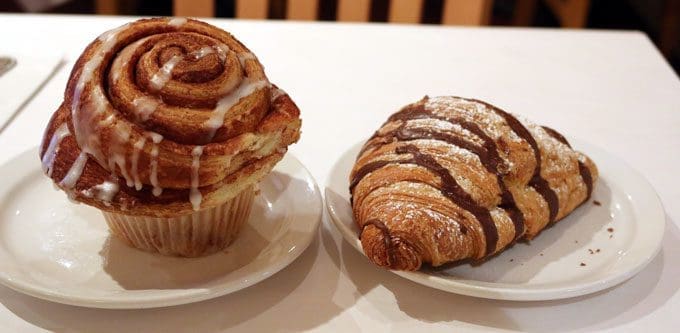
In the polytheistic world of the Mesoamerican cultures (which include the Aztecs and Mayans), Quetzalcoatl was revered as the creator deity and patron of priests, merchants and rulers. Known as the “feathered serpent,” Quetzalcoatl was also associated with the cocoa bean and with chocolate. Great temples were erected in his honor and chocolate was offered to him. Montezuma, the 16th century Aztec ruler revered him. In Montezuma’s great city of Tenochtitlan (which the Spaniards later renamed Mexico City), chocolate was considered a luxury drink reserved exclusively for gods and the ruler class. It is believed that Montezuma’s daily constitution included 50 goblets of a finely ground, foamy red dyed chocolate flavored with chili peppers, vanilla, wild bee honey and aromatic flowers. Today, chocolate is no longer considered exclusive to a privileged class and the celebrity-worshiping modern world no longer holds Quetzalcoatl, the “god of chocolate” in reverence. No longer are temples built in his honor or sacrifices of chocolate made in his name. Modern temples celebrating chocolate are ubiquitous in the modern world. One of New Mexico’s most renown and revered chocolate temples is the Chocolate Maven Bakery & Cafe, situated in an edifice which, from the exterior, more closely…

Piatanzi – Albuquerque, New Mexico

“Italy is an illusion, indeed, a mirage, the stuff of wishes.” ~Mario Luzi In the 1996 motion picture Big Night, two Italian restaurants across the street from one another operate in diametric opposition to one another both philosophically and in practice. One is enormously successful because it gives customers what they want and expect (even though savvy diners would consider the culinary fare mediocre and uninspired). In the other restaurant, the chef is a perfectionist who will labor all day to create a perfect dish and becomes exasperated when diners don’t recognize the authentic culinary art he creates, preferring “Americanized” Italian food instead. You might think the American dining public would prefer the latter and reject the former. Our inaugural visit to Piatanzi seems to indicate the opposite may be true in Albuquerque. Our route to Piatanzi took us past an Olive Garden where throngs of patrons lined up to get their fill of mediocre Americanized Italian food. When we arrived at Piatanzi, we practically had our choice of seating. The cavernous restaurant was nearly empty on a Saturday at noon. We could only hope this was an anomaly because diners should be beating down the doors to dine at…

Le Troquet Bistro – Albuquerque, New Mexico

Pope Gregory the Great was a prolific writer canonized as a saint and recognized as a “doctor of the church.” Among musicians, singers, students and teachers, he is revered as a patron saint, a heavenly advocate who intercedes on their behalf. Among gluttons of the Middle Ages, however, the supreme pontiff was reviled. In his treatise Morals on the Book of Job, Pope Gregory essentially condemned them to Hell, a denouncement reflecting the strict austerity of the times. For gluttons, the unpardonable sin was in deriving too much pleasure from eating. Eating, or more precisely the pleasurable overindulgence in food, was viewed as an ungodly preoccupation with temporal and corporeal pleasures at the expense of spirituality. Church leaders of the Middle Ages didn’t just denounce the derivation of pleasure from eating in a general sense. They listed five specific ways in which gluttony was a sin: eating too soon, eating too expensively, eating too much, eating too eagerly, eating too daintily and eating wildly. By Middle Age standards, many Americans are gluttons and would be condemned to an eternity in Hell for our enjoyment of food. Fortunately the provincial dogma regarding the enjoyment of food has been replaced by more…

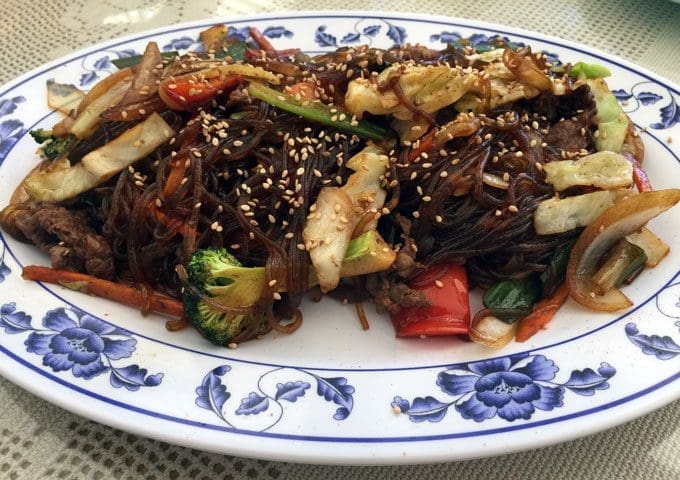
Arirang Oriental Market – Albuquerque, New Mexico

“Cuisine is the tactile connection we have to breathing history. History and culture offer us a vibrant living society that we taste through cuisine. All cuisine is a reflection of the society from which it emanates … in the end cuisine is the result of culture” – Clifford Wright If cuisine is the result of culture, then it can certainly be stated that music is the expressive language of that culture. Well before the advent of the written word, music was used to tell stories, impart wisdom, express ideas, share emotions and convey the history and culture of the civilization. Until the 20th century and the rapid cultural changes wrought by the postmodern period, music also bridged the generations. Family members of every generation typically listened to the same music. In Korea, there may be no song as beloved–even in North Korea–as Arirang, an iconic folk song often considered an unofficial national anthem. Its plaintiff lyrics convey a traveler’s agony and anguish while crossing a mountain pass named Arirang with a heartfelt longing to return home. After its service in Korea during the Korean War, the South Korean government designated Arirang as the official march of the United States Army’s…

El Zarandeado – Albuquerque, New Mexico

“Anyway, like I was sayin’, shrimp is the fruit of the sea. You can barbecue it, boil it, broil it, bake it, saute it. Dey’s uh, shrimp-kabobs, shrimp creole, shrimp gumbo. Pan fried, deep fried, stir-fried. There’s pineapple shrimp, lemon shrimp, coconut shrimp, pepper shrimp, shrimp soup, shrimp stew, shrimp salad, shrimp and potatoes, shrimp burger, shrimp sandwich. That- that’s about it.” – Bubba from Forrest Gump Benjamin Bufford “Bubba” Blue may have thought he knew all there was to know about shrimp, but he didn’t know about camarones and he had no idea about ceviche. In 1967 while Bubba was in Vietnam helping “save the world for Democracy,” only the jet-setters who spent time in Mexico’s coastal regions had an inkling about the magical things which could be done with mariscos (Mexican seafood) freshly plucked out of the sea. In 1967 American restaurants–particularly steak restaurants–were still serving butterflied fried shrimp in “surf and turf” entrees and calling it gourmet. Long John Silvers was still two years away from making inexpensive shrimp available to the masses. The most exotic use of shrimp during the year of the “summer of love” was probably on Chinese dishes. Mariscos restaurants didn’t make significant…

Bucketheadz – Albuquerque, New Mexico (CLOSED)

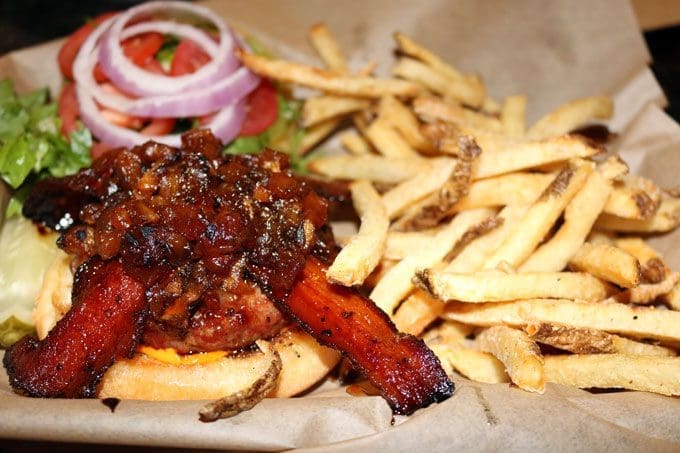
“I think it’s easy to dismiss Southern food as nothing but grease and grits. I happen to like both grease and grits, And if you call them lardo and polenta, no one would have a problem with it.” ~John T. Edge Author John T. Edge acknowledges that negative stereotypes are rampant about Southern food, crediting some of those perceptions to how Southern food is marketed. Instead of Southern food being presented as one of America’s great culinary traditions, all too often it’s presented as bumpkinly and backwater. Instead of focusing on its soul-warming deliciousness and comforting properties, it’s presented as fatty, fried and laden with butter. It could well be argued that Southern cooking is the Rodney Dangerfield of American cuisine; it gets no respect. Credit media, particularly the aptly named “boob tube” for perpetuating unsavory—and often inaccurate–stereotypes. If you were a product of the ‘60s and 70s, your perceptions of Southern cuisine were probably gleaned from such television shows as The Beverly Hillbillies, Green Acres, The Andy Griffith Show and The Waltons. While these programs were generally family-oriented and depicted homespun values, they often portrayed Southern food in a condescending light. Who, for example, can ever forget the typical…

Magokoro Japanese Restaurant – Albuquerque, New Mexico (CLOSED)

Emeril Lagasse, the jovial master of the culinary catchphrase, has been known to exhort his studio audience to “feel the love” as he adds a dash or two of something special to a dish. Indeed, love is that extra ingredient many chefs say they add to make everything they prepare taste better. To these chefs, cooking with love is not a labor of love because the gratification they receive is as intrinsically nourishing and pleasing as their cuisine is pleasurable and fulfilling to the diners who partake of it. Asian cultures have known for time immemorial that cooking is more than providing sustenance to sate hunger. They believe cooking and eating can create spiritual awareness and foster community as well as inspire the heart. The Chinese term dim sum, in fact, translates to “touching the heart.” In Japan, there’s a similar term–“Magokoro,” which is translated as “heart of truth” and is considered the basic attitude toward life. Magokoro is used to convey “sincerity, pure heart, uprightness.” It is, generally, the sincere attitude of a person in doing his or her best. Doing her best is precisely what Takako Bowen, the owner and chef of Albuquerque’s Magokoro Japanese Restaurant has done…

La Quiche Parisienne Bistro – Albuquerque, New Mexican

Who can ever forget Fred the Baker, the haggard, perpetually exhausted Dunkin Donuts baker and his iconic lament, “time to make the donuts?” Every morning an annoying alarm clock would rouse Fred from his deep slumber and he would wearily utter his trademarked catch phrase as he prepared for the rigor of the day. For fifteen years—from 1982 to 1997—Fred the Baker let America know it was time to make the donuts, reminding them that while he was doing so, the guys who make the supermarket donuts were still in bed. The Fred the Baker commercials became ingrained in American pop culture, but they also had a ring of truth. Being a baker means rising very early and working during hours in which most people are sleeping. According to the Bureau of Labor Statistics, “bakers work early mornings, late evenings, weekends, and holidays” and “the work can be stressful because bakers often work under strict deadlines and critical, time-sensitive baking requirements.” La Quiche Parisienne Bistro is an exemplar of every story you’ve ever heard about how hard bakers work. Master baker Bruno Barachin and his better half Sabine Pasco, the on-site pastry chef, put in the type of hours which…

Tecolote Cafe – Santa Fe, New Mexico (CLOSED)

Everyone knows the most sagacious of all creatures in nature is the owl. The owl is to whom all other creatures go to get some of life’s most pondered questions answered–questions such as “how many licks does it take to get to the Tootsie Roll center of a Tootsie Pop?” After having posed the question to a cow, a fox and a turtle, a young boy decides to ask the wise owl. “Good question, let’s find out,” the owl retorts. “A One…A two-hoo…A three (crunch sound effect). Three!” It took three licks for the erudite owl to get to the Tootsie Roll center of a Tootsie roll, prompting the boy to declare, “if there’s anything I can’t stand, it’s a smart owl.” Three is also the number of visits to New Mexico restaurants made in December, 2007 by Guy Fieri while filming episodes of Diners, Drive-Ins and Dives for the Food Network. Fieri was wise enough to make one of those visits to Santa Fe’s own owl, the famous and fabulous Tecolote Cafe. Tecolote is the Nahuatl (Aztec) word for “owl,” but founding proprietors Bill and Alice Jamison actually named their restaurant for an all-but-deserted Northern New Mexican village alongside…

Frost Gelato – Albuquerque, New Mexico

“I believe gelato is meant to be treated as medicine and taken daily as a prescription.” ~Author: Betsy Brandt If you’ve never associated such words as searing, stifling, sweltering, sultry, sticky and sizzling with Italy, you probably haven’t been there during a summer heat wave. During the day, cobbled streets heat up like a pizza oven, radiating heat even through the night. Worse, in much of Italy air conditioning is a rare luxury, especially by American standards. Even at five-star luxury accommodations you probably won’t be able to drop the temperature down to the cool 70-degrees you enjoy at home. Summer’s heat in Italy is probably why Andrew Zimmern, host of the Travel Channel’s Bizarre Foods Delicious Destinations program described gelato as “Italy’s air conditioning,” a phrase coined by Faith Willinger in 1996. More specifically, she called gelato “oral air-conditioning, the only food that Italians will eat on the street.” Aside from its cooling properties, both Zimmern and Willinger wax poetic about the sheer deliciousness of the cool, creamy, refreshing treat Italians have perfected. Tucson natives and lifelong friends Stephen Ochoa and Jeff Kaiserman found out just how hot Italy can be when visiting Lo Stivale, the boot-shaped nation. Now,…

The Luna Mansion Landmark Steakhouse – Los Lunas, New Mexico (CLOSED)

New Mexico is truly a dichotomous land, a state in which seemingly contrasting qualities exist in symbiotic harmony with each other. While most of those contrasts exist spectacularly in nature, the Land of Enchantment’s architecture is no stranger to contradictions. One such example is the Luna Mansion, a stately manor built in the Southern Colonial architectural style, but whose basic construction material is adobe. The Luna Mansion was built in 1880 by the Santa Fe Railroad Company in exchange for right-of-way through lands owned by the Luna family. In the 1920s, the Luna-Otero family added to the grandeur of the Los Lunas showcase by building a front portico and grand solarium. White Grecian columns bid all visitors welcome. In the 1970s, the Luna Mansion was transformed into a restaurant, perhaps rankling the ire of Josefita Otero, one of the original family members to dwell in the Mansion. Her apparition, attired in 1920s regalia, began to appear. Several other apparitions, including Cruz, a groundskeeper, are said to haunt the restaurant while others have been seen or felt on the grounds of the estate. Perhaps they continue to visit the Luna Mansion for the food. While Auld Lang Syne faded with the…