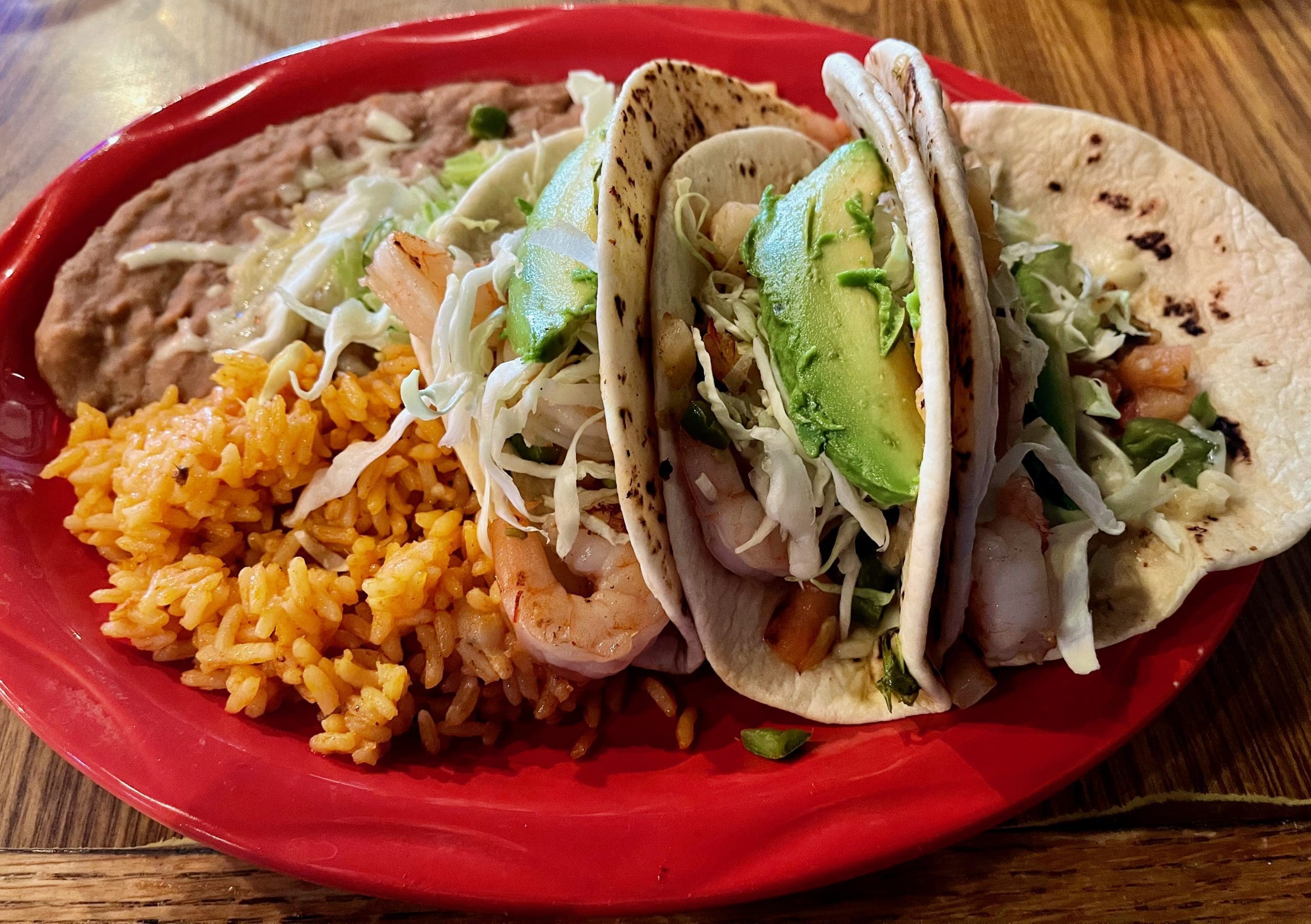
Salty Catch – Albuquerque, New Mexico

As children growing up in landlocked and agrarian Peñasco, my siblings and I led a very sheltered life. Our extremely provincial experience with “seafood” was limited to Mrs. Paul’s fish sticks which we dipped in Kraft’s sandwich spread (we didn’t know about tartar sauce) and (gasp, the horror) Mrs. Paul’s fried shrimp. Sure, we snared the legal limit (yeah, right) of German brown trout, cutthroat trout and rainbow trout in the cold, rocky waters of the mountain streams in our backyard, but that wasn’t “seafood.” That was fish! One commonality among the “seafood” and even the “fish” we experienced was that it was all fried. Okay, so the Mrs. Paul’s seafood was already breaded and fried when we removed it from its hermetically sealed container. All we had to do was put it on a baking pan and bake it “until crispy and browned.” Despite my mom following the instructions on the box, both the fish sticks and shrimp had a mushy and oily texture. It certainly didn’t have the wonderful mouth-feel of the fish she fried for us. One memorable school trip to the “big city” of Albuquerque included a visit to Sizzler, a “fancy” steakhouse chain that would…

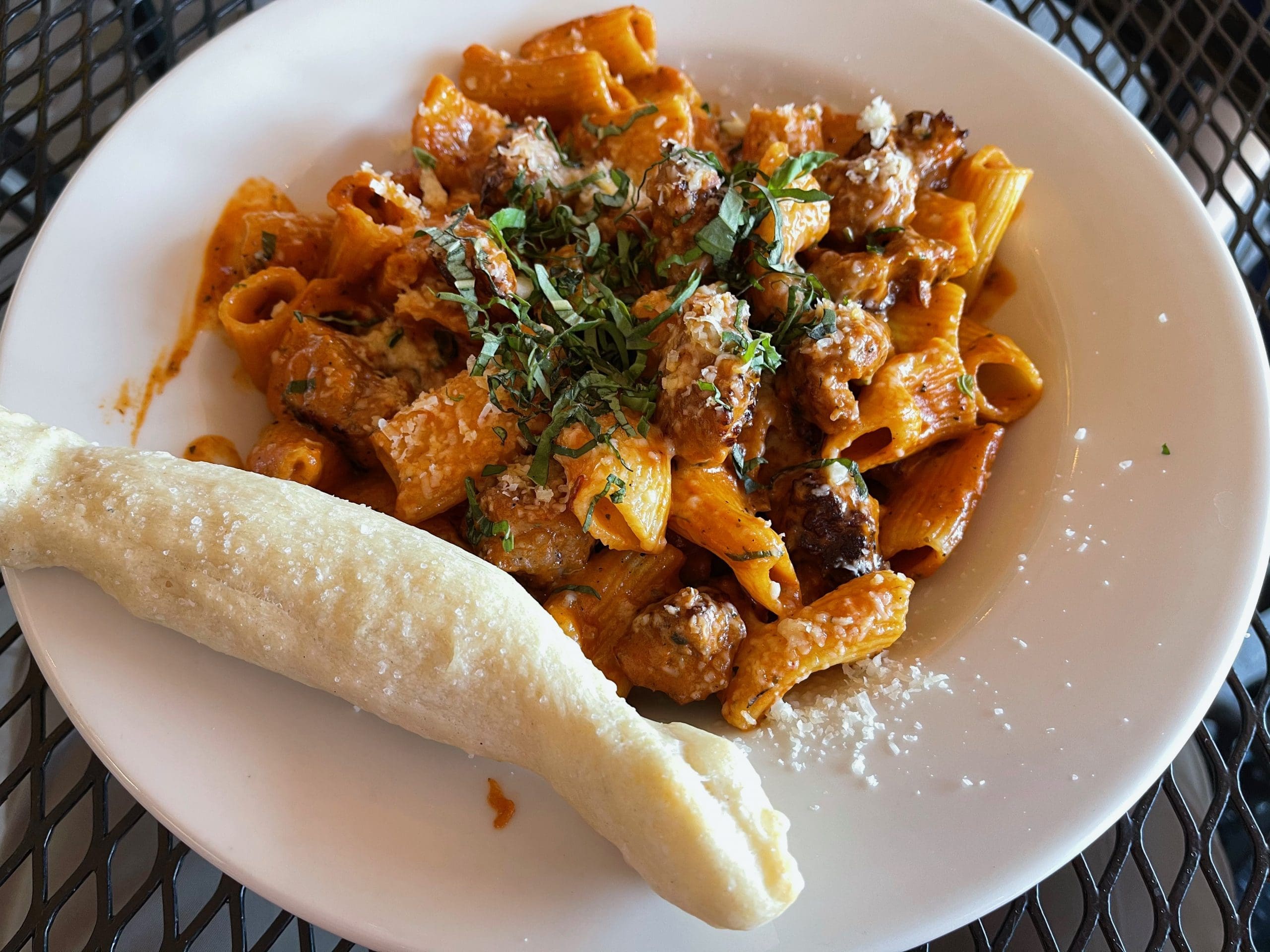
Urbano Pasta Kitchen – Albuquerque, New Mexico (CLOSED)

“To break bread together,” a phrase as old as the Bible, captures the power of a meal to forge relationships, bury anger, provoke laughter.” ~The Joy of Food From National Geographic Sharing a meal creates a unique sense of intimacy felt by all who sit together at the table.  It’s an act that can spark new friendships, solidify lifetime bonds and serve as the backdrop for new memories.   Dining together is the most communal and binding action humans can take–an act The Atlantic describes  as “a quintessential human experience.”  It’s a universal act that transcends cultures, borders and geopolitical divides and it’s been practiced since the dawn of time.   Or at least for 300,000 years  according to archaeologists who unearthed evidence of ancient meals where diners gathered to eat together at a cave near Tel Aviv. Professor Ayelet Fishbach published a study in the Journal of Consumer Psychology that showed colleagues who ate similar foods together experienced higher rates of trust and closeness than those who ate alone.   If you’ve ever worked in a team environment, you can relate to that finding.  It’s amazing just how many agreements are brokered and how many ideas are conceived when two…

Dragon House – Albuquerque, New Mexico

Admit it–every time you dine at a Chinese restaurant, you peruse the Chinese Zodiac paper placemats at your table describing the characteristics of people based on their birth year. Every new year of the lunar calendar is represented in Chinese mythology by one of twelve animals, only one of which is mythological. That would be the dragon. People born on the year of the dragon are considered very fortunate as presumably a long, happy life awaits those with a dragon birth year. So that you don’t have to look it up, the last six years of the dragon were 2012, 2000, 1988, 1976, 1964 and 1952. If you were born before 1952, simply subtract 12. Long before Hungarian Horntails, Swedish Short-Snouts and Norwegian Ridgebacks ran roughshod over the wizarding world of Harry Potter, giant-winged, fire-breathing reptiles were carving a niche in the rich history of China. Unlike the malevolent maiden-stealing, village trashing, knight incinerating creatures of old European mythology, dragons in China were viewed as benevolent entities capable of bringing rain to a parched land. The dragon signified power, strength and good luck. Starting with the Han Dynasty (206BC – 220AD), Chinese emperors assumed the symbolism of the dragon, hoping…

Bibo Bar & Grille – Bibo, New Mexico

There’s an old Lebanese proverb that says, “some men build a wine cellar after only finding one grape.” That proverb aptly describes the many rags to riches success stories among Lebanese immigrants to the Land of Enchantment, primarily to our state’s northern villages. Some of New Mexico’s most prominent names in business–Maloof, Bellamah, Hanosh, Ghattas, Sahd and others–embody the spirit of that proverb. The progenitors of many of New Mexico’s Lebanese immigrants left Lebanon during the repressive Ottoman Empire, the main exodus occurring in the late 19th and early 20th centuries. Escaping persecution and poverty, some arrived with nothing but aspirations, dreams and hopes. The frontier territory of New Mexico was replete with opportunity (and the prospect of freedom) for them. Like their Phoenician forefathers had done, many of them began as door-to-door peddlers, many eventually launching trading posts or general stores in the small villages in which they settled. The “Arabes” as they are sometimes still called by Hispanics were hard workers, shrewd businessmen, community-minded and family-oriented. They fit right in with the tight-knit Hispanic communities which shared similar values–so much so that Los Arabes of New Mexico, a wonderful book written by Monika Ghattas is subtitled Compadres From…

Nena’s Food – Albuquerque, New Mexico (CLOSED*)

“The restaurant business, as I well know, ain’t no picnic. And in Mexico City, it’s particularly rough.” ~Anthony Bourdain NOTE:  Although its brick-and-mortar shuttered its doors in 2022, Nena’s Food now exists as a food truck.  You can find it parked “Somewhere in New Mexico.” With an urban area population of almost 22-million over a broad expanse of 573 square miles, Mexico City is the fifth most populous city in the world and the most heavily populated city in North America. Known as Distrito Federal, or the federal district, it is the country’s economic and cultural hub, as well as home to the offices of the federal government. A true megalopolis, Mexico City boasts of some 15,000 restaurants including two restaurants ranked among the world’s fifty best restaurants in 2019 and eleven of Latin America’s 50 top-ranked restaurants.  By any measure, Mexico City is one of the world’s greatest eating cities.  Whether in pursuit of cosmopolitan fine dining, incomparable street food or market stalls showcasing agrarian bounty, you’ll find it in this culinary Mecca.  You’ll uncover both time-honored recipes–some predating Cortez–passed down through the generations as well as a globally-influenced fusion of ingredients and techniques.  You’ll relish dishes with unique…

Poki Poki Cevicheria – Albuquerque, New. Mexico

Having settled comfortably into middle age (perpetually 39-years old), my favorite participatory sports of basketball and tennis have been replaced by more sedentary, safe and slothful pursuits. Instead of getting my shot rejected (almost as often as the cheerleaders in Peñasco spurned my offers of a burger at Victor’s Drive-in), I now delight in catching every grammatical faux pas, malapropism and inaccuracy uttered by the media–not a difficult challenge since the legendary and near infallible anchor Dick Knipfing retired. Instead of double-faulting on my serve eighteen times in a row, it’s answering questions which stump Jeopardy contestants that now gets my adrenaline pumping. Alas, as a fogey who believes music died in the 70s pop culture questions are my downfall.   I could not, for example, answer a question about Hollywood heartthrob Ryan Gosling but count among my very favorite people, the Albuquerque Adonis, Ryan “Break the Chain” Scott.  Another case in point, “Barney the Purple Dinosaur” was my answer to a recent question about a video game franchise from Japan. The correct answer, of course, was Pokemon. Pokemon? I could have answered nearly all there is to know about Poke, the Hawaiian culinary craze that’s sweeping the mainland, but had…

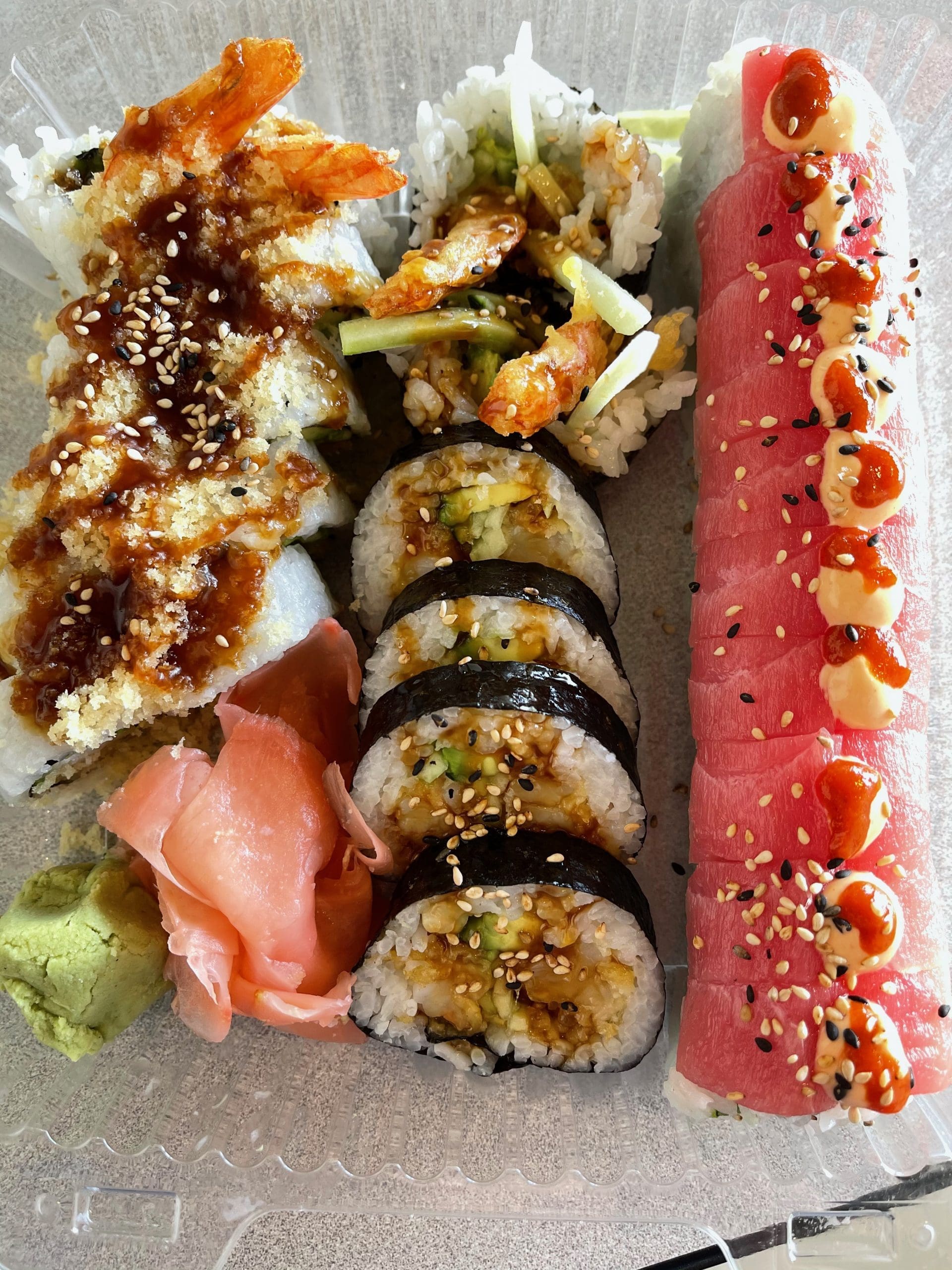
Kamikaze Kitchen – Albuquerque, New Mexico (CLOSED)

NOTE: In early January, 2024, Kamikaze announce the closure of its brick-and-mortar location. The owner said increasing rent and years of vandalism played a large role in the decision. In the 1970s and 1980s, Reese’s Peanut Butter cups commercials consisted of a series of vignettes. Each vignette depicted the collision of two daydreamers–one eating peanut butter and the other eating chocolate. The peanut butter eater would exclaim “you got chocolate on my peanut butter.” The one eating chocolate would retort “you got peanut butter on my chocolate.” The two would then sample the mix of chocolate and peanut butter and burst out in wide-eyed surprise with “Delicious!” A godlike narrator would then proclaim “Two great tastes that taste great together.” My mention of “fusion cuisine” once brought about the retort “you mean like chocolate and peanut butter” from my former colleague Matt Mauler.  For Matt that magical melding of chocolate and peanut butter is probably as far as he would ever go in culinary exploration.  My counter-argument fell on deaf ears–that cuisine across the world has been made significantly more interesting by the intermingling of culinary cultures.  Moreover, I argued, the convergence of cooking techniques, spices, ingredients and recipes has…

Heaven Dragon – Rio Rancho, New Mexico

From Norbert, the Norwegian Ridgeback of Harry Potter lore to Smaug, the greatest and most powerful of all dragons in The Hobbit, dragons are a familiar icon in modern literature, movies, music and pop culture.  Dragons are symbols of fantasy, whimsy and magic, often representing ancient legends and far-off lands.  They range from the malevolent, fiery tempered, scaly fire-breathers (insert your favorite mother-in-law reference here) to the affectionate benefactors of mankind.  What could possibly explain the popularity of dragons?  Could it be because dragons once existed?  Stories of dragons are pervasive in such ancient cultures as the Chinese, Australian aborigines, Babylonians and Welsh.  Ancient Chinese cosmogonists actually defined four types of dragons.  The Heaven, Heavenly or Celestial Dragon (Tianlong) guarded the heavenly dwellings of the gods.  The Earth Dragon (Dilong) controlled the waterways while the Spiritual Dragon controlled the rain and winds.  The fourth, Fuzanglong, was the dragon of hidden treasure.   The Heaven Dragon of Chinese mythology may have looked down from its celestial perch as emperors of the Ming and Qing dynasties visited Beijing’s Temple of Heaven to pray for a good harvest.  The Temple of Heaven is one of two large, colorful photographs (the other is of…

Placitas Pizza – Placitas, New Mexico

Back in the 1960s before the world was “woke” a catchy television jingle painted a pretty bleak picture: “Aunt Jemima pancakes without her syrup.  It’s like the spring without the fall.  There’s only one thing worse in the universe.  That’s no Aunt Jemima at all.”  Frankly, there’s one thing worse than Aunt Jemima pancakes without her syrup.  That would be a village with no pizza.  A Village With No Pizza.  Doesn’t that sound like a horror story about a dystopic place where residents are haunted by insatiable cravings for an essential food group?  In actuality, that horrific situation described the village of Placitas where, for generations, residents had to find pizza elsewhere. As in all clichéd horror movies, escape to an idyll that proffers pizza was fraught with obstacles.  Thankfully instead of axe wielding killers and cars that don’t start, those obstacles included having to drive to Pizza 9 in Bernalillo or Davido’s in Rio Rancho.  Only the Israelites wandering in the dessert for forty years seemed as long as driving through Bernalillo where perpetual construction of Highway 550 remains a twisting and turning, stop-and-go nightmare.  The alternative (and probably quicker than driving through Bernalillo) is driving to Albuquerque, some 25…

AK Pizza – Albuquerque, New Mexico (CLOSED)

“I hate it. I think it’s an abomination. There are so many awesome things here, I don’t know why that should be featured. It’s leading with your weakness. So much other great stuff.” ~Anthony Bourdain What could have rankled the ire of the world renowned celebrity chef, master raconteur and social activist?  Was it an injustice in dire need of exorcising?  Dystopian horrors in a faraway third-world country?  Devaluation of life?  Bringing to light those suffering in the dark?  No, my friends.  It wasn’t the broken world Bourdain railed against.  It was something much more apolitical…unless you’re talking about the politics of pizza, specifically between the warring factions of New York and Chicago.  What Bourdain found so appalling was Chicago’s deep-dish pizza. Chicago deep-dish pizza is the Rodney Dangerfield of pizza.  Outside the Windy City, it gets no respect.  Cynics malign it as “not a pizza.” Others, such as Bourdain and former “Daily Show,” host Jon Stewart simply love to hate it.  In a particularly vitriolic rant, Stewart called it everything from a “fricking casserole” to “an above-ground marinara swimming pool for rats” and worse, much worse.  He suggested it would be complete with canned onion rings on top.  Even…

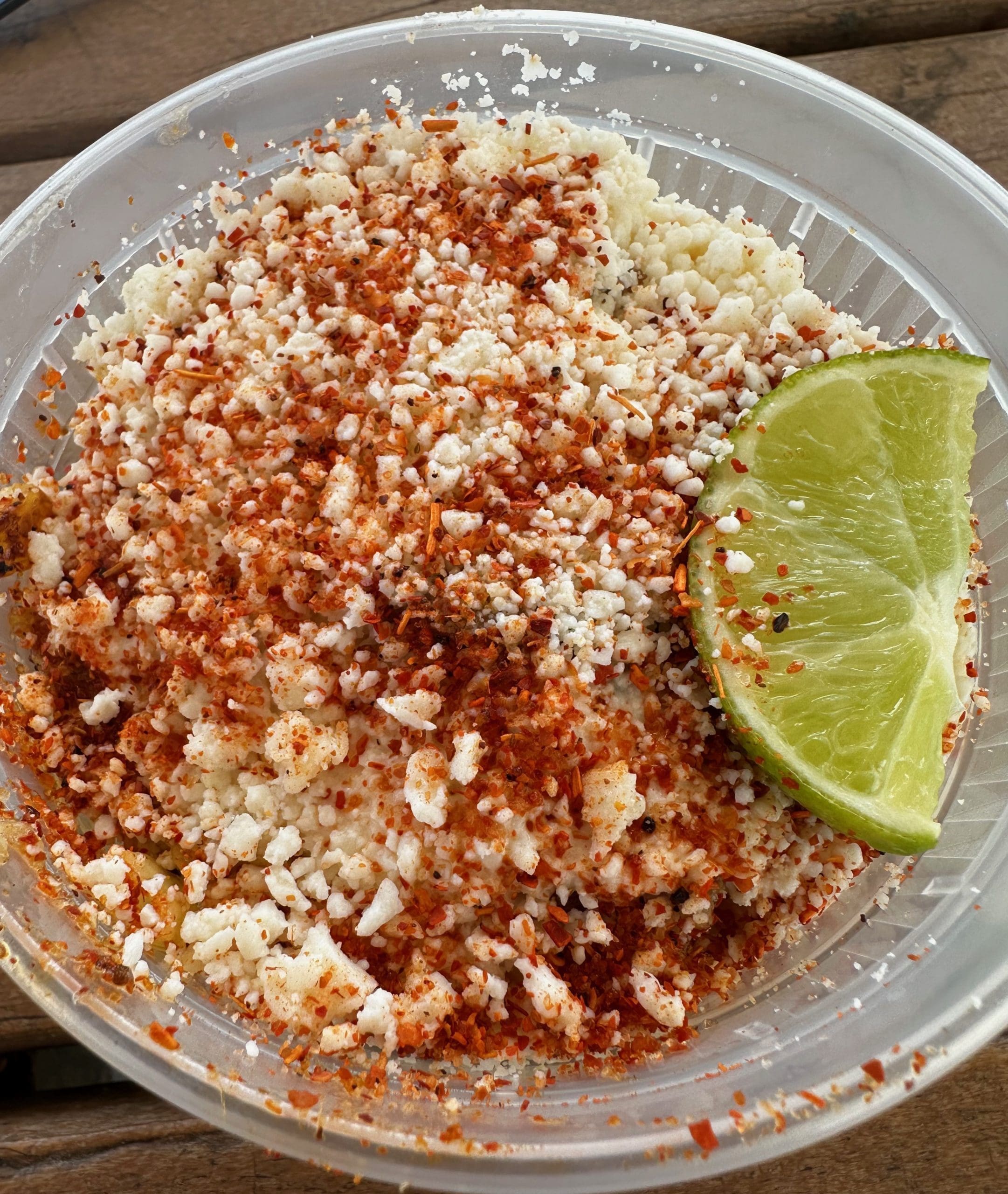
Street Food Sensations – Albuquerque, New Mexico

Restaurant Insider, which touts itself as “your source for restaurant news, trends, information, tools and conversation” has observed that one of the catalysts most instrumental in driving a changing culinary landscape are Generation Z (anyone born between 1997 and 2010) diners.  With a spending power of over $29 Billion, Gen Z diners make up a quarter of all the people going out to eat, accounting for 14.6 billion restaurant visits in 2018.  Gen Z is increasingly influencing restaurant industry trends, prompting savvy restaurateurs to take a real hard look at their current menus. And just what do Gen Z diners want?  According to Technomic’s  2019 College & University Consumer Trend Report, “42 percent of Gen Z-ers want street food on the menu.”  Not just the street food more geriatrically-advanced citizens among us might think of, but food fashioned by the fusion of culinary cultures and ingredients.  Because Gen Z constitutes the most ethnically diverse of all generational cohorts, the traditional definition of “American” food is rapidly evolving, with ethnic tastes and foods becoming even more mainstream.  Gen Z wants—and expects—more mash-ups combining multiple ethnic influences, a blurring of lines between ethnic menus. As we perused the menu at Street Food…