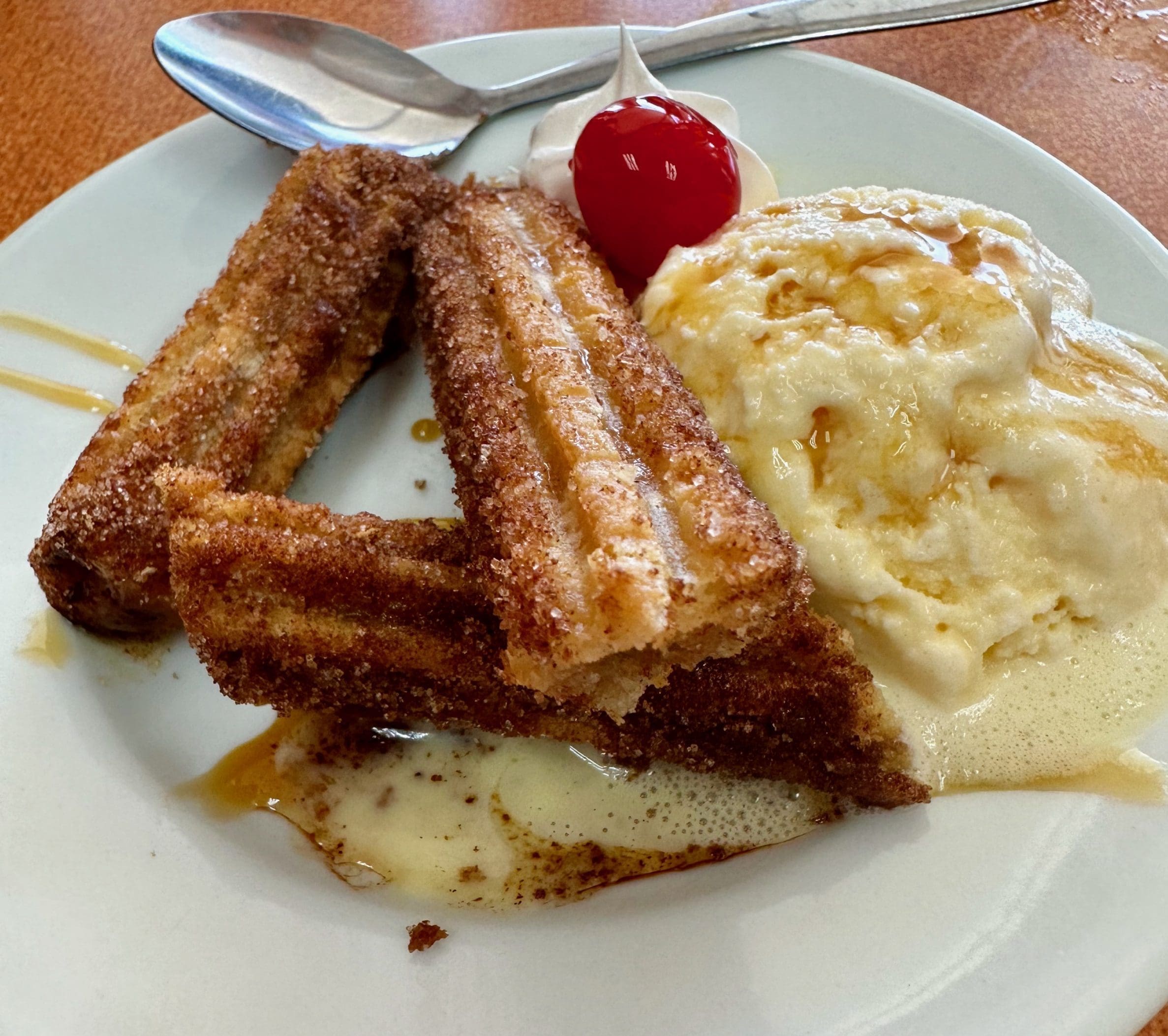
Monte Carlo Steakhouse – Albuquerque, New Mexico

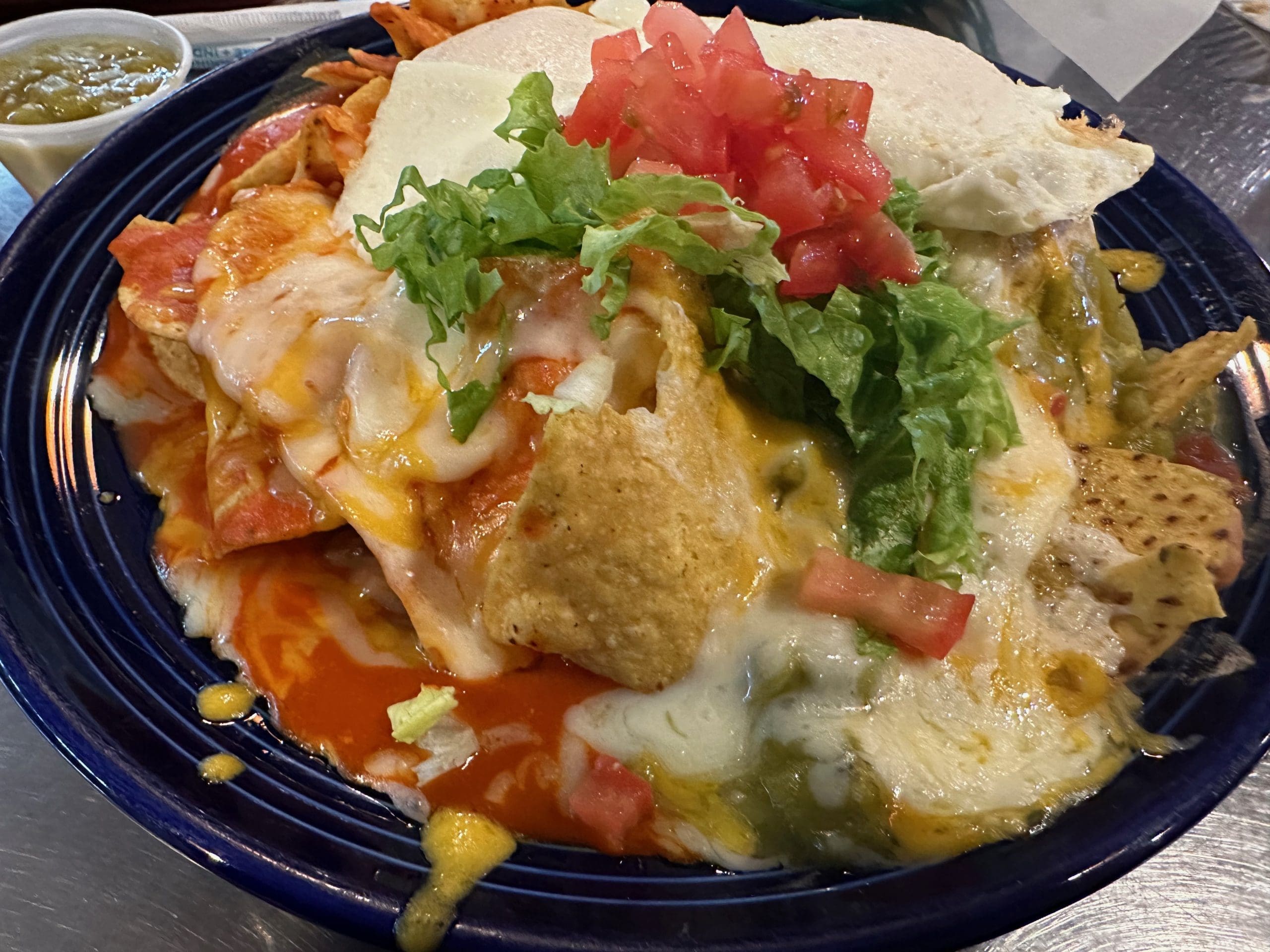
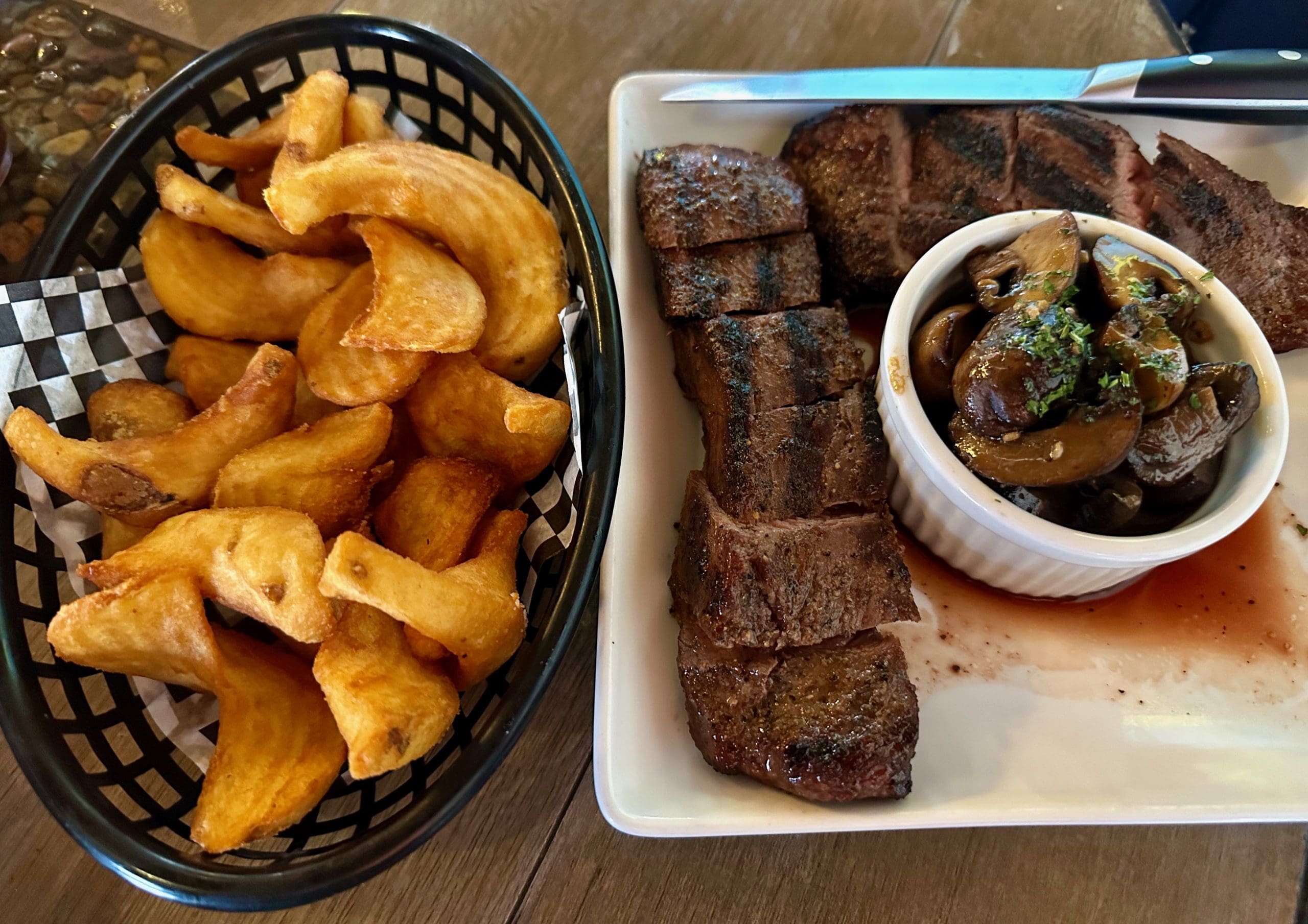
“Last night I broke the seal on a Jim Beam decanter That looks like Elvis.” ~George Jones Having spent much of his career in an inebriated state, Country music icon George Jones actually lived the life experiences that inspired much of his music. After one of his four divorces, Jones sat alone in a rather empty home, his ex-wife having absconded with almost everything–furniture, china, glassware and more. Among the few items left behind were a small table, a Jim Beam whiskey decanter bearing the likeness of Elvis Presley, and a Fred Flintstone jar of jelly beans. After dumping the jelly beans, the “Possum” used the jar as a glass into which he poured the entire contents of the Jim Beam decanter. The imaginary conversations he had with Elvis and Fred during his impaired state were the inspiration for the song “The King is Gone.” Only among avid collectors will you generally find Jim Beam decanters sporting the likeness of The King. The Duke City’s most prolific collectors of vintage adult beverage decanters, bottles and signage is the Monte Carlo Steak House on Route 66. Kitschy mirrors emblazoned with the logos of beer distributors, anthropomorphic alcohol decanters, faux wood walls,…

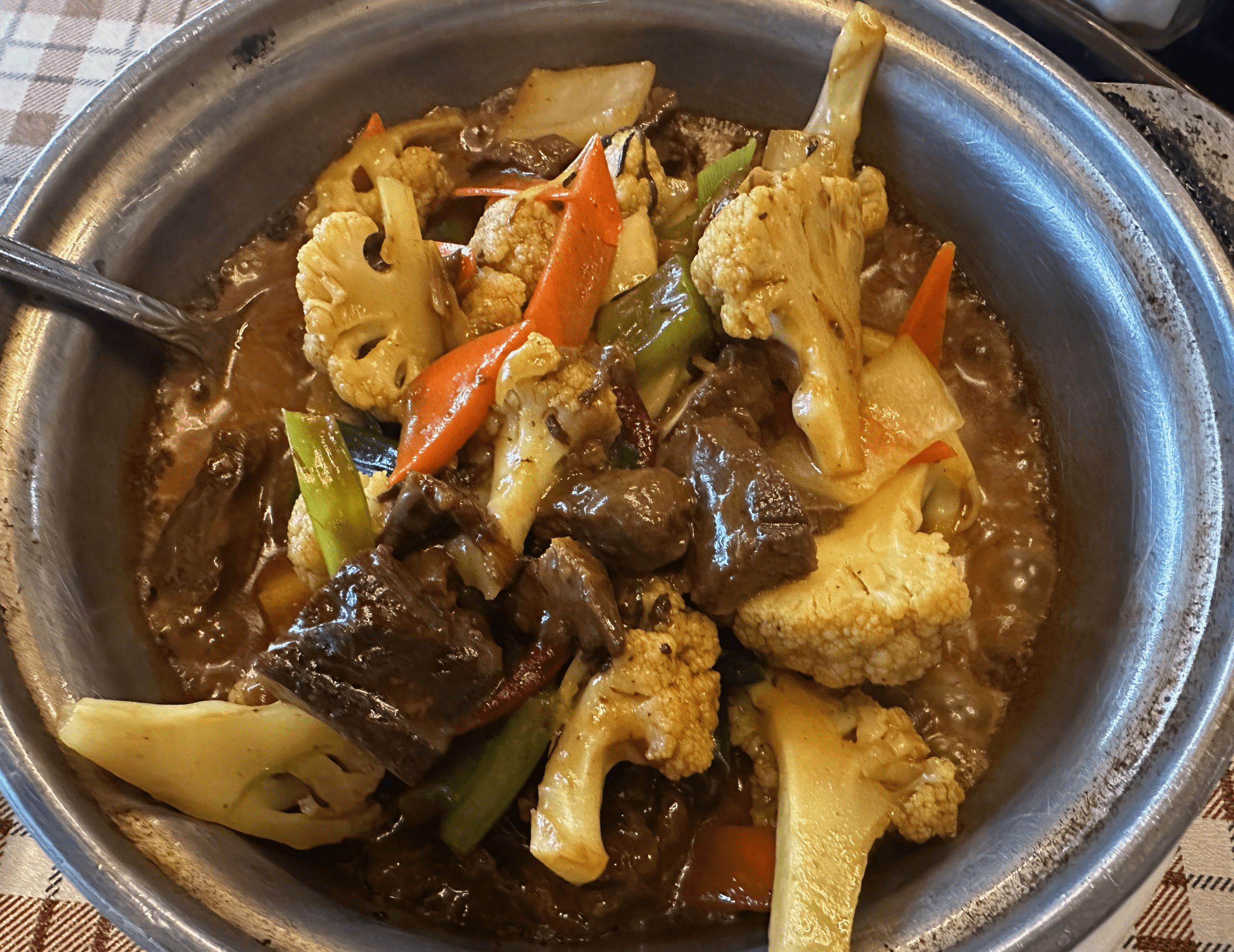
Nio Szechuan – Albuquerque, New Mexico

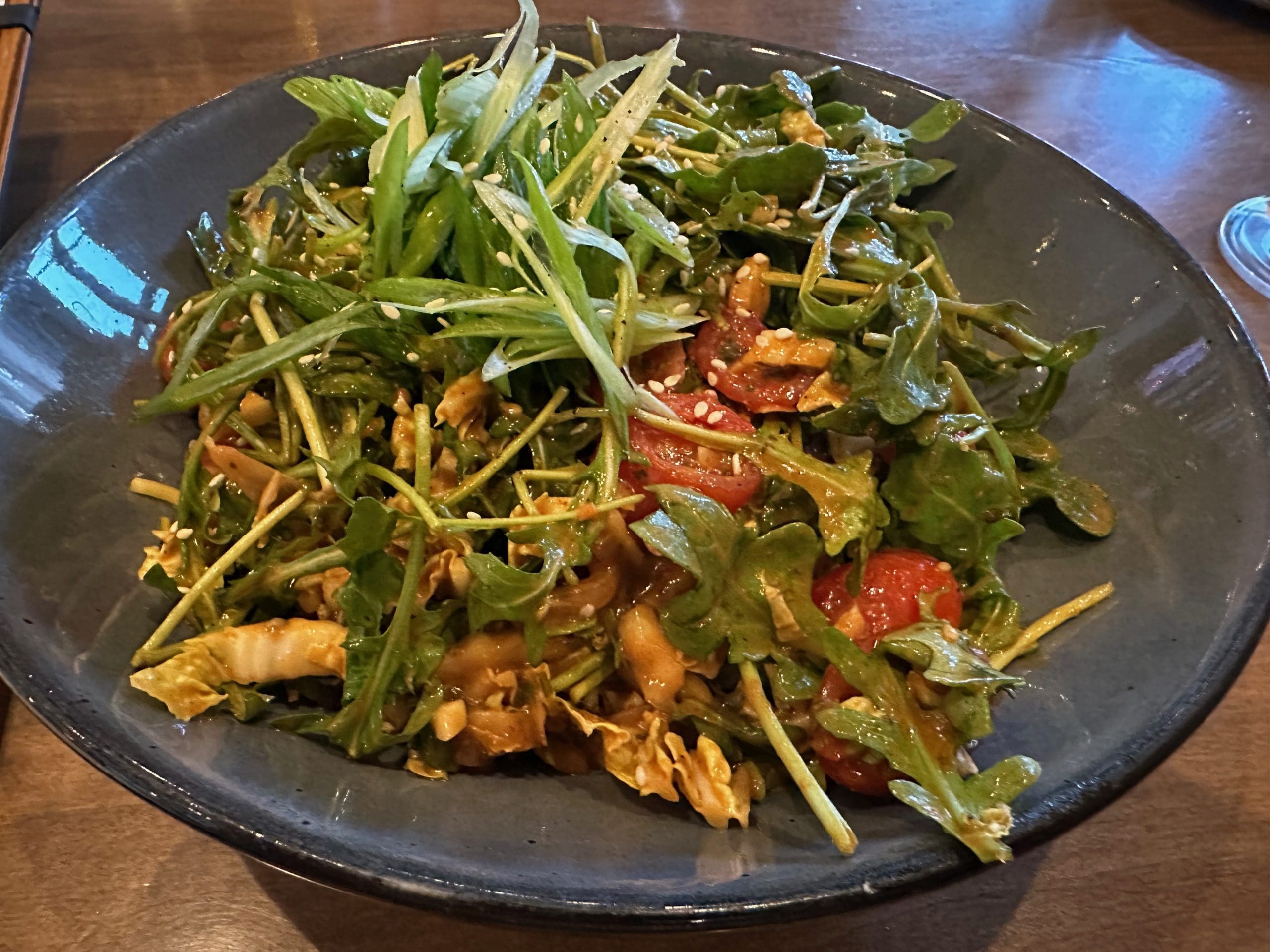
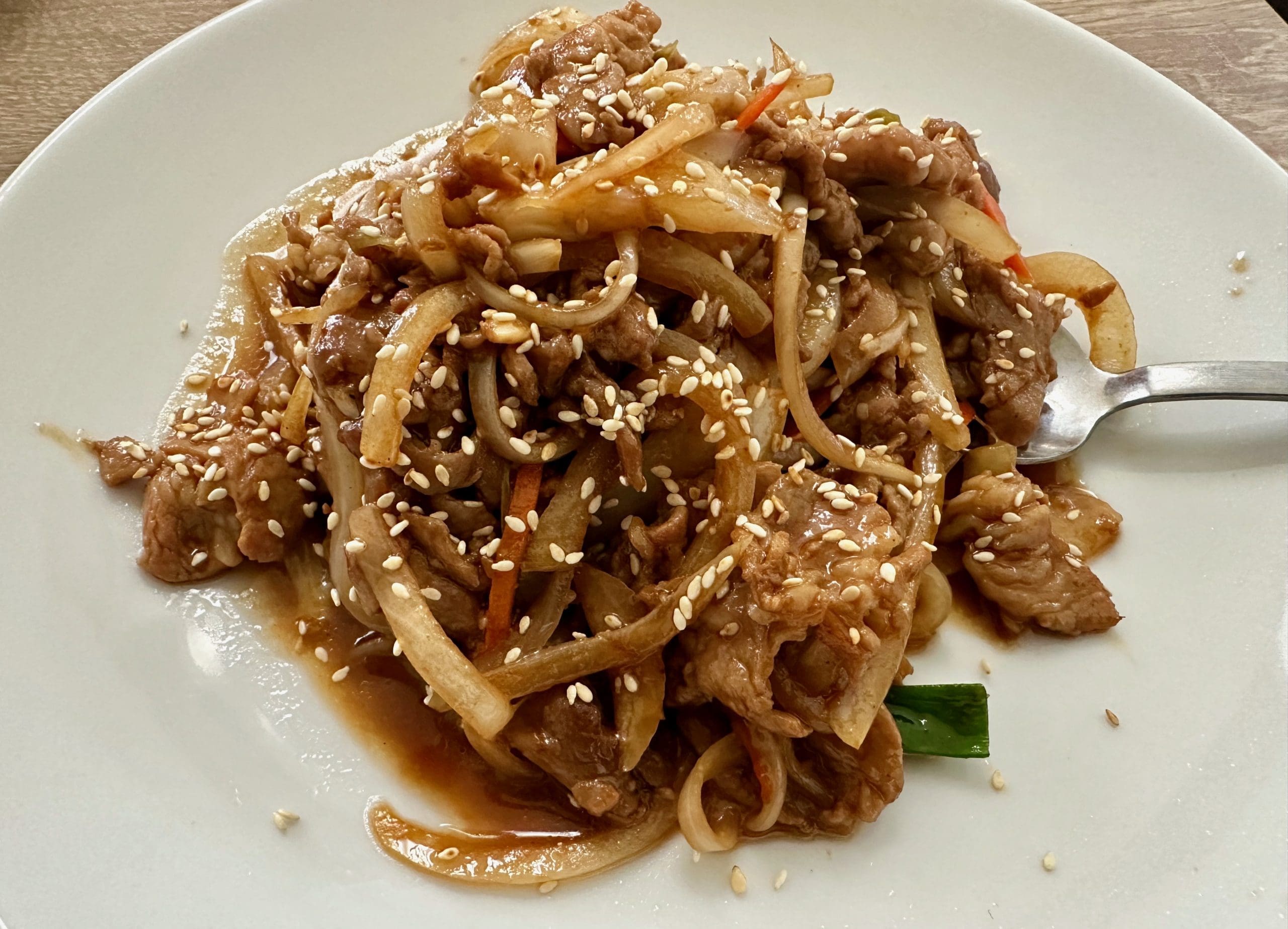
Several years ago Mike Muller, my friend and former colleague at Intel was sent to Chengdu, the capital of the providence of Szechuan in Southwest China.  It was an assignment I would have loved.  Unfortunately I could barely spell the name of the enterprise asset management application Mike would be training our Chinese counterparts how to use.  From an application and business knowledge perspective, Mike was the perfect man for the job.  From the perspective of culinary culture, Intel should have sent me.  Our counterparts may not have learned much about the asset management tool, but we would have had a great time feasting on the incendiary delights for which the Szechuan region is famous. Mike is “bizarro Gil,” my polar opposite when it comes to dining.  He’s absolutely brilliant, hilariously funny and a great family man, but to him adventurous dining would be using honey mustard on his chicken nuggets instead of barbecue sauce.  Mike often joked about creating a blog in which he would publish reviews of all his favorite chain restaurants:  Olive Garden, Applebee’s, Mimi’s and the like.  He nearly broke my heart when he told me about a trip to Santa Fe which culminated in a…

¡Ay Mi Mexico! – Albuquerque, New Mexico

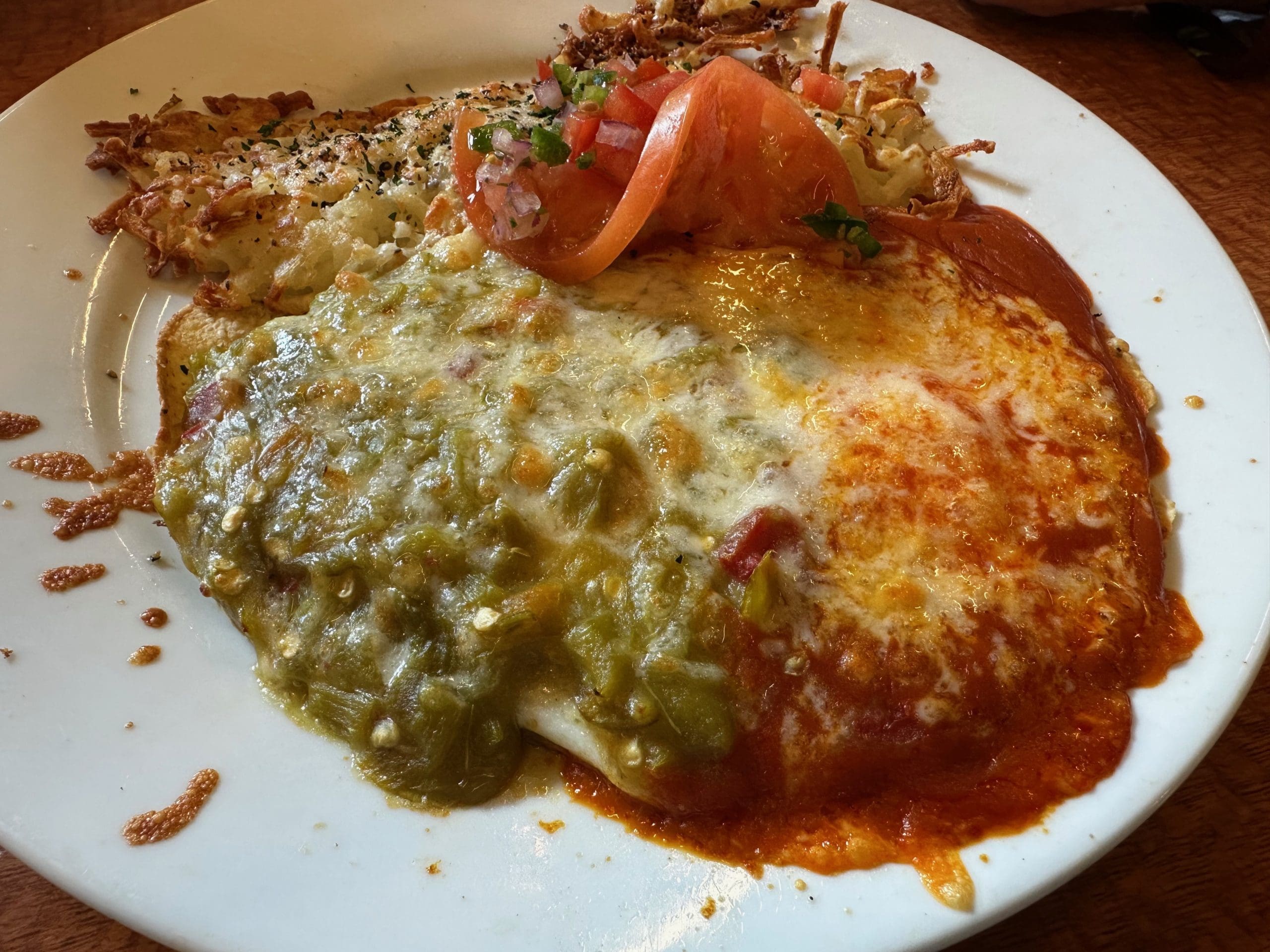
One syllable, one word, one simple expression…yet there probably is no more expressive interjection,  heart-rending cry or honest exclamation in the Spanish language than the simple word “Ay.” This–one of the most  diminutive among all words–can say and mean so much.  Depending on the context, “Ay” is used to express such emotions as: <happiness: think “¡Ay, Chihuahua” when Despicable Me patriarch Gru espies a black villain suit he covets; surprise: ¡Ay, Cabron! what are you doing home in the middle of the day?; exasperation: ¡Ay, Que Lastima! <pain or dismay: Bart Simpson’s ¡Ay, caramba!” when he saw his parents having sex. The versatility of “ay” is virtually unparalleled (though you can usually tell what meaning or mood a speaker is ascribing to that oh, so simple and powerful expression). Informally, “ay” may preface other words in place of curse words in order to make a phrase sound less harsh.  In essence “¡Ay, caramba!” and “¡Ay, Chihuahua!” are Mexican equivalents of “oh, shoot,” “darn” or “shucks.”  Perhaps the most famous use of the term is in the immortal Mexican song Cielito Lindo whose refrain exhorts “Ay, ay, ay, ay, canta y no llores.”  Some English dictionaries translate this as “oh, oh,…

Frank’s Famous Chicken & Waffles – Albuquerque, New Mexico

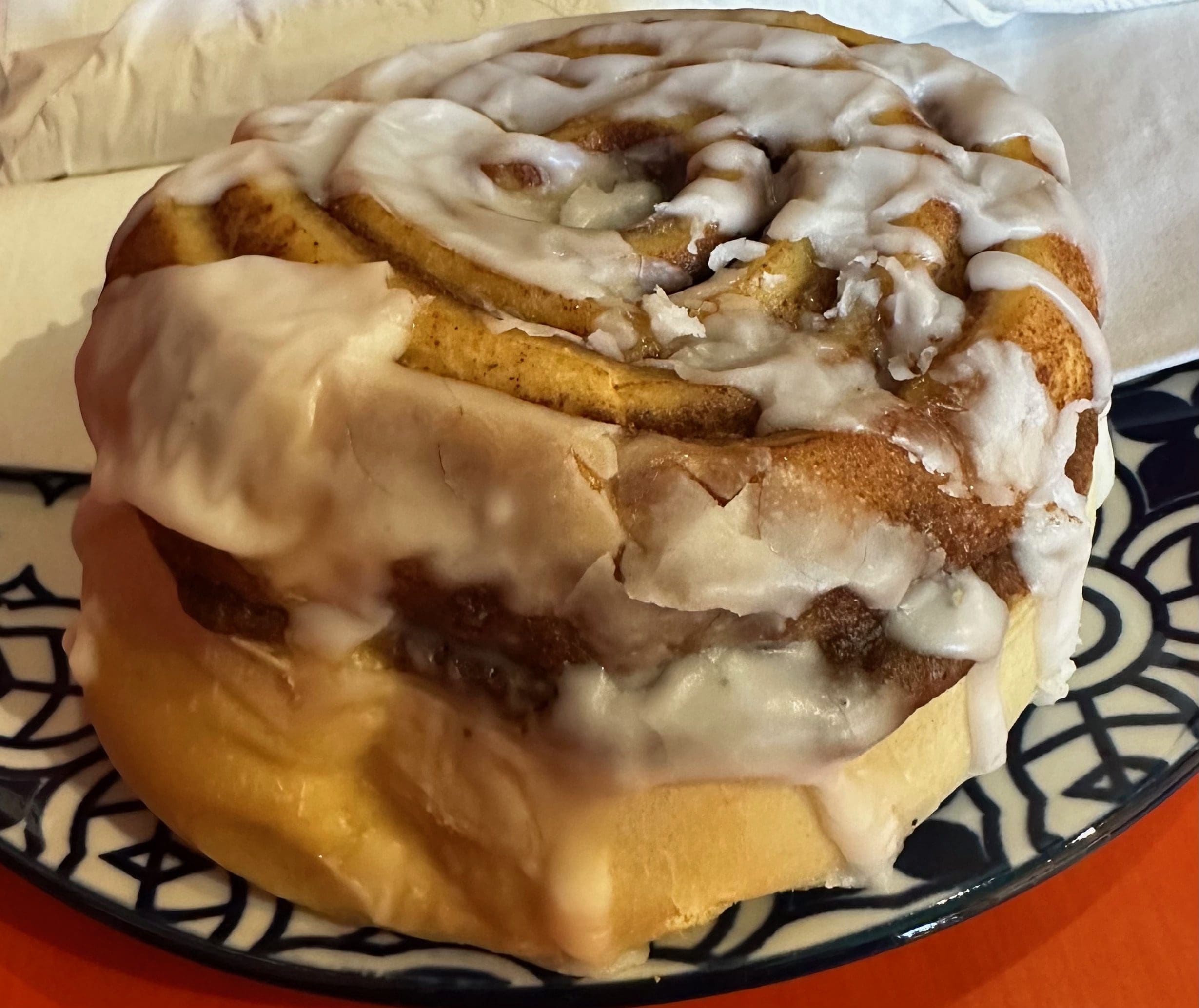
If one measure of success is having the wherewithal to pursue those things you love most, Frank Willis has led a very successful life. A towering skyscraper of a man, Frank has had four great loves in his life: family, basketball, music and chicken and waffles. They’ve been his passions and his raisons d’être. Maybe that’s why he’s done them all well. You might remember Frank Willis as a heavily coveted recruit who played basketball for the University of New Mexico Lobos, then the only game in town. At 6’8” and 260 pounds, he was a physical presence down on the post, helping the Lobos win the Western Athletic Conference championship in 1994. Knee injuries kept him from achieving the promise he showed as a high school senior in Los Angeles. After his playing days ended, Frank remained in Albuquerque where he pined for the soul food—especially chicken and waffles–so readily available in the City of Angels. When he couldn’t find the foods he coveted, he began preparing them himself. While he cites his mother, grandmother and aunt as formative influences on his cooking, Frank also waxes nostalgic about his frequent visits to Roscoe’s Chicken and Waffles, a beloved Los…

Gray’s Coors Tavern – Pueblo, Colorado

Dante Alighieri’s classic poem “A Divine Comedy” recounts a spiritual journey in which the author was guided by ancient Roman poet Virgil through hell, purgatory, and paradise.  Their path takes them through the nine circles of Hell where they witness the punishments suffered for all eternity by the souls of deceased sinners.  The deepest circle of Hell, where Satan resides, is reserved for history’s worst traitors–Judas Iscariot, Brutus, Cassius…and maybe a certain New Mexico food blogger who not only admits there is wonderful green chile to be found outside the paradise that is the Land of Enchantment; he believes it’s possibly just as good, even better than some New Mexico chile.  That chile, from Pueblo, Colorado isn’t just an “it’ll do” substitute, but a bona fide equal (or superior) to much of the green chile grown in Hatch, Chimayo, Lemitar, Deming, Jarales and any number of other purveyors of chile fecundity across New Mexico.   “Gasp!  Heresy!” you lash out.  “Next you’re going to tell us the Denver Broncos, not the Dallas Cowboys, are America’s team.  Before you condemn me to an eternity of wailing, gnashing of teeth and non-stop watching of The View, hear me out.  My “heretical declaration” is based…

Banbury Cross Donuts – Salt Lake City, Utah

“Ride a cockhorse to Banbury Cross, To see a fine lady upon a white horse; Rings on her fingers and bells on her toes, She shall have music wherever she goes.” ~The Dorling Kindersley Book of Nursery Rhymes While planning our culinary exploration of the Salt Lake City restaurant scene, there were a number of restaurants we categorized as “must visit.”  Among those in that rarefied air were restaurants with a national profile such as Tony Caputo’s Market & Deli and Freshie’s Lobster Co.  Another made our must visit solely on the basis of its name.  The name Banbury Cross probably doesn’t resonate with you if you’re not a bona fide Anglophile or if haven’t lived in the Cotswolds.  Having lived in the Cotswolds for three years, My Kim and I are passionate Anglophiles (but not necessarily royalists).  We were thrilled at the prospect of visiting with the proprietors whom we assumed were from Banbury, a scant 24 miles from our English home in Little Rissington. Alas, for the second time in two days we were to learn that the education system in Utah may be lacking, at least in the area of geography.  Yesterday a clerk at a shop…

Blu Pig BBQ & Blues – Moab, Utah

For many of us barbecue is a noun as in “a social gathering at which barbecued food is eaten.”   For others it’s a verb (to roast or smoke food over wood using smoke at low temperatures over a long cooking time).  For the most passionate and devoted, barbecue is a way of life…even a religion.  That religion is practiced by large and small congregations in both outdoor and indoor temples throughout a portion of U.S. Highway 61.  The hymns wailed and warbled by choruses of angelic voices are the reason that portion of U.S. Highway 61 is known as the “Blues Highway.”  Rivaling Route 66 as the most famous road in American music lore, the portion of U.S. Highway 61 known as the legendary “Blues Highway” runs north from Vicksburg, Mississippi to Memphis, Tennessee.  So common is the paring of barbecue and blues along this stretch that U.S. Highway 61 could rightfully be called the “Barbecue and Blues Highway.”  Visit the iconic Beale Street in the heart of Memphis and you’ll understand why Bon Appetit declared “Blues and barbecue, smoke and sauce. In Memphis, they all meld beautifully. Just like heaven.” We didn’t wear blue suede shoes during our visit…

Dr. Field Goods Kitchen – Santa Fe, New Mexico

At first contemplation, Dr. Field Goods sounds like a strange name for a restaurant. To the lexicologist in me, it brought to mind the Hippocrates missive “Let food be thy medicine and medicine be thy food.” To the white-coat-syndrome suffering, borderline iatrophobe in me, the name sent shivers down my spine. To the gastronome in me who finally realized the emphasis is on “field goods” and not on “Doctor,” the name elicited a curiosity that wouldn’t be sated, especially after an effusive recommendation from the Lobo Lair (good luck finding the specific post). As you’ve probably surmised, Dr. Field Goods is all about using fresh, local ingredients (“field goods”), a farm-to-table approach which delights the locavores among us who prefer consuming foods that are produced locally, not shipped long distances to market. The farm-to-table movement in New Mexico is more than just alive and well. It’s thriving with several exemplars who do it exceedingly well. With expectations high for a restaurant named Dr. Field Goods, it’s got a lot to live up to. The “Doctor” is Chef Josh Gerwin, an accomplished MD (master of deliciousness) who’s cut a wide swath across Northern New Mexico’s culinary landscape. Chef Gerwin earned his…

No Te Rajes – Rio Rancho, New Mexico

As the eldest of six, I had the wonderful blessing of having spent more time with our dad than my siblings did.  Dad was the embodiment of the term “gentle man,” a patient mentor and nurturing exemplar of how to be a father and friend.  During our many outings, dad always had the radio tuned to KDCE, “The Station That’s All Heart” out of Espanola.  KDCE played the New Mexican and Mexican songs dad grew up with and loved.  Among his favorites (frequently on KDCE’s repertoire) was Ay Jalisco No Te Rajes by Jorge Negrete. It became one of my favorites, too. The song title made absolutely no sense to me because the term “rajes” comes from the verb “rajarse” which means to “crack” or “split.”  Dad explained that colloquially, “no te rajes” means “don’t back out” or “don’t chicken out.”  He assured me the song was basically a love song to the Mexican state of Jalisco.  He also told me it was the theme song to the 1941 Mexican movie of the same name, based on a novel by the same name.  If you think I’m a wealth of information, you should have met my dad, one of the…

Saigon 2 Restaurant – Rio Rancho, New Mexico

In Chinese and Vietnamese cultures, numerology is very important. If you’ve traveled extensively, you may have wondered why the term “Pho” followed by a number is so commonplace. Often these numbers are considered lucky–and not necessarily across an entire culture. A number may be lucky on a personal level, perhaps marking a date that’s special to the restaurant owner. Espy a restaurant named Pho 66and the number 66 may well represent the year the owner fled Vietnam during the war. Restaurants named Pho 75 may well be honoring 1975, the year Saigon fell. Numerical repetition is also considered fortuitous. The City of Vision certainly counts the number eleven as a lucky number. November 11th, 2011 at precisely 11 o’clock AM (11/11/11 at 11AM) saw the launch of Rio Rancho’s third Vietnamese restaurant when Saigon 2 Restaurant opened its doors on Southern Boulevard. The restaurant is situated in an 1,800 square foot space that’s about a thousand feet smaller than Saigon Restaurant, its elder sibling on San Mateo. Because the Rio Rancho restaurant is smaller, the menu is somewhat abbreviated–115 items instead of 145 items. Fish dishes are not be served in Saigon 2, but for the most part, the dishes…

The Cornivore Popcorn Company – Albuquerque, New Mexico

“Popcorn for breakfast! Why not? It’s a grain. It’s like grits, but with high self-esteem.” ~James Patterson The planet’s very first known popcorn aficionados may have expressed the sentiment “to the batcave”  long before Batman, the Caped Crusader uttered the words to Robin, the Boy Wonder.  After long days of hunting and gathering, foraging and fishing, our primitive progenitors–nearly six-thousand years before the advent of Netflix–would adjourn to a cave to enjoy popcorn (which, ostensibly, was delicious even without butter, caramel and Cheddar). Contrary to popular opinion, the world’s oldest popcorn did not come from the same movie theater which also houses the world’s oldest hotdog, a perpetually rotating hot dog seared to a leathery sheen under a heat lamp.  The oldest known popcorn to date was actually discovered in a dry cave in West Central New Mexico.  Dubbed the “bat cave,” it yielded several individually popped kernels as well as a trove of unpopped corn.  These kernels were carbon-dated and shown to be approximately 5,600 years old. During his ransacking of Mexico, Spanish explorer Hernando Cortes was among the first Europeans to glimpse popcorn. In addition to enjoying it as a snack, Aztecs used popcorn to decorate ceremonial headdresses,…