The Hollar – Madrid, New Mexico (CLOSED: December 17, 2023)

It wasn’t that long ago that if you played “word association” with almost anyone outside the Mason-Dixon line, the first thing coming to mind if you used the term “Southern food” was probably something like “heapin’ helpins’ of hillbilly hospitality.”  During their nine-year run as one of the most popular comedies in the history of American television, the Clampetts, a hillbilly family who relocated to Beverly Hills after finding oil on their property, introduced “vittles” to the American vernacular.  Vittles, of course, meant such “delicacies” as possum shanks, pickled pig jowls, smoked crawdads, stewed squirrel, turnip greens, and owl cakes.  “Weeeee Doggies,” now that’s eatin‘.” To much of America, the aforementioned delicacies were culinary curiosities–bumpkinly and provincial food no one…
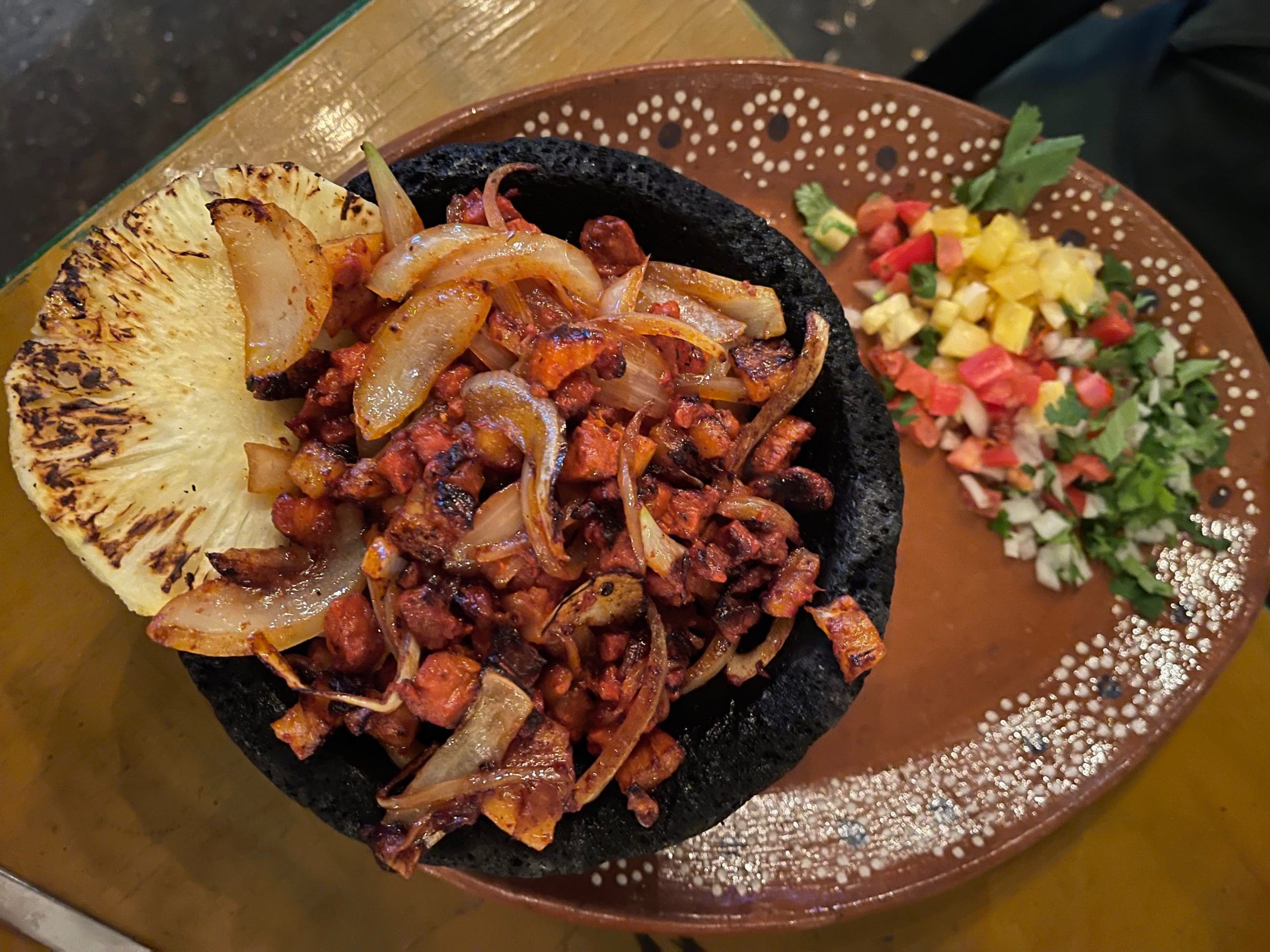
Los Potrillos – Santa Fe, New Mexico

Faced with a situation that renders us incredulous, many of us might yammer incoherently, complain vociferously or maybe even utter colorful epithets. Such moments, it seems, are best expressed with succinct precision, a rare skill mastered by a select few wordsmiths from which eloquence flows regardless of situation–polymaths such as the late Anthony Bourdain, a best-selling author, world traveler, renowned chef and “poet of the common man.” Flummoxed at the discovery of a Chili’s restaurant a mere five miles from the Mexican border, I might have ranted and raved about another inferior chain restaurant and its parody of Mexican food. With nary a hint of contempt, Bourdain instead compared the spread of Chili’s restaurants across America to herpes. How utterly…

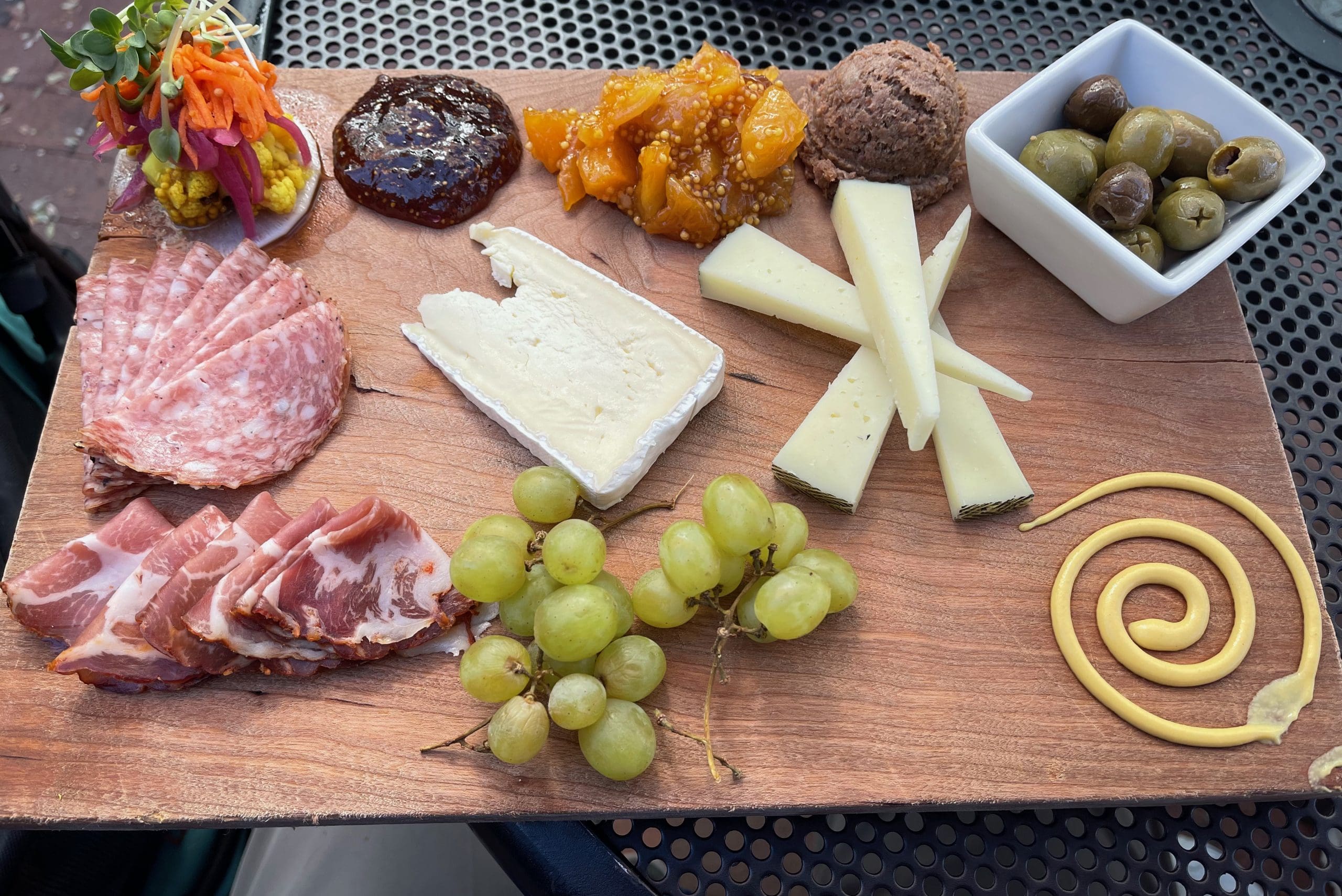
Salt and Board – Albuquerque, New Mexico

“Five years ago, everyone was making beer in their bathtubs, and now everyone’s making charcuterie in their garage!” ~Brian Malarkey, Chef When my friend Carlos, a punctilious polyglot conversant in four languages, asked what my Kim and I ate over the weekend, my poorly-pronounced beginner’s French response was “une assisette de charcuterie et de fromages.” “Oh, you had cold-cuts and cheese,” he responded. “No, we had charcuterie!” I emphasized, slowly pronouncing each syllable of the term: “char-cu-te-rie.” “Only the French,” he retorted “could convince you a plate of bologna and slices of cheese is a gourmet dish worth thirty dollars.” Carlos was only kidding, of course, but beyond his flippancy was a veiled challenge. He wanted me to figure out…

Fork & Fig – Albuquerque, New Mexico (CLOSED)

FROM THE FORK & FIG FACEBOOK PAGE (November, 2024): Thank you Albuquerque for 10 wonderful years! Skyrocketing rent and food costs have really impacted us. We have loved serving you. We are moving to a private chef/catering model. Stay tuned for our next adventure. Listen to Billy Joel’s 1983 doo wop hit Uptown Girl and you’ll probably get the impression that uptown is synonymous with uppity or at least upscale. The lyrics describe a working-class downtown man (ostensibly Joel himself who’s originally from blue-collar Long Island) trying to win the heart of a wealthy, white bred uptown girl (Joel’s future wife Christie Brinkley). The perception of uptown’s haughtiness were reenforced in “The Contest” episode of Seinfeld in which John F.…

Damacio’s Bar & Tapas – Albuquerque, New Mexico

“I wanna open a Jamaican/Irish/Spanish small plate breakfast restaurant and call it Tapas the Morning to Ja.” ~Harris Wittels (Comedian) It wasn’t Wittel’s humorous quip that came to mind as we approached Damacio’s Bar & Tapas but rather something legendary raconteur and television host Anthony Bourdain once said.  During a 2013 episode of his CNN television show Parts Unknown filmed in Granada, Spain, he declared “We will never have tapas culture in America.”  Calling tapas “that greatest of Spanish traditions,” Bourdain added “You may think you know what a tapa is.  Like if you’ve had small bites at some fusion hipster bar where they do a whole lot of little plates. Yeah, that ain’t a tapa. Quite naturally Boudain’s comments…

Papa Nacho’s – Albuquerque, New Mexico

“No one who cooks, cooks alone. Even at her most solitary, a cook in the kitchen is surrounded by generations of cooks past, the advice and menus of cooks present, the wisdom of cookbook writers.” ~Laurie Colwin, Novelist The notion of cooking alone is unthinkable to Ignacio and Brigette “BeBe” Lopez, founders of Papa Nacho’s. Since they launched their popular Mexican restaurant in 1995, the restaurant has embodied the aphorism “the family that cooks together, stays together.” Papa Nacho’s is and always has been a family affair, with daughters Gloria and Marcial practically having grown up in the kitchen. Today Marcial and her husband Richard Jimenez own the restaurant and Gloria is living in California.  The gracious Gloria once reminded…

Tako Ten – Albuquerque, New Mexico

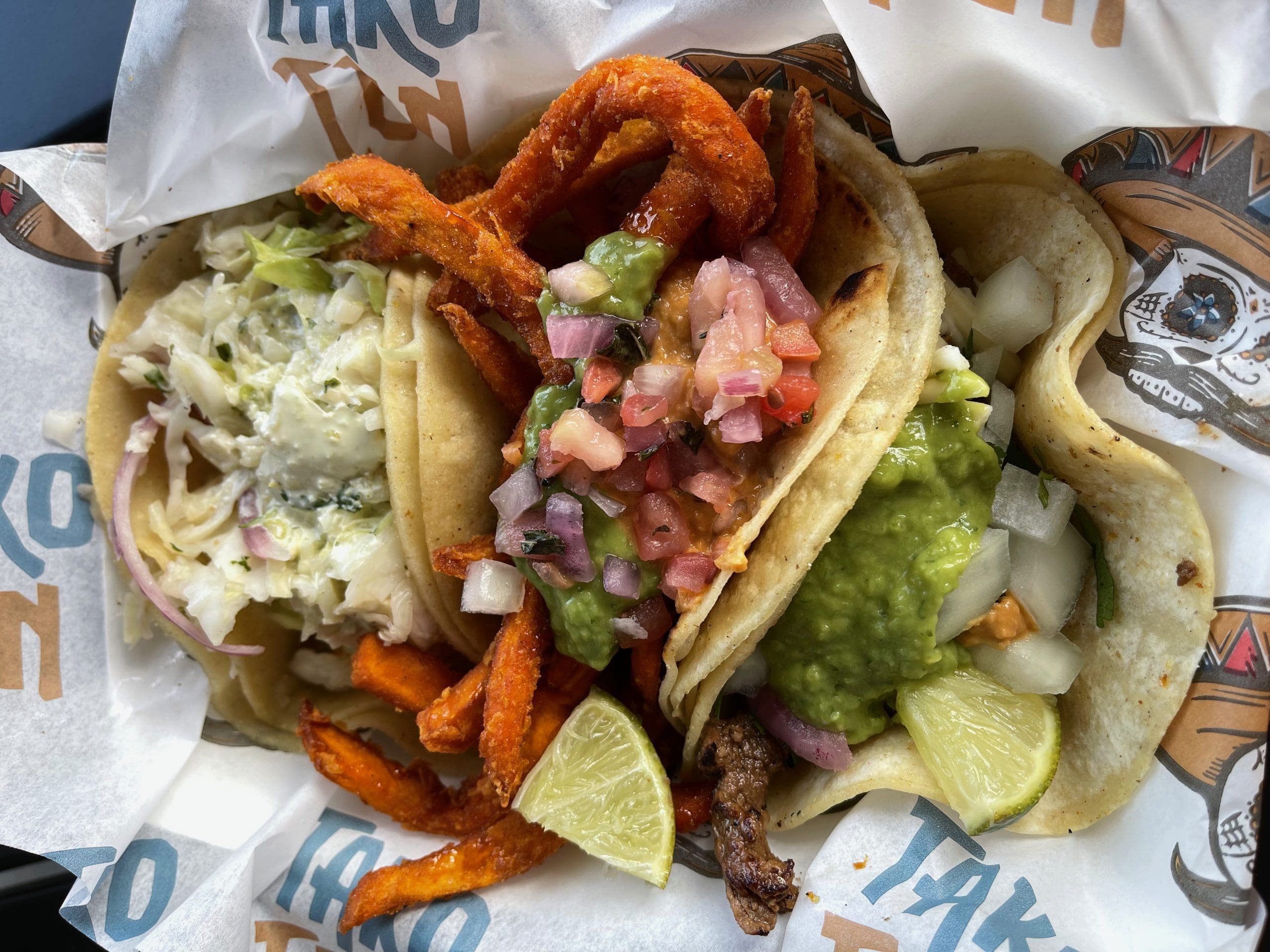
Gustavo Arellano, author of Taco USA: How Mexican Food Conquered America, wasn’t kidding when he quipped “The Taco Bell taco is dead. Long live the taco.”  Boomers like me may not have grown up heading for the border, but we did grow up with the Taco Bell “taco template”–a crunchy hard-shell tortilla crammed with seasoned ground beef, chopped tomato, lettuce, a fistful of shredded yellow cheese and a large dollop of sour cream.  We’ve long since joined enlightened millennials and generation Z diners in railing against what Chef Rick Bayless calls Taco Bell’s “near-laughable caricature” of authentic Mexican tacos.   So just what are authentic Mexican tacos? Travel throughout the Land of Montezuma and whether you get your tacos from upscale…

CAFE DA LAT – Albuquerque, New Mexico

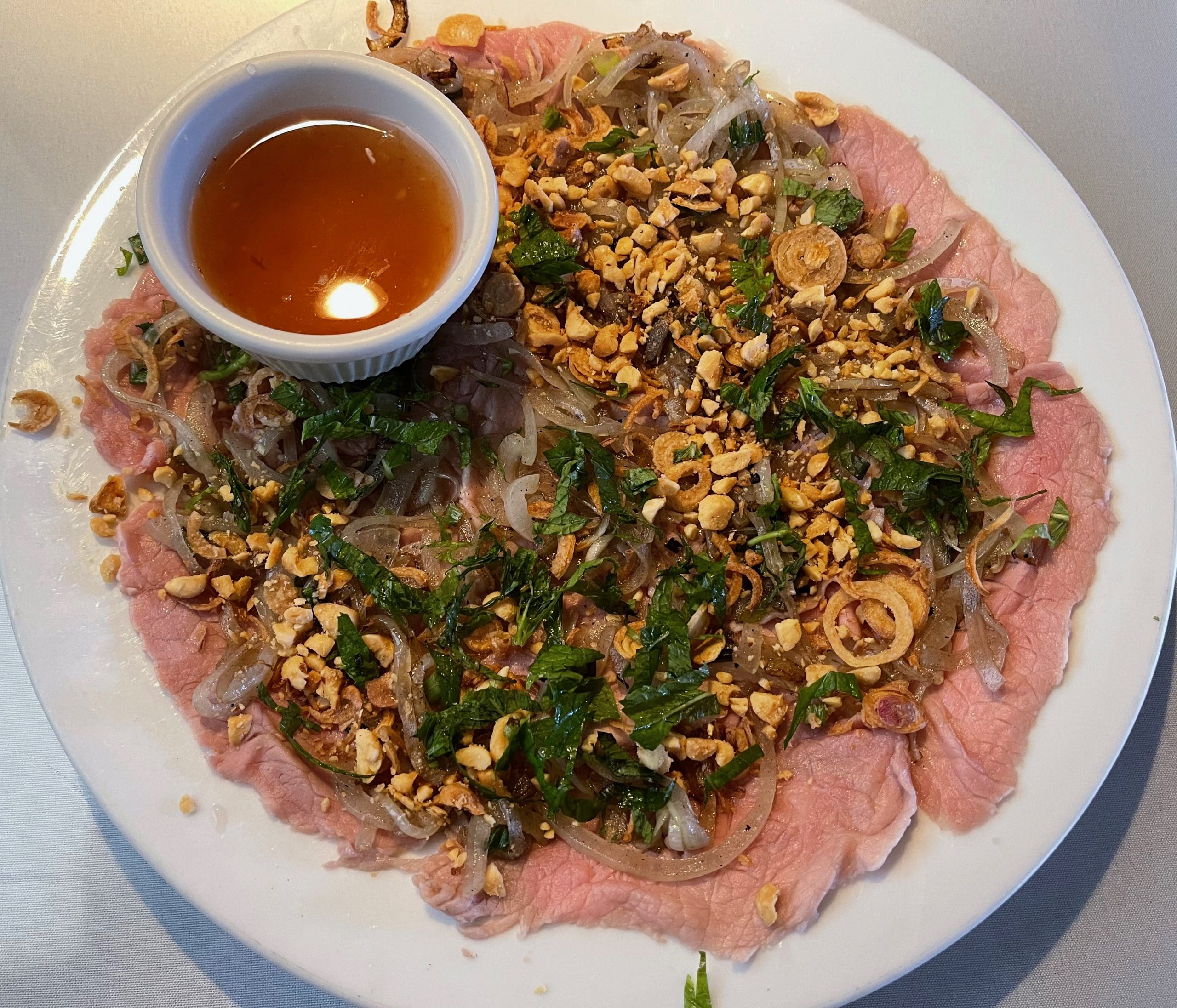
While the term “Vietnamese cuisine” is broad and overarching, any attempt to pigeonhole this very diverse and eclectic culinary culture is a failure to consider its complexities and nuances.  Even when culinary taxonomists compartmentalize Vietnamese cuisine regionally into “Northern,” “Southern” or “Central,” these wide-ranging generalizations fail to take into account the variations–often influenced by socioeconomic factors–that occur not only between villages, but often within small neighborhoods.  James Nguyen, proprietor of Albuquerque’s Cafe Da Lat is very cognizant of those variations.  That’s why he takes it in stride when a compatriot visiting his restaurant contends “this isn’t like the Vietnamese food I grew up eating.”  Obviously, he says, they didn’t grow up with his mother’s cooking.  His mother’s recipes are at…

Vintage 423 – Albuquerque, New Mexico

My friend Bill Resnik, a professional stand-up comedian for more than two decades, performs a bit in which he “translates” Spanish terms for linguistically challenged audiences.  “Paseo del Norte,” for example, translates to “Paseo of the Norte.” For Duke City residents, the “Northern Route” is no joke.  It’s the corridor from the Northeast Heights to Albuquerque’s burgeoning West side, ferrying nearly 100,000 vehicles a day.  Paseo del Norte is widely credited with the rapid development–from 30,000 residents in 1980 to more than 85,000 in 2006–of the city’s growth north of Interstate 40 and west of the Rio Grande.  What most city residents don’t realize is that the official Department of Transportation designation for the 25-mile passage is State Highway 423.…

Big Boss Hot Links at Brew Lab 101 – Rio Rancho, New Mexico

The Oxford Dictionary defines an adage as “a proverb or short statement expressing a general truth.”  The adage “the apple does not fall far from the tree,” for example, means a child usually behaves in a similar way to his or her parents.  Sometimes, however, an adage fails to live up to the truism it purports to express.  One such example is the vast chasm that exists between patriarch Martin Crane (John Mahoney) and his sons Frasier (Kelsey Grammer) and Niles (David Hyde Pierce).  Where Martin was portrayed as an everyman with whom many of us can identify, Frasier and Niles were pretentious and condescending snobs. In one episode the Brothers Crane decide to broaden their father’s horizons by taking him…

D. H. Lescombes Winery & Bistro (Old Town) – Albuquerque, New Mexico

There are varying accounts as to the genesis of wine-making in the United States. While it is widely acknowledged that as early as the 1500s Spanish and French Huguenot settlers in Florida began making wine with a native grape known as muscadine, efforts to plant the classic grapes used to create the great wines of Europe failed because of pests prevalent in wet climates. It wasn’t until Spanish Missionaries discovered the dry climate of New Mexico in 1629 with its sandy soils that the first European Mission grapes brought over from Spain were planted in what is now the United States.  The original grape stocks supposedly remain the source of many of New Mexico’s vinters to this day. Sources relates that…