Blog

Rex’s Hamburgers – Albuquerque, New Mexico

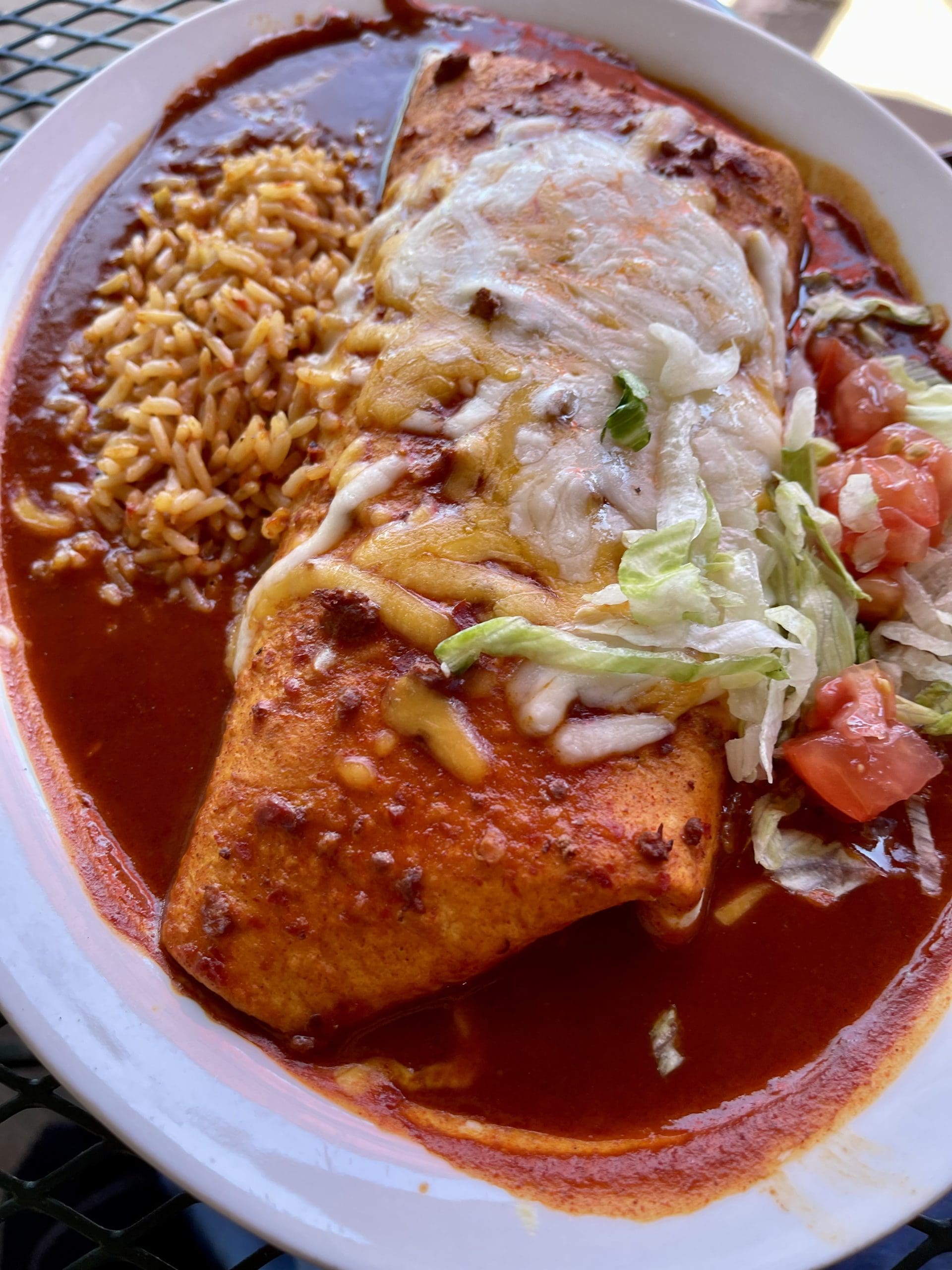
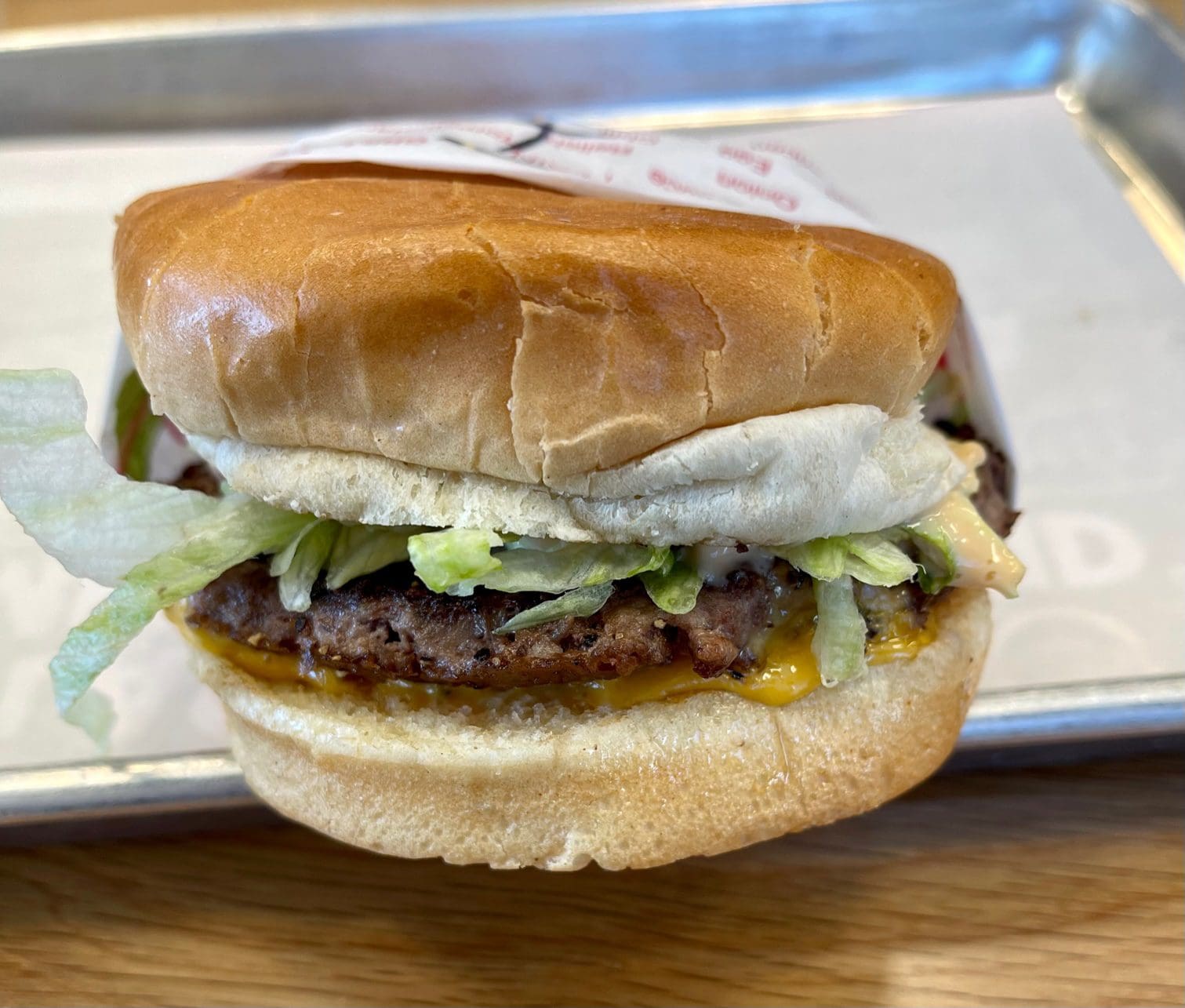
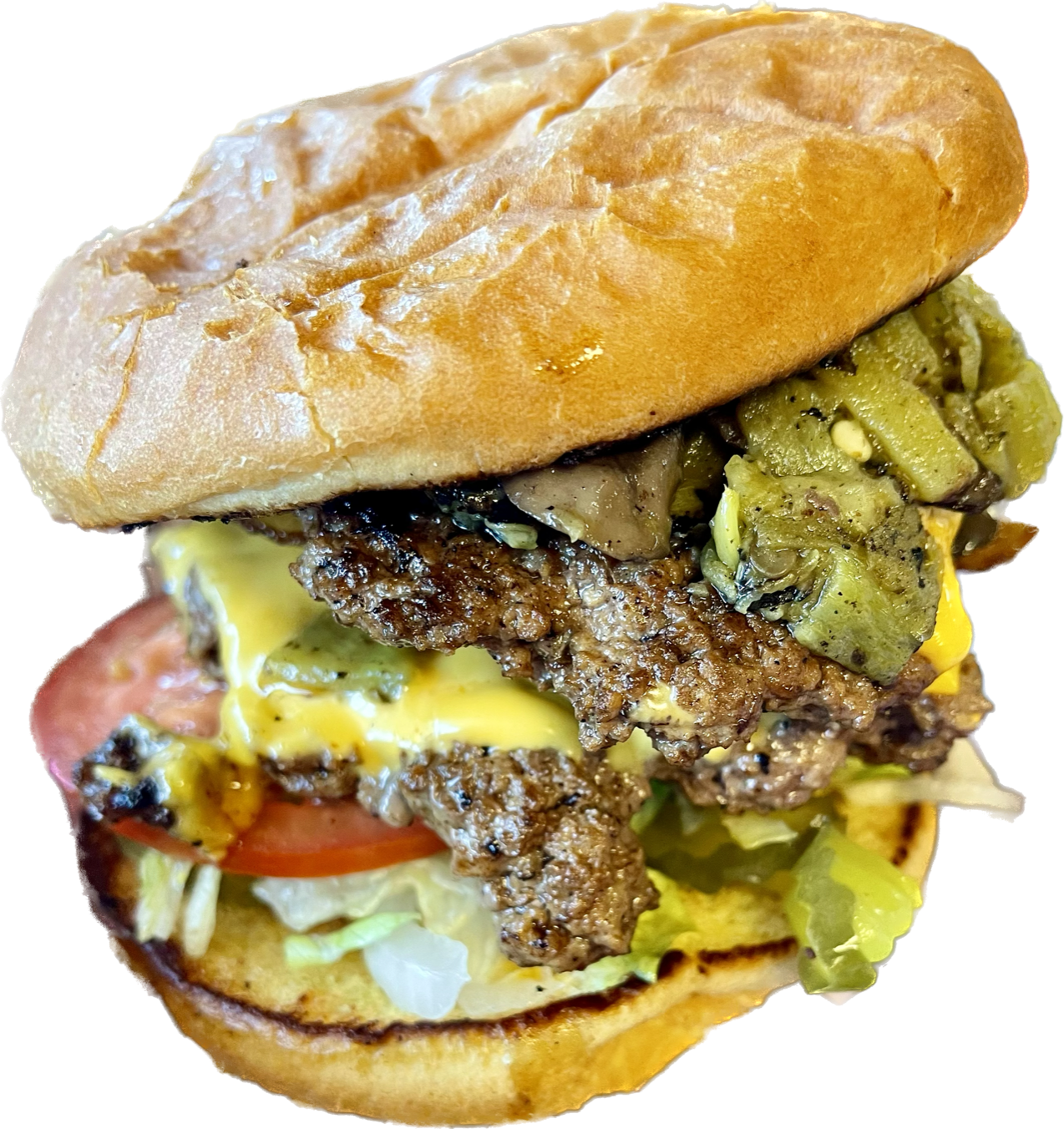
From 1988 through 2005, Rex’s Hamburgers stood practically alone in offering Duke City consumers an alternative to the homogeneous gobble-and-go offerings of deep-pocketed fast-food chains like McDonald’s, Burger King and Wendy’s. Rex’s earned and retained the hearts of Albuquerque diners for nearly 20 years. During its halcyon days, it garnered the long defunct’s Abq magazine’s “Best of Albuquerque” honors for several consecutive years. The reason Duke City patrons were so loyal to Rex’s was because Rex’s was at the diametric extreme opposite of the chain restaurants. Whether ensconced in a strip mall or housed in a single tenant edifice, Rex’s offered real sit-down service at a relaxed and reasonable pace. Moreover, it served hamburgers the way they are intended to be prepared. That means they started with real meat, never frozen, formed into a ball and flattened on the griddle with a spatula then allowed to cook slowly to retain the beef’s natural juiciness. Unlike at the Golden Arches, you never had to wonder what filler was used in Rex’s all-beef patty. It was always 85 percent lean and 15 percent fat, the time-tested optimum balance for optimum flavor. It was always served hot and with only the freshest of…
Turquoise Desert – Rio Rancho, New Mexico

A 2016 online survey conducted by Statista asked 719 adult respondents “What is the maximum length of time that you would drive to a place to eat?” More than half (51-percent) of the respondents indicated they would travel 16 to 30 minutes to a restaurant. The limit for another 26-percent was 30 minutes to an hour.  Only five percent said they would travel more than one-hour.  Even the most prolific driving diners don’t have anything on David Schuler of Mississippi.  To sate his cravings for his favorite pizza in Massachusetts, Mr. Schuler drove over 1,400 miles and through 16 states.  Even that distance pales in comparison to humpback whales who travel as much as five thousand miles to get their fix of plankton, shrimp and salmon. Now you know what my argument will be next time my Kim complains about my “end-of-the-Earth” drives to visit a restaurant we haven’t previously visited.  Her counter-argument usually involves “all the great restaurants within a couple miles” of our Rio Rancho home.  She obviously doesn’t enjoy drives of great distance as much as our debonair dachshund The Dude and his dad do.  On a lazy August Sunday morning I surprised her by taking her…

Scalo – Albuquerque, New Mexico (CLOSED)

Contrary to popular belief, Scalo was not already a Nob Hill fixture in 1706 when Don Francisco Cuervo y Valdés, governor and captain general of New Mexico, named a new settlement for the Duke of Alburquerque, then viceroy of New Spain.  Scalo didn’t actually open until December, 1986, but during its lengthy tenure it has such a degree of permanence in our memories and taste buds that it’s hard to believe it wasn’t one of the fabled paradors (an establishment where travelers could seek lodging, and usually, food and drink) along the Camino Real.  It would make sense because the word “Scalo” itself translates from Italian to “stopover.”  Then there’s Scalo’s revered spot on the now defunct Albuquerque Monthly.  On its tenth anniversary, the magazine created a “Best Of” Hall of Fame, listing the ten establishments–restaurants, bars, card stores, clothing stores, computer stores, galleries and more–which had received more “best of” votes during the decade of the 90s than anyone else. The first establishment listed was Scalo Northern Italian Grill, which was also perennial selection on the magazine’s annual listing of the city’s top ten fine-dining restaurants (other mainstays still serving the city include the Artichoke Cafe, Prairie Star and…

Ranchos Plaza Grill – Ranchos De Taos, New Mexico

If you’ve read or studied the history of New Mexico, you’re probably aware that life wasn’t easy for Spanish colonists. As with other efforts to colonize North America, Spanish settlers quickly found themselves insufficiently provisioned for the agrarian lifestyle they sought to establish and maintain. Wholly dependent on water to produce and maintain crops and farmland, they quickly found out rainfall in the desert Southwest was fickle and unpredictable. When winter came, the harsh realities of a poor crop yield set in. Settlers often had to resort to taking the food of their Indian neighbors, often by duplicitous means. Throughout the seventeenth century the Spanish population in New Mexico never exceeded more than 3,000, about one-sixth the number of Pueblo residents.  Clashes between Spanish settlers and soldiers and various Pueblos were largely predicated by the indignities Pueblos suffered at the hands of the Spanish. Then came severe drought, higher than average temperatures and very little rainfall.  Significant crop losses, livestock death and starvation made life tenuous. These conditions were exacerbated by raiding Navajos and Apaches seeking to supplement their own dwindling foodstuffs by preying on other inhabitants of the colony. Ultimately these events contributed to the Pueblo Revolt of 1680…

Fatburger – Isleta & Espanola, New Mexico

To its detractors, there are a lot of things about which to criticize California, but even detractors will give the Golden State its due when it comes to a national obsession–the hamburger.  California is the state that gave America McDonald’s, In-N-Out Burger and my favorite, the Fatburger. (My Illinois in-laws will remind me with proud vehemence that the “original” McDonald’s restaurant location (launched on April 15th, 1955) was in Des Plaines, Illinois, but the “first” McDonald’s hamburger stand operated out of San Bernardino in 1954.) To some readers, my declaration of Fatburger being my favorite California burger may be seen as heretical, the schismatic raving of a mad man and proof that your humble blogger is a moron.  I’ve had friends throughout the country question my patriotism, parentage and credentials as an essayer of restaurant reviews because of my declared preference for Fatburger and disdain for another California burger chain they prefer.  “How,” they protest “can anyone possibly prefer Fatburger to In-N-Out?”.  It’s easy!  Fatburger is superior in every way…at least to me.  Your opinion may differ, of course, but this is America and people used to be free to dissent even on crucial matters such as expressed burger preference.…

Circle T Burgers – Belen, New Mexico

The year was 1958.  The average American wage-owner’s income was $4,650 per year.  A Ford automobile cost between $1,967 and $3,929.  Milk was $1.01 per gallon.  Bread cost 19 cents a loaf and a can of Chef Boyardee spaghetti went for 19 cents a can.  First class US postage was raised to 4 cents after having held at 3 cents for more than a quarter-century.  A gallon of gasoline cost 24 cents. In 1958, the United States had two-thirds of the world’s 47-million television sets and many of them were tuned in to Gunsmoke, Father Knows Best, Dinah Shore and The Jack Benny Show.  France gave the world the disposable Bic pen (which very few people under 20 have even heard of today).  Corningware dishes, the hula hoop and stereo records were introduced.  To pay for this copious consumerism, American Express introduced the first credit card. The “King” Elvis Prestley was inducted into the United States Army. Prince, Andy Gibb, Madonna and Michael Jackson were born. In the world of sports, Pele scored two goals to lead Brazil to victory at the 1958 World Cup.  Wilt Chamberlain left the University of Kansas to play with the Harlem Globetrotters.  Ohio State…

Spring Rollin’ – Albuquerque, New Mexico

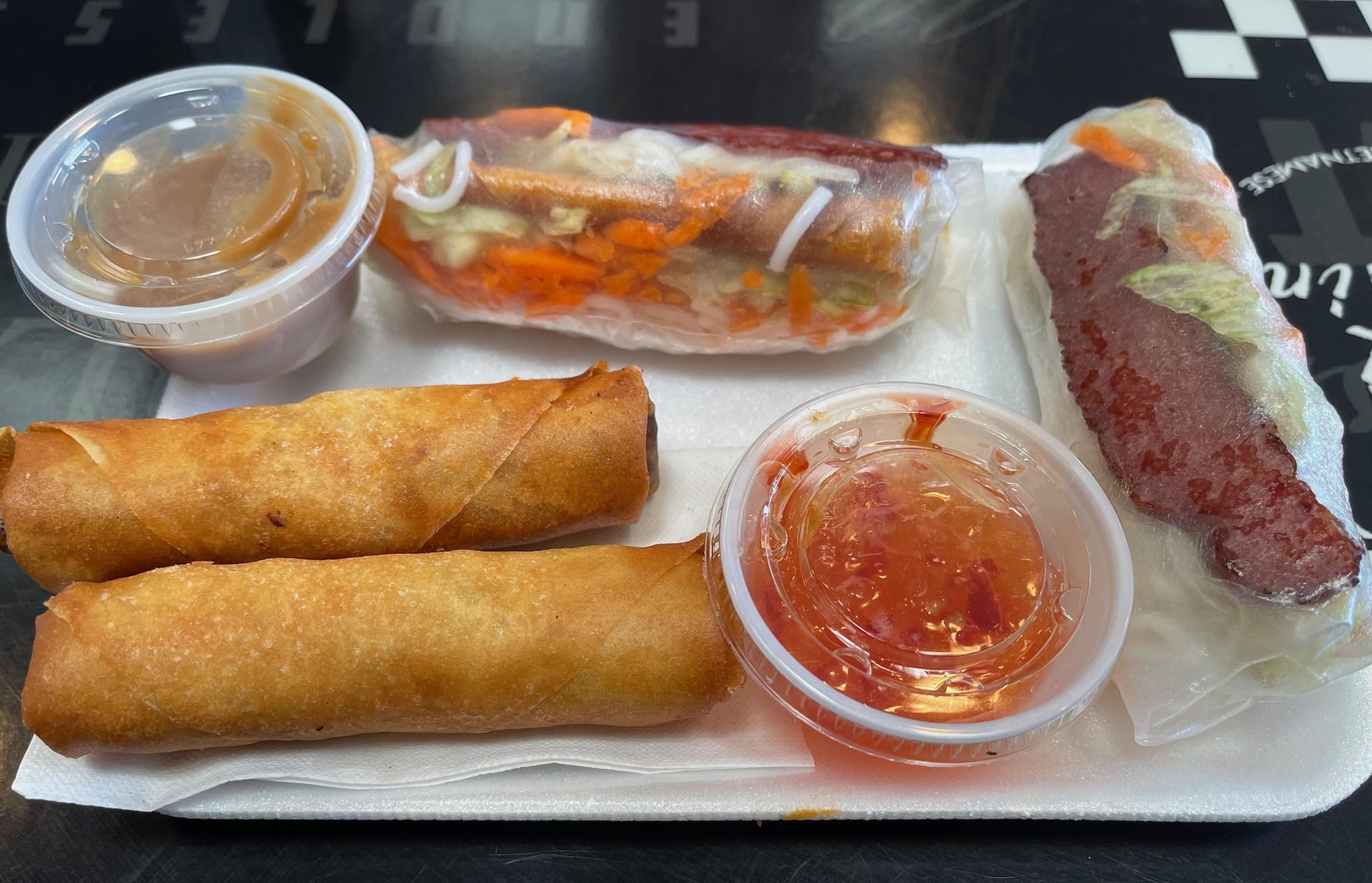
Reclusive American poet Emily Dickinson insisted a light exists in spring that’s not present at any other time of year. If you’ve ever spent a winter in the Northern Hemisphere at a latitude of 42° or more, you know what it’s like to long for that light. You can relate to the irritability and restlessness of having fewer than eight hours of sunlight during winter months. You know what it’s like to head to work in the dark and return home in the dark. You know the confinement of cabin fever when persistent rain or snow keep you indoors for prolonged periods of time. If you’ve experienced long, dark winters, you celebrate the return of spring. In northern climates, the advent of spring is celebrated as a return to warmer weather, new growth and increased daylight. While most countries celebrate spring festivals a couple of weeks after the much loathed Daylight Savings Time, China’s Spring Festival (better known as the Chinese New Year) begins somewhat earlier. Generally falling on a day between January 21st and February 20th in the Gregorian calendar, this spring festival is the grandest festival in China. China’s spring festival is a seven-day long holiday in which…

66 Diner – Albuquerque, New Mexico

Known as “America’s Highway” and celebrated by author John Steinbeck as the “Mother Road,” the legendary Route 66 meandered across 2,448 miles of the fruited plain, crossing three time zones and eight states as it traversed from Chicago to Los Angeles. For many—especially destitute sharecroppers fleeing Oklahoma’s devastating Dust Bowl—Route 66 held the promise of a better life. For others, Route 66 brought a sense of connectedness with parts of America previously considered difficult to reach. For them, Route 66 engendered a frontier spirit of adventure, greatly expanding their vacation options and travel opportunities. For hundreds of communities strewn along the two-lane blacktop, Route 66 was also an engine of economic prosperity, creating tremendous opportunities for entrepreneurs large and small. The service industry fared especially well with roadhouses, motels and restaurants springing up, offering respite and sustenance to weary and hungry travelers. Since the halcyon days of Route 66, neon signage has been a prominent and vital part of the Mother Road as it winds through Albuquerque. From the foothills of the Sandias in the east to the parched desert expanse of the west, Route 66 is festooned with vibrant neon signage that cuts a luminous swath through the city.…

Viet Cốm – Albuquerque, New Mexico

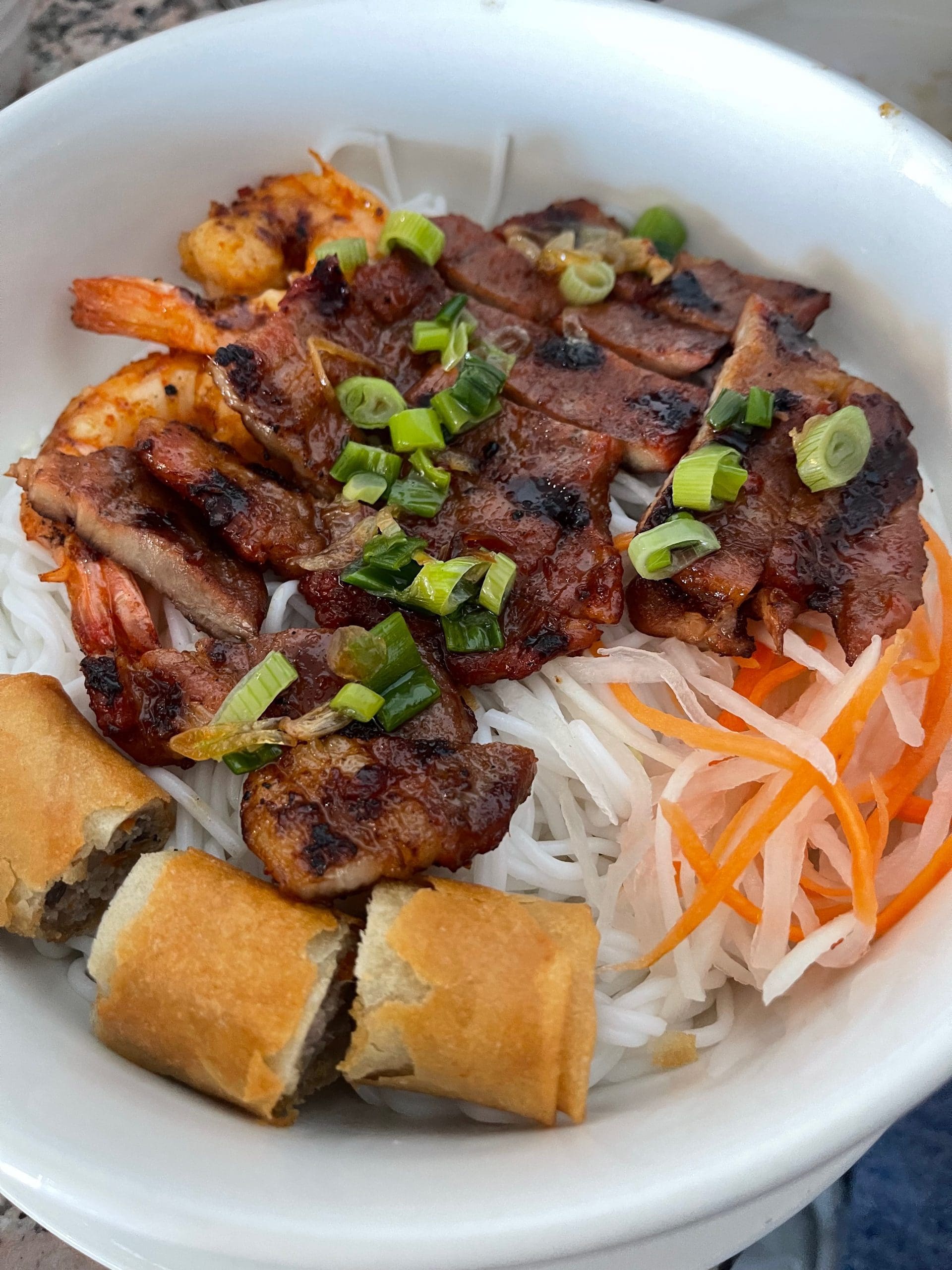
The name on the signage is Viet Cốm, not Viet dot com.  The difference is more than semantic.  In Vietnamese the term “Cốm” (with an accent denoting a high rising pitch when vocalized) translates from Vietnamese to a green sticky rice or green rice flakes. Cốm is a delicacy made only in autumn and cherished by all Vietnamese.  You learn a lot when you visit a Vietnamese restaurant and are interested enough to ask a lot of questions.  If Misty Do is your server, ask her about the family restaurant and you’ll learn quite a bit. We learned, for example, that the family owned and operated eatery opened in June, 2020, just a couple of months after the Cabrona Virus shut down the world.  Viet Cốm is indeed a family operation.  Misty’s dad is the cook.  Her stepmother, older sister and younger brother all help out, but it’s Misty who appears to be the face of the restaurant as you’ll learn should you peruse the restaurant’s Yelp review.  We learned also that we shouldn’t have assumed that because Misty’s last name is “Do,” the family name must also be Do.  Misty clarified that in accordance with Vietnamese traditions, women don’t…

The Farmacy – Albuquerque, New Mexico (CLOSED)

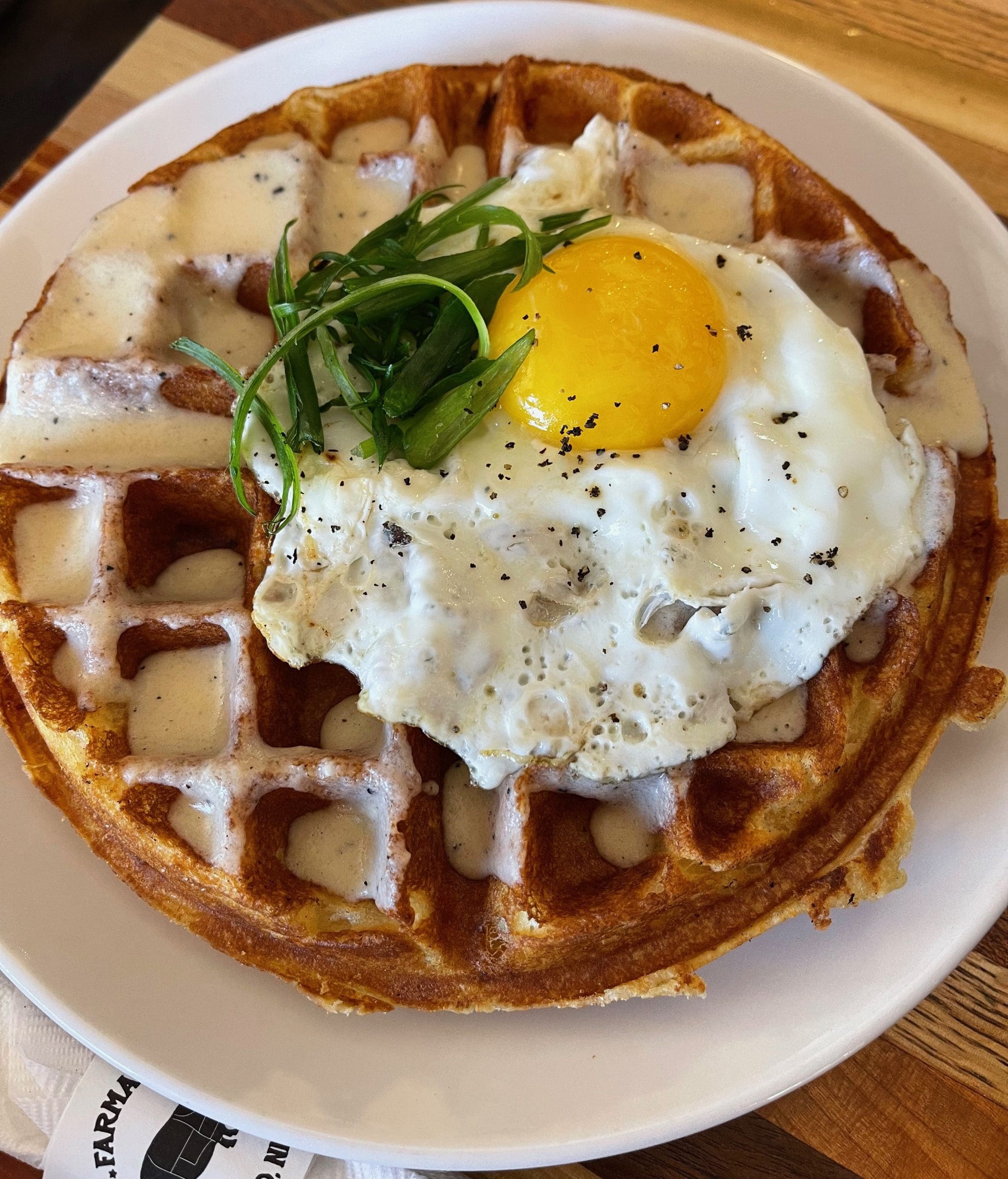
In this age of “fake news,” biased media slants and unabashed tell-alls, the one recent headline which has pleased me most comes from Bloomberg. Splashed in bold typeface was the eye-catching lead “Mom-and-Pop Joints Are Trouncing America’s Big Restaurant Chains.” Elaborating on this contention, the first paragraph reads: “Americans are rejecting the consistency of national restaurant chains after decades of dominance in favor of the authenticity of locally owned eateries, with their daily specials and Mom’s watercolors decorating the walls.” The numbers bear this out–“annual revenue for independents will grow about 5 percent through 2020, while the growth for chains will be about 3 percent.” Fittingly, I read this article during my inaugural visit to The Farmacy, a Lilliputian lair of luscious food then located on the southeast corner of the Mountain Road-Eighth Street intersection. If big restaurant chains and their well-heeled operations are the proverbial muscle-bound beach bullies who kick sand in the face of scrawny kids, The Farmacy embodies the small underdog who fights back with the only weapons at its disposal: great food and friendly service at an affordable price. The Farmacy is David to the Philistine’s Goliath, the plodding tortoise to the overly confident hare, unknown…

Firenze Pizzeria – Albuquerque, New Mexico (CLOSED)

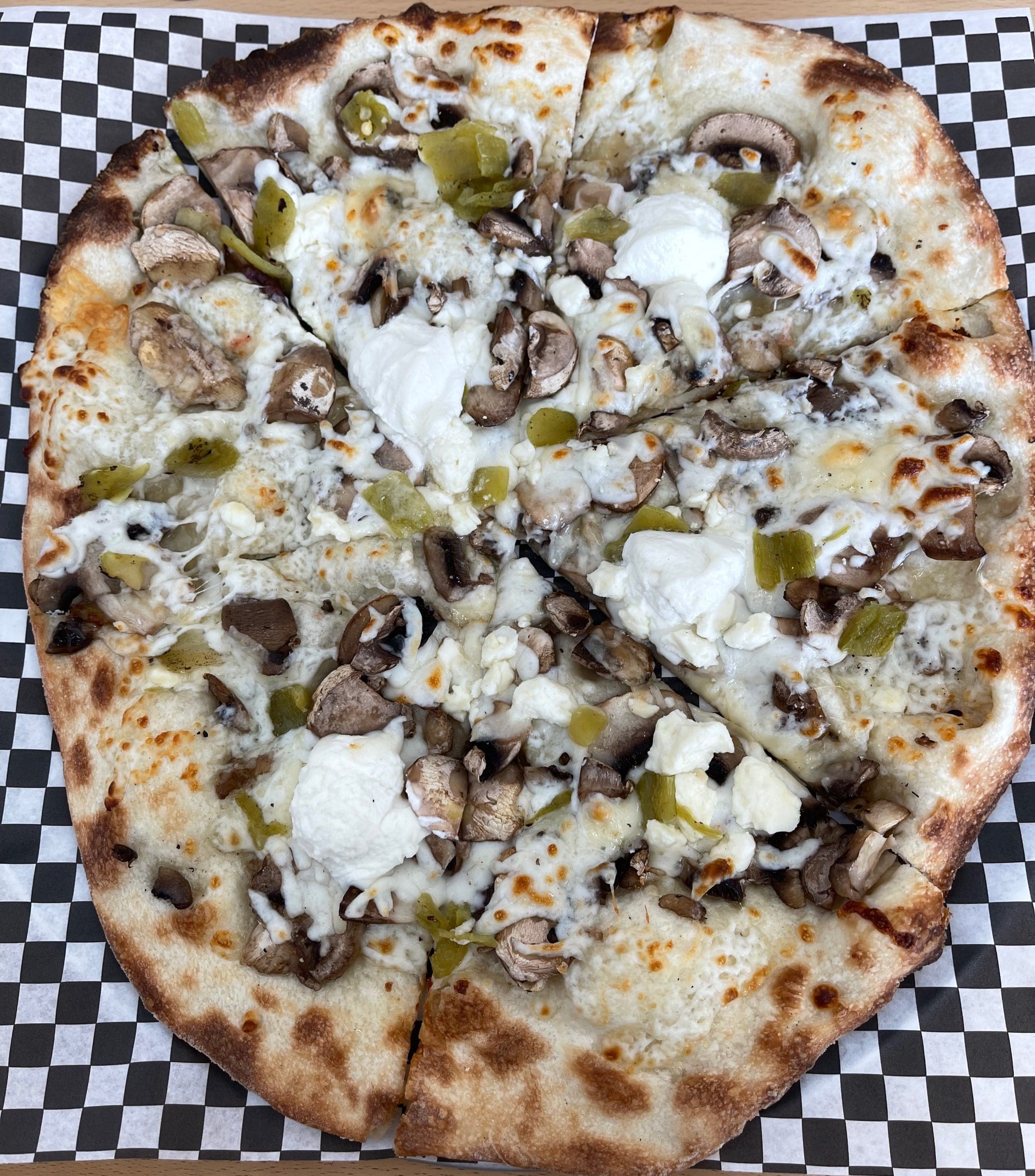
Name a pizza joint “Florence Pizzeria” and public reaction would likely be dubious:  “Who the heck is Florence?”  “Can someone named Florence possibly have a clue how to make pizza?”  Now translate “Florence” to Italian and all of a sudden, “Firenze Pizzeria” has instant credibility.  Never mind that most of the pizza in Florence (er, Firenze), Italy is of the Neapolitan variety.  The name Firenze is a perfect fit for a pizzeria.  Even the name inspires visions of a fire-breathing Italian oven preparing a waifishly thin pizza in just about a minute. Steven Meyer, owner-operator of Albuquerque’s Firenze Pizzeria knows a thing or two about fire-breathing ovens and waifishly thin pizzas.  In 2011, he pioneered portable pizza in the Duke City, toting an Italian-made oven throughout the city.  Being booked every weekend for nearly two years for special events, catering and a semi-permanent gig at the Downtown Growers’ Market at Robinson Park facilitated the decision to seek a permanent venue.  He found the perfect spot at 900 Park Avenue, S.W., just across Central Avenue to Robinson Park. The two-story edifice Firenze called home for nearly nine years had plenty of character and personality.  One of its neighbors was the lair…