Brekki Brekki – Albuquerque and Rio Rancho, New Mexico

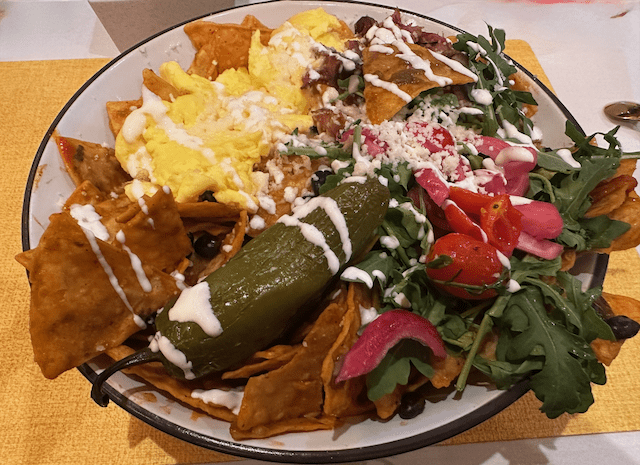
Brekki Brekki–To those of us who were around in the mid 70s, those two words might dredge up recollections of the citizens band (CB) radio vernacular.  Maybe even the Chuck Norris movie “Breaker!  Breaker!” with its perfunctory butt-kicking.  Though I pride myself on having a sesquipedalian vocabulary, I had never heard the term “brekki” used  as slang for breakfast” until watching the Irish television series “Jack Taylor.”  My research revealed “brekki” is not an Irish term for breakfast, but is in Iceland.  Yes, Iceland.  Jack Taylor’s backstory didn’t involve a stint in Iceland.  So, where did the Irish detective pick up the term.  Closer to home, why would a Duke City restaurant specializing in breakfast name itself “Brekki Brekki?” Paula, our delightful server didn’t know. She believes the term is Italian for breakfast, but verifiable evidence doesn’t seem to exist on the omniscient internet.  It’s conceivable the restaurant’s name is meant as a mnemonic, a word pattern designed to help people remember it.  At the very least, it’s a cutesy term.  Owner Robert Punya, who also founded and owns Poki Poki Cevicheria seems to like duplicated names.  If you haven’t had the pleasure of meeting Robert, you’re undoubtedly acquainted with…

The Cracker Barrel Old Country Store – Albuquerque, New Mexico

Your eyes aren’t deceiving you. This really is Gil’s Thrilling (and Filling) Blog and you really are reading a review of  a (gasp) chain restaurant. It would be easy (a cop-out) to say my visit to the Cracker Barrel Old Country Store was the result of brow-beating, cajoling, bribery or even torture, but the truth is my Kim loves the Cracker Barrel.  She’s well aware of my chain-averse attitude, but was hoping the Cracker Barrel would win me over. With my every reference to the “Chancre Barrel” on the drive to the restaurant, she quickly realized it was a hopeless cause. After eight years of living in the Deep South, the Cracker Barrel didn’t stand a chance.  For the most part, Southern cooking in the Land of Enchantment (or frankly, anywhere outside of Dixie) is about as good as New Mexican food being interpreted  in Mississippi.  It just doesn’t pass muster.  We’ve learned if we want Southern food as we enjoyed it in Dixie, we have to visit The Hollarin Madrid where chef-owner Josh Novak elevated Southern food to the level of cuisine. The Hollar, unfortunately, shuttered its doors on December 23, 2013. My friend Bill Resnik, who coined the…

Pine State Biscuits – Reno, Nevada

In 2020, Ted Lasso burst onto the pop culture scene.  Not long thereafter my friend Alonna Smith, the brilliant owner of My Indian Stove practically begged me to watch it.  She realized that with my penchant for British comedies, I’d love the laugh-out-loud show about an American soccer coach who assumes the help at a Premiere League soccer team in the United Kingdom despite not knowing anything about soccer.  Lasso is the master of the one-liner as well as the bringer of balm during heart-warming scenes.  He’s warm and fuzzy…and as usual, Alanna steered me in the right direction. On the second episode of season one, Ted began the practice of bringing freshly baked biscuits to the football club’s owner Rebecca Welton.  “Biscuits with the boss” quickly became one of the show’s most endearing gags.  Moreover, it’s essential to the relationship Ted wants to build with his stoic, business-like boss.   Over the time, the daily biscuit fix defrosted Rebecca’s cold heart and she embraced Ted not only as integral to her team’s future, but more importantly as a friend. Bringing biscuits to his boss also displays Ted’s efforts to assimilate with British culture.  What Americans like Ted would call…

Sugar Jam – Scottsdale, Arizona

I often describe my youth in rural, agrarian Peñasco as “bumpkinly naïveté.”  I may have been book smart (and insolent) enough to intimidate some of my teachers, but insofar as experiential smarts, I was one pretty sheltered guy.  The very first black people I ever saw up close were Drew and Shane Roebuck, gazelle-quick running backs for Menaul High School.   I wanted to kill them…not because they were black, but because I couldn’t catch them.  You see, I had a reputation as a fierce tackler.  It didn’t matter the race, ethnicity, religious affiliation or favorite breakfast cereal, I wanted to tackle everyone in a uniform that didn’t have Peñasco’s blue and gold. In basic military training for the Air Force, I shared close quarters with young men of every demographic.  It was the start of many beautiful friendships.  Over the course of an entire military career, many of my best friends were black.  Some of those friendships were borne of proximity and job, but flourished from the heart.  Even today–some 28 years after my retirement–fond recollection of such wonderful black friends as Dwayne (not The Rock) Johnson, Patrick Fields, Michael Gordon, Moe Myers and so many others remind me…

Blu Pig BBQ & Blues – Moab, Utah

For many of us barbecue is a noun as in “a social gathering at which barbecued food is eaten.”   For others it’s a verb (to roast or smoke food over wood using smoke at low temperatures over a long cooking time).  For the most passionate and devoted, barbecue is a way of life…even a religion.  That religion is practiced by large and small congregations in both outdoor and indoor temples throughout a portion of U.S. Highway 61.  The hymns wailed and warbled by choruses of angelic voices are the reason that portion of U.S. Highway 61 is known as the “Blues Highway.”  Rivaling Route 66 as the most famous road in American music lore, the portion of U.S. Highway 61 known as the legendary “Blues Highway” runs north from Vicksburg, Mississippi to Memphis, Tennessee.  So common is the paring of barbecue and blues along this stretch that U.S. Highway 61 could rightfully be called the “Barbecue and Blues Highway.”  Visit the iconic Beale Street in the heart of Memphis and you’ll understand why Bon Appetit declared “Blues and barbecue, smoke and sauce. In Memphis, they all meld beautifully. Just like heaven.” We didn’t wear blue suede shoes during our visit…

K&I Diner – Albuquerque, New Mexico

In 1960, Albuquerque’s population reached 201,189, more than doubling the city’s tally from the 1950 census. The start of a new decade began an era of expansion, a construction boom in which the burgeoning city began experiencing unprecedented growth. A proliferation of shopping centers was built to serve new neighborhoods. Albuquerque was not yet overrun by horrendous, copycat chain restaurants.  Family owned and operated mom-and-pop dining establishments–like the K&I Diner–were (and still are) your best bet for a great meal. 1960 (March 2nd to be exact) was also the year in which Irene Warner opened Grandma’s K&I Diner (named for her daughter Kay Hess and herself) in the heart of Albuquerque’s industrial district in the far South Valley. She ran the eatery with her family for 39 years until her death at age 82 in 1999. The matronly Irene was a fixture at her restaurant, a kind and gentle woman who made everyone welcome at her restaurant home. With a pronounced Southern drawl, she and her family kept things lively, often addressing their faithful patrons by “honey” or “sugar.”  Kay passed away in 2018. The restaurant has undergone several ownership changes since Grandma Warner passed away, but other than some…

The Range – Bernalillo, New Mexico

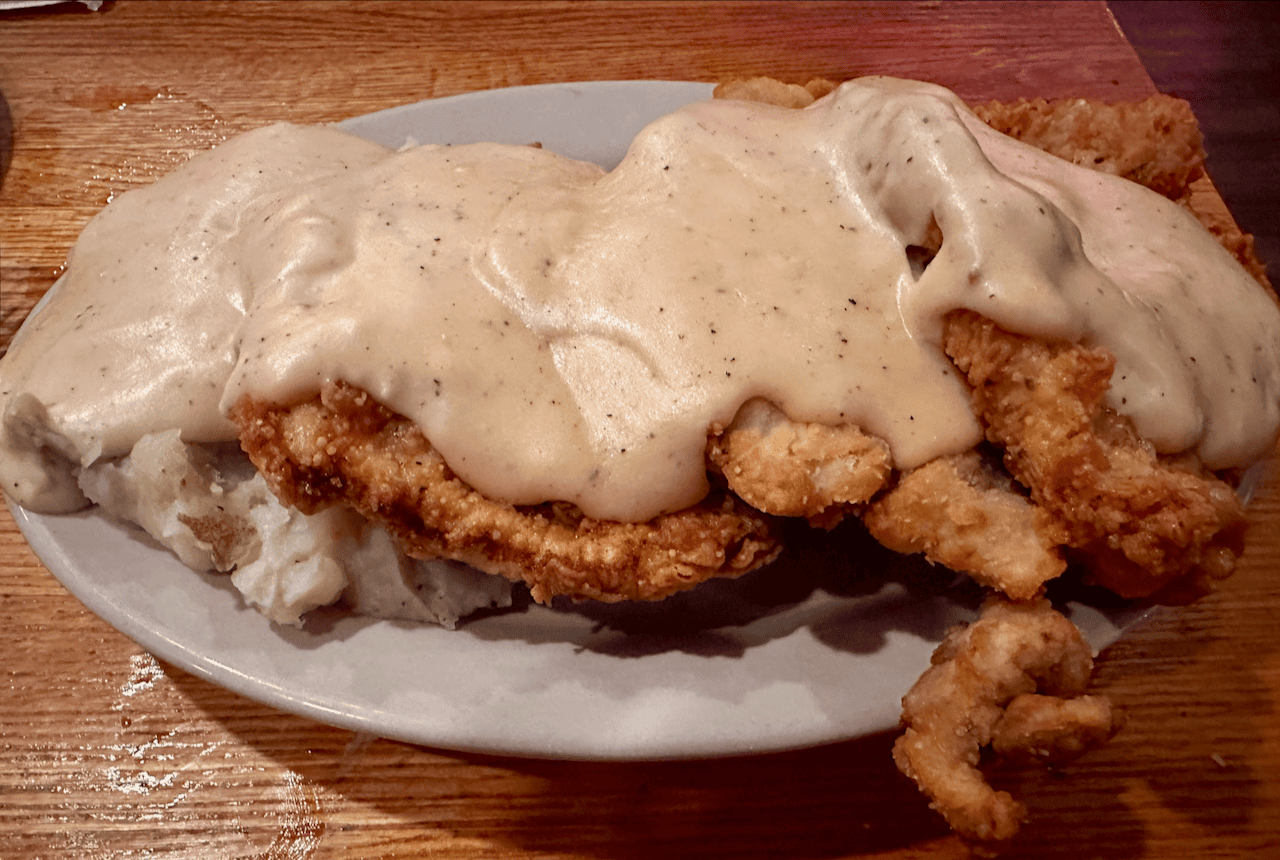
The phoenix of ancient Egyptian mythology was a sacred firebird of beautiful red and gold plumage said to live for centuries. At the end of its life, the phoenix built itself a nest of cinnamon twigs which it then ignited. Both the phoenix and the nest burned fiercely and were reduced to ashes from which a new phoenix arose. Similarly, the Range Cafe in Bernalillo was claimed by a fiery conflagration only to rise up from the ashes to exceed its former glory to become one of the most popular restaurants in New Mexico. Like the phoenix, the Range is a rare breed–one of the few locally owned and operated (non-chain) restaurants which at any given time (make that, almost all the time) has diners lining up for a seat. That may be because the Range offers the “familiar” in serving comfort foods and local favorites and serves them in the profuse portion sizes American diners love. The original Range debuted in September, 1992 in Bernalillo’s main street, Camino Del Pueblo. The restaurant was an instant success, quickly becoming more than a local favorite. Not quite three years later (on May 30, 1995), the Range went up in smoke–a huge…

Ms. Gennie’s House of Chicken – Albuquerque, New Mexico (CLOSED)

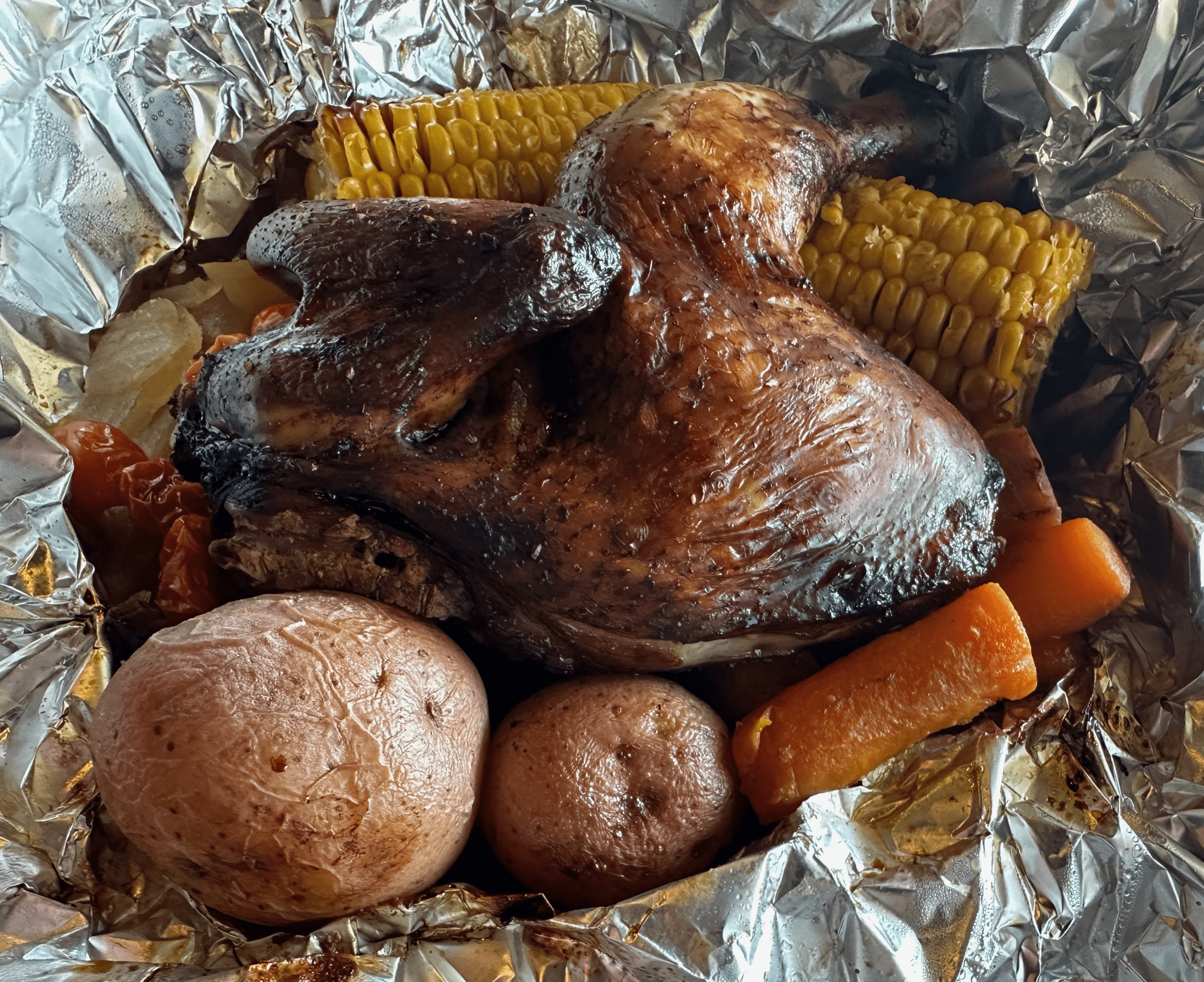
My Air Force friend and colleague Al Garcia once shared one of those amusing anecdotes that will leave your head shaking in disbelief even as you’re practically rolling on the floor with laughter.  According to Al who grew up in the Socorro area, his parents had to make a daylong trip to the big city (Albuquerque), leaving him and his sister at home to finish their chores.  At around lunchtime, he and his sister got hungry and decided to prepare some rice.  Never having cooked rice before, they poured an entire bag of rice into a pot, added water and turned the stove on high.   In a few minutes, rice began spilling out over the pot like lava flowing from a volcano.  Cooked rice covered the kitchen floor.  Not wanting to anger their parents, Al and his sister decided to get rid of the evidence.  They scooped up all the rice and fed it to their chickens.  The chickens gorged themselves on the all-you-can-eat feast of rice, eating so much that they (and this is the part I found hard to believe) burst, fowl feathers exploding all over the yard.  When their parents got home, Al and his sister…

Biscuit Boy – Albuquerque, New Mexico

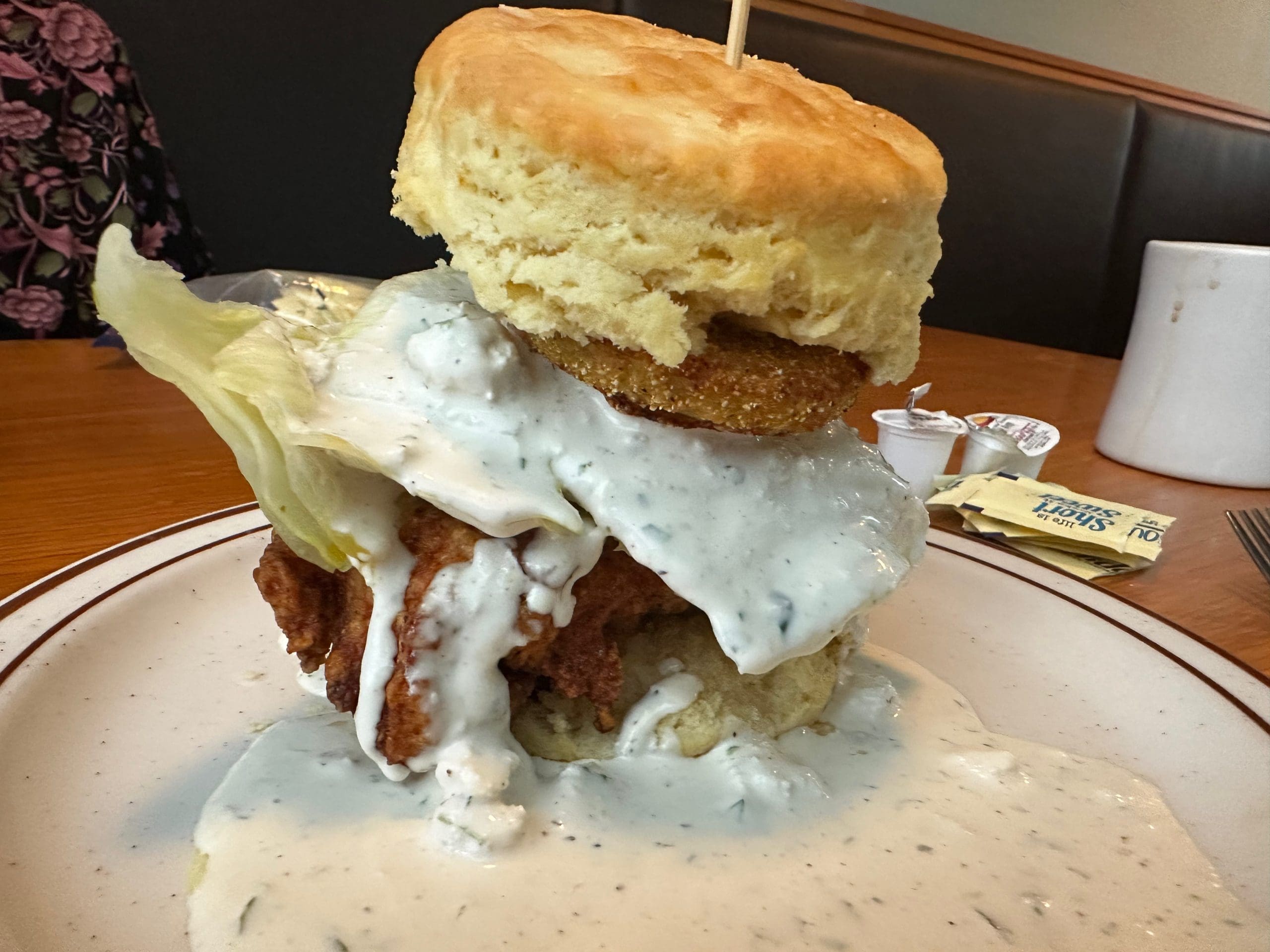
In Boris Pasternak’s Dr Zhivago, a sagacious old Russian czarist caught up in the communist revolution lamented “Scratch a Russian and you will find a peasant.”  To paraphrase that immortal line “Scratch a cook and you’ll find a chemist.”  Think I’ve been ingesting pharmaceuticals?  Maybe you should ask Deonte “Dee” Halsey, the affable owner of Biscuit Boy about the influence of chemistry in cooking.  He would know!  Dee was actually a research scientist working for the U.S. Department of Architecture before figuring out teaching science actually pays more than doing science.  Dee has been teaching science and math for more than two decades now, imparting knowledge and wisdom to high school, middle school and elementary school students.  For the past two years or so, he’s also been spending weekends hawking some of the very best biscuits you’ll find in the Land of Enchantment.  On Saturday you can find him at La Esquinita, a center for cultural flourishment in the Barelas neighborhood.   A mixed-use development combining housing, food, arts and retail, La Esquinita is yet another reason to visit Barelas.  On Sundays “in season” he plies his sideline at the Rail Yards Market in Albuquerque.   Though he grew up in Los Angeles,…

The Hollar – Madrid, New Mexico (CLOSED: December 17, 2023)

It wasn’t that long ago that if you played “word association” with almost anyone outside the Mason-Dixon line, the first thing coming to mind if you used the term “Southern food” was probably something like “heapin’ helpins’ of hillbilly hospitality.”  During their nine-year run as one of the most popular comedies in the history of American television, the Clampetts, a hillbilly family who relocated to Beverly Hills after finding oil on their property, introduced “vittles” to the American vernacular.  Vittles, of course, meant such “delicacies” as possum shanks, pickled pig jowls, smoked crawdads, stewed squirrel, turnip greens, and owl cakes.  “Weeeee Doggies,” now that’s eatin‘.” To much of America, the aforementioned delicacies were culinary curiosities–bumpkinly and provincial food no one outside the deeply rural south would eat.  Because the Beverly Hillbillies predated the Food Network and the culinary awakening of America, those stereotypes as to what constitutes Southern food became deeply ingrained in the fabric of American culture. In 2008, Gary Paul Nabhan published Renewing America’s Food Traditions, one of the most important books written about American food. This terrific tome celebrates the vast diversity of foods which gives North America its distinctive cultural identity, an identity reflecting the vast and…

Sweet Lake Biscuits & Limeaid

In 2008, Natchez, Mississippi, was officially named the Biscuit Capital of the World, a process which took three years of research by Chef Regina Charboneau.  Just our luck, the Natchez native and French-trained chef began serving her famous biscuits at her Twin Oaks Bed & Breakfast in Natchez a decade after our last visit to the “Antebellum Capital of the World.”  While we didn’t get to partake of Chef Charboneau’s celebrated biscuits (revered by the Rolling Stones), our breakfasts in Natchez were memorable because biscuits in the Mississippi River town are truly “biscuit capital” worthy. In the quarter-century plus since we lived in Mississippi, we haven’t missed the oppressive humidity or the politics (on par with New Mexico and let’s just leave it at that), but we’ve missed the patriotism, people and…maybe especially the biscuits.  Yes, I know biscuits are made everywhere across the country, but only in the South are biscuits a transformative flaky, buttery and ethereal experience.   Everywhere else most biscuits are floury hockey pucks–dry, tasteless disappointments not worthy of the butter, jam or gravy with which they’re slathered. Not surprisingly, the last truly life-altering biscuit to cross my lips was in Charleston, South Carolina at the James Beard…