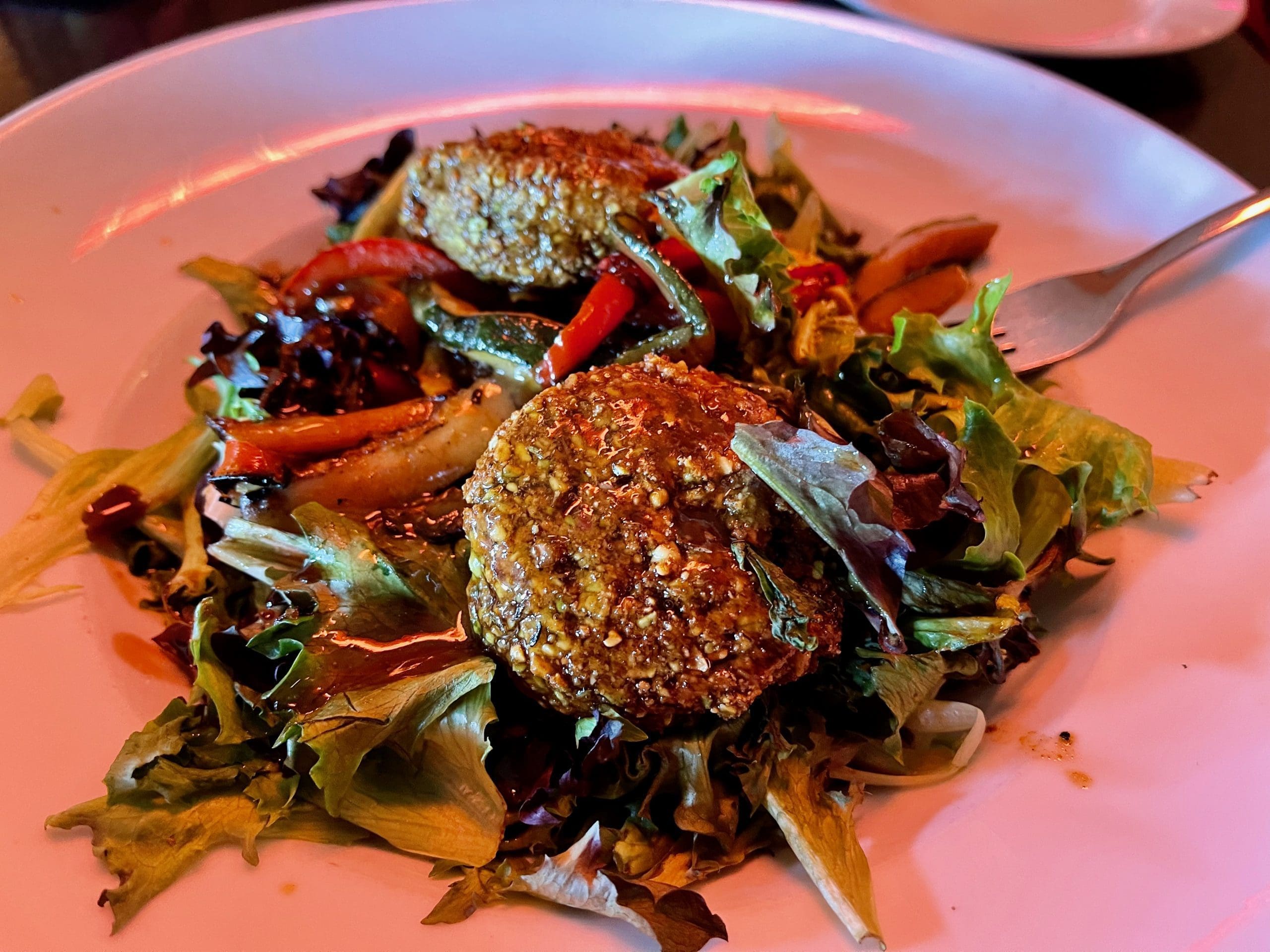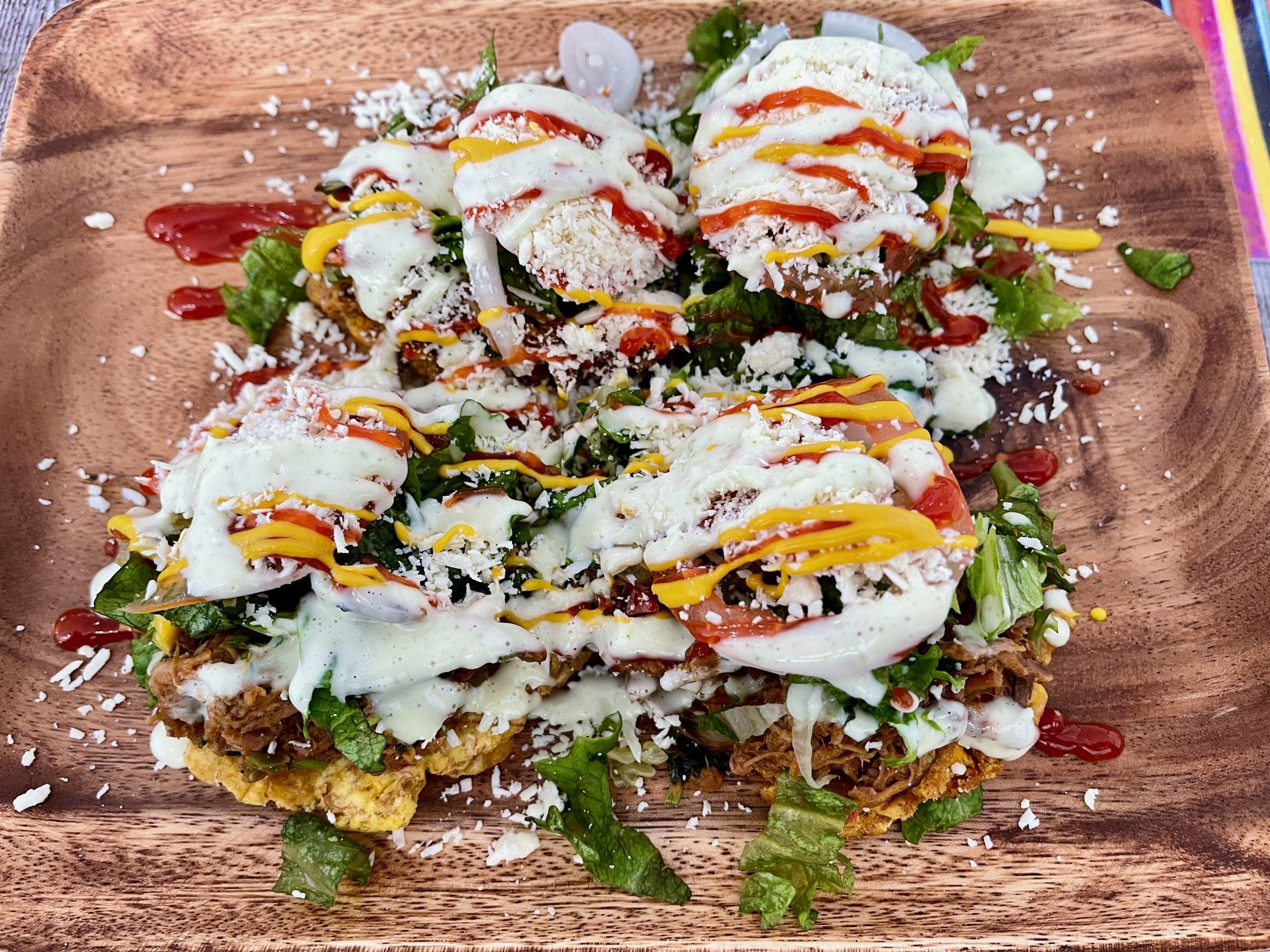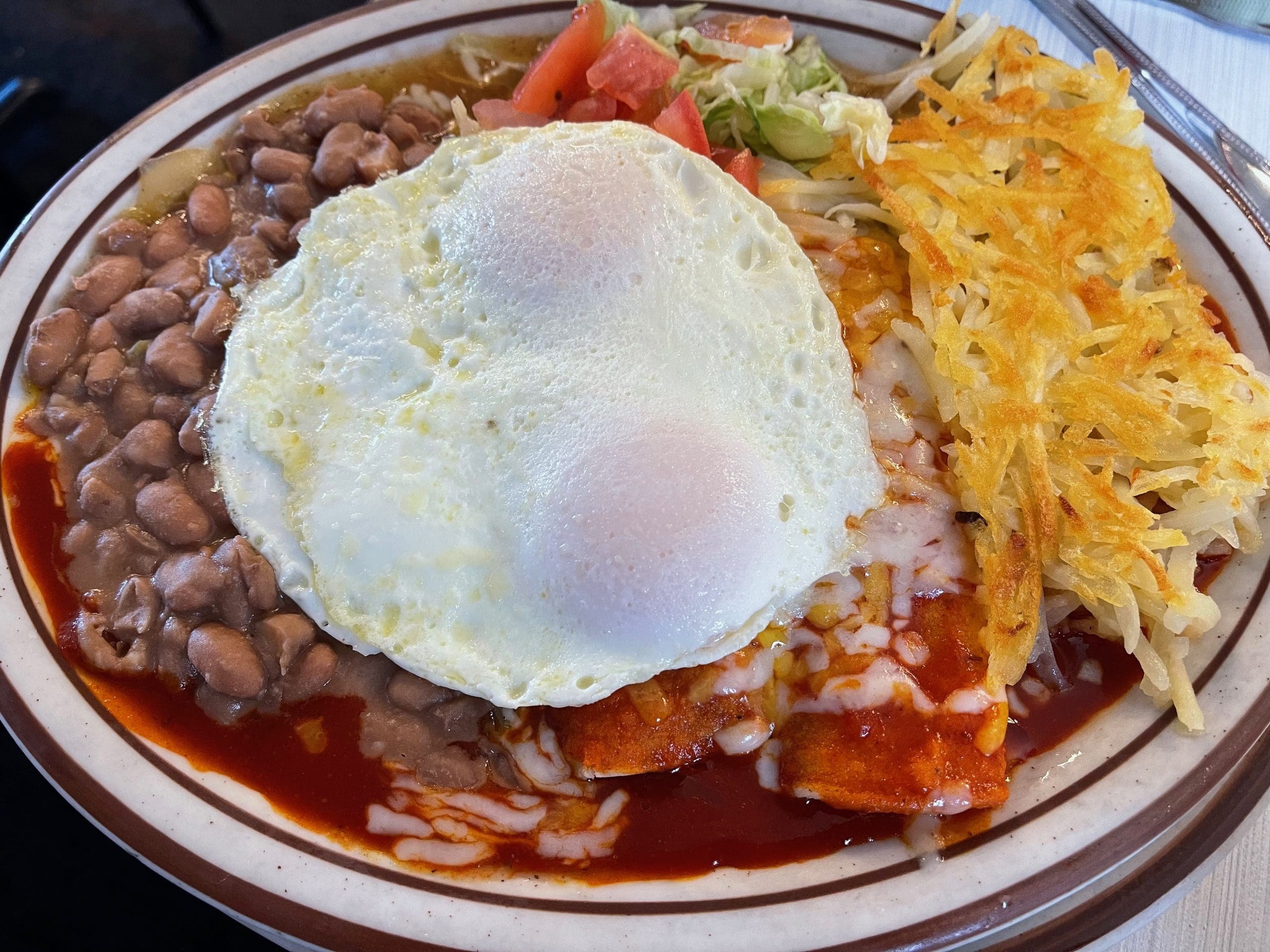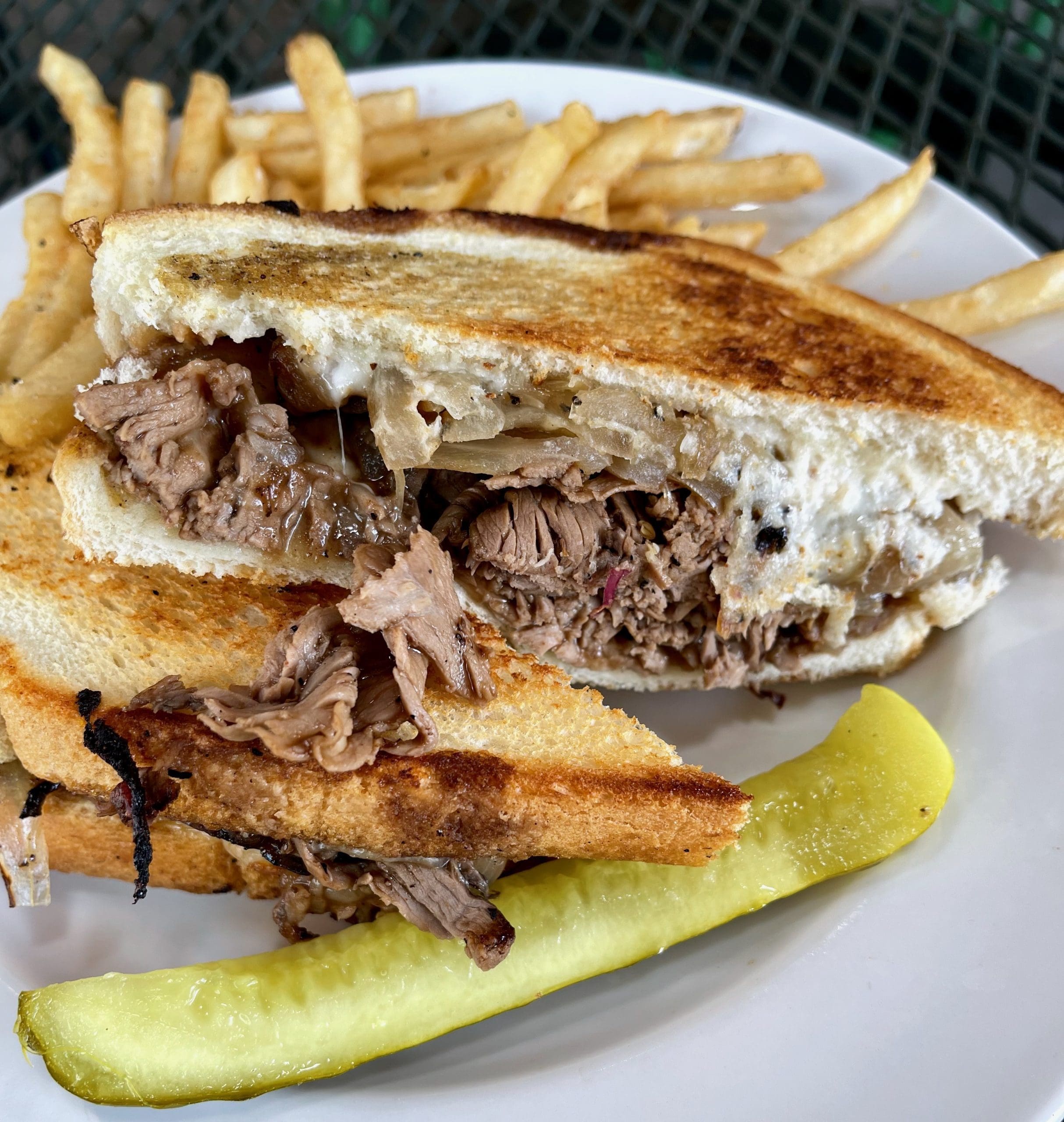
Scarpas Brick Oven Pizza – Albuquerque, New Mexico

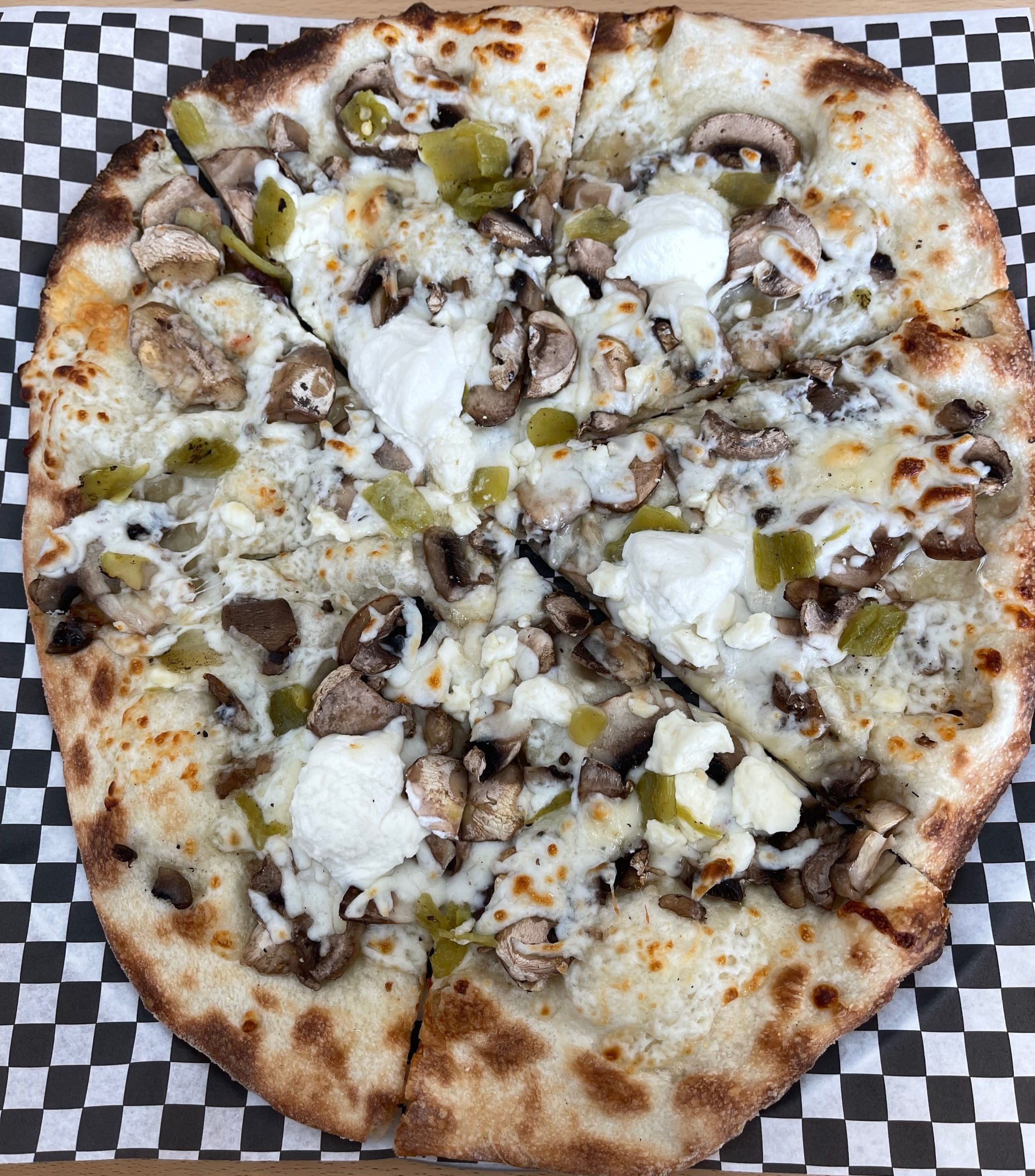
As an essayist of the New Mexico culinary condition, it’s easy to be lured in by new restaurants, those bright and shiny beacons of promise.  Sadly, critics (and those of us who play them in movies and television) gravitate toward new restaurants with the expectation of newness, something heretofore different and amazing.  We often do this at the expense of tried-and-true, established and proven restaurants which haven’t ever let us down.  For every new restaurant I visit, there are hundreds of old favorites to which I don’t return often enough.  One such personal favorite is Scarpas, a long-time fixture on Academy.  Prior to our visit in January, 2023, our previous visit was in December, 2006.  That’s far too long! Academy has been home to Scarpas since entrepreneur and restaurant impresario Jim Schumacher opened it in 1995.  For years later, he opened a second Scarpas, this one on Montgomery.  Schumaker, you might remember, was the long-time owner of The Cooperage, a Lomas mainstay since 1976.   In 2020, Joe Sommers, a Scarpas employee from day one, purchased the restaurant from Schumacher. Not too much later, The Cooperage shut down for good. In 2021, year two of year the world’s nightmare, the Montgomery…

Los Olivos – Albuquerque, New Mexico

For many New Mexicans, Durango, Colorado is much more familiar than Durango, Mexico.  In truth, however, Mexico’s Durango may actually have more historical significance and ties to the Land of Enchantment than its like-named resort town in Colorado.  That’s especially true for the Catholic Churches of New Mexico. Episcopal jurisdiction for the Catholic church in New Mexico was placed in 1797 under the stewardship of the Bishop of Durango. New Mexico remained part of the Diocese of Durango until 1850 when Pope Pius IX created the Vicariate Apostolic of New Mexico and appointed Father Jean Baptiste Lamy as its first Bishop.  Yes, that’s the same Father Jean Baptiste Lamy on whom Wila Cather’s Death Comes For the Archbishop is based. Durango, Mexico was also a significant “paraje” (stopping point) along the The Camino Real de Tierra Adentro (Royal Road of the Interior Land), the 1,590 mile road between Mexico City and San Juan Pueblo (Ohkay Owingeh), New Mexico. During the 17th Century, the area between the villas of Durango and Santa Fe also came to be known as “the Chihuahua Trail.”   It’s a vast understatement to declare that Santa Fe’s reliance on El Camino Real was crucial to the…

Mariscos La Playa – Albuquerque, New Mexico

There’s deliciousness and there’s delicious irony on the menu at Mariscos La Playa. The deliciousness is more readily apparent. It’s part and parcel of virtually every item on the menu. You have to understand a little Spanish to grasp the delicious irony which is outwardly manifested in the form of a soup called “Caldo Vuelve a la Vida,” literally ” Come-back-to-life-soup.” The soup is a metaphor for the restaurant itself, the irony being that the restaurant itself came back to life in Albuquerque after a hiatus of almost two years. Mariscos La Playa operated in the Duke City from November, 2006 through mid-2013. Located on Central Avenue just west of Atrisco, the colorful Mexican seafood restaurant received significant critical acclaim from every online and print medium in the city. Moreover, it earned popular acclaim among Mexican seafood aficionados. Large crowds typified lunch and dinner at Mariscos La Playa, the third instantiation of a Mexican seafood dynasty founded and operated by Luis Ortega and his family who also own two locations in Santa Fe and one in Española. From a demographic standpoint, the original location was probably more ideally situated for the Duke City’s Mexican population. The new location–on San Mateo…

Limonata Nob Hill Crepe Escape – Albuquerque, New Mexico

While contemplating a name for their second Duke City restaurant venture, Maxime and Daniela Bouneou wanted to convey the feeling of a refreshing and invigorating venue in which their patrons could relax and enjoy themselves. After deliberating several options, they ultimately decided on Limonata, the Italian word for lemonade. When Daniela proudly told her friends in Italy what the new restaurant would be named, they laughed, reminding her that Limonata is an Italian slang term for “French kiss.” Though Maxime and Daniela may have become a bit more “Americanized” by having lived in the United States for more than a decade, Limonata had the look, feel and most importantly, tastes of a true Italian trattoria. Limonata was launched as the more informal and sassy younger sibling of Torinos @ Home, the sensational Italian ristorante many of the cognoscenti considered one of, if not the Land of Enchantment’s best for Italian cuisine. Limonata’s menu focused on simple fare–Italian street food–at relatively low prices in a relaxed, family-friendly atmosphere and as the Bouneous envisioned, it’s a refreshing change of pace. Limonata is located in Albuquerque’s Nob Hill district, one block south of Central Avenue on Silver. There’s a bit of delicious irony…

Tomato Cafe – Albuquerque, New Mexico

You like potato and I like potahto, You like tomato and I like tomahto Potato, potahto, Tomato, tomahto, Let’s call the whole thing off – Ira & George Gershwin Prior to the introduction of tomatoes in 1548, the Italian diet was largely similar to the diet throughout the rest of the Mediterranean. Such staples as bread, pasta, olives, and beans were commonplace, as was a variety of different types of polenta. The Italian diet of the time varied depending on region: fish featured heavily near the coast while inland regions would rely more on pork and wild game. Garlic, onion, pepper and onion oil was used to add flavor.  Olive oil also held a central role in the region’s cuisine.  While a Mediterranean diet is delicious and even healthy, it’s certainly not as popular as Italian food has become across the world thanks largely to the now ubiquitous tomato. Tomatoes were initially received with skepticism on account of their unusual qualities. They were associated with eggplant, another foreign vegetable introduced to Europe from abroad (in this case from the Middle East). Similar to tomatoes, it took hundreds of years for eggplant to become an accepted ingredient in the Italian diet.…

Tikka Spice South Asian Street Food – Albuquerque, New Mexico (CLOSED*)

*NOTE:  Only the brick and mortar version of Tikka Spice has closed.  Tikka Spice still operates out of a food truck. In baseball it’s called the “Triple Crown,”an incredibly rare achievement in which a player leads the league in average, home runs, and runs batted in.  To win the triple crown, a player must tremendous power to hit for distance as well as a very keen eye to hit baseballs thrown at nearly 100 miles per hour and place them on the field in positions that result in driving in runs.  In horse racing, the term Triple Crown represents a series of horse races for three-year-old Thoroughbreds, consisting of the Kentucky Derby, Preakness Stakes, and Belmont Stakes.  To win all three of these races is even more rare. There’s another Triple Crown competition that’s even more challenging and difficult to win.  That’s Edible’s Green Chile Cheeseburger Smackdown, an annual event held in Santa Fe every year since 2013.  This competition has one simple goal: to determine the best burger in New Mexico.  I would argue that the reason this competition is even more difficult to win than the aforementioned Triple Crowns is that the Smackdown is not an athletic achievement reliant on…

Ihatov Bread and Coffee – Albuquerque, New Mexico

“The smell of good bread baking, like the sound of lightly flowing water, is indescribable in its evocation of innocence and delight.” ~ M.F.K. Fischer A colleague who was recently struck with a second bout of the Cabrona virus confided that while he could tolerate the malaise, coughing and body aches, what bothered him most was temporarily losing his sense of smell and taste.  He shared that he couldn’t live with not being able to imbibe the aroma of freshly baked bread right out of the oven.  That aroma is almost universally loved.  For many of us, it promotes a Pavlovian response and catapults us back to very specific points in our formative years.  These “odor-cued” memories may take place at a subconscious level, but they’re extremely powerful. A survey of 1,000 people which accompanied a Institute of Food and Health at the University College of Dublin revealed that 89-percent of their respondents indicated that the smell of bread made them happy with 63-percent saying it evoked happy memories.  Respondents were asked for a word they associate with those memories.  29-percent listed the word “mom” or “mother” while 20-percent associated aroma-triggered memories of bread to the word “childhood.”  The Institute was able…

Abuelita’s New Mexican Kitchen – Bernalillo and Albuquerque, New Mexico

Abuelita–perhaps no word in the vernacular of Spanish Northern New Mexico evokes such veneration, reverence and, for those of us who have lost these heaven-sent treasures, a melancholy ache not even time can erase. The abuelita is the family matriarch, the heart of the extended family and the sagacious matron to whom you go for counsel, consolation and cooking. For generations, New Mexico’s abuelitas have been nurturing their families with the simple foods passed down by their own abuelitas. Before the proliferation of New Mexican restaurants, abuelita’s was where the family congregated–no special occasion was necessary because any time with your abuelita was a special occasion. Dining at Abuelita’s New Mexican Kitchen in Bernalillo or Albuquerque won’t replace dining at your own abuelita’s, but you’re guaranteed a good meal, sizeable portions and genial, attentive service. As at your own abuelita’s home, there’s almost always something going on in the kitchen. Abuelita’s is open for breakfast, lunch and dinner every day but Monday and has been serving Bernalillo since 1984. Photographs honoring abuelitas of local patrons festoon the muted yellows and earth tones of the restaurant’s walls. Fittingly the shirts worn by the wait staff sport the motto “panza llena, corazon…

Sugar Nymphs Bistro – Peñasco, New Mexico

Peñasco has always been the beautiful stepsister ignored by the dutiful suitors who prefer the company of Taos, its more glamorous sibling. Taos, the mystical art colony to which new age subscribers seem preternaturally drawn is the terminus of the high road, starting and end point of the enchanted circle and one of the most beautiful communities in the country, if not the world. Sugar Nymphs Bistro is helping Peñasco lure some of those suitors away…at least for a spectacular meal or ten.  A 2002 entry into the Taos county restaurant scene, Sugar Nymphs offers a sophisticated menu that belies Peñasco’s rural simplicity while celebrating its agrarian traditions and serving its local home-grown organic produce.  It’s quite simply one of the very best restaurants of any genre in the Land of Enchantment. In recognition of its bucolic setting and its outstanding cuisine, Sugar Nymphs Bistro was featured in the October, 2004 issue of Gourmet magazine, the internationally renown “magazine of good living.” It was one of eight featured rural restaurants where “the welcome is warm and the flavor regional.” Despite the restaurant’s acclaim, to some local residents, Sugar Nymphs remains “that place founded by los hippies.” Those “hippies” would be…

Rowley Farmhouse Ales – Santa Fe, New Mexico

Only in John Denver’s hit song “Thank God I’m A Country Boy” is life on the farm “kinda laid back.” In actuality, farm life can be downright arduous, requiring back-breaking work in climatic extremes for low wages. It was much worse in colonial days when life on a farm generally meant very few luxuries outside of a warm fire and a tankard (or ten) of house-brewed ale. Beer was brewed not only to refresh, sustain and comfort hard-working farmers, but because during sanitation-deprived colonial times, it was safer than water. Farm-brewed beer was created with what was on hand, whether it be wheat, hops, barley or rye supplemented with such ingredients as evergreen boughs, juniper berries, honey and fruit. Because beer was made with whatever ingredients were available, the lack of convention led to an emphasis of individuality over uniformity. Along with life, liberty and the pursuit of happiness, beer, it seems, was almost an inalienable right and in many cases, an integral part of a worker’s compensation package. Gentlemen farmers such as George Washington brewed beer not only for themselves, but for their farm workers whose employment contracts often stipulated a certain daily allotment of beer. Washington’s farm workers…

Uptown Saggio’s Scratch Italian Kitchen – Albuquerque, New Mexico

Can you imagine the outcry if Governor Michelle Lujan Grisham tried to abolish New Mexico’s sacrosanct red and green chile because the Department of Cultural Affairs Secretary convinced her that chile doesn’t bring out the best in New Mexicans?  Such a treasonous and heretical act would probably provoke outrage, if not an outright revolution.  Thankfully our Governor is a tremendous advocate for our home state’s hallowed and official state vegetable.  Regardless of your political affiliation, you can’t help puffing up your chest with pride when she responds to a snarky tweet from Colorado’s governor claiming Colorado’s chile is superior. That dystopian scenario sounds too outlandish to ever happen.  It would be akin to Italy trying to abolish pasta.  Wait, that actually did happen.  In the decade before World War II, an up-and-coming art movement called The Futurists derided anything that wasn’t on the cutting edge of modern. They wanted Italy to be on the front lines of the future and saw one thing holding the entire country back—its love of pasta.  The movement believed pasta was “heavy and anti-virile,” claiming that “no true fighters would ever eat pasta because of its tendency to weigh you down.” They also made it clear…