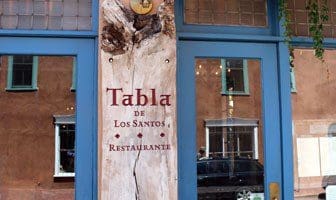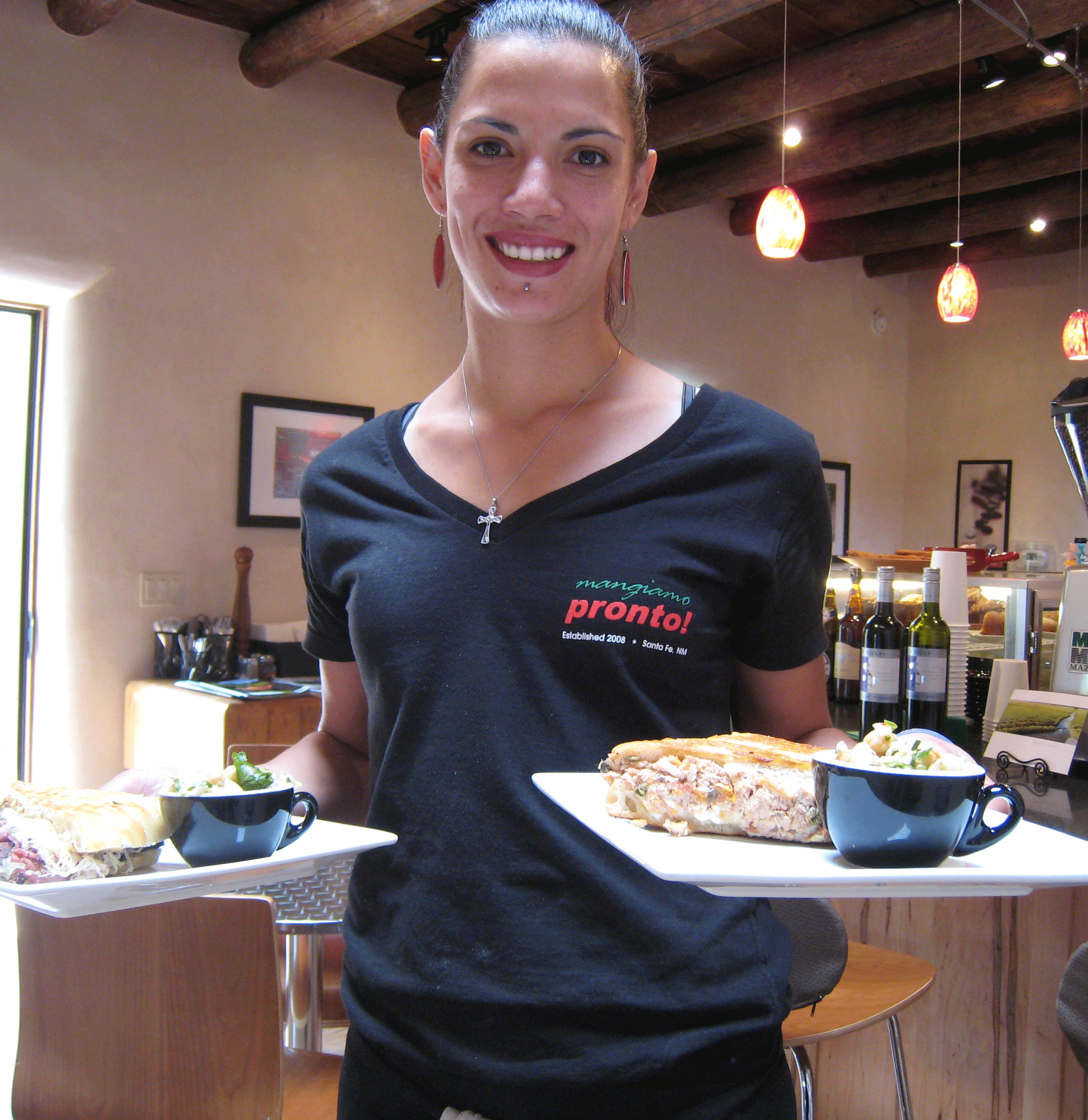
Roque’s Carnitas – Santa Fe, New Mexico (CLOSED)

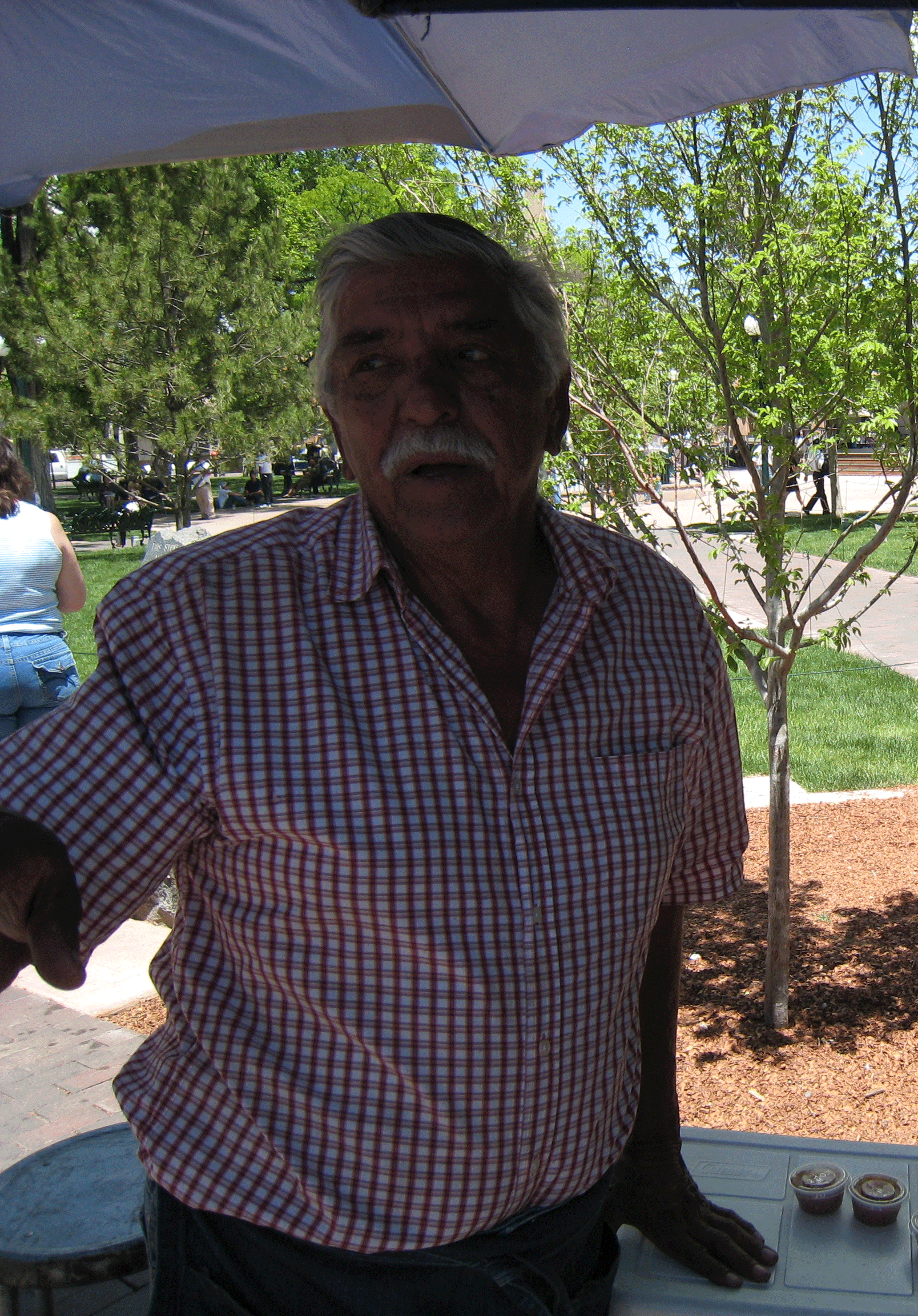
In more cosmopolitan metropolises it isn’t uncommon to see sidewalk vendors plying their trade over chuck wagon stands and proffering high quality fast food such as hot dogs, tacos, gyros and sundry quick meal items. Some of the best food in cities such as Portland, Oregon can be found near city parks where enterprising street vendors concoct culinary magic on portable kitchens and what we typically deride as “roach coaches.” Roque Garcia has made such a business an art form–a very successful one. In fact, Roque claims carnitas paid for his home outside Puerto Vallarta in Mexico and for the Mercedes Benz automobiles he likes to drive. Roque’s cart is stationed on the southeast corner of the Santa Fe plaza…

The Shed – Santa Fe, New Mexico

In the culinary world, the name James Beard is revered perhaps above all others. Considered the “Dean of American Cookery,” Beard established a legacy of culinary excellence and became a household name to generations of home cooks and professional chefs. The cookbooks he authored between 1940 and 1983 are considered “a slice of American history” because those tomes span America’s culinary regions and served as a premonition of the global epicurean expanse to come. Today, the James Beard Foundation, a national not-for-profit organization is dedicated to celebrating, preserving, and nurturing America’s culinary heritage and diversity in order to elevate the appreciation of our culinary excellence. Earning a James Beard award signifies the pinnacle of achievement in the culinary world. It’s…

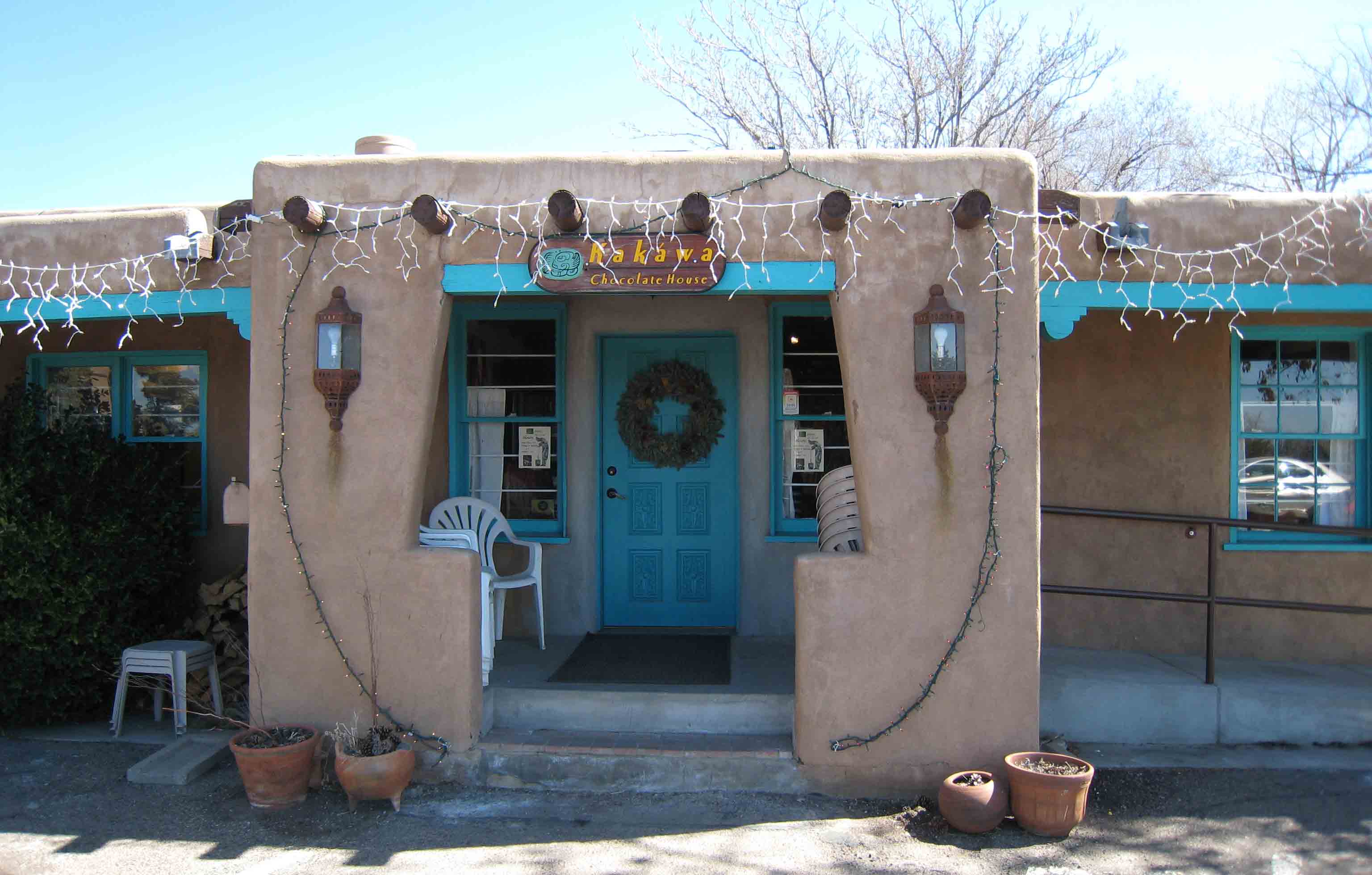
Kakawa Chocolate House – Santa Fe, New Mexico

In a 1995 episode of Seinfeld, Kramer attempted to deduce George’s ATM code: “You’re a portly fellow, a bit long in the waistband.  So what’s your pleasure?  Is it the salty snacks you crave?  No, no, no, yours is a sweet tooth.  Oh you may stray, but you’ll always return to your dark master, the cocoa bean.” America is, like George Costanza, a nation of chocolohics.  The Chocolate Manufacturers Association estimates that the per capita consumption of chocolate among Americans is about 11 pounds per person per year.  That translates to 27,000 calories, 1530 grams of fat, 1130 milligrams of cholesterol, 4400 milligrams of sodium, 3150 grams of carbohydrates and 350 grams of protein.  In 2001 Americans consumed 3 billion…

Tomasita’s – Santa Fe, New Mexico

The decade following America’s Civil War was one of burgeoning expansion westward with railroads leading the way.  Railroads helped open up the Wild West which included the then territory of New Mexico.  They transported wool, hides, piñon, lumber, coal, chile and other agricultural products.  They served as “connectors” between villages, towns and pueblos.  They bridged cultures and transcended distance, traversing through rocky promontories, barren mesas and fecund river valleys.  Railroads spread the news, enlightened the culture and introduced modern amenities to outposts separated by miles and time. The long defunct Denver and Rio Grande Western Railroad (DRGWR) even had grandiose plans to connect Denver, Colorado and Mexico City  with its narrow-gauge railroad.   During its halcyon days, the 125-mile, seven-hour branch from…

Aqua Santa – Santa Fe, New Mexico (CLOSED)

“But the moment I saw the brilliant, proud morning shine high up over the deserts of Santa Fe, something stood still in my soul, and I started to attend. There was a certain magnificence in the high-up day, a certain eagle-like royalty, so different from the equally pure, equally pristine and lovely morning of Australia, which is so soft, so utterly pure in its softness, and betrayed by green parrot flying. But in the lovely morning of Australia one went into a dream. In the magnificent fierce morning of New Mexico one sprang awake, a new part of the soul woke up suddenly, and the old world gave way to a new.” In a 1928 essay called “New Mexico,” prolific…

Guadalupe Cafe – Santa Fe, New Mexico (CLOSED)

1974, Mexico’s Nobel laureate Octavio Paz wrote that “the Mexican people, after more than two centuries of experiments, have faith only in the Virgin of Guadalupe and the National Lottery.” Though perhaps not to the same degree of reverence as people of Mexican descent have for Our Lady of Guadalupe, many diners literally make pilgrimages to Santa Fe’s Guadalupe Cafe. You might say they trek to this beloved institution with a type of fervor which could be considered almost spiritual. The Guadalupe Cafe, long removed from Santa Fe’s Guadalupe District and Guadalupe Street, does indeed inspire a fierce devotion. It is one of the most popular restaurants in Santa Fe, a venue often included in discussions about the best New…

Honnell’s Late Nite Burger – Santa Fe, New Mexico (CLOSED)

“America’s celebrity psychologist” Dr. Phil McGraw posits that how you interact with your partner in the first four minutes can set the tone for the day.  Those first and most crucial 240 seconds of each and every day can, in essence, dictate your entire mood and, in the long run, either keep your relationship intact or destroy it.  I’d add that even the first four minutes of your workday can have a profound impact on the rest of your day. If the first person with whom you interact is what Dilbert creator Scott Adams would describe as an “office vampire” your entire day will be impacted.  Office vampires are those people from whom a cheery “good morning” greeting will elicit…

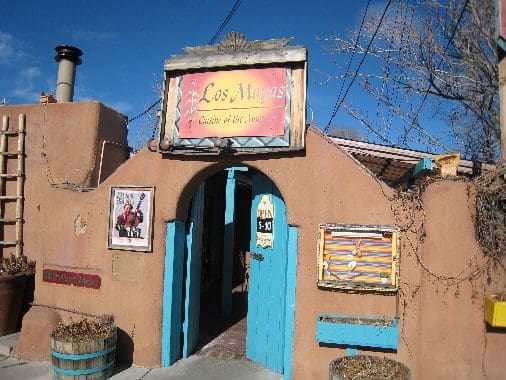
Los Mayas – Santa Fe, New Mexico

Diego de Landa Calderón, the former Bishop of Yucatán, is a dichotomous figure in the history of the new world.  On one hand, he is recognized as an invaluable source of information on pre-Columbian Mayan civilizations, but on the other, he was directly responsible for destroying much of that civilization’s history, literature and traditions. Given the responsibility of converting the indigenous Maya to Roman Catholicism, he instituted an Inquisition that ultimately ended with the notorious auto de fé, a ritual of public penance for condemned heretics.  Mayas who continued to practice “idol worship” after having been “converted” to Catholicism were the recipients of this torturous rite.  During one ceremony, he also burned more than 5,000 Maya cult images and a significant number of Maya codices which would have filled…

Eldorado Court – Santa Fe, New Mexico (CLOSED)

In Spanish, the word Eldorado translates to “the gilded one” or the “golden one” and refers to an imaginary place of great wealth and opportunity sought in South America by 16th-century explorers. In Santa Fe, Eldorado means a stately landmark hotel just off the historic Plaza in which guests are graced by the art of hospitality in lavish accommodations. The heart of the hotel is the Eldorado Court, located just off the main lobby. During our first visit in 2005, the Eldorado Court was “guarded” by two multi-hued, bigger than life coyotes (the type that helped define Santa Fe style years ago). Those coyotes have been repositioned onto ledges where they still remain in vigilant watch. On Sundays, Eldorado Court…

Osteria d’Assisi – Santa Fe, New Mexico

Historians have characterized the discovery, exploration, and colonization of the Americas in the late fifteenth and sixteenth centuries as having had three express purposes: glory, gold and God. This holds true in New Mexico where Spanish Explorers may have come for glory and gold, but finding neither, stayed for God.  Believing the large population of native peoples needed to hear the Gospel, the Spaniards established New Mexico first as a colony then as a mission. The effort to Christianize the native peoples was led by Franciscans, known then as the Sons of St. Francis of Assisi.  The sandal-shod Franciscans carried the Gospel throughout the Indian pueblos, indelibly imprinting Franciscan spirituality into the fabric and soul of New Mexico’s Catholicism. Evidence…

Blue Heron Restaurant at Sunrise Springs – La Cienega, New Mexico

Fewer than ten miles separate the historic Spanish village of La Ciénega from Santa Fe, and though both have largely retained vestiges of their storied and proud histories, the differences that set them apart are as vast as El Camino Real, the Royal Road that has connected them for centuries. While Santa Fe has entered the 21st century as a burgeoning cosmopolitan city, La >Ciénega remains a rural enclave, parts of which have remained unchanged for generations–that despite becoming somewhat of a bedroom community for Santa Feans. Once a rural Indian pueblo outpost, La Ciénega  was abandoned in the seventeenth century only to be resettled by the Spanish after Don Diego de Vargas’ celebrated reconquest of New Mexico. During the…