Bama’s 1865 – Albuquerque, New Mexico (CLOSED)

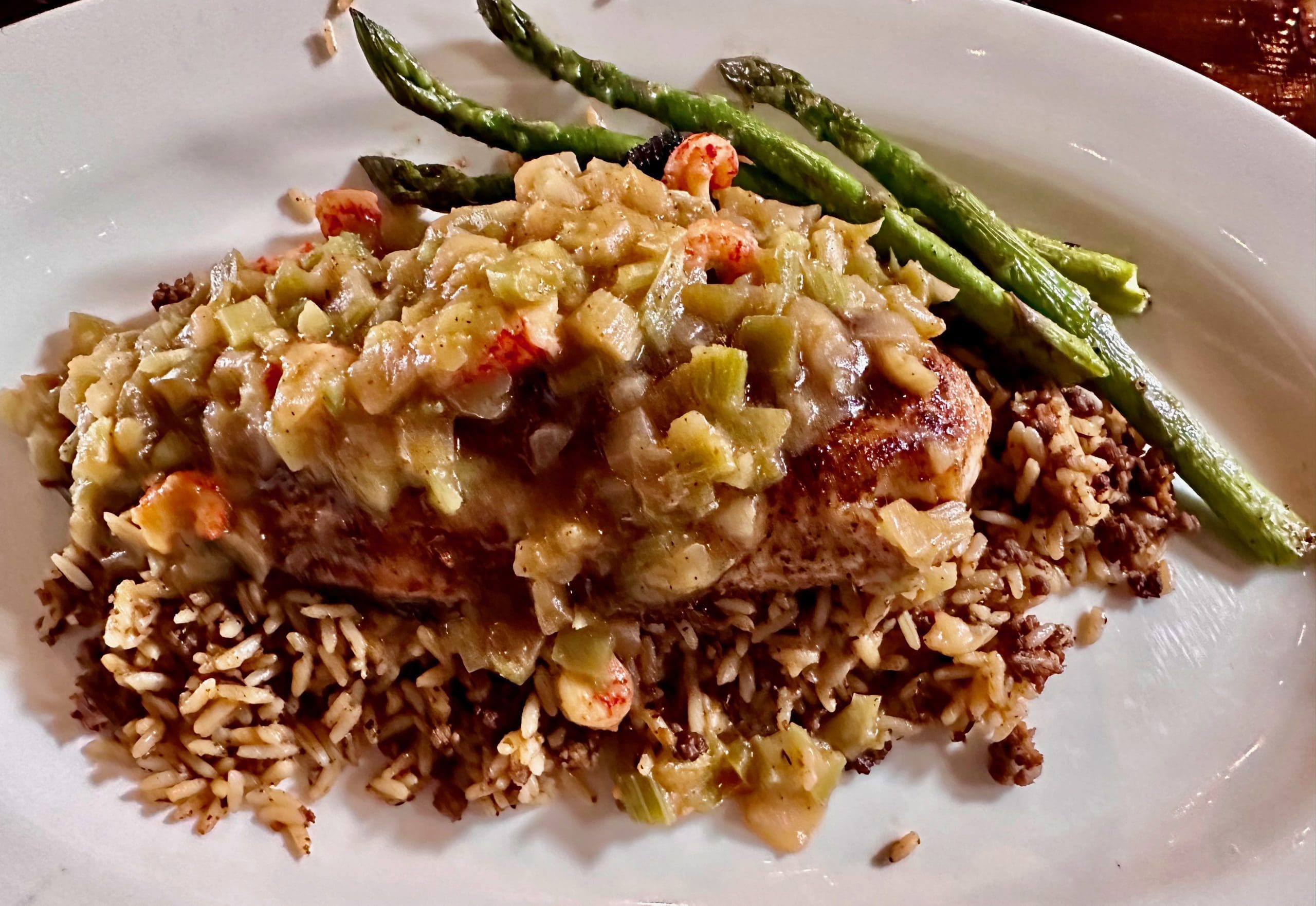
When we tell people we lived in Mississippi for eight years their typical reaction is something akin to “OMG, that must have been terrible.”  Lumping Alabama and Louisiana into their diatribes, they typically perceive we lived in a poorly educated, mostly rural and unabashedly racist region.  It surprises them to learn that New Mexico ranks below those three states among the least educated states in the country (only West Virgina ranked lower).  We lived in Ocean Springs on the Mississippi Gulf Coast, an almost contiguous metropolitan area from New Orleans to Mobile.  It’s as modern as you can get.   In terms of racism, the Deep South has made significant strides and isn’t as racist as the Boston area was when I lived there. Tragically, racism has always been a way of life in the Deep South.  It made me wonder if Bama’s 1865, Albuquerque’s newest Creole-Southern restaurant, was named for the turmoil that ravaged Alabama that fateful year.  Not only was Alabama left virtually destroyed by Union Forces, poor decisions during “Reconstruction” brought consequences that plagued the state for more than a century.  In 1865, Alabama  signed the Thirteenth Amendment (Amendment XIII) to the United States Constitution abolishing slavery…

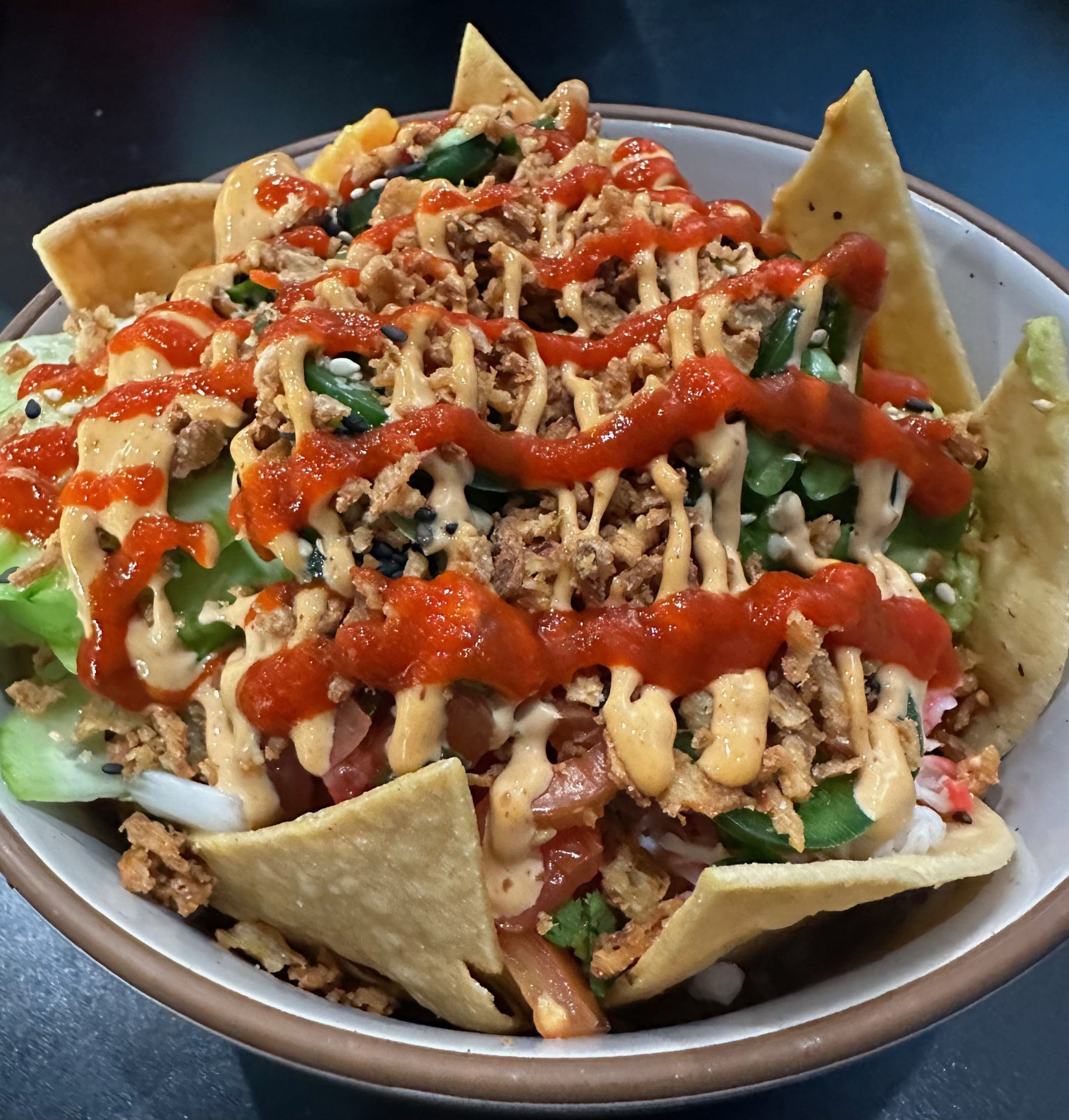
Poké Serrano Asian-Latin Fusion – Rio Rancho, New Mexico (CLOSED)

Ask most people what comes to mind when they think about Hawaiian food and the likely answer is Spam®.  No matter how much the Aloha State’s tourism department does to showcase the state’s diverse and exciting culinary culture, the stereotype that Hawaiians eat Spam® for breakfast, lunch, dinner and snacks in between meals is engrained in many of us.  Because Hawaiians do consume seven-million cans of  Spam® per year (with a population of 1.42 million residents in the Islands), it begs the question “Is it really a stereotype if facts bear out the fact that Spam® is so immensely popular in Hawaii.” Not everyone who spends time on the sandy beaches is as svelte as portrayed by media.  Widespread obesity plagues the Islands.  Some of that may be attributable to the quintessential canned ham product proudly made in Minnesota, a processed food  replete with salt and other “bad for you” things. Spam® became a vital part of the Hawaiian diet during World War II when rationing was a fat of life for its citizenry.  Hawiians figured out how to incorporate Spam® into their diet and figured out it’s a pretty versatile product.  Note: If you’re from Northern New Mexico and…

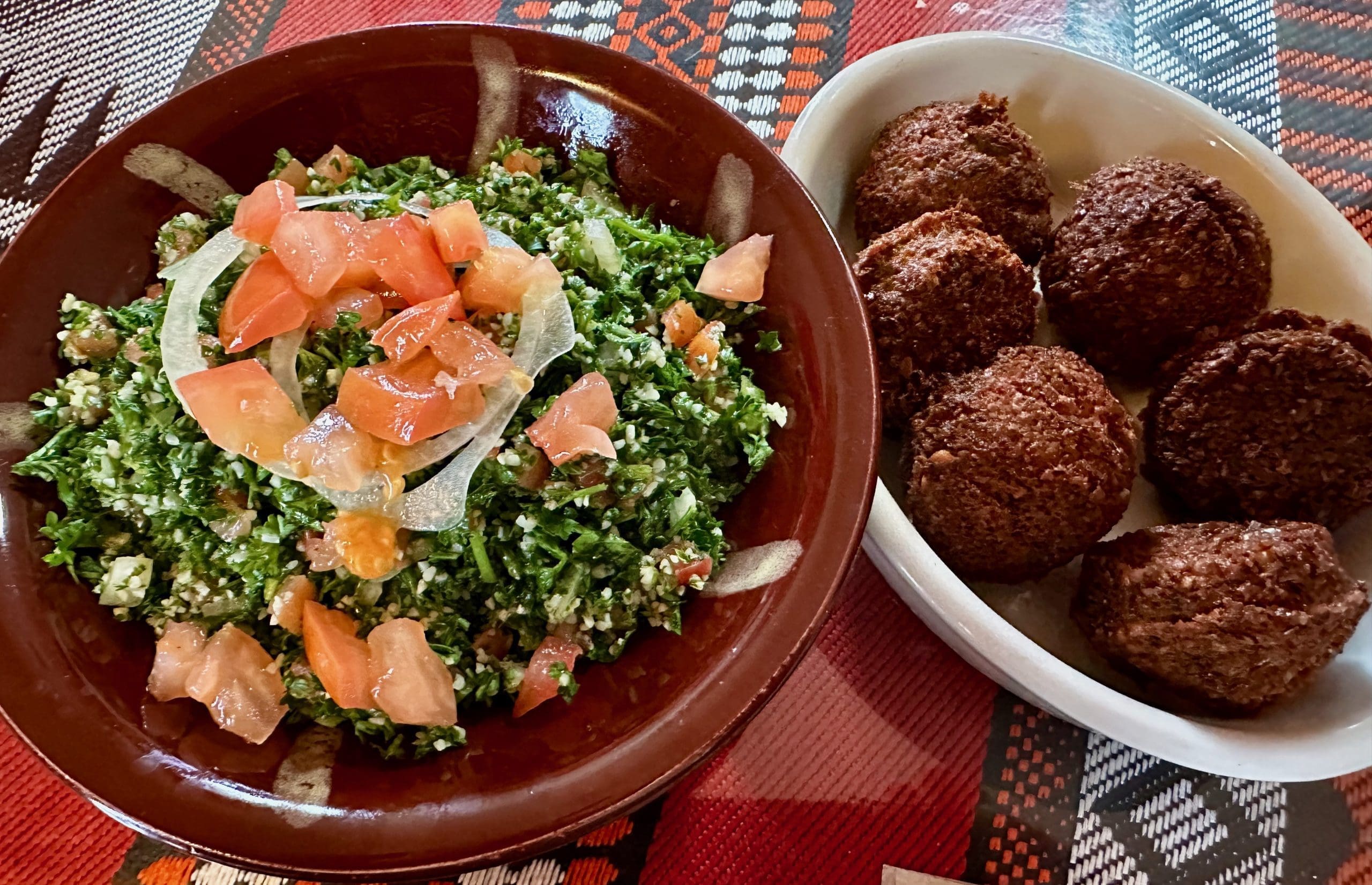
Habibi House – Albuquerque, New Mexico (CLOSED)

Before Al Gore invented the internet, it wasn’t easy for logophiles (lovers of words) like me to figure out what some words meant.  “Lover of words,” in my case was an understatement.  I was obsessed about learning every new word–its etymology (origin, definition and context, even what it used to mean) I came across.  It’s a wonder my parents (both educators) didn’t put this precocious, pedantic child up for adoption. Dictionaries were of little help as their content was mostly limited to English words.  The Velazquez dictionary was helpful when I wanted to learn a new Spanish word, but that, too, was limiting.  Alas, no comprehensive resource seemed to exist to sate my curiosity. Here’s an example of my dilemma.  The popular 60’s television show I Dream of Jeanie was replete with Arabic words.  For most people being entertained was enough, but not for me.  When a new word was used, I wanted to know what it meant–even if it was a proper name.  Jeanie’s master (played by the altitudinous Ted Cassidy) was named Habib.  No source or person of my acquaintance had any idea what “Habib” meant.  Surely, when Jeanie’s master’s parents named their son Habib, it was because the…

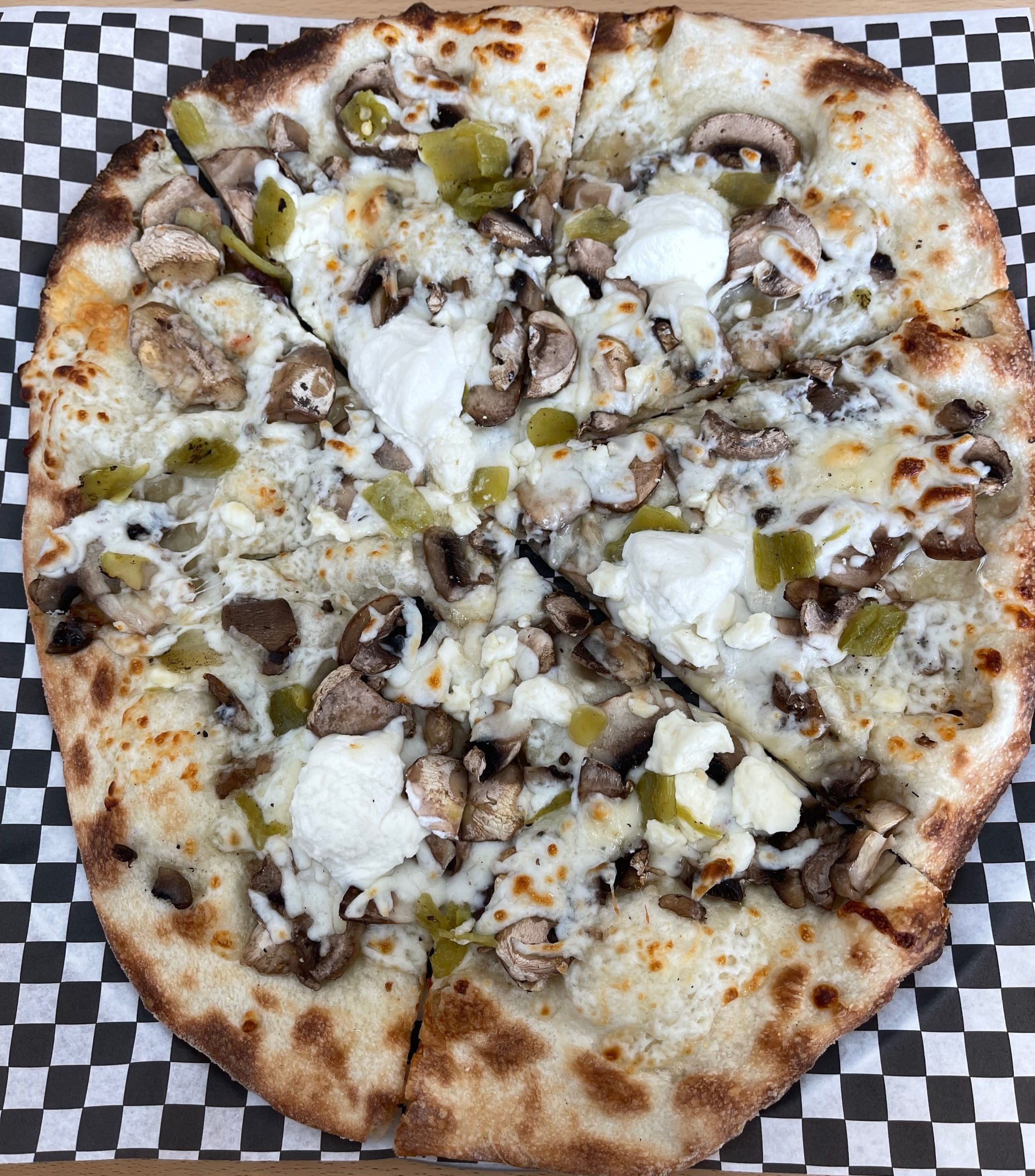
Firenze Pizzeria – Albuquerque, New Mexico (CLOSED)

Name a pizza joint “Florence Pizzeria” and public reaction would likely be dubious:  “Who the heck is Florence?”  “Can someone named Florence possibly have a clue how to make pizza?”  Now translate “Florence” to Italian and all of a sudden, “Firenze Pizzeria” has instant credibility.  Never mind that most of the pizza in Florence (er, Firenze), Italy is of the Neapolitan variety.  The name Firenze is a perfect fit for a pizzeria.  Even the name inspires visions of a fire-breathing Italian oven preparing a waifishly thin pizza in just about a minute. Steven Meyer, owner-operator of Albuquerque’s Firenze Pizzeria knows a thing or two about fire-breathing ovens and waifishly thin pizzas.  In 2011, he pioneered portable pizza in the Duke City, toting an Italian-made oven throughout the city.  Being booked every weekend for nearly two years for special events, catering and a semi-permanent gig at the Downtown Growers’ Market at Robinson Park facilitated the decision to seek a permanent venue.  He found the perfect spot at 900 Park Avenue, S.W., just across Central Avenue to Robinson Park. The two-story edifice Firenze called home for nearly nine years had plenty of character and personality.  One of its neighbors was the lair…

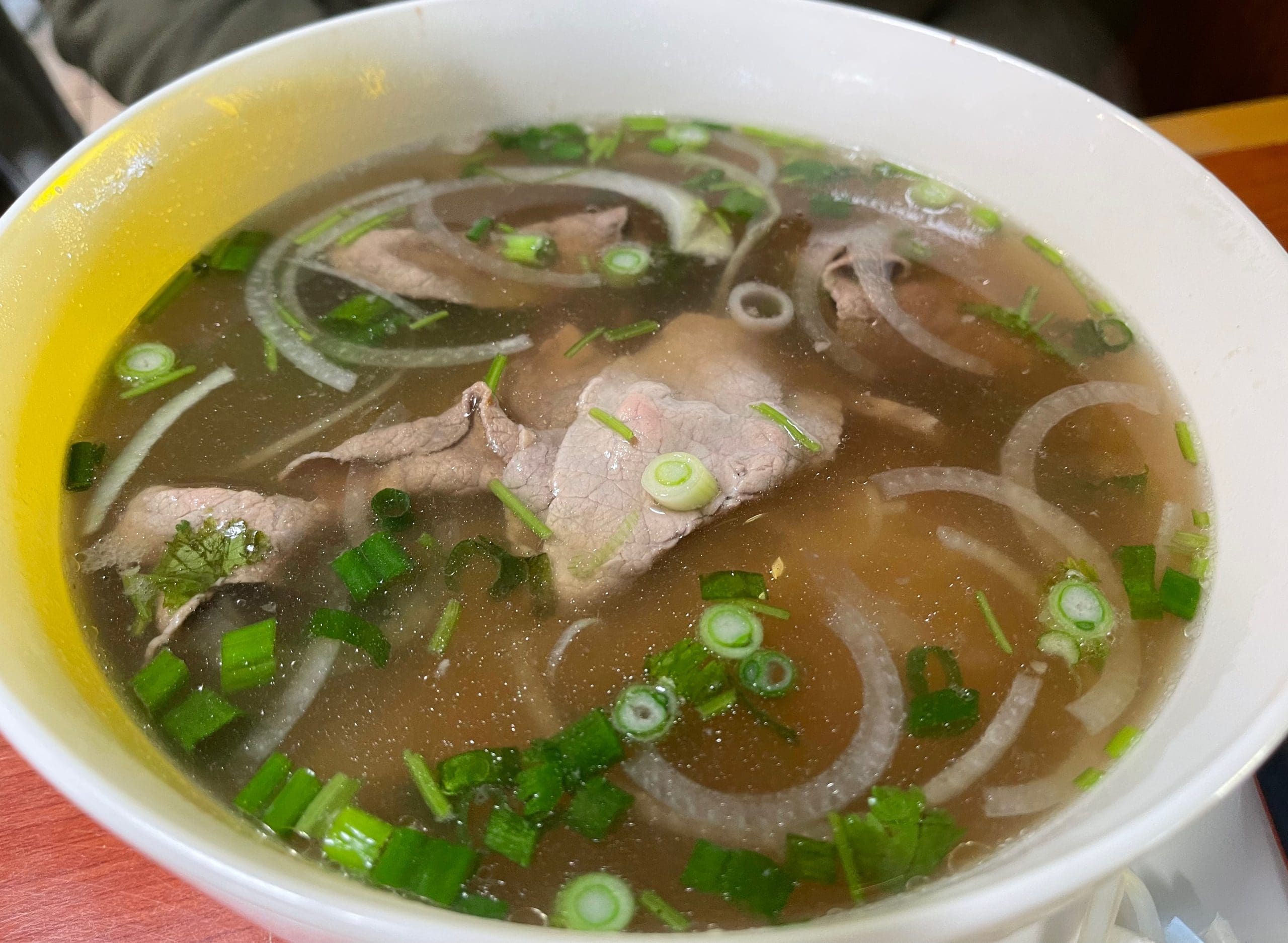
Pho 79 – Albuquerque, New Mexico (CLOSED)

When the temperature dips and the Land of Enchantment’s ubiquitous winds howl with a vengeance, savvy diners revel in the knowledge that they can luxuriate in the familiar warmth of a steaming, swimming pool-sized bowl of aromatically alluring pho. Few things in life are as comfortable as snuggling up with a simple and no frills bowl showcasing a rich, spicy, nuanced broth with tangles of rice noodles, fresh herbs and vegetables and a veritable meat fest (rare steak, tendon, brisket, meatball). It’s the single best way to warm up from the inside-out on a bitterly cold day. With nearly forty Vietnamese restaurants gracing the Duke City, diners have no shortage of purveyors to frequent for this preternaturally pleasurable elixir. The signage on eight of those restaurants includes the term “Pho,” a term which has been known to evoke a reaction akin to Pavlov’s dogs responding to a bell. It can get pretty embarrassing if you start salivating when you espy “Pho”emblazoned on a restaurant’s signage–even when that signage fronts that of low-rent Motel 76.  To be brutally honest, Pho 79 does not have the most alluring curb appeal.  In fact, it’s downright homely. Whether or not Pavlov’s disciples are consulted…

El Roi Cafe – Albuquerque, New Mexico (CLOSED)

You know you’ve been involved in project management for too long when the only thing that comes to mind when told about a restaurant named “El Roi” is “why would a restaurant be named for a Return on Investment (ROI).”  For those of us who have worked in Information Technology, ROI is a financial ratio used to calculate the benefit an investor will receive in relation to their investment cost.  Restaurants often have a poor return of investment–not just in financial capital, but in human capital.  Restaurants require a significant investment in time by owners as well as kitchen and “front of the house” staffs and the financial return isn’t exactly lucrative.  My Kim theorized that Roi is probably a preferred derivation of Roy.  “By poor spellers,” I chortled.  It turns out my brainy bride was correct…well, almost.  According to Namedat, a website which takes social security administration data and converts it to facts and stats about names of people in the United States, there are actually 8,706 humans in the country with the first name Roi.  Naturally one of the very first questions we asked when we finally made it to El Roi is just what does the name…

Kickstand Cafe – Albuquerque, New Mexico (CLOSED)

In 2016, The Plough Hotel in North Canterbury, New Zealand banned Lycra-clad customers in an attempt to remove any “unsightly bumps and bulges.”  The hotel owner declared Lycra “unsuitable,” explaining “We get a nice group of customers out here, some elderly folk. When you’re trying to concentrate on your breakfast you just want to see the sausages on your plate.” Then as if expecting a confrontation from the lumpy, bumpy bikers, he issued a challenge: “If there’s hordes of cyclists outside threatening to bash us with their bike pumps we can always barricade ourselves in, we’ve got a bit of food and drink here so we should be able to outlast them.” Lycra bike wear may not be de rigueur at Albuquerque’s Kickstand Cafe, but you just might feel overdressed if you didn’t squeeze into the form-fitting attire for a visit to the Alameda cafe.  And surprise, surprise, “elderly folk” whom the prudish New Zealand hotel owner tried to shield from “sausages” and other shapes and contours that leave little to the imagination were well represented among the guests wearing second-skin-apparel.  It didn’t appear any guests perceived bike shorts to be ribald regalia.  Nor did we notice any ogling or lusty…

Roti NM Rotisserie Chicken – Albuquerque, New Mexico (CLOSED)

Google “the history of rotisserie chicken” and you’re likely to read something along the lines of “Back in 1985 a fast casual chain called Boston Market (formerly Boston Chicken) specialized in the sale of rotisserie chicken. People would pick up a pre-cooked bird along with several side dishes, and have a family dinner that felt homemade. The concept caught on quickly and 35 years later you can find these pre-cooked birds sold throughout the country in virtually every supermarket.” While the last part of that statement–“you can find these pre-cooked birds sold throughout the country in virtually every supermarket“–may be true, one megalithic retailer may be responsible for their continued growth in popularity.  According to Reader’s Digest, “Costo sold approximately 101 million chickens in 2020.”  That number set a record for the retailer as most rotisserie chickens sold in one year and constituted more than ten percent of the one-billion rotisserie chickens sold across the fruited plain in the year the world shut down.   The price tags on Costco rotisserie chickens have read $4.99 since 2009, thanks to the warehouse’s commitment to holding the price steady.  Thus far not even the “build back better” economy has managed to touch…

Barrio Cafe – Phoenix, Arizona (CLOSED)

A neighborhood should never be defined solely by grids and lines on a map or by a physical area where people live.  Nor should a neighborhood be defined by areas made homogeneous by restrictive covenants.  Neither should it be defined by brick-and-mortar landmarks.  What truly makes a neighborhood is its diverse and unique characters. Some are quirky and eccentric, some are brash and loud, others are indistinct and don’t stand out, but all are essential in weaving that beautiful neighborhood tapestry, that compendium of personalities that make up a community. The 16th Street “Barrio” neighborhood in Phoenix, Arizona is rich in both characters and character.  The latter is evident in the color wheel of unabashedly audacious and brash murals festooning the walls along the street.  It’s art with an attitude, art that inspires double-takes.  Who needs a gallery when you can drive up and down 16th Street and see better-than-museum-quality art depicting the culture and personality of the barrio: the iconic imagery of Dia De Los Muertos figures, low riders, masked luchadores, Mayan deities and so much more.  One of the most vivid threads in the rich and diverse tapestry that is the Phoenix’s 16th Street “barrio” neighborhood is Chef Silvana…

Kitsune – Albuquerque, New Mexico (CLOSED)

FROM THE BITE: Albuquerque’s Asian-inspired Kitsune slipped out of its Old Town location with nary an announcement last year, and now the rumors about their new fling with Sister Bar are official. This will be happening Mondays, but maybe not every Monday; the next one looks to be slated for February 26. Here are a few tips if you’ve got  a trip planned to Japan and would like to practice terms to convey your enthusiasm for the delicious meals you’re sure to experience,    After your first bite, use the term “umai” to express how delicious that first bite was. As you continue to eat, use the term “oishii” frequently to convey with alacrity that the food you’re eating is fantastic.  Because it’s considered good manners in Japanese culture not only to finish every single morsel on your  plate but to ask for a second serving, the phrase “okawari” will come in handy.  And to make it even more polite, postface the term with “kudasai” which means “please.” On the last Sunday of October when our planned lunch excursion was to Kitsune, a Japanese term for “fox,” I had hoped to be able to display this gaijin’s (foreigner’s) mastery of Japanese…

Fork & Fig – Albuquerque, New Mexico (CLOSED)

FROM THE FORK & FIG FACEBOOK PAGE (November, 2024): Thank you Albuquerque for 10 wonderful years! Skyrocketing rent and food costs have really impacted us. We have loved serving you. We are moving to a private chef/catering model. Stay tuned for our next adventure. Listen to Billy Joel’s 1983 doo wop hit Uptown Girl and you’ll probably get the impression that uptown is synonymous with uppity or at least upscale. The lyrics describe a working-class downtown man (ostensibly Joel himself who’s originally from blue-collar Long Island) trying to win the heart of a wealthy, white bred uptown girl (Joel’s future wife Christie Brinkley). The perception of uptown’s haughtiness were reenforced in “The Contest” episode of Seinfeld in which John F. Kennedy, Jr. lived in trendy uptown. When they finally came into money, the Jefferson’s moved on up, too. Until just a few years ago, the Albuquerque neighborhoods around which conversations typically centered were Old Town, downtown, Nob Hill and even EDo (East Downtown). Uptown was solely where the Coronado and Winrock Malls were. With the closure of the Winrock Mall and subsequent launch of ABQ Uptown, a pedestrian-friendly, open-air lifestyle center, Albuquerque’s uptown area seemingly became “the heart of the…