Davido’s Pizza – Rio Rancho, New Mexico

Some might call the American Realty and Petroleum Company (AMREP for short) a pioneering visionary for its early 1960s purchase of over 50,000 acres on the dusty Sandoval County plains that are now Rio Rancho. Others use different–and not necessarily as complimentary–adjectives to describe the land speculator whose clever marketing attracted hundreds of New Yorkers (among others) to the then untamed western fringes overlooking the Rio Grande. They came because Rio Rancho was a “lucrative investment” with half acre lots going for under $800 in the 1960s. They came because Rio Rancho offered “fishing, camping, swimming and golfing in a place where the sun shone 360 days a year.” They came to live in an area which sloped “among the greenest, most fertile valleys in the world.” Middle income retirees from New York initially made up a significant percentage of Rio Rancho’s population, earning the community the sobriquet “Little New York.” The nickname is still bandied about even though Rio Rancho’s population is comprised of people from all over the country. In its first decade, the fledgling newcomer became the sixth largest city in New Mexico and by 1990, the census indicated the city had grown to more than 32,000…

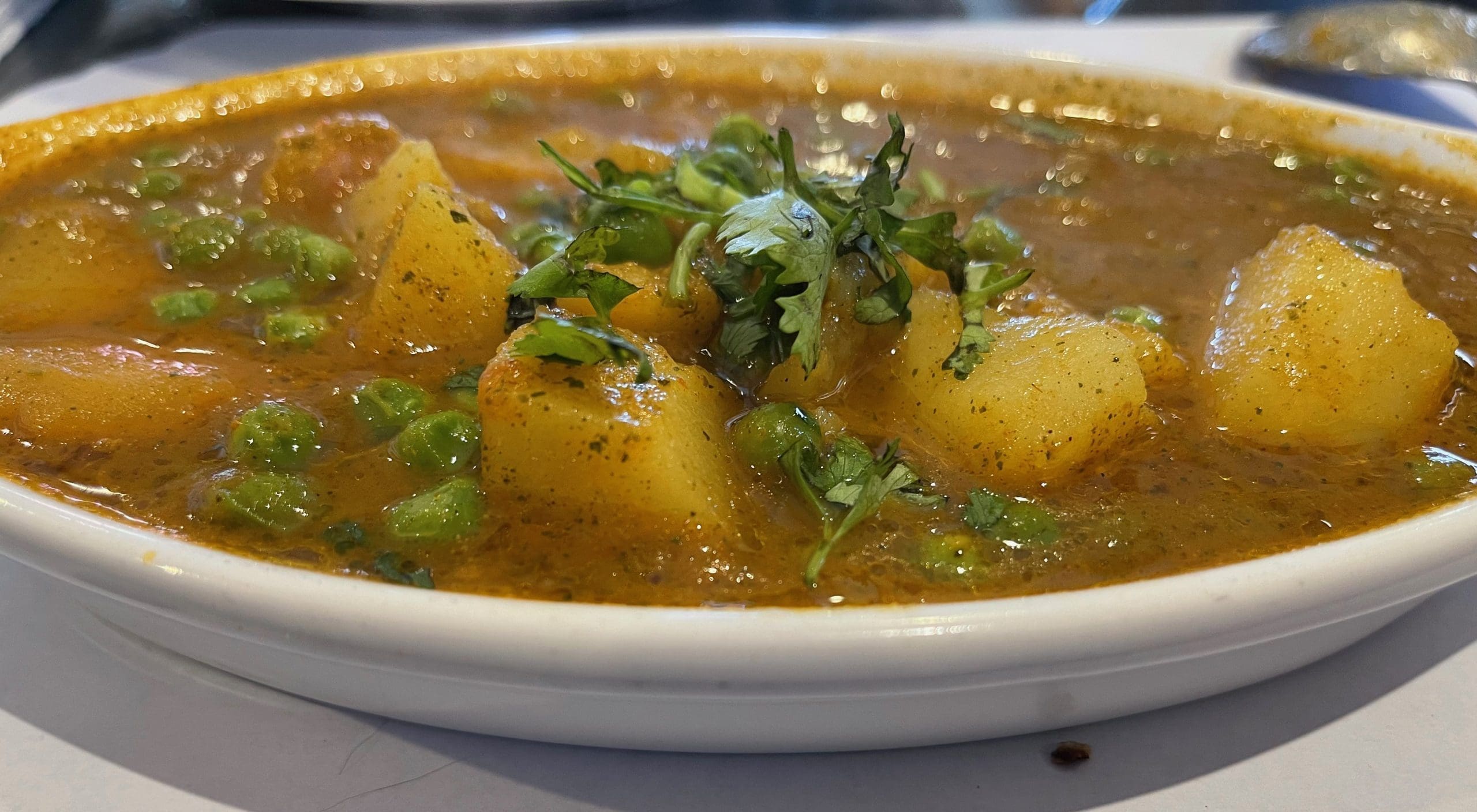
Namaste Restaurant – Rio Rancho, New Mexico

Several years ago while leading my organization’s e-business marketing and communication effort at Intel, I had the great fortune of hiring a phenomenal Web developer recently arrived from India. In the process of filling out one of our complicated employment forms he transposed his name, writing his last name then his middle initial and first name instead of the way hinted at on the complicated form. As a result, during the entire time he worked for us we all called him Kolli, his last name. He was too polite to tell us his first name is actually Srini. Over time Srini became more acculturated, maybe even a bit “Americanized” (he’s now a huge Dallas Cowboys fan), but he’s never lost his personal warmth, good humor and impeccable manners. Politeness and great manners seem to be a hallmark of Indian people…or at least those in the service industries. When colleagues ask for a romantic dinner recommendation, I frequently suggest one of the area’s Indian restaurants where impeccably attentive service and consistently excellent food impart the effect of making diners feel like welcome royalty. Most Indian restaurants, like my friend Srini, embody the spirit of a traditional Indian salutation, “Namaste” which is…

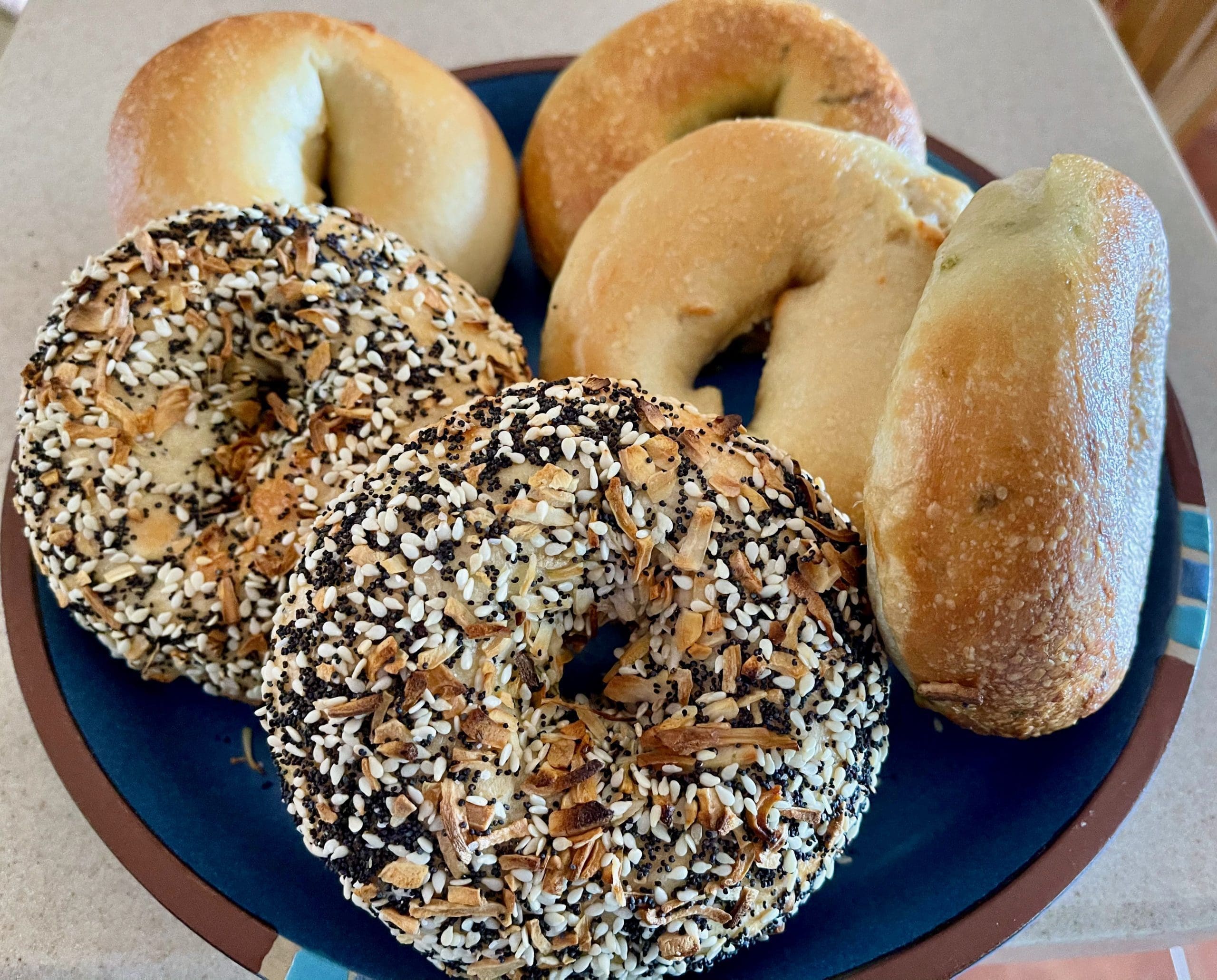
Ruthie’s Bagels – Albuquerque, New Mexico

George: “I came this close last night, and then I just sort of chickened out.” Jerry: “Well, that’s a big move, Georgie boy. Are you confident in the “I love you” return?” George: “Fifty-fifty.” Jerry: “Because if you don’t get that return, that’s a pretty big matzo ball hanging out there.” ~Seinfeld The 1980s comedy Seinfeld has been described as “a show about nothing” largely because it focuses on the minutiae of daily life.  A show about nothing is, of course, a faulty premise.  In the case of Seinfeld, the “nothing” may have referred to the simplicity of each episode’s narrative. More often than not, each weekly show focused on four people coming in and out of Seinfeld’s apartment or a coffee shop talking about their latest bad date.   In 2007, Chowhound, an online resource for food enthusiasts that includes an active community forum of knowledgeable contributors, published within that forum a post asking readers to share their favorite Seinfeld food moments.  Reading the more than 400 comments not only prompted a nostalgic revisit of some of my own personal favorite Seinfeld food moments, it clearly demonstrated that Seinfeld wasn’t a show about nothing.  It was undeniably a show about food. …

The Flying Star – Albuquerque, New Mexico

In the ancient Chinese art and science of Feng Shui, flying stars are used to assess the quality of the energy flow (qi) in a given place at a given time. The positive and negative auras of a building are charted using precise mathematical formulas to determine the wealth, academic, career, success, relationships and health of a building’s inhabitant. By understanding the course of harmful and beneficial flying stars, appropriate Feng Shui cures can be employed to mitigate the effects of those harmful stars while enhancing the positive effects of the beneficial stars. While founders Jean and Mark Bernstein may not have renamed their successful local restaurant chain for the Feng Shui principles of flying stars, there’s no denying the qi (energy flow) at Flying Star is active, vibrant and positive. It’s been that way from the very beginning, even before their restaurant was rechristened Flying Star (likely for its meteoric rise in popularity). The Flying Star chain got its auspicious start in 1987 when the Bernsteins launched a high-energy restaurant named Double Rainbow in Albuquerque’s Nob Hill district. A franchisee of a San Francisco ice cream store of the same name, Double Rainbow was an immediate hit. It was…

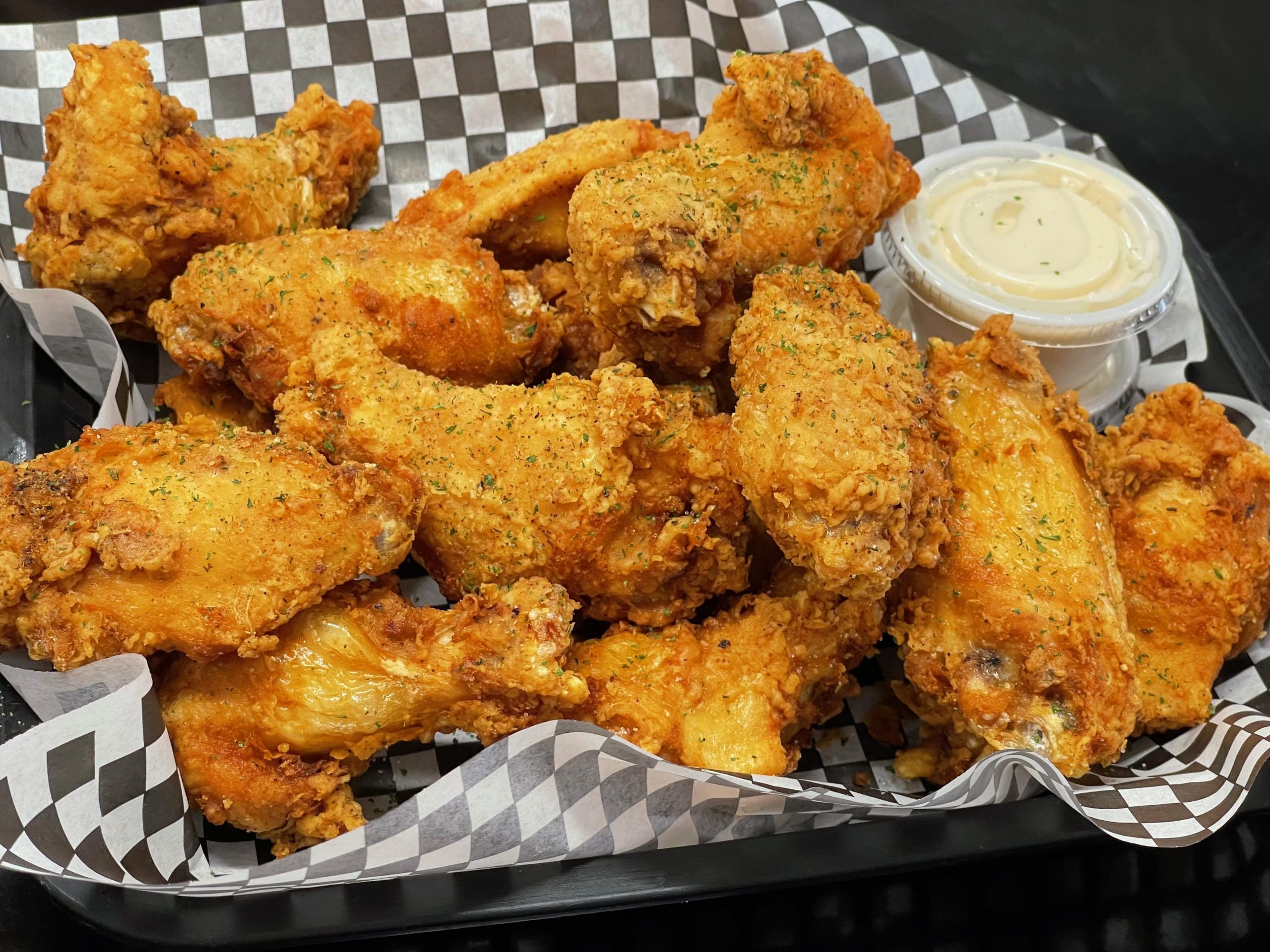
Ms. Gennie’s House of Chicken – Albuquerque, New Mexico (CLOSED)

My Air Force friend and colleague Al Garcia once shared one of those amusing anecdotes that will leave your head shaking in disbelief even as you’re practically rolling on the floor with laughter.  According to Al who grew up in the Socorro area, his parents had to make a daylong trip to the big city (Albuquerque), leaving him and his sister at home to finish their chores.  At around lunchtime, he and his sister got hungry and decided to prepare some rice.  Never having cooked rice before, they poured an entire bag of rice into a pot, added water and turned the stove on high.   In a few minutes, rice began spilling out over the pot like lava flowing from a volcano.  Cooked rice covered the kitchen floor.  Not wanting to anger their parents, Al and his sister decided to get rid of the evidence.  They scooped up all the rice and fed it to their chickens.  The chickens gorged themselves on the all-you-can-eat feast of rice, eating so much that they (and this is the part I found hard to believe) burst, fowl feathers exploding all over the yard.  When their parents got home, Al and his sister…

Barelas Coffee House – Albuquerque, New Mexico

Quick, name the oldest neighborhood in Albuquerque. Most people would say Old Town which was settled in 1706 near the banks of the Rio Grande. Most people would be wrong. The oldest neighborhood in Albuquerque is actually the Barelas neighborhood, formally established as a ranching settlement in the late 1600s. The history of the central Rio Grande region began at and expanded from Barelas, once a thriving hub of commerce bustling with activity. Both the Camino Real, the royal road to Mexico City and Route 66, America’s mother road passed through the Barelas neighborhood. Barelas was the seat of a flourishing railroad enterprise which facilitated a burgeoning economy.  The neighborhood began a precipitous decline in the 1950s when odoriferous emanations from an area sewage treatment plant drove people away. Then in the 1960s, shopping mall developments proved too formidable competition for long-established mom and pop businesses, the economic heart of the community. Before long, the federal government was calling Barelas a “pocket of poverty” and what was once a thriving neighborhood languished. By the 1970s, Barelas was all but forgotten–perhaps a blessing in disguise because that allowed the preservation of historic buildings for which the community is best known today.…

Los Potrillos – Santa Fe, New Mexico

Faced with a situation that renders us incredulous, many of us might yammer incoherently, complain vociferously or maybe even utter colorful epithets. Such moments, it seems, are best expressed with succinct precision, a rare skill mastered by a select few wordsmiths from which eloquence flows regardless of situation–polymaths such as the late Anthony Bourdain, a best-selling author, world traveler, renowned chef and “poet of the common man.” Flummoxed at the discovery of a Chili’s restaurant a mere five miles from the Mexican border, I might have ranted and raved about another inferior chain restaurant and its parody of Mexican food. With nary a hint of contempt, Bourdain instead compared the spread of Chili’s restaurants across America to herpes. How utterly brilliant and wholly appropriate was that? Indicating that chain restaurants are “the real enemy, the thing to be feared, marginalized and kept at a distance at all costs,” he wondered aloud why anyone would eat institutionalized franchise food when the real thing is available nearby. Bourdain, a cultural assimilator, would love Los Potrillos, an unabashedly authentic Mexican restaurant which serves the food Mexican citizens eat everyday, not the pretentious touristy stuff or worse, the pseudo Mexican food proffered at Chili’s…

Tako Ten – Albuquerque, New Mexico

Gustavo Arellano, author of Taco USA: How Mexican Food Conquered America, wasn’t kidding when he quipped “The Taco Bell taco is dead. Long live the taco.”  Boomers like me may not have grown up heading for the border, but we did grow up with the Taco Bell “taco template”–a crunchy hard-shell tortilla crammed with seasoned ground beef, chopped tomato, lettuce, a fistful of shredded yellow cheese and a large dollop of sour cream.  We’ve long since joined enlightened millennials and generation Z diners in railing against what Chef Rick Bayless calls Taco Bell’s “near-laughable caricature” of authentic Mexican tacos.   So just what are authentic Mexican tacos? Travel throughout the Land of Montezuma and whether you get your tacos from upscale restaurants, market stalls or street vendors, you’ll quickly discover their versatility, diversity and deliciousness.  Adventurous diners can, for example, enjoy palm-sized tortillas filled with virtually every part of the pig, cow, or chicken.  These proteins can be stewed (as in a guisado), barbecued (for barbacoa), roasted on a vertical spit (al pastor), cooked atop a griddle (a la plancha), or served campechano (a mélange of chopped meats). Tacos de mariscos (seafood), pescado (fish) and chapulines (grasshoppers) are also pretty popular…

Siam Cafe – Albuquerque, New Mexico (CLOSED)

It’s oft been said that “you taste first with your eyes.”  Certainly sight figures in to the enjoyment of food and sets expectations, but the first sensory receptors to engage in taste is the sense of smell.  If you’ve ever experienced a pleasant aroma wafting toward you as you approach a restaurant, you’ll agree.  The Siam Cafe is quite possibly the most aromatically-enticing, olfactory-arousing restaurant in the Duke City.  Its exotic spices and herbs waft like a gentle summer breeze over all diners entering what is conceivably Albuquerque’s best Thai restaurant. For years the marquee named its previous occupant, Pollo Loco, before the owners of the Siam Cafe finally changed the marquee in 2003. With its new signage, this gem declared “Siam, I am!.” The common denominator among all the dishes I’ve had here is consistent excellence, particularly among the curry dishes. Curry is one of those dishes about which inexperienced diners tend to generalize, tending in many cases to believe, for example, that any experiences–good or bad–they may have had with Indian curry will be duplicated with Thai, Japanese, Vietnamese or Malaysian curry. While all curry has an unmistakably pungent fragrance, there are more than subtle differences between the curries…

Busy Bee Frozen Custard – Albuquerque, New Mexico

Irish playwright George Bernard Shaw has been credited with the aphorism “England and America are two countries separated by the same language.” My Kim and I had no idea just how different the Queen’s English is from the English spoken by the colonists until we were assigned to Royal Air Force Fairford. As part of the newcomers orientation, we were required to attend a course in which those vast differences between American English and England English were explained. Many of those differences were rather comedic, but we were warned, “if Yanks aren’t careful, we could perpetuate the dreaded “ugly American” stereotype widely held in some parts of Europe.” We learned, for example, that if an American serviceman walks up to an English lady and introduces himself with “Hi, I’m Randy,” he’s likely to get slapped in the face. Randy has an entirely different connotation in England where it means “frisky.” It surprised me just how many terms had sexually suggestive connotations.  Terms such as shag, fag, beaver and spunk mean entirely different things in England than they do in the United States.  The double-entendre wasn’t one sided.  We learned that if offered “spotted dick” we shouldn’t create an international incident…

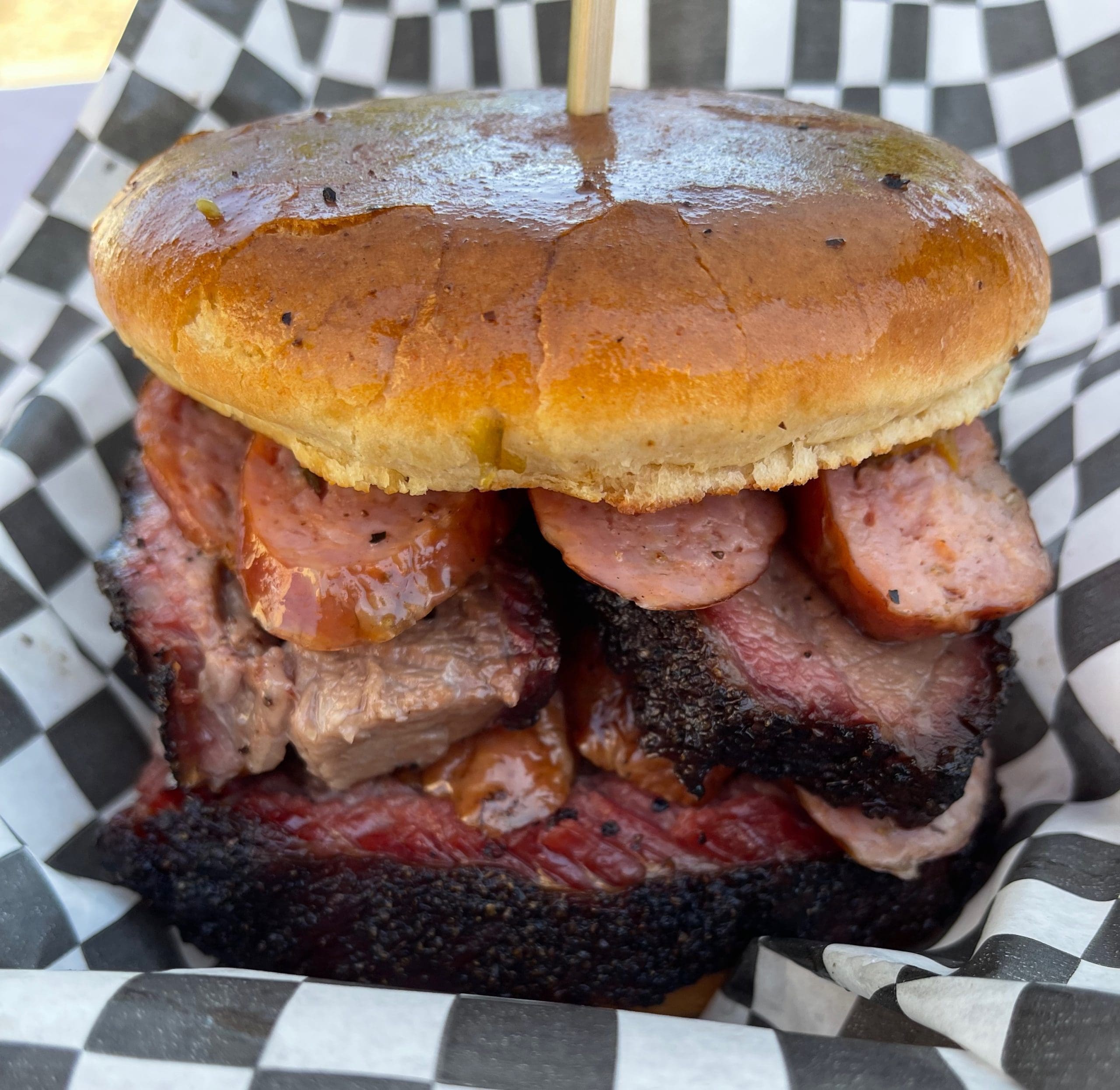
Watson’s BBQ – Tucumcari, New Mexico

The Wikipedia article on Eastern New Mexico describes the region as “mostly characterized by flat featureless terrain,” even likening it to West Texas: “Like much of the Llano Estacado region, Eastern New Mexico is largely agricultural and resembles West Texas in geography, culture, economy, and demographics.”  While Eastern New Mexico may not be back-dropped by spectacular mountain ranges or bisected by the murky Rio Grande, it’s got an enchantment all its own even if the Wikipedia writer can’t see it.  It’s also got something else the Rio Grande Corridor, for all its population centers and cultural diversity, can’t match.  It’s got long-standing barbecue traditions that, not surprisingly, have their roots in Texas.  By comparison, barbecue along the Rio Grande Corridor is a fledgling chick learning to fly.  Eastern New Mexico is home to Smokin’ On the Pecos, the New Mexico State Barbecue championship held every year in Artesia.  The winner of this prestigious event–sanctioned by the Kansas City Barbecue Society–is an automatic preferred qualifier for the world barbecue championship.  Artesia is the middle jewel in a three city diadem that includes Roswell to its north and Carlsbad to its south.   These three cities constitute New Mexico’s  “Barbecue Belt.”  Drive…