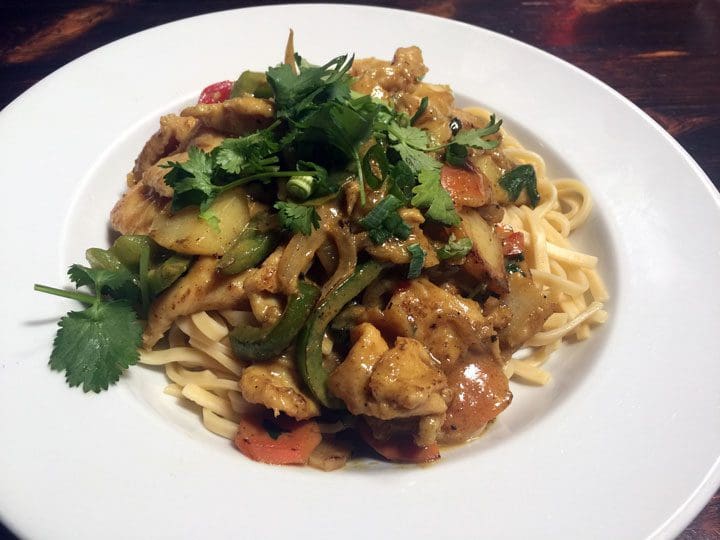
Plum Cafe – Albuquerque, New Mexico (CLOSED)

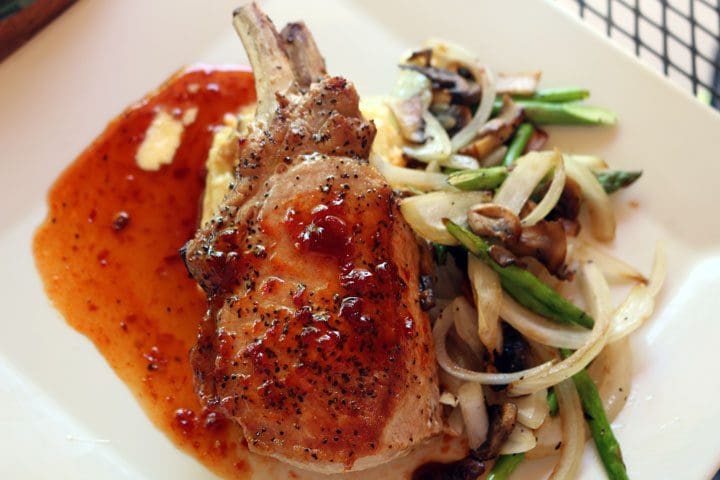
“The branches of the aspen plum To and fro they sway How can I not think of her? But home is far away,” – Confucius According to Urban Farm Online, “plums were domesticated in China more than 2,000 years ago and have figured in written documents since 479 B.C. These fruits were the plums Confucius praised in his writings and the ancestors of today’s Asian plums.” In China, plums symbolize good fortune while the blossom of the plum tree is considered a symbol of winter and harbinger of spring. The Taiwanese consider the plum blossom a symbol for resilience and perseverance in the face of adversity during the harsh winter. In both Korea and Japan, the plum blossom also symbolize spring while in Vietnam, the plum tree and its flowering blossoms symbolize feminine pulchritude. Despite its longevity, plums are not as significant on Asian dishes as one might expect, especially considering its versatility and complementary flavor potential. In excellent Chinese (Ming Dynasty) and Thai (Siam Cafe) restaurants throughout Albuquerque, plum sauce (sometimes called duck sauce) is a staple, a sweet sauce as thick as a jam with a slightly tart flavor which compliments egg rolls, spareribs and other appetizers and…
Terra – Tesuque, New Mexico

Several years ago, I asked my grandmother if she might consider aromatherapy as a treatment for the nagging aches and pains she suffered daily.  Aromatherapy, I explained was being hailed by New Age devotees in Santa Fe and Taos as a holistic healing treatment used to promote health and well-being. “Mi hijito,” she said gently, “In Northern New Mexico we are always surrounded by aromatherapy. We experience it when we bake bread in our hornos and roast chile in our comals. Aromatherapy is the petrichor of wet earth after the first rain. It’s the piñon-scented air we breathe every day.” As usual my grandmother was right. In her own way, she was telling me to let others seek a trendy panacea for life’s vicissitudes; those of us fortunate to live in Northern New Mexico had an abundance of simple, life-affirming blessings to help us heal. Memories of my grandmother’s wisdom flooded back to me when we stepped out of the car and imbibed the piñon-scented air of the Sangre de Cristo’s rolling foothills just fifteen minutes or so from downtown Santa Fe.  The familiar early autumn aroma and freshness of the air were a balm.  So was the  quiet stillness. …

Cafe Nom Nom – Albuquerque, New Mexico (CLOSED)

“Nom nom.” It sounds innocent enough. Parents–yes, including parents of four-legged fur babies–utter it in baby talk intonations to get our children to eat something, especially when that something is “good for them” but doesn’t actually look or taste good. Nom nom was, of course, the favorite expression of Sesame Street’s Cookie Monster (Hi Darren) as he ravenously devoured a plate or six of cookies, a fusillade of crumbs flying from his chewing mouth.  Grade school teachers use nom nom as an example of an onomatopoeia, a word that imitates a sound.  My friend Michael Gonzales, the dynamic owner of Rio Rancho’s Cafe Bella uses it to describe great new restaurant finds. English majors recognize it as an expression used to convey pleasure at eating or at the prospect of eating.  It’s also a verb meaning “to eat something, typically with great enjoyment.” See anything wrong with the term nom nom?  Though it may never grace Gil’s Thrilling… in a descriptive manner, I don’t see anything wrong with it either.  So, if it sounds innocent and innocuous enough, why does the Huffington Post rank the word nom nom with “moist” as “the worst offender of words when it comes to…

Tortilla Flats – Santa Fe, New Mexico

“Beans are a warm cloak against economic cold.” ~John Steinbeck, Tortilla Flat In his 1935 novel Tortilla Flat, John Steinbeck introduced the literary world to the downtrodden denizens of Tortilla Flat, an impoverished barrio on the shabby hillside just outside the respectable city of Monterey, California. The quirky inhabitants of the ramshackle community were a dichotomous lot–hedonistic drunks, adulterers and thieves on one hand; on the other, paisanos with surprisingly kind-hearts who asked nothing more from life than loyal friends and a little wine. Unlike their stodgy, orthodox counterparts in Monterey, the men of Tortilla Flat defied social mores, conventions and expectations. They rebuffed the notion of holding down steady employment or paying rent. They had no qualms about cadging for food or purloining it from neighbors or restaurants. The paisanos of Tortilla Flat were carnal beings, happiest when their appetites (food, drink, women, music) were sated. They cared nothing for accumulating material possessions or the responsibilities inherent with ownership. Though Santa Fe’s touristy-artsy Plaza area and the city’s western fringes along Cerrillos are hardly Monterey and Tortilla Flats, there is a clear demarcation between the two, a distinctness that bespeaks of vast socioeconomic differences. My friend Carlos would argue…

Chello Grill – Albuquerque, New Mexico

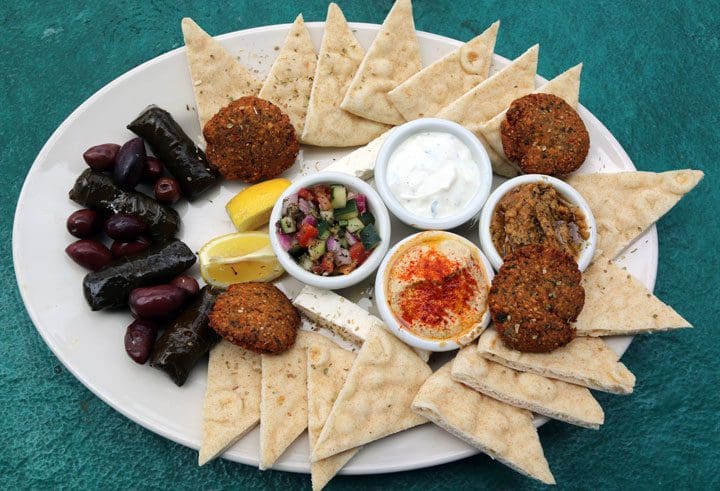
Persian cuisine has been described as “poetry on a plate” and “a pretext to break into verse.” Persian history is replete with a large repertoire of literary quotes about food and drink. Even when the subject of a poem wasn’t about food, a poet’s appreciation for Persian cuisine often inspired the inclusion of culinary terms. Take for example fifteenth-century Persian poet Bu-Isaq of Shiraz who described his beloved as: “lithe as a fish, eyes like almonds, lips like sugar, a chin like an orange, breasts like pomegranates, a mouth like a pistachio” and so forth.” “Surely,” I thought, “contemporary poets can also be inspired to put to verse and song their sentiments about the loves of their lives using food in descriptive terms. Diligent searches revealed that the twain apparently doesn’t cross. I did, however, find an inspiring poem by Grammy award-winning hip-hop artist Busta Rhymes who pays tribute to his favorite food (and one of mine): “Mrs. Fried Chicken you was my addiction. Dripping with high cholest- Like Greeks with his falafel, Italian with his to-mato pasta. What roti is to a rasta. Trapping me; You and your friend mac’ and cheese. Candy yams, collard greens but you knocking…

Pho Linh Vietnamese Grill – Albuquerque, New Mexico

You always remember your first time…and if it’s good, it may set the standard by which you’ll forever measure every other time. I was a lanky lad of nineteen, away from home for the first time when “it” happened. As a precocious yet naive child growing up in bucolic Peñasco, New Mexico, I had been sheltered from the wiles and ways of the world and felt silly and embarrassed about being so inexperienced. All my new friends in Massachusetts seemed so sophisticated in comparison. Luckily I had a very patient and understanding teacher who taught me all its nuances and variations–how to appreciate its fragrant bouquet, taste the subtleties of its unique flavors and use my fingers as if lightly caressing its delicate features. To this day, I still compare all other Vietnamese meals against my first that balmy summer day in Massachusetts. I treasure the memories of my first fresh spring rolls; marinated, grilled beef served atop a bed of rice vermicelli and the fragrance of leafy basil wafting from my first steaming bowl of pho. The intoxicating aromas of Vietnamese cuisine remain a potent medium for conjuring up memories of my first time. A flood of memories greeted…

Little Anita’s New Mexican Food – Albuquerque, New Mexico

My friend Scott Pacheco may never forgive me for dining at Little Anita’s New Mexican Food in Old Town. Scott hates Little Anita’s, but not because of its food, ambiance or service.  He hates Little Anita’s for what he considers a traitorous act on the scale of Benedict Arnold and Judas Iscariot. To understand why Scott hates Little Anita’s so much, it might help if you know that there are two things in life he’s passionate about–the Denver Broncos and New Mexican green chile. If this isn’t making sense yet, recall that on February 2, 2014, the Seattle Seahawks demolished the Broncos 43-8 in Super Bowl XLVIII. Not only was this the largest margin of victory for an underdog, it was tied for the third largest point differential (35) in Super Bowl history. Scott was (and still is) incensed at the “dirty” Seahawks, the “blind mice” referees and “biased” announcers.  His beloved Broncos had no chance against such a stacked deck.  So what did Little Anita’s have to do with the Broncos loss?  Actually nothing, but in Scott’s mind Little Anita’s still committed an unforgivably (albeit unwitting) traitorous transgression.  As is  Super Bowl tradition, dignitaries from competing cities engaged in…

Pars Cuisine – Albuquerque, New Mexico

“Here with a Loaf of Bread beneath the Bough, A Flask of Wine, a Book of Verse — and Thou Beside me singing in the Wilderness — And Wilderness is Paradise enow.” – The Rubaiyat of Omar Khayyam The imagery inspired by this enduring poem–most notably “a jug of wine, a loaf of bread, and thou“–can be read on so many levels–some literal and some allegorical. In the literal sense, these few lines may evoke images of a romantic dalliance in an idyllic wilderness, its lines undoubtedly kindling intense ardor. In the allegorical sense, some scholars believe one of the core themes of The Rubaiyat is a reiteration of a passage from The Gospel of Luke: “eat, drink and be merry.” Others compare its outlook to Ecclesiastes: that life is vanity, our knowledge is limited, our time is brief, and the existence of another world uncertain. Focusing solely on the literal translation, perhaps the modern day urban equivalent of a romantic outdoors tryst is a meal at Pars Cuisine which specializes in the Persian food Khayyam enjoyed during his time. At Pars (synonymous with Persian), that cuisine is served in a milieu which may inspire a little romance in its…

Stripes Biscuit Co. – Albuquerque, New Mexico

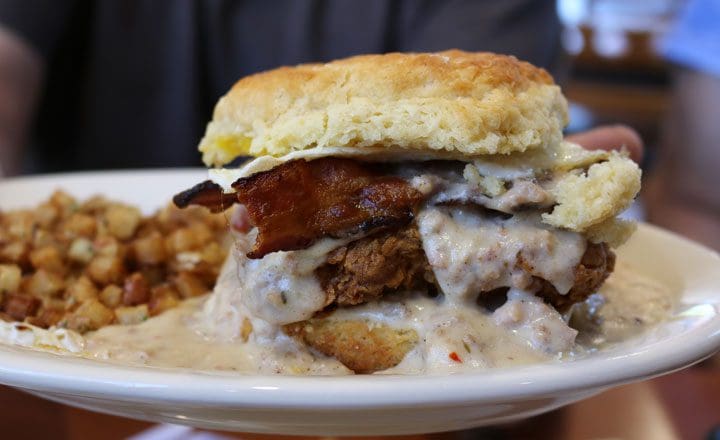
NOTE: While the Gibson location of Strips Biscuit Co. has closed. Stripes Biscuit Co. can still be found at 8050 Academy Rd NE # 101. Additionally, there are a number of Stripes Burrito Co. throughout the city and in Rio Rancho. Southern humorist Jerry Clower once quipped “One of the saddest things is the sound of them whomp biscuits being opened in more and more houses these days. Whomp! Another poor man is being denied homemade biscuits. No wonder the divorce rate is so high.” There’s more than a bit of underlying truth to Clower’s humor. Southerners take their biscuits seriously. “Whomping” or “whacking” biscuit cans on the kitchen counter to open them is akin to parents letting their children answer their Memaw with “yeah” and “nope” instead of “Yes, ma’am,” and “No, ma’am.” It just isn’t done! Southerner Belinda Ellis, author of Biscuits: A Savor the South Cookbook expresses it succinctly: “I learned that deep in the soul of a biscuit, there’s more than the flour, fat, and milk. A hot biscuit embodies a memory of place and family.” Her heartfelt tribute to the biscuit is one with which anyone raised or who has lived in the South can…

Las Ristras Restaurant – Corrales, New Mexico (CLOSED)

Based on interviews conducted with Hollywood luminaries who’ve starred in movies or television shows shot in New Mexico, you might think our state either doesn’t have a symbol of hospitality or that symbol is something as poorly representative of the Land of Enchantment as crack (Josh Brolin), tire stores (Jonathan Banks), shirtless drivers (Seth McFarlane), Walmart (Jessica Alba) or loudness (Tommy Lee Jones). With all the tax breaks and enticements afforded film production companies, shouldn’t its most visible beneficiaries at least have something nice to say about New Mexico? While New Mexico doesn’t have an official (as in legislatively decreed) symbol of hospitality, most of us recognize a ristra hanging on a doorway as an invitation to visitors, ergo a symbol of hospitality. It’s as much a symbol of hospitality as the pineapple is in Hawaii and the fleur de lis is in Louisiana. Moreover, the ristra has come to represent the state of New Mexico, maybe not quite as much as the Zia sun, but to a large extent. Now, if you want your texts to reflect New Mexico hospitality, download an app called “New Mexico Emojis” for your iPhone or iPad. Among the emojis you can add to…

Bob’s Burgers – Albuquerque, New Mexico

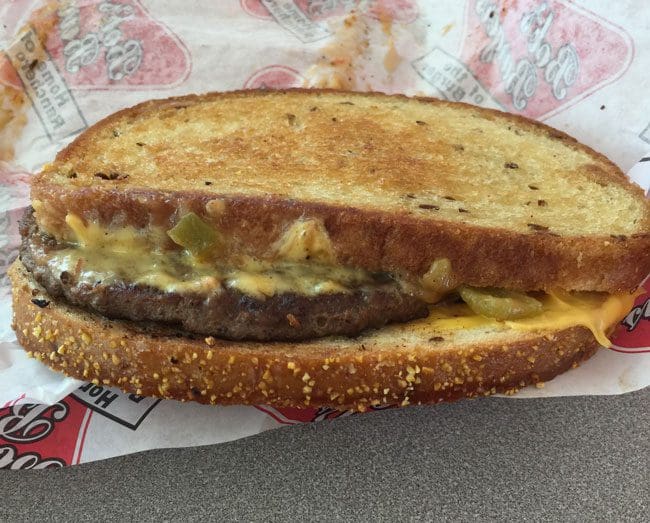
“Bob.” Advertisers (as well as television and movie producers) realize there probably isn’t a better example of an “every man” name, typically portraying Bob as the average wage-earning man about town. Few would argue that Bob, a diminutive of Robert, isn’t a very vanilla and common name. In fact, according to Social Security Administration data it was the fourth most common name in the United States with 9.5 instances per 1,000 people as of 2013. Despite that popularity, advertisers seem to prefer naming the metrosexual males they portray something like Brad or Troy (sorry BOTVOLR). Bob’s Burgers in Albuquerque, Los Lunas, Las Cruces and Rio Rancho precedes the animated television program by that name by 48 years. Brothers Tom and Bob Salas launched the very first Bob’s Burgers in 1963 with their original restaurant at Copper and Sixth Street. Tom and Bob are still actively involved in the restaurant as is Tom’s son Clifford who owns several Bob’s locations. Everything is made to order at this popular New Mexico exclusive eatery. Unlike the green chile which tops so many burgers at other restaurants, Bob’s red and green chile bites back. Expect some of it to run down your arms. Expect…