El Modelo – Albuquerque, New Mexico

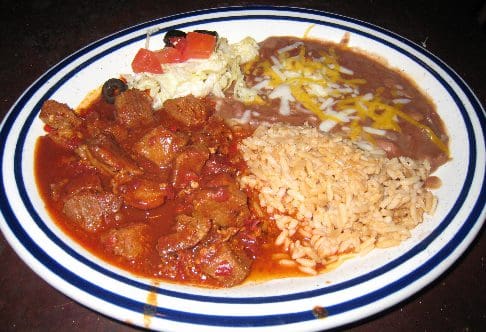
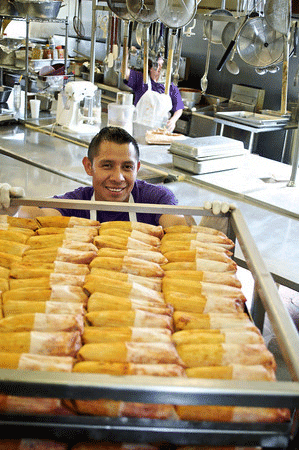
Growing up in the 60s in a bucolic village in Northern New Mexico, we had no idea about such things as political correctness and multi-culturalism. It would be decades before the ascendency of the “woke” movement.  My friends included descendents of Montezuma, scions of the Spanish explorers, Native Americans from a nearby Pueblo and even a few “white” kids.  None of us really thought about things like “inclusion” and “diversity.”  We lived it! Being kids, there was naturally a lot of good-natured name-calling and teasing, but even when tempers flared, I can’t recall racial stereotype-based derogatory terms ever used in anger.  We thought nothing of teasing the “rich” white kids about their “white as them” Rainbo bread sandwiches and they retorted in kind with insults about the “poor” kids and their chicharones and chile engorged tortillas. We were teased that “Mexican” (then a collective term for all Hispanics) children received tamales for Christmas so they would have something to open on Christmas morning.  Rather than think it offensive and racist, we laughed and tried to one-up with something better. It wasn’t until years later that we found out we were supposed to be offended by race-based stereotypes and insults.  It brought…
Osteria d’Assisi – Santa Fe, New Mexico

Historians have characterized the discovery, exploration, and colonization of the Americas in the late fifteenth and sixteenth centuries as having had three express purposes: glory, gold and God. This holds true in New Mexico where Spanish Explorers may have come for glory and gold, but finding neither, stayed for God.  Believing the large population of native peoples needed to hear the Gospel, the Spaniards established New Mexico first as a colony then as a mission. The effort to Christianize the native peoples was led by Franciscans, known then as the Sons of St. Francis of Assisi.  The sandal-shod Franciscans carried the Gospel throughout the Indian pueblos, indelibly imprinting Franciscan spirituality into the fabric and soul of New Mexico’s Catholicism. Evidence of their spirituality remains in the large population of Roman Catholics in New Mexico today, but also in the names given to villages throughout the state. One example is La Villa Real de la Santa Fe de San Francisco, translated from Spanish to The Royal Village of the Holy Faith of Saint Francis of Assisi, shortened to Santa Fe. In addition to being the patron saint of Santa Fe, Saint Francis is the patron saint of animals, birds and the…

Las Mañanitas – Albuquerque, New Mexico (CLOSED)

Estas son las mañanitas, que cantaba el Rey David, Hoy por ser día de tu santo, te las cantamos a ti, Despierta, mi bien, despierta, mira que ya amaneció, Ya los pajarillos cantan, la luna ya se metió. This is the morning song that King David sang Because today is your saint’s day we’re singing it for you Wake up, my dear, wake up, look it is already dawn The birds are already singing and the moon has set Las Mañanitas, the traditional Mexican birthday song often sung in Catholic churches and birthday parties is one of my very favorite songs of any genre.  It offers the recipient a good-morning wish just as King David himself might have. During early summer days when Duke City diners feel like serenading their taste buds with New Mexican food, many head to Las Mañanitas just north of Old Town.  There they dine on a brick patio under towering cottonwoods and a canvas of blue provided by New Mexico’s incomparable skies. The sprawling adobe restaurant is a historic landmark with a colorful history.  Parts of the structure date back more than 300 years.  It has served as a stagecoach stop, saloon and brothel as…

The Original Wineburger – Phoenix, Arizona (CLOSED)

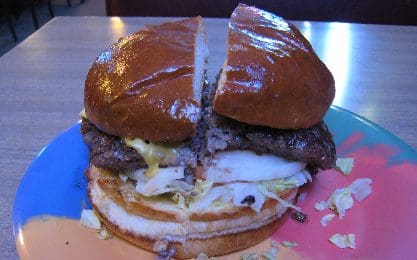
Every year, children of all ages fall in love all over again with the heart-warming 1947 Christmas movie, Miracle on 34th Street. We’re aghast when the district attorney demands that defense lawyer Fred Gailey provide “authoritative proof” that Kris Kringle is “the one and only Santa Claus.” We share Gailey’s seeming desperation when he offers as evidence, a solitary letter addressed to Santa Claus at the NYC Courthouse. We’re enraged when the D.A. retorts that one letter is hardly enough proof, and are proudly vindicated when Gailey has guards march in with huge bags overflowing with letters. We revel in Gailey’s argument, “Your Honor, every one of these letters is addressed to Santa Claus. The Post Office has delivered them. Therefore the Post Office Department, a branch of the Federal Government, recognizes this man, Kris Kringle, to be the one and only Santa Claus.”  We cheer at justice being served when the sympathetic judge, desperate not to be portrayed as the man who found Santa Claus guilty, declares, “Uh, since the United States Government declares this man to be Santa Claus, this court will not dispute it. Case dismissed.” Authoritative proof! That has been in dispute for years when it…

Crab House at Pier 39 – San Francisco, California

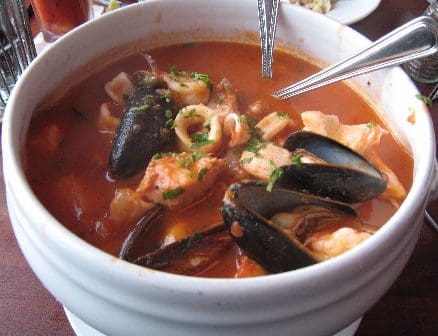
Every town has them–the touristy attractions every out-of-town visitor wants to hit and locals avoid like a Lobo basketball team coached by Ritchie McKay. To visitors, these attractions represent what your town is all about and nothing you tell them will dissuade them from thinking so.  After all, your local Chamber of Commerce paints these attractions as “can’t miss” and “absolutely must see.” Generally packaged with these touristy attractions are  dining destinations that promise to deliver authentic local flavor–the cuisine de culture so to speak. In Albuquerque that generally means a meal at a New Mexican restaurant–usually one with the stereotypical accoutrements that more closely represent Old Mexico than New Mexico. Invariably, in the Duke City those package deal restaurants feature cuisine whose red chile has the piquancy of Chef Boyardee tomato sauce and its green chile, the heat equivalent of a bell pepper.  An authentic experience?  Hardly, but many out-of-town visitors wouldn’t have a clue. To most first-time visitors, a San Francisco vacation or business trip would be incomplete without a trek to the storied Pier 39 and a meal at one of its seafood restaurants.  Never mind that locals will try to talk you out of it.  Most…

Ghirardelli Chocolate Shop & Soda Fountain – Las Vegas, Nevada

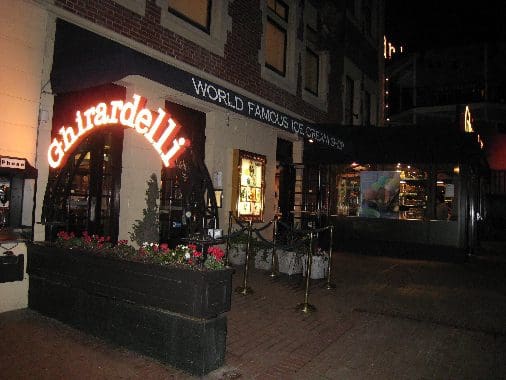
While Ghirardelli chocolate is available worldwide, there are only a few shop locations–mostly in California with outliers in Las Vegas, Chicago and in two Florida cities. Named after Italian chocolatier Domingo Ghirardelli who brought his chocolate from Peru to San Francisco, Ghirardelli Shops are a true chocoholics dream where you can purchase a tempting assortment of chocolate confections and gifts. The San Francisco location on Ghirardelli Square is a historical site near Pier 39 (where the pictures on this review were taken) that is even equipped with chocolate making equipment so you can see artistry at work. Truly one of the most progressive cities in the world, Las Vegas has a Ghirardelli chocolate shop near Harrah’s.  It’s designed like an old-fashioned soda shop with a checkered floor, ceiling fans and a long counter at which you place your order. Detractors might say, these soda fountains are also staffed with soda jerks, emphasis on the word “jerk.”  On a hot summer day, it’s obvious the staff wants to get you in and out quickly. The menu is replete with decadent ice cream sundae masterpieces, floats, malts and shakes, some of which are named for San Francisco area landmarks such as the…

Destino Nuevo Latino Bistro – San Francisco, California (CLOSED)

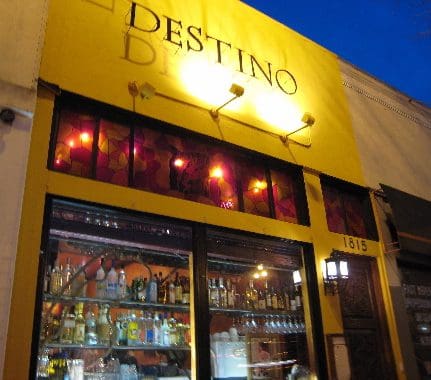
In 2004, The Economist (a British weekly news publication) proclaimed that “Peru can lay claim to one of the world’s dozen or so great cuisines.” In 2005, Bon Appetit declared Peruvian “the next hot cuisine,” extolling its “vibrant ceviches, crispy, spiced rotisserie chickens and packed-with-flavor empanadas” then encapsulating its declaration with “this is one cuisine we could eat every day.”  A year later, at the world’s premier gastronomic forum, the International Summit of Gastronomy, Lima (the coastal nation’s capital city) was touted as the “gastronomic capital of the Americas.” What’s surprising is not that the culture-rich cuisine of a small, multi-ethnic nation rarely on the world’s stage received such acclaim, it’s that it took so long.  Peru’s culinary traditions, after all, began in pre-Columbian times. Peru was home not only to the oldest known civilization in the Americas (the Norte Chico civilization flourished as early as the 30th century BC) but later to the largest civilization in the Pre-Columbian Americas–the Incan empire. Immigration melded the culture and cuisine of the Spanish, Basque, African, Moorish, Sino-Cantonese, Japanese and in the 19th century, the Italian, French and British with Peru’s indigenous peoples, the descendents of the pre-Incas and Incas, to combine the…

Blue Heron Restaurant at Sunrise Springs – La Cienega, New Mexico

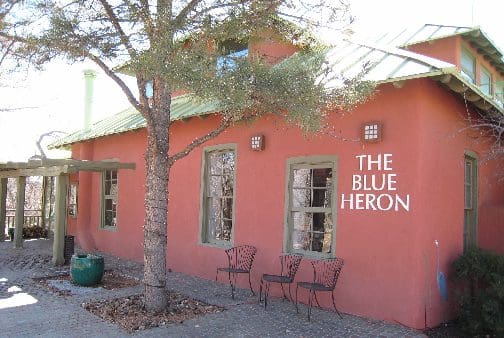
Fewer than ten miles separate the historic Spanish village of La Ciénega from Santa Fe, and though both have largely retained vestiges of their storied and proud histories, the differences that set them apart are as vast as El Camino Real, the Royal Road that has connected them for centuries. While Santa Fe has entered the 21st century as a burgeoning cosmopolitan city, La >Ciénega remains a rural enclave, parts of which have remained unchanged for generations–that despite becoming somewhat of a bedroom community for Santa Feans. Once a rural Indian pueblo outpost, La Ciénega  was abandoned in the seventeenth century only to be resettled by the Spanish after Don Diego de Vargas’ celebrated reconquest of New Mexico. During the second Spanish colonial period (1692-1821), haciendas and ranchos dotted the Rio Grande valley.  Dons (landlords) and their peones (workers) cultivated the fertile alluvial soils, raised livestock and tended orchards of fruit.  Hard work was a way of life.  It had to be! Ranchos HAD to be self-sufficient.  The tremendous distance from Mexico City coupled with the laborious and perilous 2,000-mile trek made visits from supply caravans infrequent.  Even when they did arrive, rarely did they transport the necessities of daily…

Athens Eclectic Greek – Albuquerque, New Mexico (CLOSED)

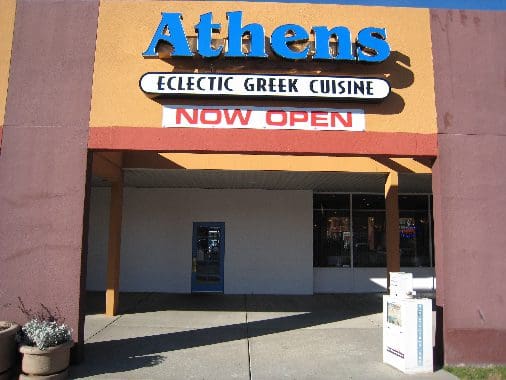
There’s an expression in Greece that all roads lead to Athens. If restaurateur Gus Petropoulos has his way, all Albuquerque streets will take diners to Athens Eclectic Greek Cuisine, the restaurant he launched in August, 2007. Petropoulos is a veteran of culinary competition, having owned six restaurants in Florida before setting up shop in the Duke City. His new venture is located in the Far North Shopping Center where, just scant years ago, this was about as far north as you could go in Albuquerque. The eclectic in the restaurant’s name means you’ll find so much more than gyros, Kalamata olives, feta cheese and all the other standards we’ve come to expect from Greek restaurants. It means fresh seafood flown in twice a week and other Mediterranean treats the like of which the Duke City has not experienced. One of the unique offerings initially promised for Athens is the “lion burger” which is being held in reserve for a steakhouse Petropoulos is planning. Look for it to draw prides of diners to the steakhouse from the minute it opens. The menu is decidedly upscale with gourmet entrees sharing space with the Greek standards we’ve all come to know and love.…

Chef Jim White’s Cafe & Catering – Albuquerque, New Mexico (CLOSED)

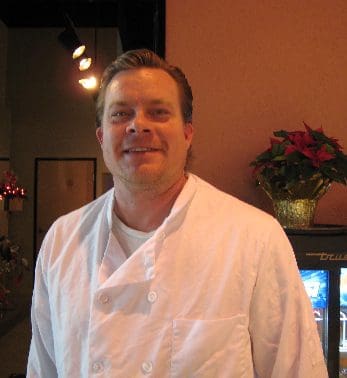
Long before the Food Network made chefs legitimate on-air celebrity icons, Albuquerque had its own larger-than-life, media-savvy celebrity chef who, it seemed, spent almost as much time on the airwaves as behind the stove. Chef Jim White was a peripatetic presence on television where he hosted short cooking segments on two Duke City television news programs in addition to having a three-minute format airing in a San Diego station. He also wrote a highly-regarded food column for the Albuquerque Journal. So well known was (and is) Chef Jim White that in Albuquerque his name is always prefaced with his title, “Chef.” In society, only doctors and professors seem to earn that level of respect and in Hollywood, the celebrity equivalent might be being known by first name (i.e., Oprah, Beyonce). Chef Jim White was everywhere. He had the energy, enthusiasm and credentials (graduating no less than at the top of his class at the Culinary Institute of America) to carry off bona fide celebrity. He also had an endearing effusive personality that engendered genuine affection among many loyal patrons. From 1999 until July, 2005, the indefatigable chef also owned Casa Vieja, a venerable Corrales restaurant. At Casa Vieja he popularized…

Downtown Gourmet – Albuquerque, New Mexico (CLOSED)

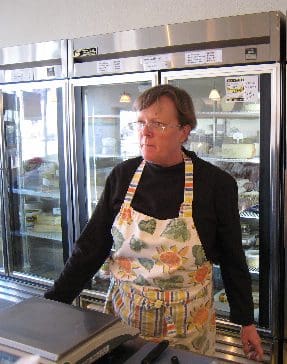
“People who know nothing about cheeses reel away from Camembert, Roquefort, and Stilton because the plebeian proboscis is not equipped to differentiate between the sordid and the sublime.” – Harvey Day I don’t know whether or not Mr. Day intended his quote as a condescending affront toward those lacking appreciation for some of the world’s most fetid fromage, but the truth is, not everyone really “gets it” when it comes to stinky cheeses. There’s absolutely nothing wrong with that. That’s because there really is a cheese for everyone. It’s one of the world’s most versatile and beloved foods and it has been since the very first cheese was made somewhere in the Middle East around 6000 B.C. Its versatility ranges from overwhelming (to some) to subtle. In taste, it can range from bland to sharp, from buttery and rich to light and delicate and from pleasantly astringent, even mild, to powerful and assertive. The texture of cheese can range from the softness of melting butter (such as a fine Burrata) to a crumbly firmness that makes it literally flake off in pieces when you cut or bite into it (think Leicester cheese). The aroma of some cheeses can clear a…