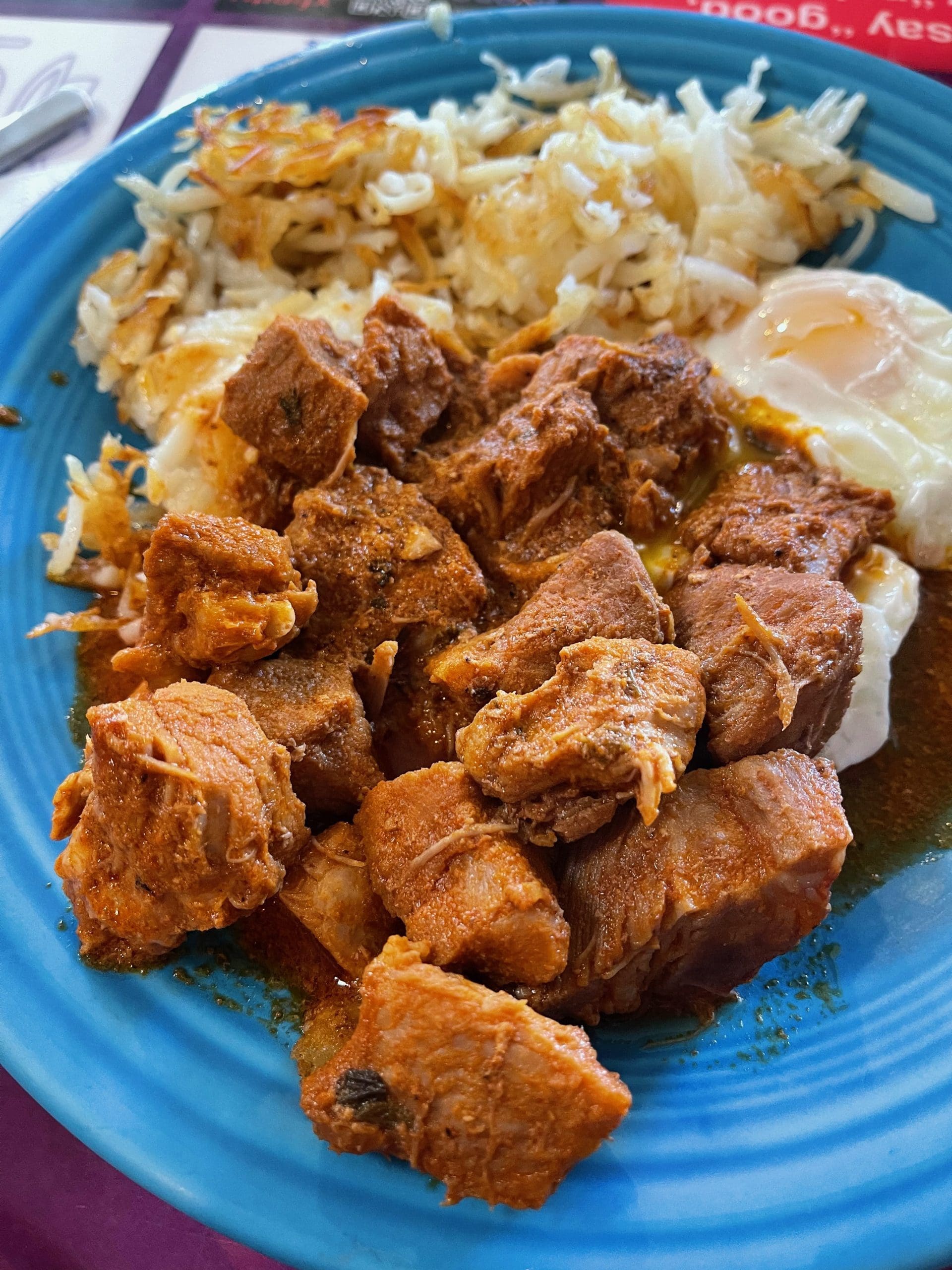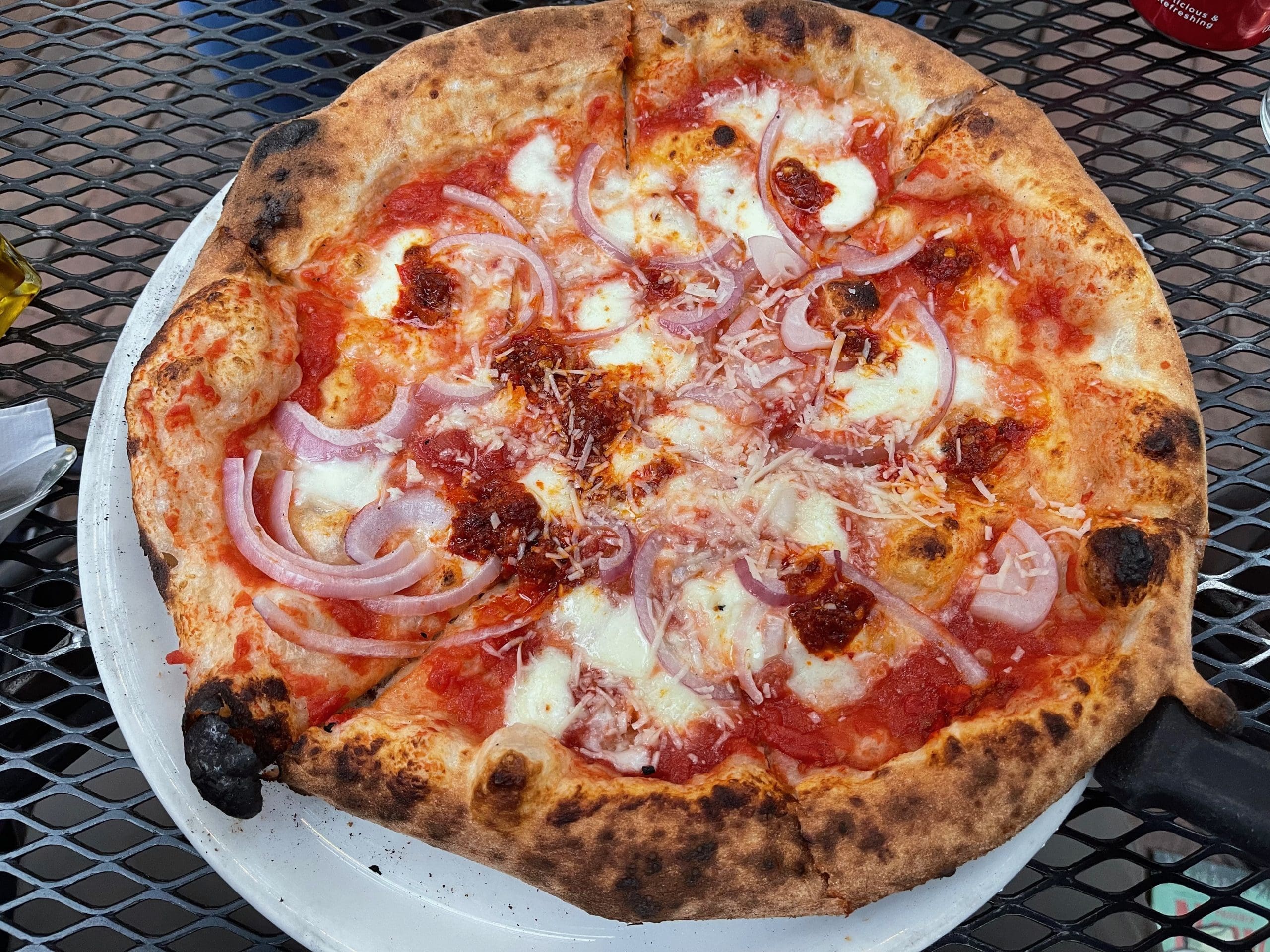
Cibo – Phoenix, Arizona

Inasmuch as they’re both Romance languages, there are a lot of similarities between Spanish and Italian.  Because Spanish was my first language, if spoken slowly enough I can probably understand thirty-percent of what is spoken in Italian.  Alas, not all Spanish and Italian terms are lexical cognates.  That is, they don’t have the same etymology or derivation.  For example, the Italian term “mangia” means “eat up” (naturally, it’s one of my favorite Italian words) while perhaps its closest Spanish equivalent is “come.”  Another Italian culinary term every self-respecting gastronome recognizes is “cibo” which translates in English to “food.” In Italy, life revolves around the preparation and enjoyment of good food (cibo buono).   Hmm, maybe I should have been born Italian?   As a gastronomo prolifico (the Italian AND Spanish translation for both words), I feel a profound connection to Elena Davis who writes the fabulous blog Cucina by Elena in which she shares recipes and memories of having grown up in Lo Stivale.  She’s a lady after my own heart.  Take this paragraph:  “In Italy, if we aren’t eating, we are probably talking about eating.  The word Mangia (verb: mangiare), pronounced man-juh, definition: eat-up!!”  Yes, you literally say it…

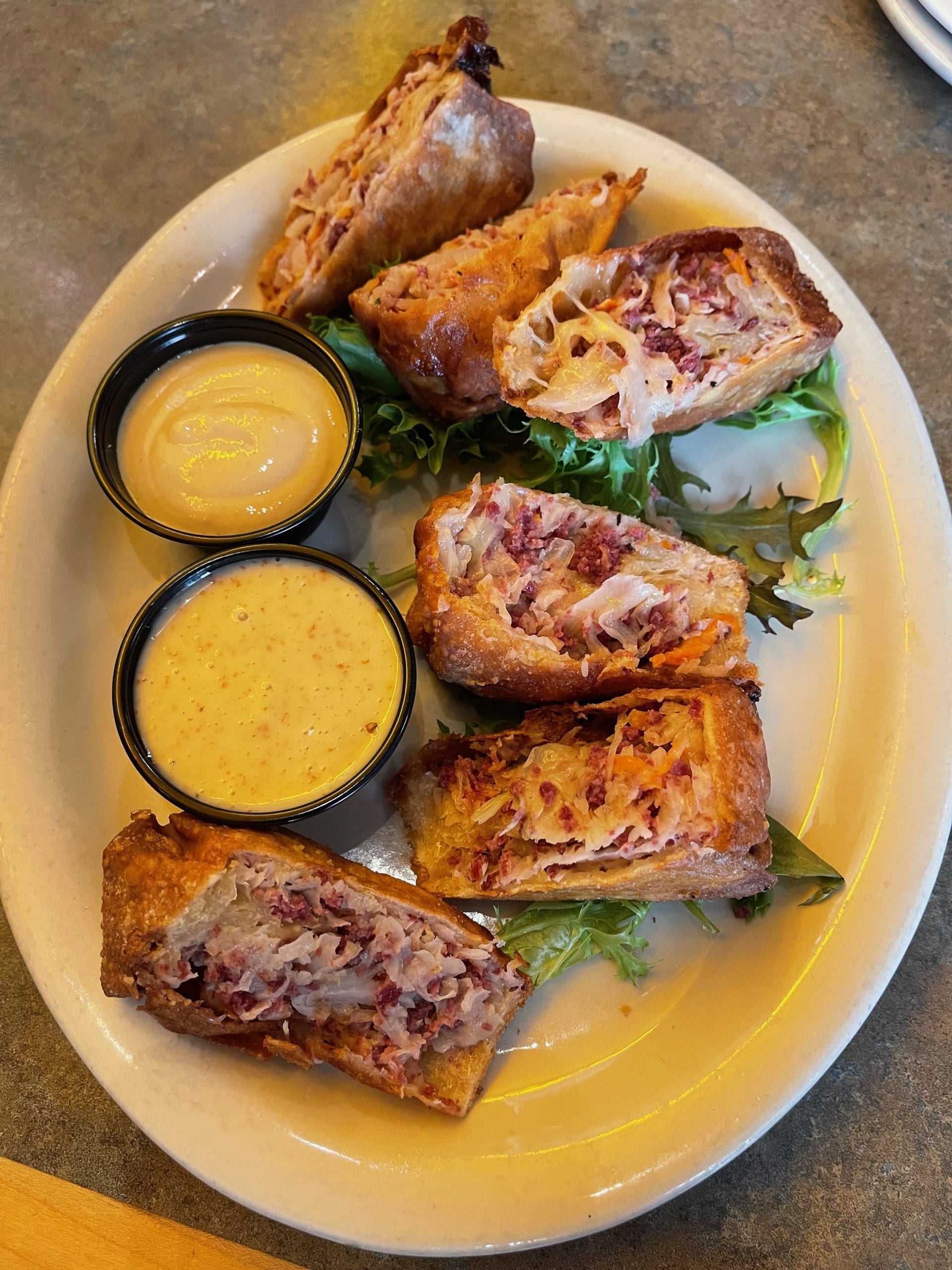
O’Niell’s Irish Pub – Albuquerque, New Mexico

Despite several efforts by the United States Department of Agriculture (USDA) to make it more user-friendly, the Food Pyramid has never been that easy to understand. Could confusion be one of the reasons 73.6% of American adults are either overweight or obese (according to the Centers for Disease Control)? Based on that alarming percentage, you’d think the pyramidal nutritional guide has chocolate as its base topped with pizza, burgers and cheesecake tapering to a whipped cream covered point. Perhaps to alleviate confusion, in June, 2011, the USDA replaced the ubiquitous food pyramid with a graphic depiction of a plate which (ostensibly) should make it easier for us to determine if we’re balancing our meals nutritionally. Hopefully the size of the plates at the typical family home aren’t platter-sized (or that the pie-wedge shaped components of the plate–fruits, grains, vegetables and proteins–won’t have a subliminal effect). The Food Pyramid is not a uniquely American way of depicting nutrition. Throughout the world there are many ways used to present nutritional recommendations graphically (the Japanese use a spinning top model) even though the basics of nutrition have remained fairly static over time and across borders–with a few country specific differences based on local…

Socorro Springs Brewing Company – Socorro, New Mexico

Socorro, New Mexico is a dichotomous town.  It is the second oldest inhabited community in our culturally blessed Land of Enchantment, yet it boasts one of the nation’s premier research universities.   It is steeped in history and tradition, inextricably linked to its storied past while embracing the technologies which are laying the groundwork for future peace and prosperity.  According to Visit Socorro “Socorro (literally to give aid, to give succor) was indeed a source of help to the first expedition of Spanish families traveling north from Mexico in 1598, led by Don Juan de Oñate y Salazar. Socorro’s first inhabitants, Piro-speaking people of the Teypana Pueblo, welcomed the scouting party of Oñate and his men. They showed no fear of the strangers, according to Oñate’s official log, and with hand signs told the group what lay ahead. When the Teypana inhabitants unexpectedly gave the group a large gift of corn, Oñate renamed the pueblo Socorro.” Much as Socorro would like to be considered a destination community, it’s better known as a “jumping off” point to nearby destinations.  It’s within minutes of the Bosque del Apache National Life Refuge where 12,900 acres of boggy bottomlands host tens of thousands of…

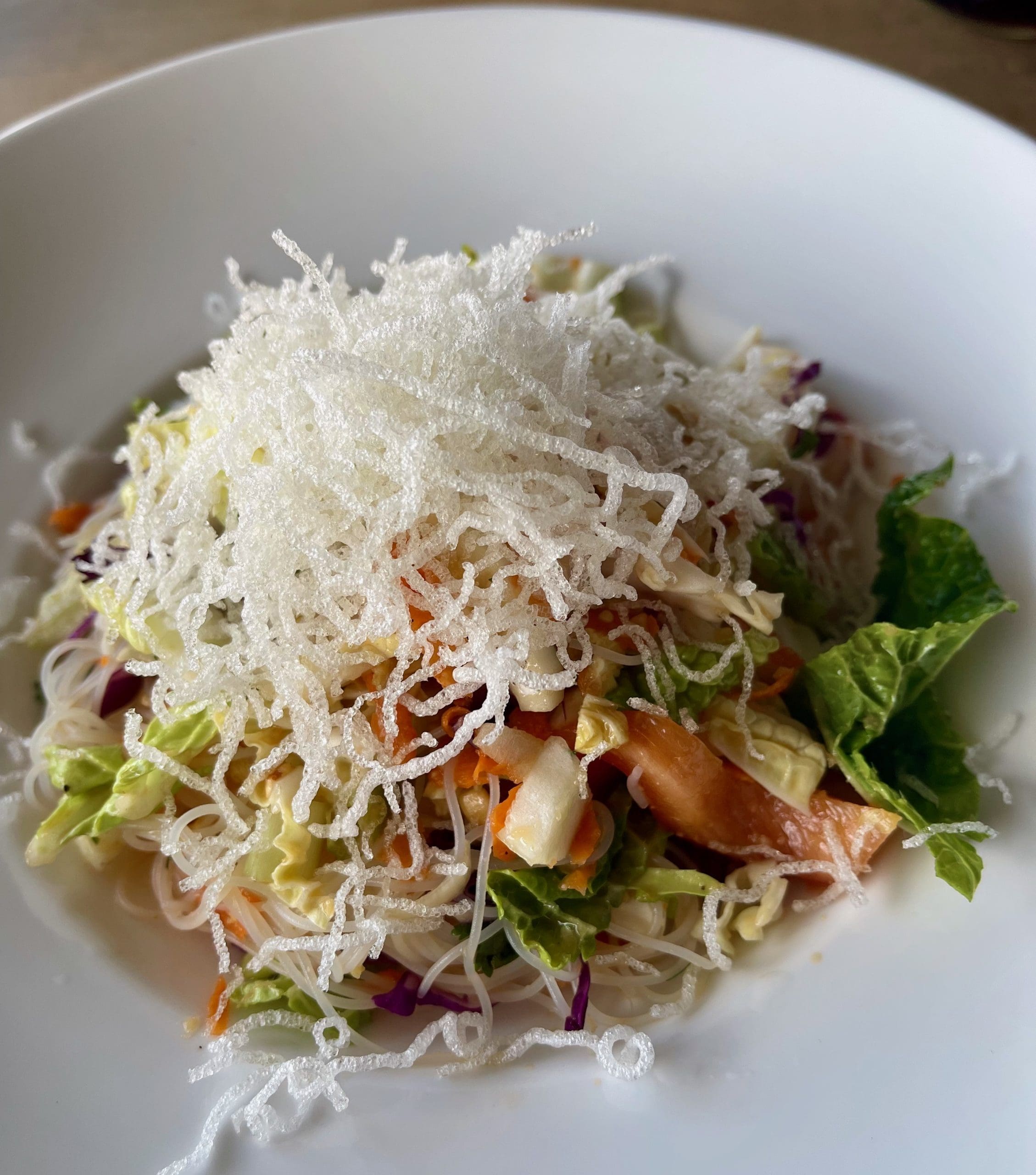
Vinaigrette – Albuquerque, New Mexico

“People aren’t either wicked or noble.  They’re like chef salads With good things and bad things chopped and mixed together In a vinaigrette of confusion and conflict.” ~ Lemony Snicket, The Grim Grotto I’m not the type of guy who could write a tearful tell-all or confess some scurrilous detail to Oprah.  Nor do I ever get on Facebook and publish a litany of mundane minutia about my life.  However, in the spirit of “confession is good for the soul,” I’ve got a secret to divulge.  I’ve got a huge crush on Erin Wade.  It’s not the type of crush for which I’d leave my Kim, but the type of crush a geeky, gangling high school kid might have on a popular girl who’s way out of his league, the type of crush that would probably leave him tongue-tied if she were ever to talk with him.  The first time I saw Erin Wade live and in color at her restaurant in Santa Fe, my initial impression was “Wow!  She is stunning.  She’s got to be a model or a goddess.”  I didn’t know who she was until my dining companion informed me that she was the braintrust behind Vinaigrette.…

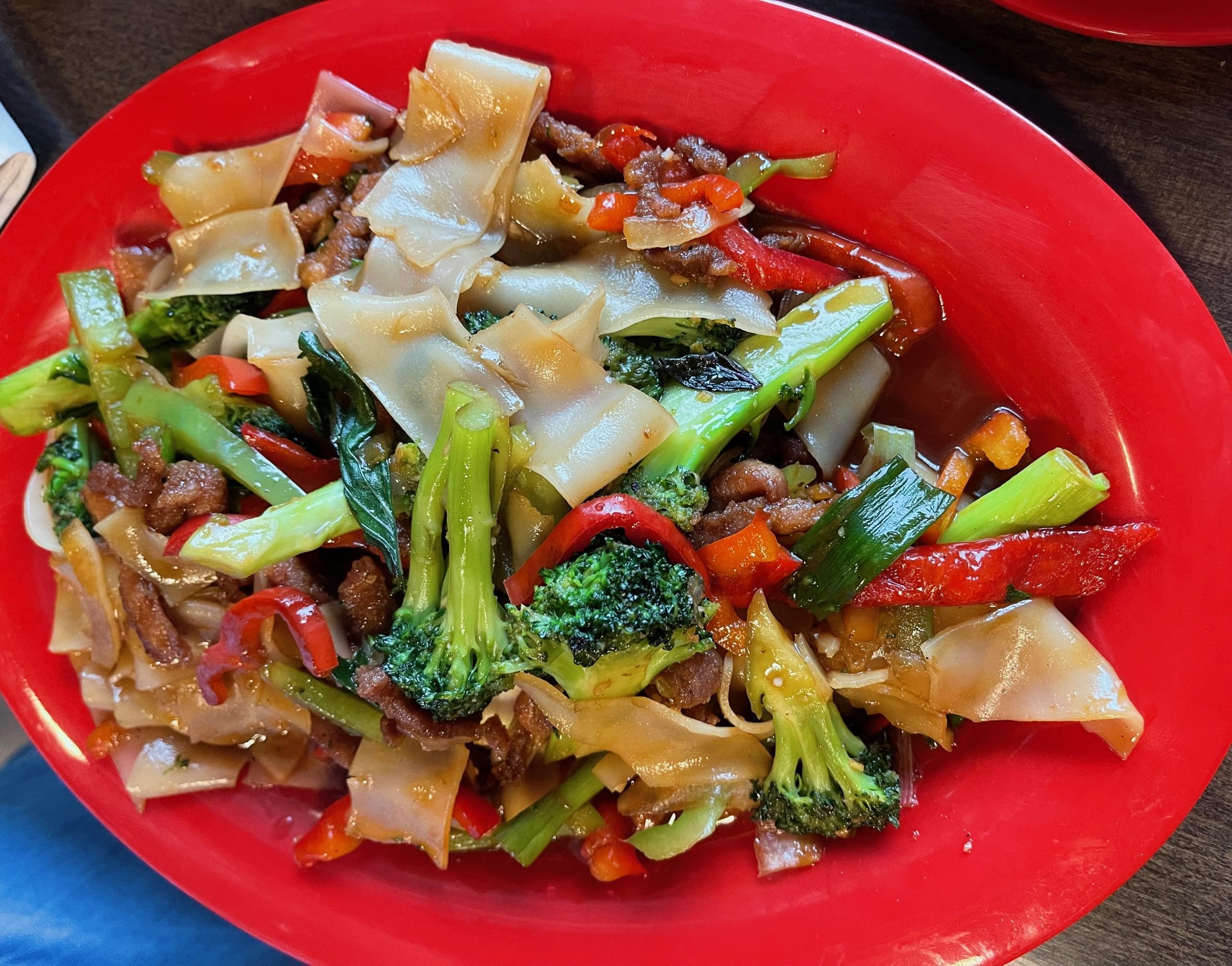
Thai Street – Albuquerque, New Mexico (CLOSED)

By chronological standards, Thai cuisine–especially as we know it today–is relatively new to the world culinary stage.  Culinary historians believe Thai cuisine may be as young as 1,400 years, coinciding with a mass migration of people from regions of China.  These settlers dined mostly on seafood, herbs and plants prepared mostly by stewing, baking and grilling (over time, stir-frying and deep-frying also became popular).  Large domestic animals such as water buffalo and oxen were too valuable to slaughter for food.  As such, meat was used very sparingly though considering the settlers’ propensity for seasoning, a small amount of meat went a long way.   While Chinese–particularly Szechuan–dietary practices were the most significant early influences, the introduction of other ingredients and culinary techniques began to define the Thai food with which we are familiar today. Foremost were curries from the exotic subcontinent of India which people infused with coconut.  After the European discovery of the American continents, Portuguese mariners brought chili spices to the region.  These were the forerunner of the incendiary dishes which give Thai cuisine their popularity and explosions of flavor.  Understandably, regional preferences were developed with five or so distinct regional styles of cooking defined.  Variations resultant from…

El Roi Cafe – Albuquerque, New Mexico (CLOSED)

You know you’ve been involved in project management for too long when the only thing that comes to mind when told about a restaurant named “El Roi” is “why would a restaurant be named for a Return on Investment (ROI).”  For those of us who have worked in Information Technology, ROI is a financial ratio used to calculate the benefit an investor will receive in relation to their investment cost.  Restaurants often have a poor return of investment–not just in financial capital, but in human capital.  Restaurants require a significant investment in time by owners as well as kitchen and “front of the house” staffs and the financial return isn’t exactly lucrative.  My Kim theorized that Roi is probably a preferred derivation of Roy.  “By poor spellers,” I chortled.  It turns out my brainy bride was correct…well, almost.  According to Namedat, a website which takes social security administration data and converts it to facts and stats about names of people in the United States, there are actually 8,706 humans in the country with the first name Roi.  Naturally one of the very first questions we asked when we finally made it to El Roi is just what does the name…

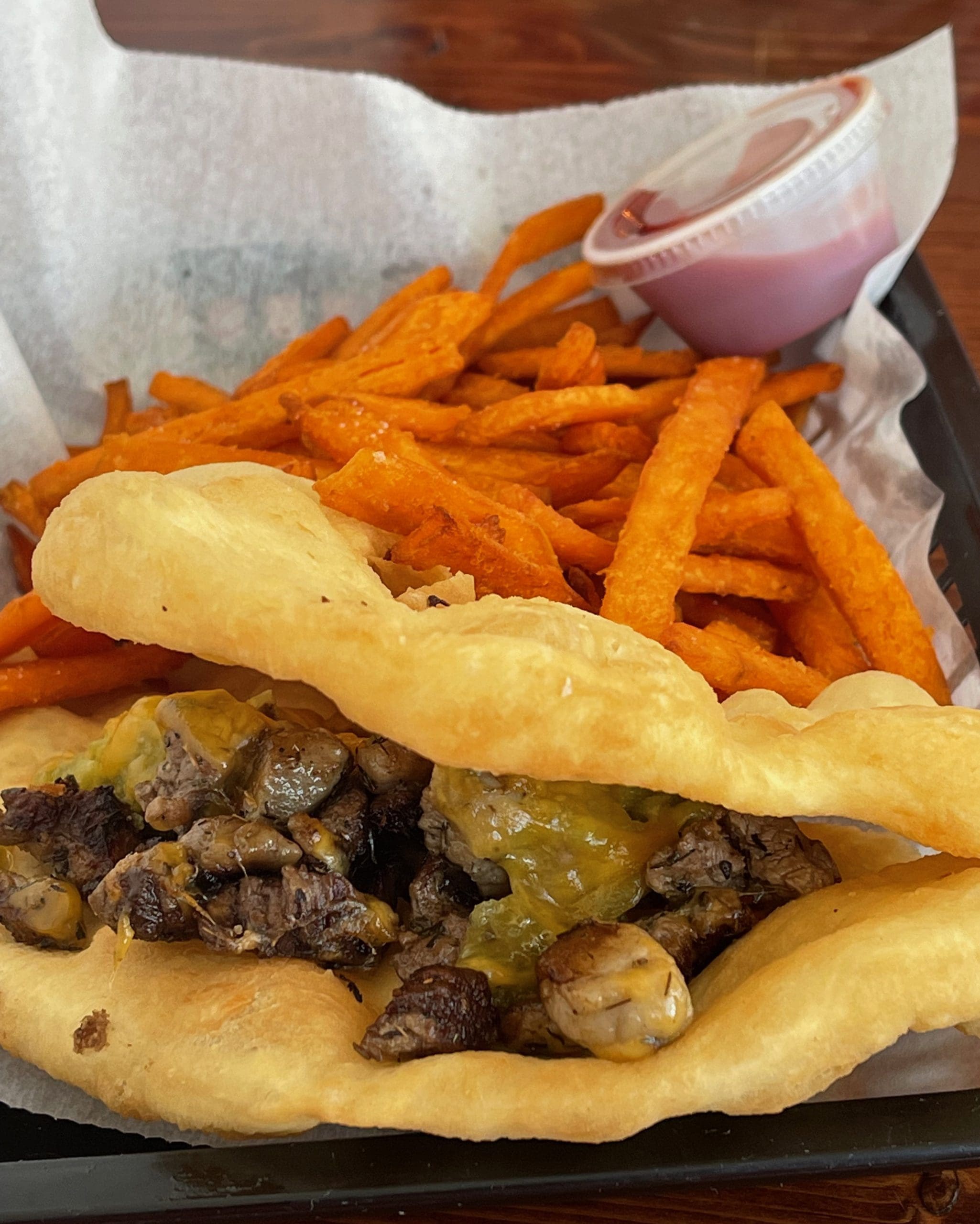
Pa’La – Phoenix, Arizona

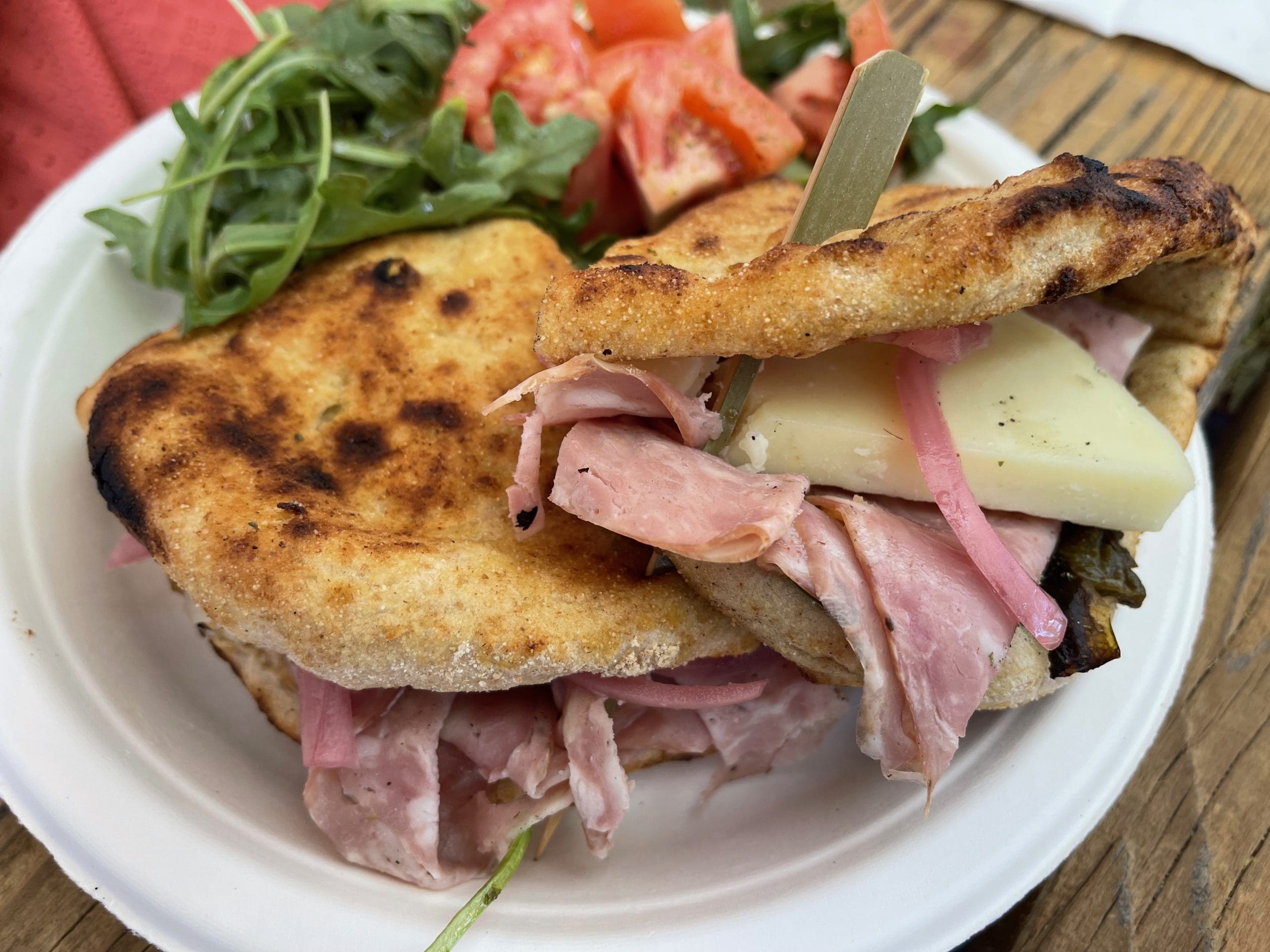
Is there anything more relaxing than a wood fire: its mesmerizing orange and blue flames as they lick the air, the warmth and comfort of heat as it overcomes weather’s chilling bite, the meditative timbre of wood crackling  over the flames, the spitting and hissing of red-orange embers and especially aromas which trigger heart-rending reminiscences of childhood days sitting around a fire with family and friends.  Just the thought of a wood fire is therapeutic, imparting benefits that are both salubrious and soothing. My attempts  at transporting you to a time and place in which wood fire helped transcend life’s vicissitudes are likely feeble, but let me add another element that might do the trick.  Now imagine the yeasty bouquet of baked bread wafting toward you from a wood-burning oven. It’s been well established that there is no more effective medium for rekindling pleasant memories than the aroma of bread baking, but studies have proven that the aroma of baking bread actually triggers more positive, helpful, kinder, and more altruistic behavior in people. Those studies–published in the Journal of Social Psychology–concluded that there is something about the effect of the smell of bread baking that is not just pleasant on…

Call Her Martina – Scottsdale, Arizona

The cultural and culinary histories of Arizona and Mexico are interlocked, transcending  the geographical borders that separate them. In fact, until only 1822, what is now the state of Arizona was still a part of the Mexican state of Sonora. It stands to reason, therefore, that Arizona’s cuisine of would be largely (but by no means exclusively) influenced by the cuisine of its Sonora.  Those influences extend far beyond the common use  of chiles, beans, flour tortillas, grilled meats and tomato-based sauces.    Rooted in Sonoran cuisine with tendrils in the cuisine of other Mexican states and molded by the American palate, Arizona’s Mexican cuisine continues to evolve in diversity, sophistication and depth.  For that, I am most grateful.  During 18 years of business travel to the Phoenix area, I was convinced that the only thing worse than Arizona’s chile-influenced Mexican food was The View.  That impression was based primarily on well-intentioned colleagues believing New Mexicans would enjoy restaurants such as one we all called “Mocoso’s,” the Spanish word for a snot-filled person. A weeklong visit to Tucson in 2010 that included meals at two of Cultural Trip’s list of the 10 Best Mexican Restaurants in Arizona did nothing to…

Kickstand Cafe – Albuquerque, New Mexico (CLOSED)

In 2016, The Plough Hotel in North Canterbury, New Zealand banned Lycra-clad customers in an attempt to remove any “unsightly bumps and bulges.”  The hotel owner declared Lycra “unsuitable,” explaining “We get a nice group of customers out here, some elderly folk. When you’re trying to concentrate on your breakfast you just want to see the sausages on your plate.” Then as if expecting a confrontation from the lumpy, bumpy bikers, he issued a challenge: “If there’s hordes of cyclists outside threatening to bash us with their bike pumps we can always barricade ourselves in, we’ve got a bit of food and drink here so we should be able to outlast them.” Lycra bike wear may not be de rigueur at Albuquerque’s Kickstand Cafe, but you just might feel overdressed if you didn’t squeeze into the form-fitting attire for a visit to the Alameda cafe.  And surprise, surprise, “elderly folk” whom the prudish New Zealand hotel owner tried to shield from “sausages” and other shapes and contours that leave little to the imagination were well represented among the guests wearing second-skin-apparel.  It didn’t appear any guests perceived bike shorts to be ribald regalia.  Nor did we notice any ogling or lusty…

California Pizza Kitchen – Albuquerque, New Mexico

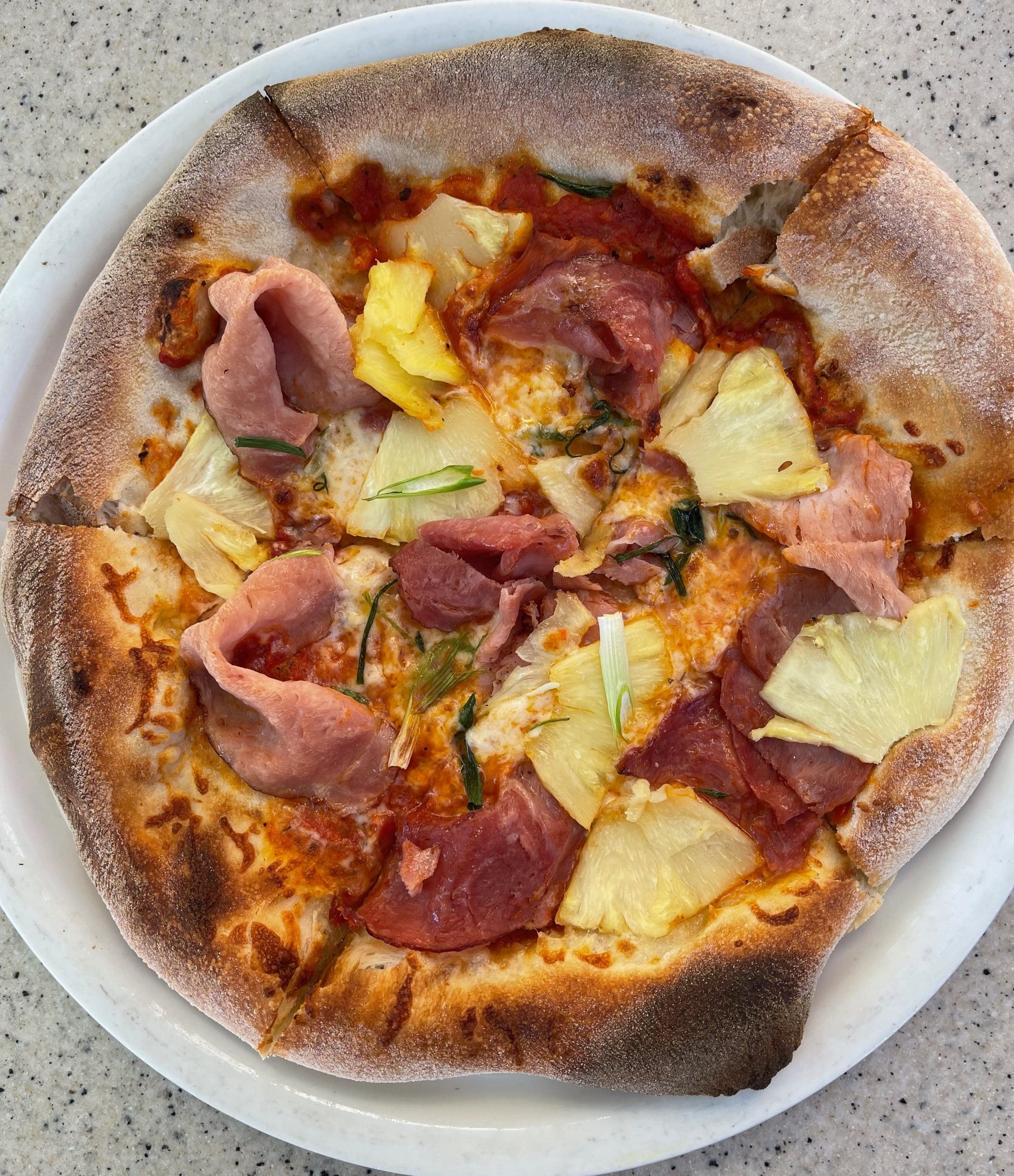
No, your eyes aren’t deceiving you. This is Gil’s Thrilling (And Filling) Blog, champion of the mom-and-pop restaurant, defender of the independently owned eatery, supporter of the family owned and family operated diner…and this is a review of a chain restaurant. No, this blog has not been hijacked by some corporate cabal bent on corrupting the American diet with homogeneous mediocrity…and no, this review was not written under duress or the promise of free food. It was written of my own free will, sound mind and full accord. Lest you condemn this seemingly traitorous affront, hear me out. Several years ago, I made my own version of a Faustian pact. Faust, for the non-English majors among you was a scholar who sold his soul to the devil in exchange for unlimited knowledge and worldly pleasures. In my case, I made a deal with my Kim to take her to the Olive Garden once a year in exchange for all the strange and exotic restaurants I want to visit the rest of the year. I sure got the rotten end of that deal! On Labor Day 2015, my Kim decided to collect my soul, er….have me make good on my promise…

Barelas Coffee House – Albuquerque, New Mexico

Quick, name the oldest neighborhood in Albuquerque. Most people would say Old Town which was settled in 1706 near the banks of the Rio Grande. Most people would be wrong. The oldest neighborhood in Albuquerque is actually the Barelas neighborhood, formally established as a ranching settlement in the late 1600s. The history of the central Rio Grande region began at and expanded from Barelas, once a thriving hub of commerce bustling with activity. Both the Camino Real, the royal road to Mexico City and Route 66, America’s mother road passed through the Barelas neighborhood. Barelas was the seat of a flourishing railroad enterprise which facilitated a burgeoning economy.  The neighborhood began a precipitous decline in the 1950s when odoriferous emanations from an area sewage treatment plant drove people away. Then in the 1960s, shopping mall developments proved too formidable competition for long-established mom and pop businesses, the economic heart of the community. Before long, the federal government was calling Barelas a “pocket of poverty” and what was once a thriving neighborhood languished. By the 1970s, Barelas was all but forgotten–perhaps a blessing in disguise because that allowed the preservation of historic buildings for which the community is best known today.…