It’s A Punjabi Affair – Amarillo, Texas

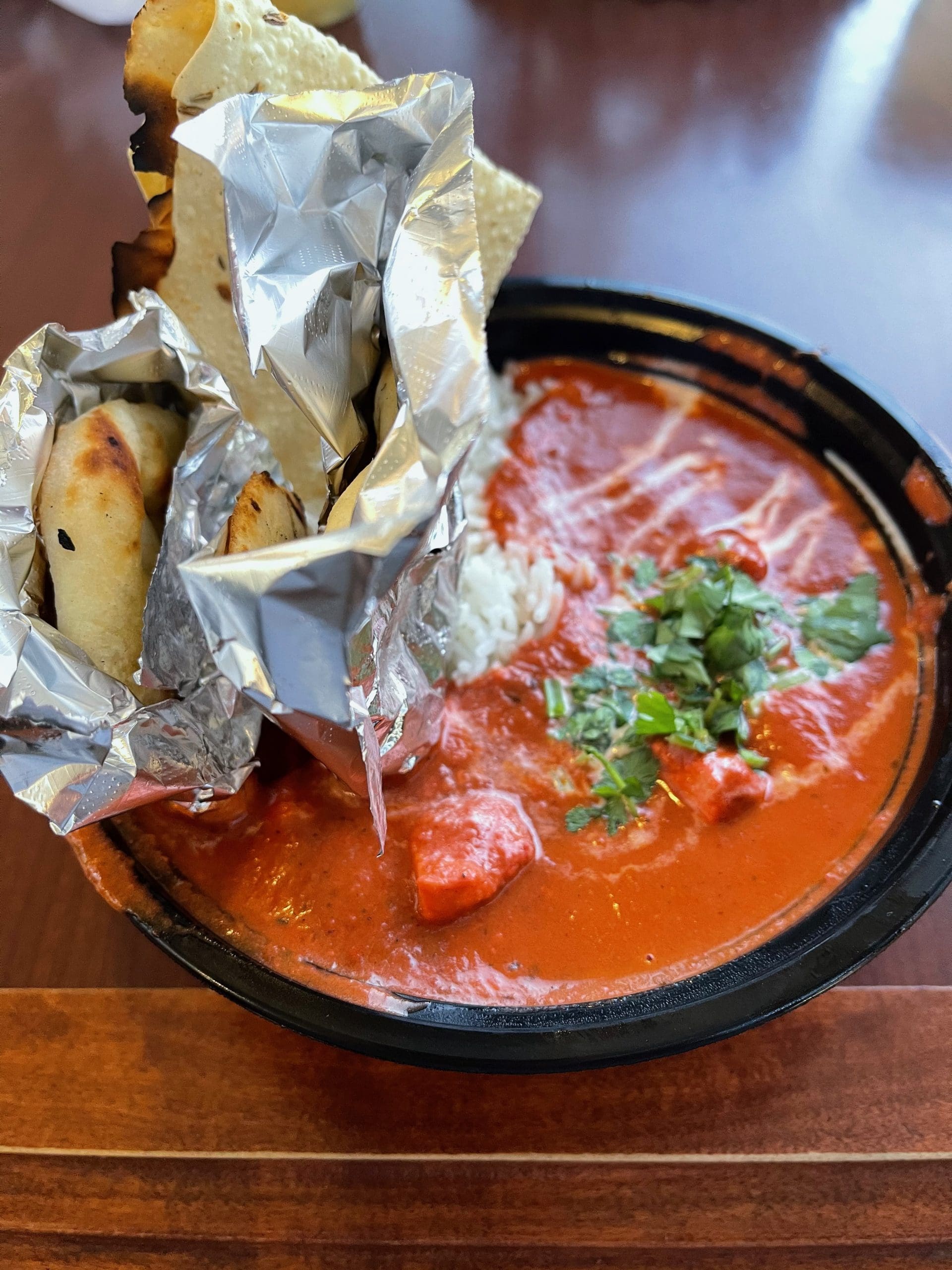
During our last full year at Intel, my friend Bill Resnik and I had the distinct honor and privilege of working on a project with a team from Microsoft comprised mostly of information technology professionals with roots in the exotic subcontinent of India.  We had expected impeccable technical expertise, but their dedication and focus was far beyond what any of us would have anticipated.  As an example, Kannan, a technical solutions analyst once took a well-deserved vacation in Hawaii and still called in to daily project meetings.  Tropical birds sang in the background as Kannan provided his updates while lounging on the lanai. Never one to miss out on an opportunity, Bill downloaded an application for his iPhone which played everything from beautiful bird songs to simple tweets and chirps.  The second Kannan began to speak during a meeting–either from his San Francisco home base or somewhere Microsoft had dispatched him–Bill would play bird sounds that weren’t necessarily indigenous to Kannan’s location at the time.  We heard everything from turkeys gobbling and chickens cackling to a pterodactyl screeching.  It was driving Kannan batty trying to figure out where all these strange and exotic bird sounds were emanating.  It brought to…
The Golden Light Cafe & Cantina – Amarillo, Texas

Published in 1938, John Steinbeck’s Grapes of Wrath is widely regarded as one of the greatest American novels ever written. Replete with timeless themes of struggle, destitution, injustice, and the pursuit of a delusive “Promised Land,” the novel centers around the trevails of the Joad family.  Along with thousands of other tenant farmers from Oklahoma who lost their livelihood and property because of the Dust Bowl, the Joads travel the relatively nascent Route 66 toward California and the pursuit of a piece of land to call their own. Every night on their journey, the Joads and their fellow migrants witnessed man’s inclinations toward desperation, violence, and murderous anger as well as generousity and respect.   We couldn’t help but think about the Joads when we made reservations for three nights at Amarillo’s Hubbel Duplex.  We couldn’t help but reflect on all the “Okies” who passed in front of the Duplex en route to California.  Situated on the western end of West Sixth Street, the brick dwelling remains virtually unchanged since its construction in 1925.  West Sixth Street was the first paved highway through Amarillo and a vibrant part of Route 66. Today the U.S. Route 66-Sixth Street Historic District runs for…

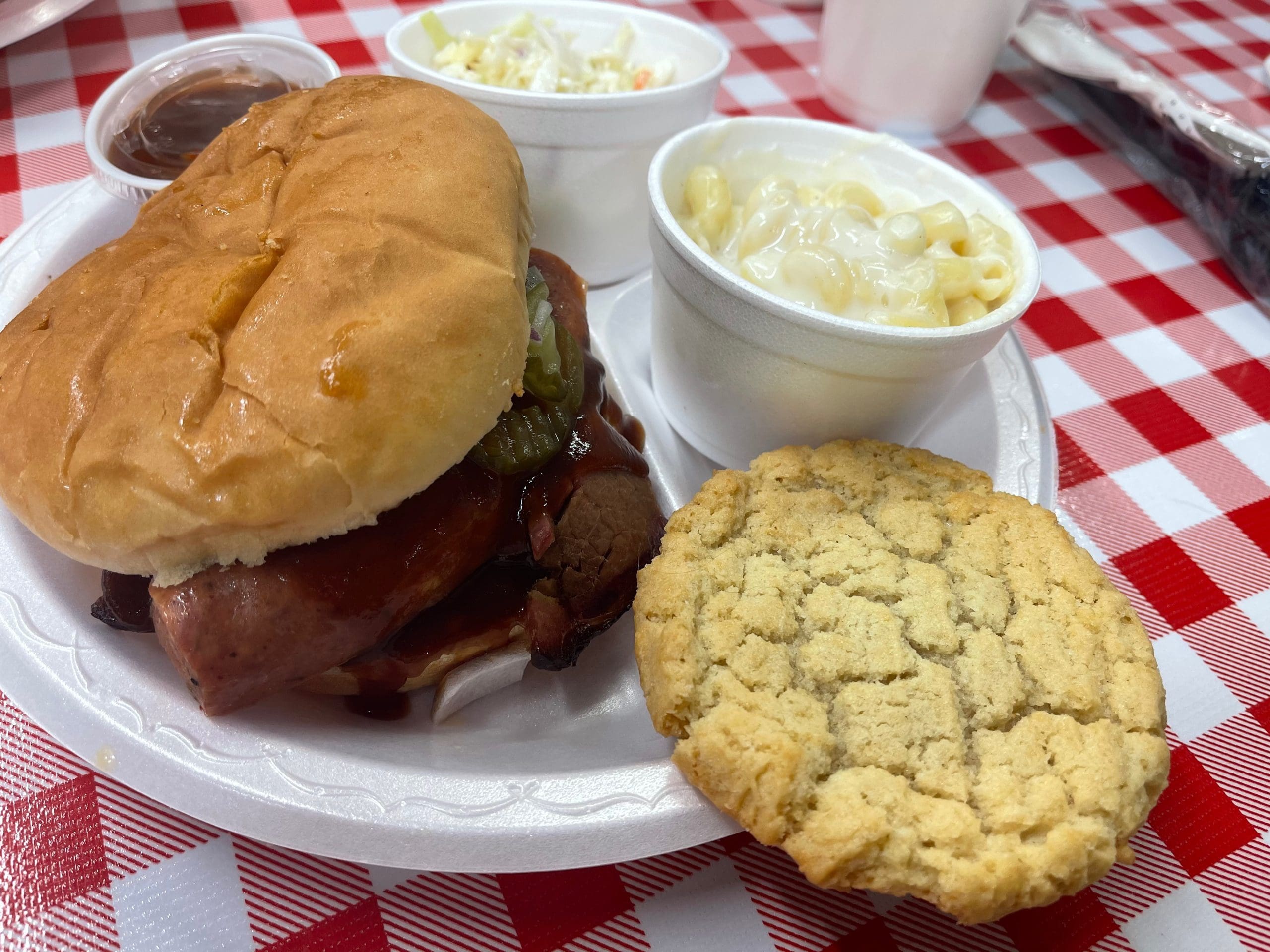
Watson’s BBQ – Tucumcari, New Mexico

The Wikipedia article on Eastern New Mexico describes the region as “mostly characterized by flat featureless terrain,” even likening it to West Texas: “Like much of the Llano Estacado region, Eastern New Mexico is largely agricultural and resembles West Texas in geography, culture, economy, and demographics.”  While Eastern New Mexico may not be back-dropped by spectacular mountain ranges or bisected by the murky Rio Grande, it’s got an enchantment all its own even if the Wikipedia writer can’t see it.  It’s also got something else the Rio Grande Corridor, for all its population centers and cultural diversity, can’t match.  It’s got long-standing barbecue traditions that, not surprisingly, have their roots in Texas.  By comparison, barbecue along the Rio Grande Corridor is a fledgling chick learning to fly.  Eastern New Mexico is home to Smokin’ On the Pecos, the New Mexico State Barbecue championship held every year in Artesia.  The winner of this prestigious event–sanctioned by the Kansas City Barbecue Society–is an automatic preferred qualifier for the world barbecue championship.  Artesia is the middle jewel in a three city diadem that includes Roswell to its north and Carlsbad to its south.   These three cities constitute New Mexico’s  “Barbecue Belt.”  Drive…

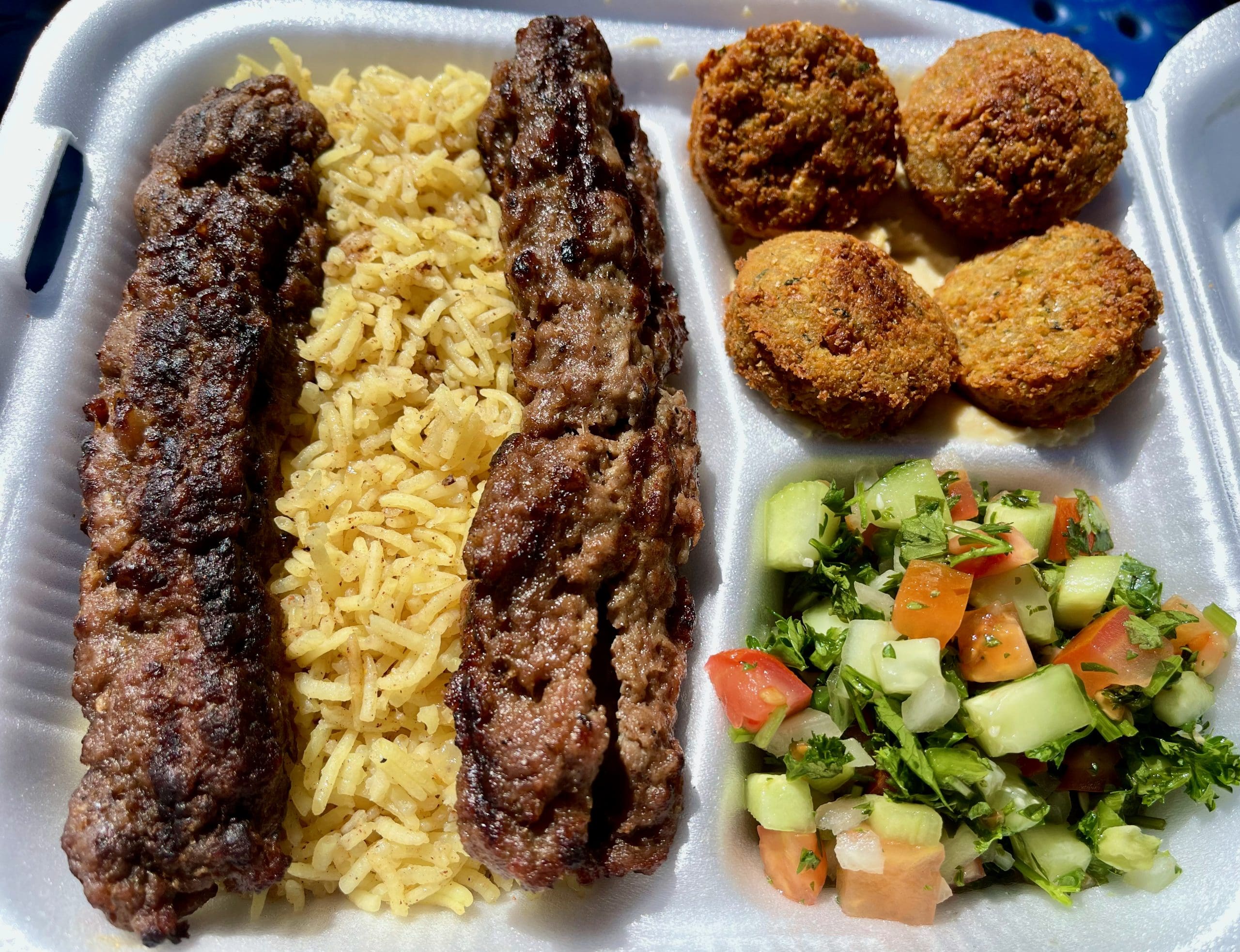
Mama Zahira Foodies – Albuquerque, New Mexico (CLOSED)

FROM THE BITE:  “In Albuquerque alone, there are too many places doing falafel for us to dine at them in quick succession. That’s despite the Wacky Iraqi’s temporary relocation to Michigan (he tells us he hopes to return in a few years). It’s so easy to be judgmental, to take things at face value…to assume.  As my friend Bruce “Sr. Plata” Silver and I approached Mama Zahira Foodies’ order window, we espied the self-deprecating term “The Wacky Iraqi in Albuquerque” scrawled by the vehicle’s rear wheel well.  The term “wacky” made us wary.  It’s just not a term we associate with great food.  No sooner had we reached the window when we were greeted by Riadh Seheem, a thickly accented, very gregarious gentleman who couldn’t wait to tell us about his food truck.  Talking a mile a minute with the unfettered enthusiasm of a child at Christmas, he raved about his truck’s menu.  Yes, it would have been far too easy to be judgmental, but what a mistake that would have been. A quote from French emperor and brilliant military strategist Napoleon Bonaparte now comes to mind and it has nothing to do with an enemy’s tendencies in battle.  That…

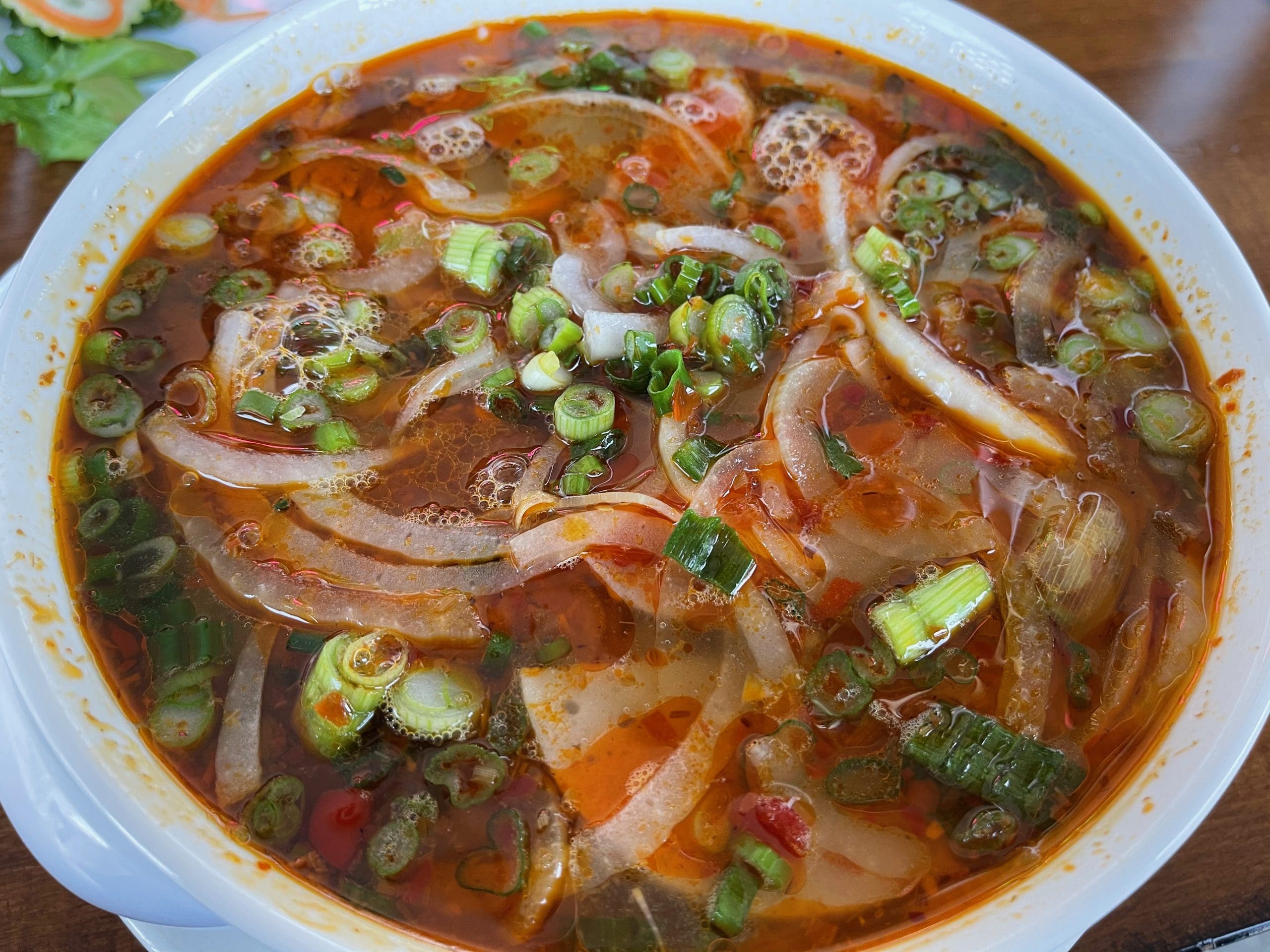
Bamboo Grill – Albuquerque, New Mexico (CLOSED)

In his 30s, curmudgeonly London food critic Jay Rayner who’s been called the “enfant terrible (literally “terrifying child) of the gastronomic scene,” came to the realization that he hated hangovers more than he hated being drunk.  During a visit to a Vietnamese restaurant in London, he achieved an epiphany:  “huge steaming bowls of a deeply aromatic beef broth called pho, bobbing with slivers of meat and wide rice noodles – would prove a perfect cure. The head pain would ease. The pitch and roll of the stomach would steady. A gentle, soft comfy cloud of well being would descend. And all this for not very much money at all.” A 2017 article from the travel experts of Lonely Planet also believes pho is “an excellent hangover cure.”  In fact, pho appears first on a list of personal tips on how to survive a hangover on the road.  The article’s editor expounded further: “The broth rehydrates, the sodium gives you a little pick-me-up, and the freshly cooked beef adds protein in wafer-thin slices (which is all I can usually stomach in this state).”   The article concludes: “Even an image of a steamy bowl of pho can cure that headache for…

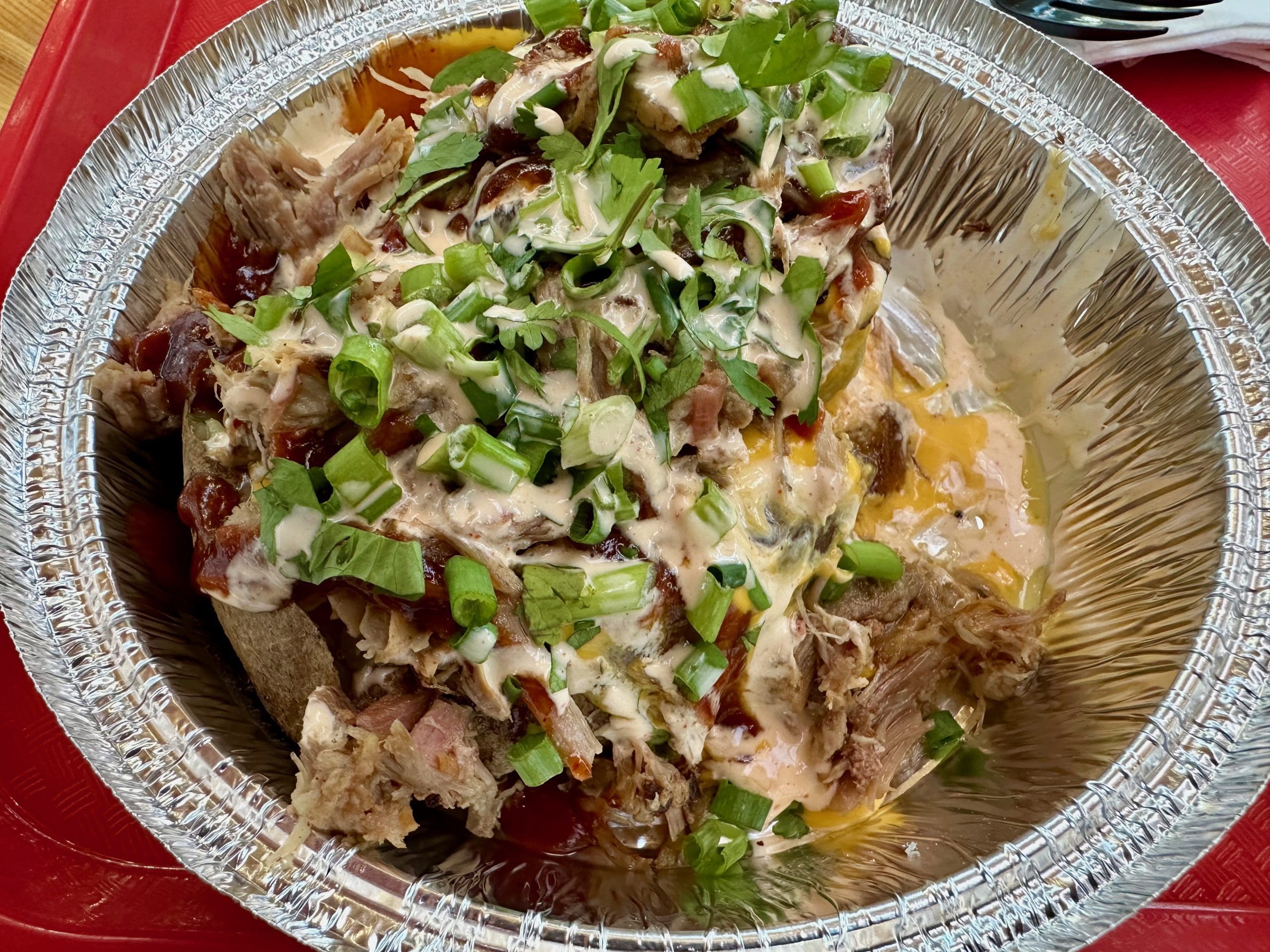
S-A Barbecue – Albuquerque, New Mexico

London-based restaurant critic Jay Rayner makes barbecue sound a bit like a scientific process: “the long, virtuous interplay of fire, smoke and time on cow and pig muscle fibre; who sees only joyous caramelisation and the deep flavours gifted by the Maillard reaction, when heat says hello to amino acids and natural sugars and they all get along famously.”  He’s actually quite right, but most of us got enough chemistry formulas in high school.   We recognize that at its most basic, the formula for barbecue is expressed much more simply: meat plus smoke plus time plus (or minus) sauce equals delicious bliss. Okay, my formula only sounds simple.  Mastering the art and science of “low and slow” actually takes a long time and extensive practice, often fraught with trial and error at the expense of ruined meats.  Speaking from personal experience, not all of us have the patience or aptitude to smoke meats people actually want to eat much less to become pit masters.  It’s a true trial by fire that shouldn’t be undertaken by the faint of heart or devoid of talent.  Survey the Duke City barbecue scene and you might conclude that baptisms by fire and smoke…

Alicea’s NY Bagels & Subs – Rio Rancho, New Mexico

Imagine a world without sandwiches! That daunting premise would make a pretty fatalistic post-apocalyptic movie in which Dystopian societies exist in a nightmare of deprivation, hopelessness, terror and processed food rations (Soylent Green anyone?). No sandwiches–it’s just too incomprehensible to imagine, especially considering everywhere you turn there’s another Subway. Frankly, my own post-apocalyptic nightmare would be a world in which Subway and other restaurants of that ilk are the only option for sandwiches. Like the indestructible roach, chain restaurants would survive even a nuclear cataclysm. Alas, my personal post-apocalyptic hell is closer to reality than you might suspect. CHD Expert, the worldwide leader in collecting, managing and analyzing food service industry data reports that the sacrosanct sandwich, one of America’s iconic foods, is dominated by chains. It’s not even close. A bleak analysis indicates chains account for 90.4 percent of the sandwich market landscape while independent sandwich restaurants represent only 9.6 percent. That type of dominance hasn’t been experienced since Mike Locksley coached the UNM Lobo football team. CHD Expert’s analysis reveals that Subway is the “largest chain restaurant in America in terms of number of locations with over 26,000 units.” Beyond the fruited plain there are over 10,000 Subway…

Kabab House – Albuquerque, New Mexico

Unlike New York City, Albuquerque might not ever truly be mistaken for “a cultural melting pot.”  Though numerous ethnicities are scattered throughout the city’s 189.5 square miles, some of their culinary cultures are vastly underrepresented (if at all represented) among the city’s restaurants. Not even in the International District–where you might feel as if you’re jumping from continent to continent as you take in mutually incomprehensible languages–will you find restaurants representing some of the world’s great culinary cultures.  As we’ve espied people draped in the traditional attire of their homelands assiduously scouring Talin Market’s shelves, we’ve often contemplated the dearth of such restaurants.  For gastronomes, one of the pleasures of eating out is experiencing unfamiliar foods and new flavors.  We pride ourselves in being adventurous.  Often that venturesome spirit pays off with the discovery of a delicious new cuisine and frequent return visits to further explore the menu.  We’ve had the great fortune of exploring and enjoying many of the world’s most historically significant and delicious cuisines, but recognize there’s so much more out there to try.  Thomas Jefferson astutely pointed out that “If you want something you’ve never had, you must be willing to do something you’ve never done.”…

Salty Catch – Albuquerque, New Mexico

As children growing up in landlocked and agrarian Peñasco, my siblings and I led a very sheltered life. Our extremely provincial experience with “seafood” was limited to Mrs. Paul’s fish sticks which we dipped in Kraft’s sandwich spread (we didn’t know about tartar sauce) and (gasp, the horror) Mrs. Paul’s fried shrimp. Sure, we snared the legal limit (yeah, right) of German brown trout, cutthroat trout and rainbow trout in the cold, rocky waters of the mountain streams in our backyard, but that wasn’t “seafood.” That was fish! One commonality among the “seafood” and even the “fish” we experienced was that it was all fried. Okay, so the Mrs. Paul’s seafood was already breaded and fried when we removed it from its hermetically sealed container. All we had to do was put it on a baking pan and bake it “until crispy and browned.” Despite my mom following the instructions on the box, both the fish sticks and shrimp had a mushy and oily texture. It certainly didn’t have the wonderful mouth-feel of the fish she fried for us. One memorable school trip to the “big city” of Albuquerque included a visit to Sizzler, a “fancy” steakhouse chain that would…

Urbano Pasta Kitchen – Albuquerque, New Mexico (CLOSED)

“To break bread together,” a phrase as old as the Bible, captures the power of a meal to forge relationships, bury anger, provoke laughter.” ~The Joy of Food From National Geographic Sharing a meal creates a unique sense of intimacy felt by all who sit together at the table.  It’s an act that can spark new friendships, solidify lifetime bonds and serve as the backdrop for new memories.   Dining together is the most communal and binding action humans can take–an act The Atlantic describes  as “a quintessential human experience.”  It’s a universal act that transcends cultures, borders and geopolitical divides and it’s been practiced since the dawn of time.   Or at least for 300,000 years  according to archaeologists who unearthed evidence of ancient meals where diners gathered to eat together at a cave near Tel Aviv. Professor Ayelet Fishbach published a study in the Journal of Consumer Psychology that showed colleagues who ate similar foods together experienced higher rates of trust and closeness than those who ate alone.   If you’ve ever worked in a team environment, you can relate to that finding.  It’s amazing just how many agreements are brokered and how many ideas are conceived when two…

Dragon House – Albuquerque, New Mexico

Admit it–every time you dine at a Chinese restaurant, you peruse the Chinese Zodiac paper placemats at your table describing the characteristics of people based on their birth year. Every new year of the lunar calendar is represented in Chinese mythology by one of twelve animals, only one of which is mythological. That would be the dragon. People born on the year of the dragon are considered very fortunate as presumably a long, happy life awaits those with a dragon birth year. So that you don’t have to look it up, the last six years of the dragon were 2012, 2000, 1988, 1976, 1964 and 1952. If you were born before 1952, simply subtract 12. Long before Hungarian Horntails, Swedish Short-Snouts and Norwegian Ridgebacks ran roughshod over the wizarding world of Harry Potter, giant-winged, fire-breathing reptiles were carving a niche in the rich history of China. Unlike the malevolent maiden-stealing, village trashing, knight incinerating creatures of old European mythology, dragons in China were viewed as benevolent entities capable of bringing rain to a parched land. The dragon signified power, strength and good luck. Starting with the Han Dynasty (206BC – 220AD), Chinese emperors assumed the symbolism of the dragon, hoping…