Blog

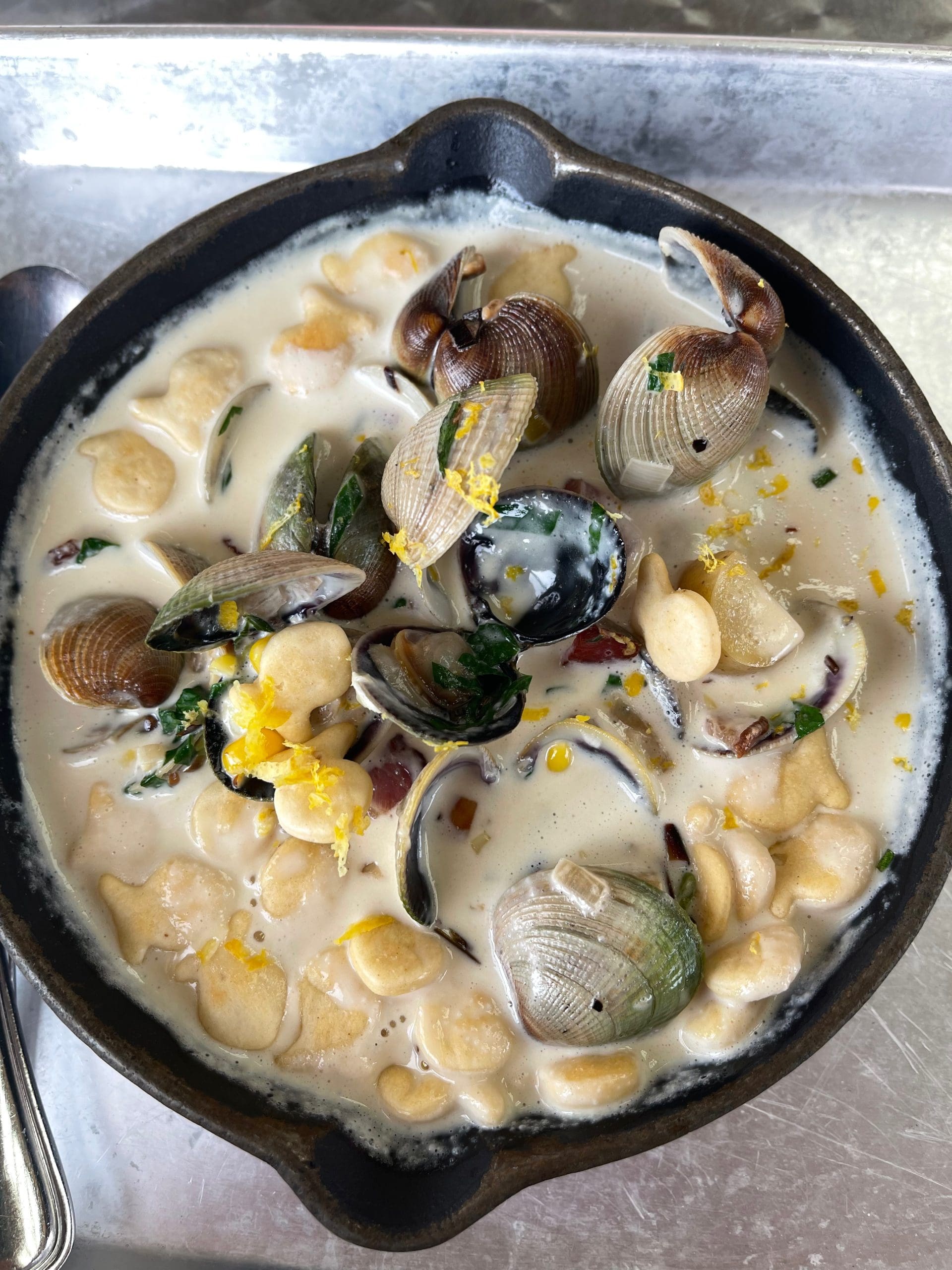
Rowley Farmhouse Ales – Santa Fe, New Mexico

Only in John Denver’s hit song “Thank God I’m A Country Boy” is life on the farm “kinda laid back.” In actuality, farm life can be downright arduous, requiring back-breaking work in climatic extremes for low wages. It was much worse in colonial days when life on a farm generally meant very few luxuries outside of a warm fire and a tankard (or ten) of house-brewed ale. Beer was brewed not only to refresh, sustain and comfort hard-working farmers, but because during sanitation-deprived colonial times, it was safer than water. Farm-brewed beer was created with what was on hand, whether it be wheat, hops, barley or rye supplemented with such ingredients as evergreen boughs, juniper berries, honey and fruit. Because beer was made with whatever ingredients were available, the lack of convention led to an emphasis of individuality over uniformity. Along with life, liberty and the pursuit of happiness, beer, it seems, was almost an inalienable right and in many cases, an integral part of a worker’s compensation package. Gentlemen farmers such as George Washington brewed beer not only for themselves, but for their farm workers whose employment contracts often stipulated a certain daily allotment of beer. Washington’s farm workers…
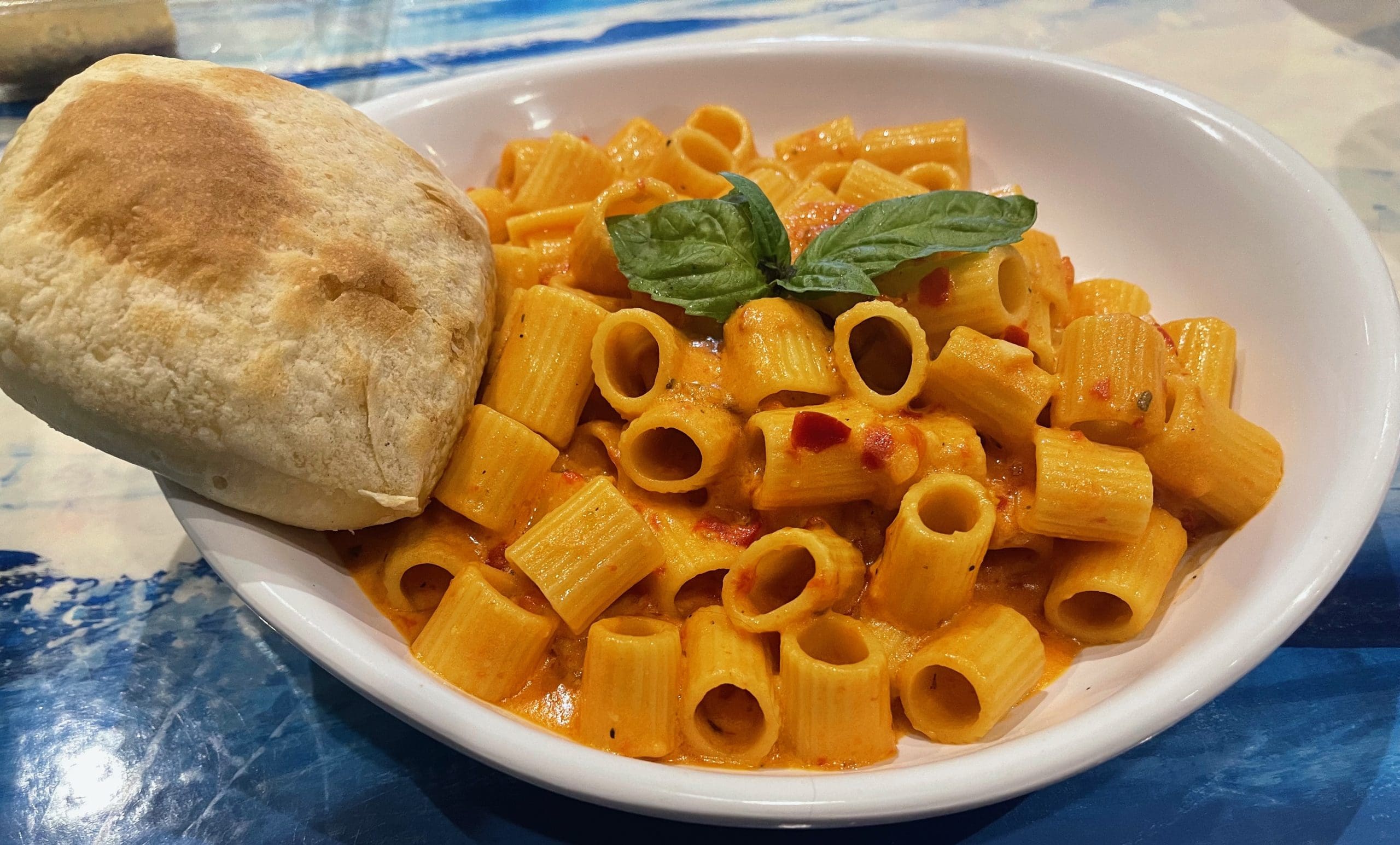
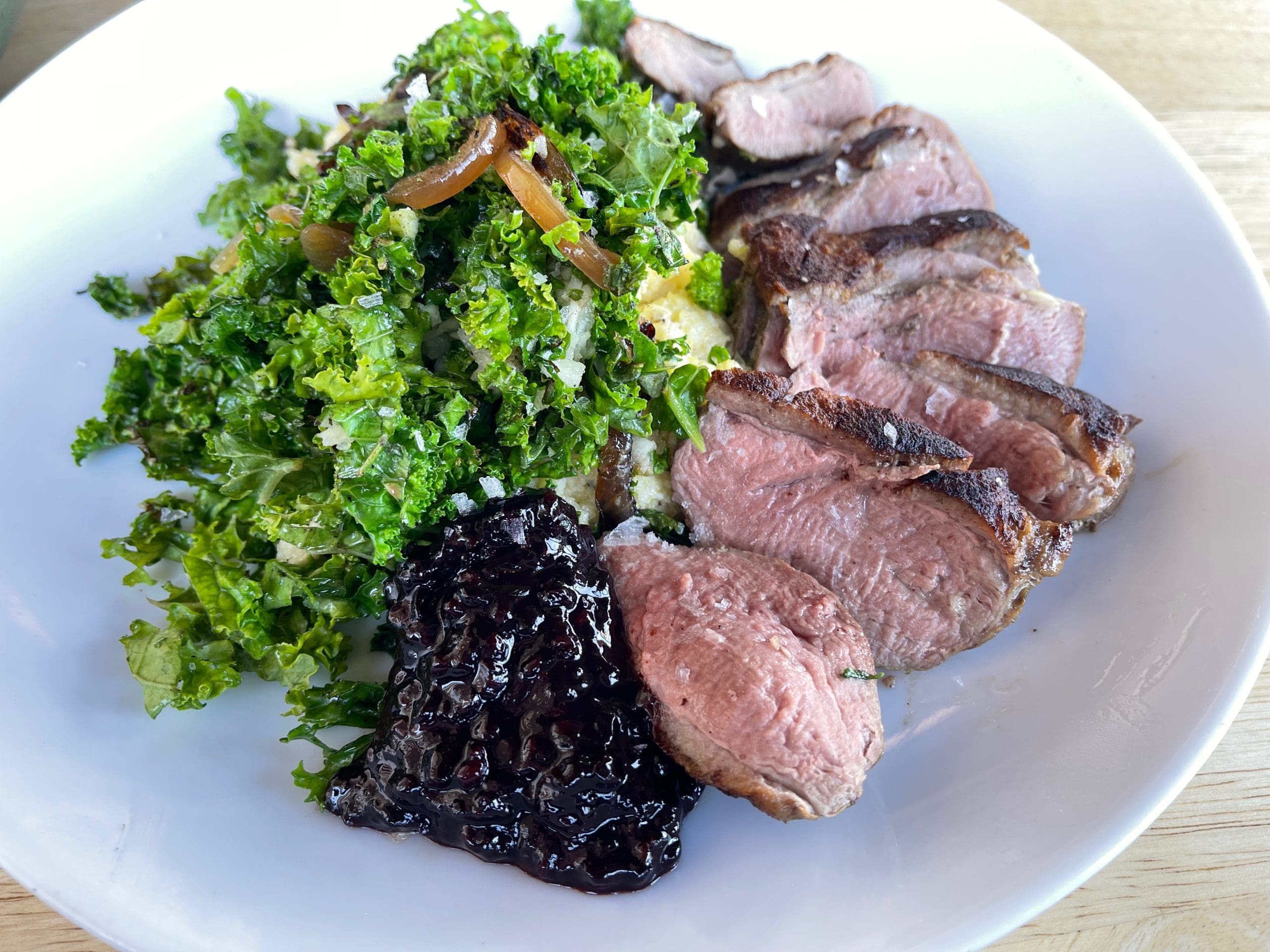
Uptown Saggio’s Scratch Italian Kitchen – Albuquerque, New Mexico

Can you imagine the outcry if Governor Michelle Lujan Grisham tried to abolish New Mexico’s sacrosanct red and green chile because the Department of Cultural Affairs Secretary convinced her that chile doesn’t bring out the best in New Mexicans?  Such a treasonous and heretical act would probably provoke outrage, if not an outright revolution.  Thankfully our Governor is a tremendous advocate for our home state’s hallowed and official state vegetable.  Regardless of your political affiliation, you can’t help puffing up your chest with pride when she responds to a snarky tweet from Colorado’s governor claiming Colorado’s chile is superior. That dystopian scenario sounds too outlandish to ever happen.  It would be akin to Italy trying to abolish pasta.  Wait, that actually did happen.  In the decade before World War II, an up-and-coming art movement called The Futurists derided anything that wasn’t on the cutting edge of modern. They wanted Italy to be on the front lines of the future and saw one thing holding the entire country back—its love of pasta.  The movement believed pasta was “heavy and anti-virile,” claiming that “no true fighters would ever eat pasta because of its tendency to weigh you down.” They also made it clear…

M’tucci’s Bar Roma – Albuquerque, New Mexico

Just prior to a planned visit to Rome, Saint Monica and her son, Saint Augustine, discovered that Saturday was observed as a day of fasting in Rome.  It was not, however, a fast day in their hometown of Milan. They consulted Saint Ambrose who advised: “When I am here (in Milan) I do not fast. On Saturday, when in Rome I do fast on Saturday.” That reply is believed to have been the genesis of the saying “When in Rome, do as the Romans do.”  It’s a good thing they didn’t ask Saint Gregory the Great for advice–especially if they enjoyed eating.  Saint Gregory believed eating–or more precisely the pleasurable overindulgence in food–was viewed as “an ungodly preoccupation with temporal and corporeal pleasures at the expense of spirituality.”  Those of you who enjoy reading this blog would probably be condemned to an eternity in Hell with me. Church leaders of the Middle Ages didn’t just denounce the derivation of pleasure from eating in a general sense. They listed five specific ways in which gluttony was a sin: eating too soon, eating too expensively, eating too much, eating too eagerly, eating too daintily and eating wildly. By Middle Age standards, many…

El Camino Dining Room – Los Ranchos de Albuquerque, New Mexico

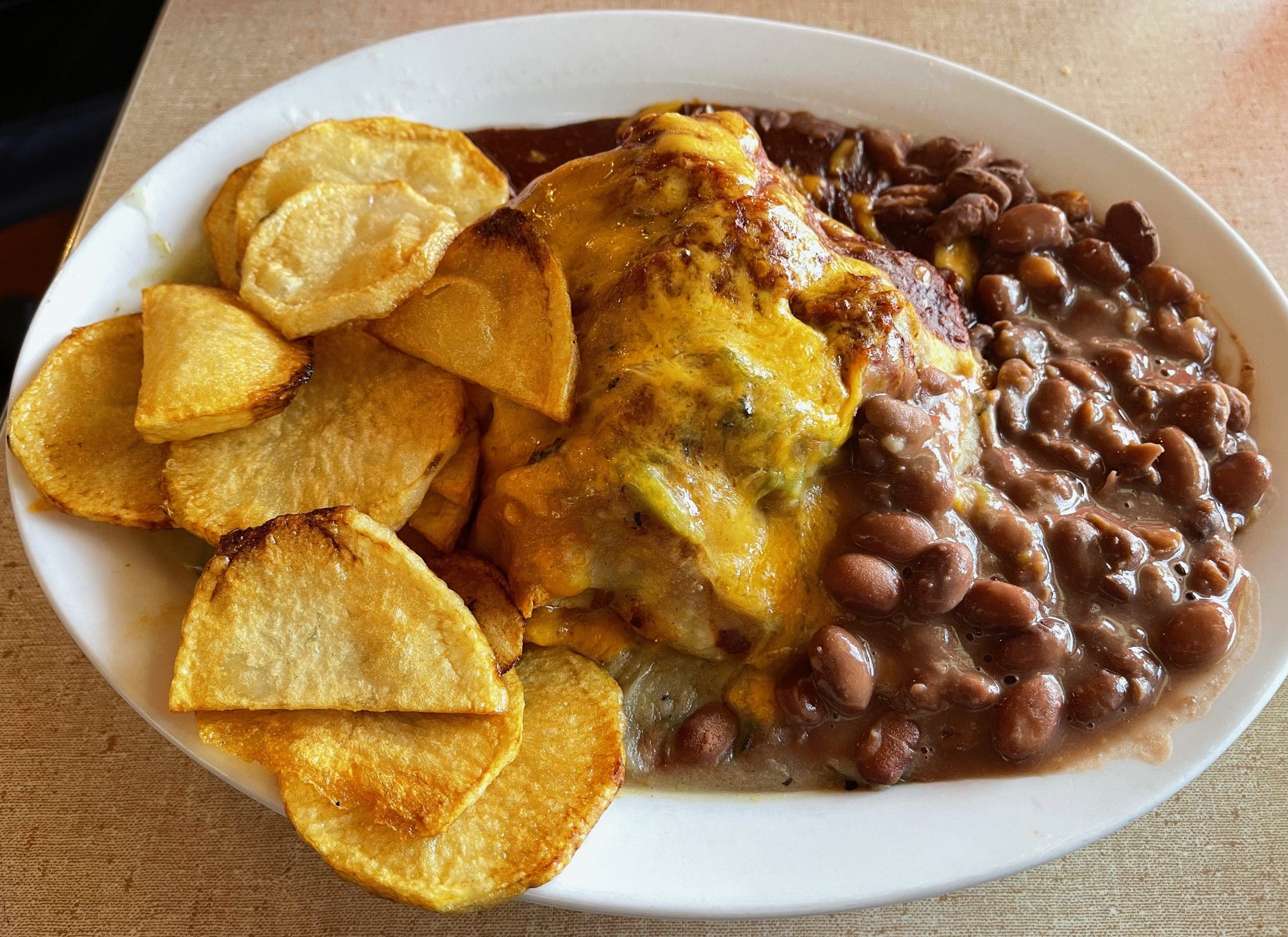
Many of us who predate, however slightly, the explosion of institutionalized fast food retain a fondness for the remaining independent family restaurants whose arsenal in the competition for hungry diners consists of reasonable portions of great meals at budget-conscious prices all served by a friendly and accommodating waitsfaff. An Albuquerque restaurant which epitomizes those ideals is the El Camino Dining Room, captured brilliantly above by the fabulous photographer Deanna Nichols. The El Camino was built by Clyde H. Tyler in 1950, five years after the latest “war to end all wars” and 13 years after Route 66 was “straightened” so that it would bypass Santa Fe completely.  Albuquerque was much more innocent back then.  Some might even describe it as a “cow town trying to be a city.”  At the time, 44% of America’s population resided in rural areas and the Duke City’s population was only 96,800. Despite no longer being part of Route 66, one of the city’s busiest thoroughfares was 4th Street on which commerce was burgeoning.  It was the perfect location for an independent family restaurant, far from the cavalcade of Howard Johnson’s type restaurants which grew along the interstates. Similar to Howard Johnson’s which prided itself…

Pho 79 – Albuquerque, New Mexico (CLOSED)

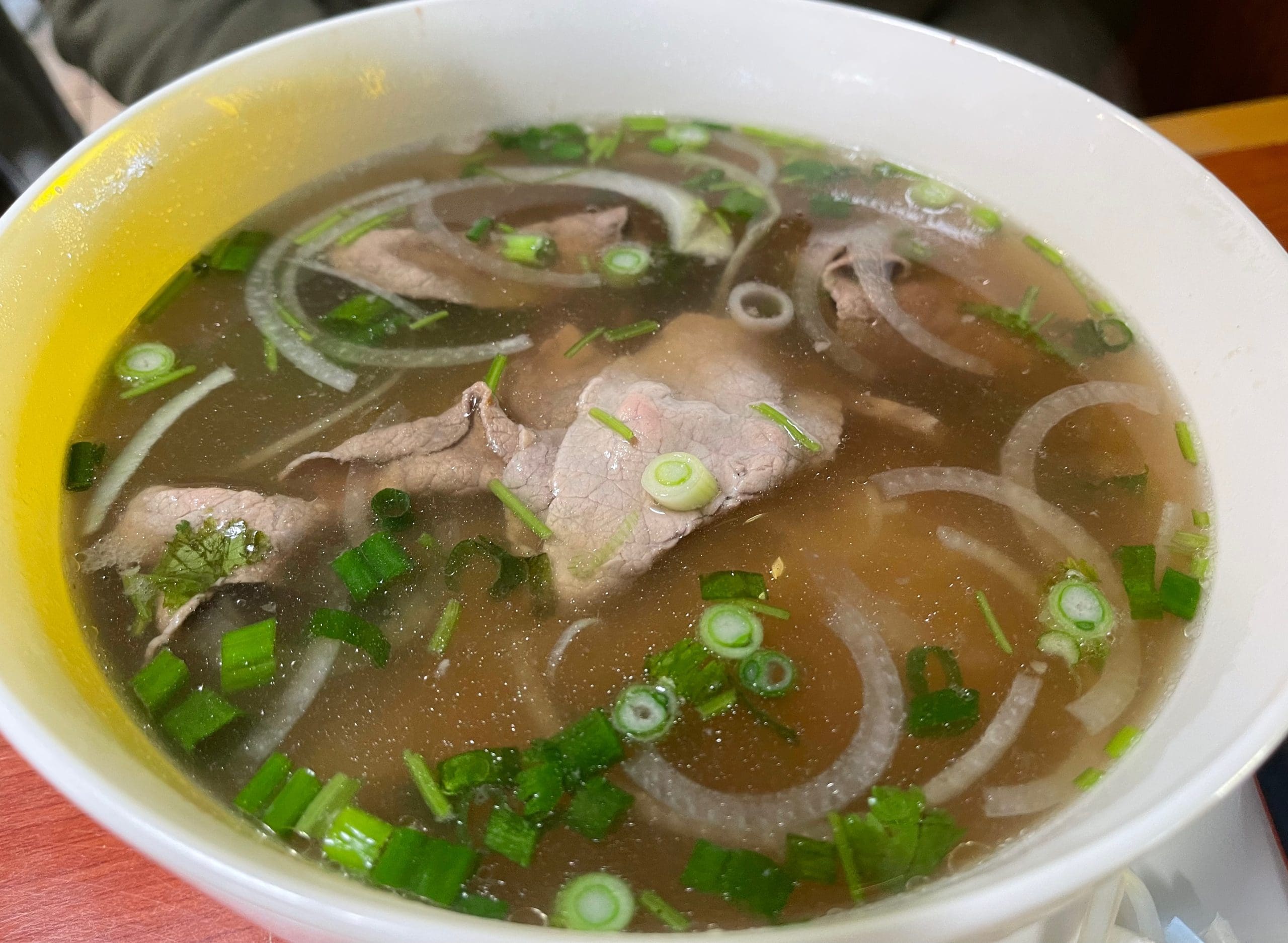
When the temperature dips and the Land of Enchantment’s ubiquitous winds howl with a vengeance, savvy diners revel in the knowledge that they can luxuriate in the familiar warmth of a steaming, swimming pool-sized bowl of aromatically alluring pho. Few things in life are as comfortable as snuggling up with a simple and no frills bowl showcasing a rich, spicy, nuanced broth with tangles of rice noodles, fresh herbs and vegetables and a veritable meat fest (rare steak, tendon, brisket, meatball). It’s the single best way to warm up from the inside-out on a bitterly cold day. With nearly forty Vietnamese restaurants gracing the Duke City, diners have no shortage of purveyors to frequent for this preternaturally pleasurable elixir. The signage on eight of those restaurants includes the term “Pho,” a term which has been known to evoke a reaction akin to Pavlov’s dogs responding to a bell. It can get pretty embarrassing if you start salivating when you espy “Pho”emblazoned on a restaurant’s signage–even when that signage fronts that of low-rent Motel 76.  To be brutally honest, Pho 79 does not have the most alluring curb appeal.  In fact, it’s downright homely. Whether or not Pavlov’s disciples are consulted…

Roma Bakery & Deli – Albuquerque, New Mexico

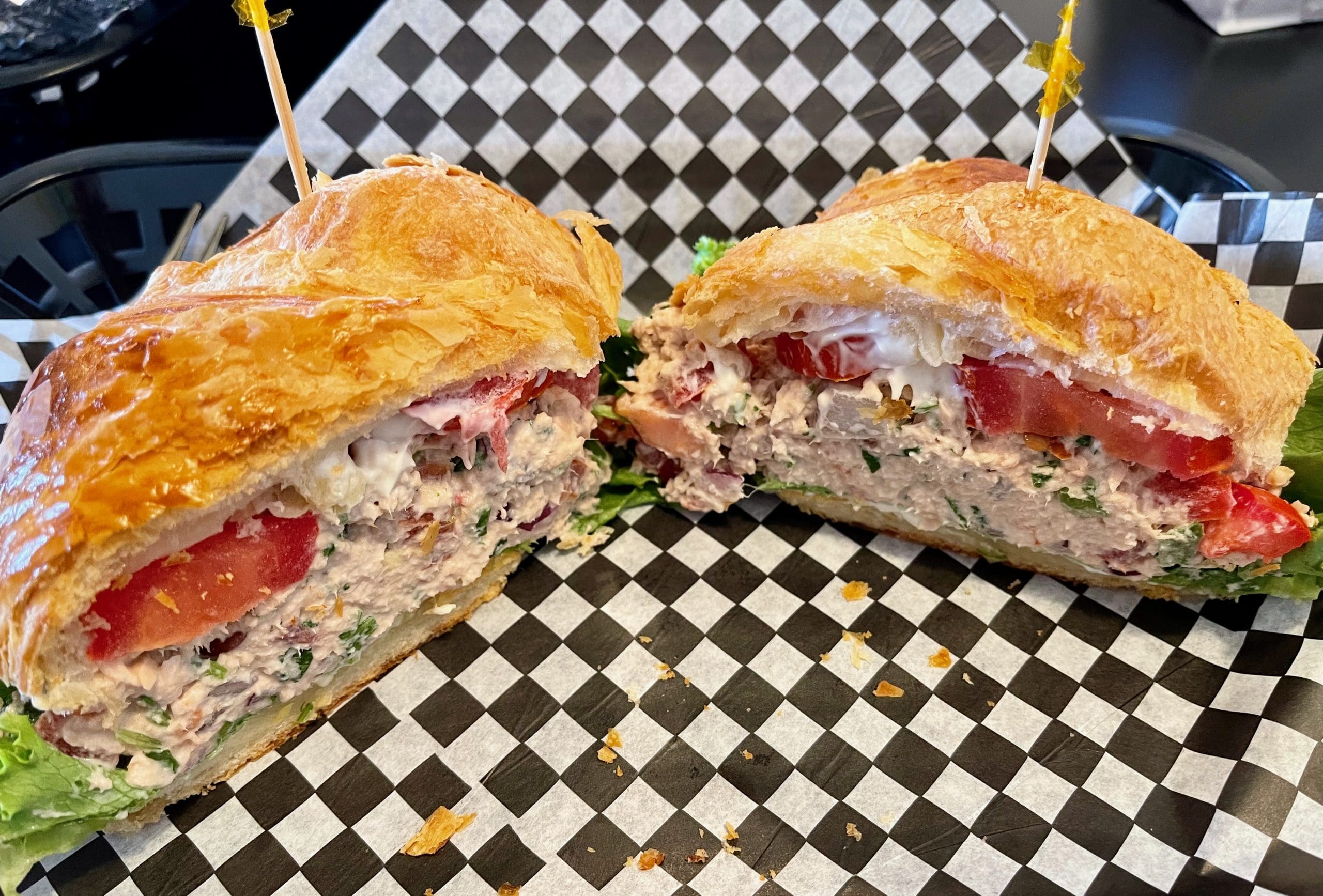
Galdamez and Albertine. If you saw those names on a building, you might expect to see them appended with “Attorneys at Law.” That’s especially true if the building is in the area immediately north of Albuquerque’s burgeoning downtown district, an area teeming with lawyers’ offices and bail bondsmen (is bondspeople the politically correct term?). Instead, the building in which Oscar Galdamez and Bruce Albertine ply their own noble trade houses a diminutive and charming dining establishment, Roma Bakery and Deli. You won’t see their named displayed in any officious self-aggrandizement manner, but it’s a good bet you’ll get to know their names soon enough. That’s because frequent return visits are imminent, especially for hungry patrons lucky enough to live or work close to the restaurant. The Roma Bakery and Deli launched in the summer of 2006 and despite seating for only about 40 patrons, this comfy, cozy diner has established itself as a very popular dining destination. Visit during the lunch hour and you’ll find yourself standing in a line that extends from the entrance to the counter at which you place your order. There is no menu overhead, but most of the patrons don’t seem to need it. That…

Central Bodega – Albuquerque, New Mexico

As if living just outside of Boston for two years just out of high school wasn’t thrilling (and filling) enough for this rustic clodhopper, New York City was only four hours (with good traffic) away.  There were more languages (800) spoken in New York City than there were people (500) in my hometown of Peñasco, not to mention a population of some 16-million.  All those languages meant a vast diversity of dining opportunities and I wanted to try them all.  Best of all, so many of them were available all day and all night long.  Large, hand-tossed slices of thin-crusted pizza were available from street vendors.  You could even find warm food at some of the Puerto Rican bodegas (owner-operated convenience stores) in the Bronx, home for my friends Carmen and Vladimir “Speedy” Gonzalez who graciously showed me around Metropolis.   At a neighborhood bodega, they introduced me to one of my favorite beverages, the legendary egg cream. Untapped New York describes a New York City bodega as “where the city’s character, diversity, and history are embodied in a physical space.”  Sadly, however, instead of being treated with reverence for being “lifelines for New York City’s food deserts” bodegas seem…

O’Niell’s Irish Pub – Albuquerque, New Mexico

Despite several efforts by the United States Department of Agriculture (USDA) to make it more user-friendly, the Food Pyramid has never been that easy to understand. Could confusion be one of the reasons 73.6% of American adults are either overweight or obese (according to the Centers for Disease Control)? Based on that alarming percentage, you’d think the pyramidal nutritional guide has chocolate as its base topped with pizza, burgers and cheesecake tapering to a whipped cream covered point. Perhaps to alleviate confusion, in June, 2011, the USDA replaced the ubiquitous food pyramid with a graphic depiction of a plate which (ostensibly) should make it easier for us to determine if we’re balancing our meals nutritionally. Hopefully the size of the plates at the typical family home aren’t platter-sized (or that the pie-wedge shaped components of the plate–fruits, grains, vegetables and proteins–won’t have a subliminal effect). The Food Pyramid is not a uniquely American way of depicting nutrition. Throughout the world there are many ways used to present nutritional recommendations graphically (the Japanese use a spinning top model) even though the basics of nutrition have remained fairly static over time and across borders–with a few country specific differences based on local…

Panaderia Guatemalteca Eterna Primavera – Albuquerque, New Mexico (CLOSED)

To truly understand the cuisine of Guatemala, it helps to understand why this Central American paradise is known as the “Land of Eternal Spring.”  With nineteen diverse ecosystems, Guatemala boasts of jungles, forests, beaches, volcanoes and an expanse of natural resources.  Thick, lush vegetation enrobes seemingly never-ending mountain landscapes in verdant hues.  Magnificent pristine waterfalls cascade over those mountains, feeding the rivers that nourish fecund lands.  A belt of fire formed by active volcanoes is often shrouded by clouds just as ominous.  Bordered at its west by the Pacific and by the Atlantic at its east, Guatemala is graced by a diversity of climates and elevations. Relatively mild year-round, the climate is tropical and sub-tropical but varies greatly in relation to altitude.  Topographical diversity ranges from sea level to mountains that climb to more than 13,000 feet.  Precipitation in excess of 150-inches per year prevail at higher elevations while near-desert conditions persist elsewhere.  In addition to its well-deserved sobriquet “Land of Eternal Spring,” Guatemala is fittingly known as “the heart of the Mayan world.”    Pride in the culture and history of one of world’s greatest civilizations and their formidable accomplishments is understandably deep.  For more than a thousand years,…

Don Tortas – Albuquerque, New Mexico

A survey of 2,000 Americans conducted by French’s Mustard in celebration of National Sandwich Day (November 3, 2021) revealed that 66-percent of Americans put between three and six condiments on their sandwiches, 44-percent of respondents believe condiments belong on both buns while 57-percent believe the most important part of a sandwich is the meat.  French’s poll revealed the cheesesteak is the most popular sandwich in America followed by the hamburger (which many people would argue is not a sandwich), barbecue pulled-pork sandwich, Italian and Reuben.  Had the survey polled Americans as to what sandwiches were on the ascent–those growing quickest in popularity–two sandwiches would have risen to the top. Both of those sandwiches owe their genesis to French colonial rule.  First is the banh mi, a culinary fusion of two cultures: France and Vietnam.  A banh mi is an airy, crunchy French-styled baguette stuffed with a combination of meats, vegetables and other condiments. A melange of different textures and temperatures, bánh mì has an off-the-chart flavor profile: salty, sour, savory, sweet, and aromatic all simultaneously! As it has grown to become a staple in Vietnamese cuisine, so has its versatility.  Banh mi can be enjoyed for breakfast, lunch, dinner, as…

Socorro Springs Brewing Company – Socorro, New Mexico

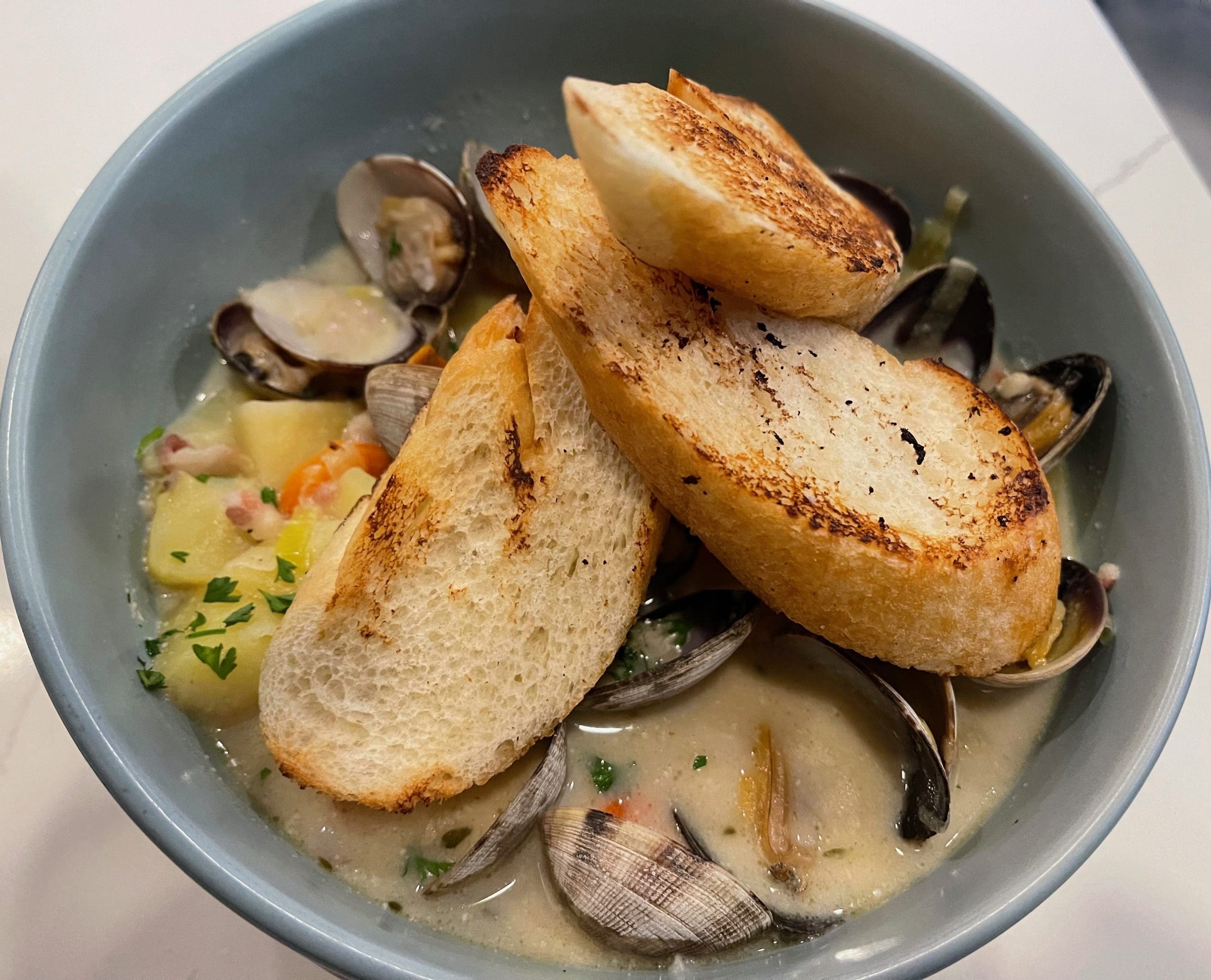
Socorro, New Mexico is a dichotomous town.  It is the second oldest inhabited community in our culturally blessed Land of Enchantment, yet it boasts one of the nation’s premier research universities.   It is steeped in history and tradition, inextricably linked to its storied past while embracing the technologies which are laying the groundwork for future peace and prosperity.  According to Visit Socorro “Socorro (literally to give aid, to give succor) was indeed a source of help to the first expedition of Spanish families traveling north from Mexico in 1598, led by Don Juan de Oñate y Salazar. Socorro’s first inhabitants, Piro-speaking people of the Teypana Pueblo, welcomed the scouting party of Oñate and his men. They showed no fear of the strangers, according to Oñate’s official log, and with hand signs told the group what lay ahead. When the Teypana inhabitants unexpectedly gave the group a large gift of corn, Oñate renamed the pueblo Socorro.” Much as Socorro would like to be considered a destination community, it’s better known as a “jumping off” point to nearby destinations.  It’s within minutes of the Bosque del Apache National Life Refuge where 12,900 acres of boggy bottomlands host tens of thousands of…