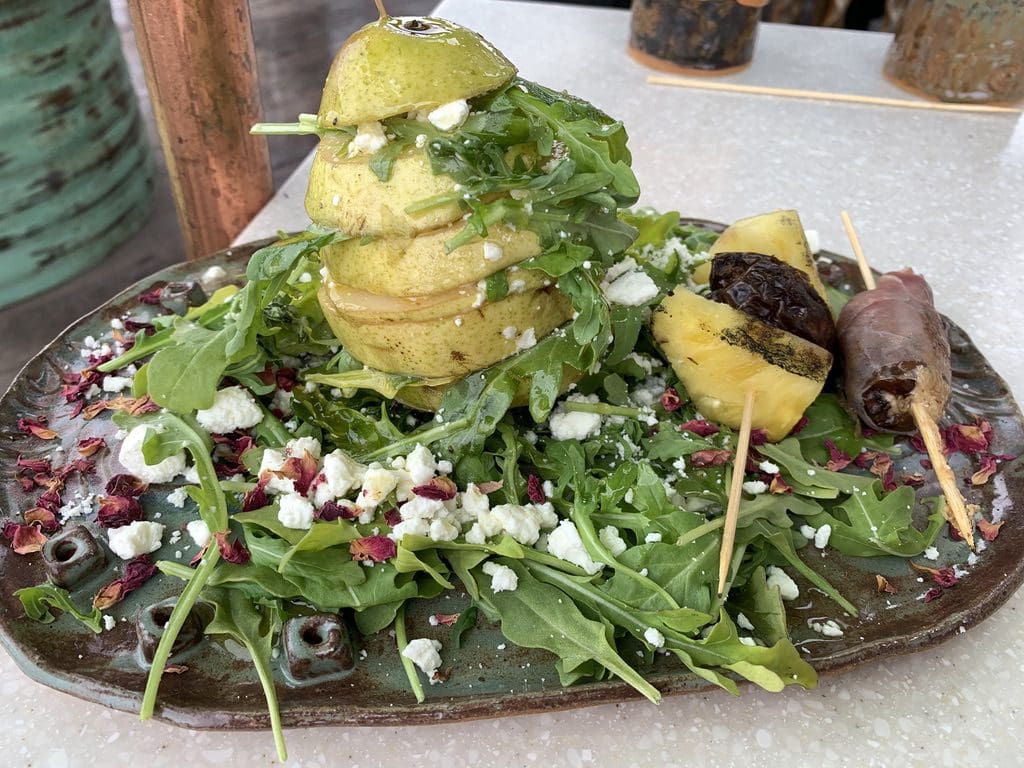
Cocoa Flora – Albuquerque, New Mexico (CLOSED)

In a 1995 episode of Seinfeld fittingly titled “The Switch” Jerry asked his devious friend George Costanza how he could switch from dating Sandy, a dour woman who didn’t laugh to dating her roommate Laura, a comely woman who laughed at all of Jerry’s jokes. George’s contrived a plan: Jerry would suggest a ménage à trois.  This would disgust Sandy so much she’d break up with Jerry.  Sandy would then tell Laura who will feel flattered, thus paving the way for Jerry to ask her out. However, when both Sandy and Laura agreed enthusiastically to the ménage à trois, Jerry promptly backed out of the suggestion. His response to George was hilarious: “Don’t you know what it means to become an orgy guy? It changes everything. I’d have to dress different. I’d have to act different. I’d have to grow a mustache and get all kinds of robes and lotions and I’d need a new bedspread and new curtains I’d have to get thick carpeting and weirdo lighting. I’d have to get new friends. I’d have to get orgy friends. … Naw, I’m not ready for it.”  Like Jerry, I once faced a conundrum, but it wasn’t whether or not…
T & T Gas N Mart – Albuquerque, New Mexico (CLOSED)

“Eat here and get gas.”  Even in more naive and innocent times, the connotation of that double-entendre wasn’t lost on adults or children, all of whom giggled when they espied the classic sign on the marquee of many a combination eatery and filling station.  In his brilliant website The Big Apple, the “restless genius of American etymology” Barry Popik points out the sign was noticed as early as 1930.  On roadways and byways–primarily across rural America–you might still espy that clever, funny and yes, inviting sign.  It undoubtedly still inspires guffaws and groans in equal measure. Consumer historian Jan Whitaker explains in her magnificent blog Restaurant-ing Through History that not long “after thousands of Americans acquired cars and took to the roads in the 1920s that all kinds of roadside businesses popped up to serve them.”  Among the most popular was the combination gas station-restaurant “often further combined with a gift shop or rooms for overnight guests.”   She described the logic as “same one-stop-shopping idea used by department stores: get customers to stop in for essentials and they may buy other things they didn’t even know they wanted.” Today, these “eat-and-get-gas highway oases” still exist across the fruited plain,…

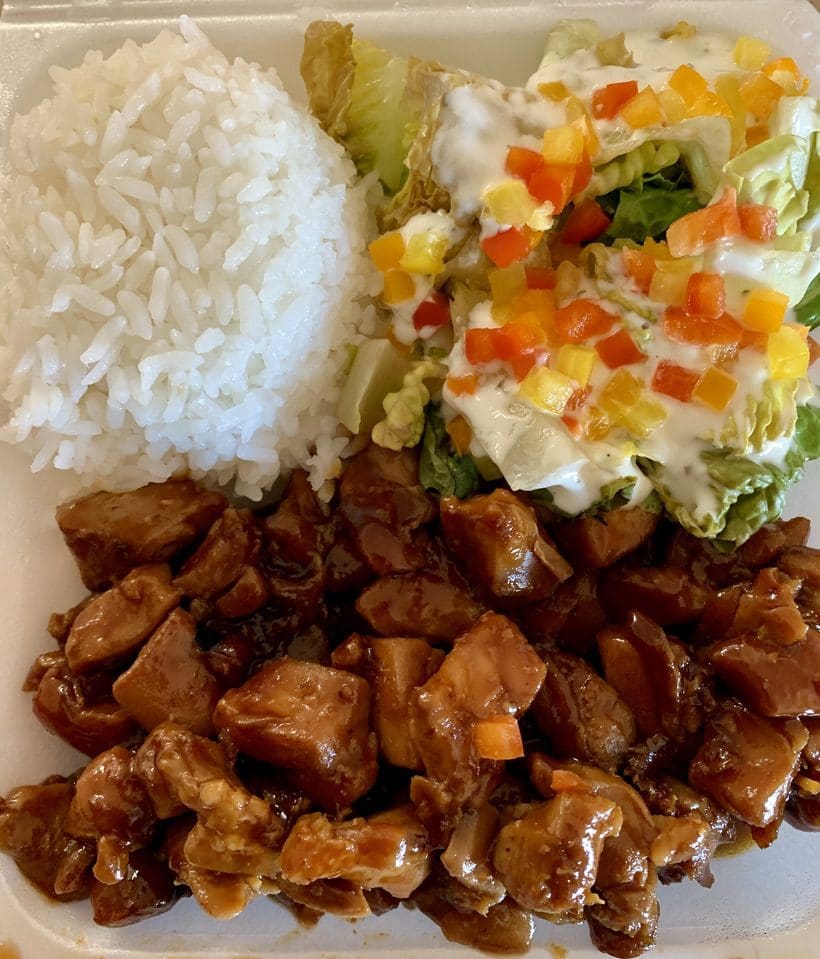
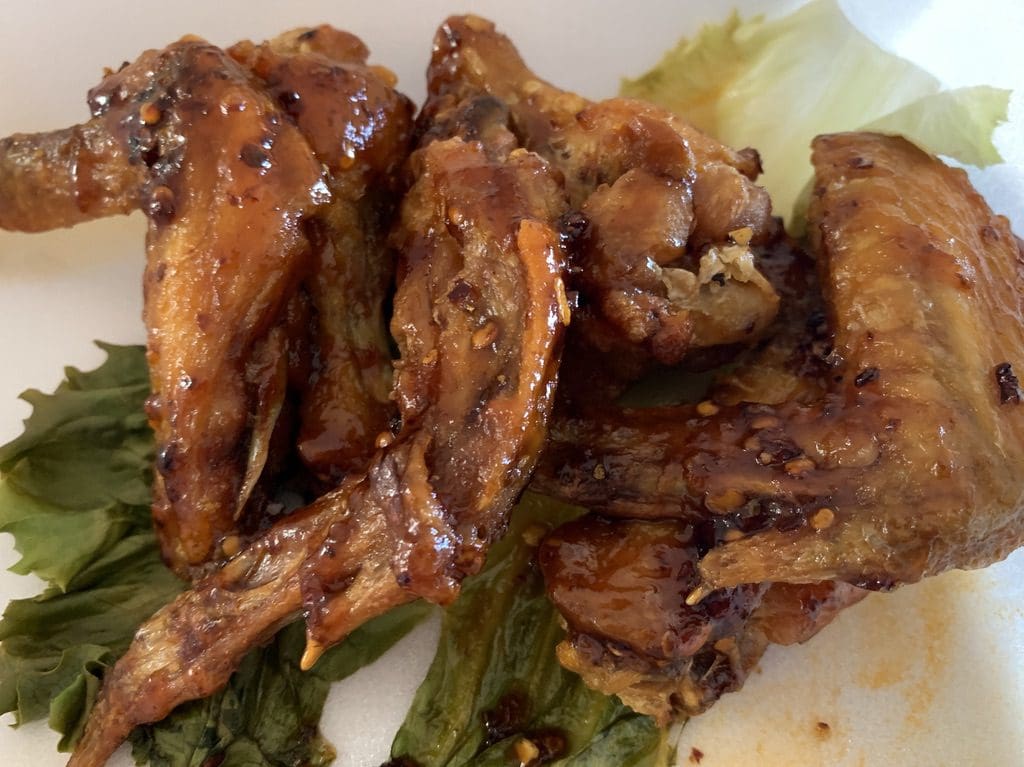
Kimo’s Hawaiian BBQ – Albuquerque, New Mexico

For over a quarter century, the most popular section in New Mexico Magazine (the nation’s oldest state magazine, by the way) has been a humorous column entitled “One of Our Fifty is Missing.” The column features anecdotes submitted by readers worldwide recounting their experiences with fellow American citizens and ill-informed bureaucrats who don’t realize that New Mexico is part of the United States. Some travelers from other states actually believe they’re leaving their nation’s borders when they cross into New Mexico. Others think they need a passport to visit (not that they’d visit considering they’re wary of drinking our water.) Merchants and banks throughout America have been known to reject as “foreign credit cards” American Express and Visa cards issued by New Mexico banking institutions. As the 47th state to join the Union, New Mexico has nothing on Hawaii, the 50th state.  Denizens of the mainland blithely cling to stereotypes about The Aloha State.  That is, if they even recognize that Hawaii is actually a state.  Among the most ludicrous of the fallacious stereotypes (and maybe this one is based on wishful thinking) is that women wear leis, grass skirts and coconut bras.  Men, of course, wear Hawaiian shirts and…

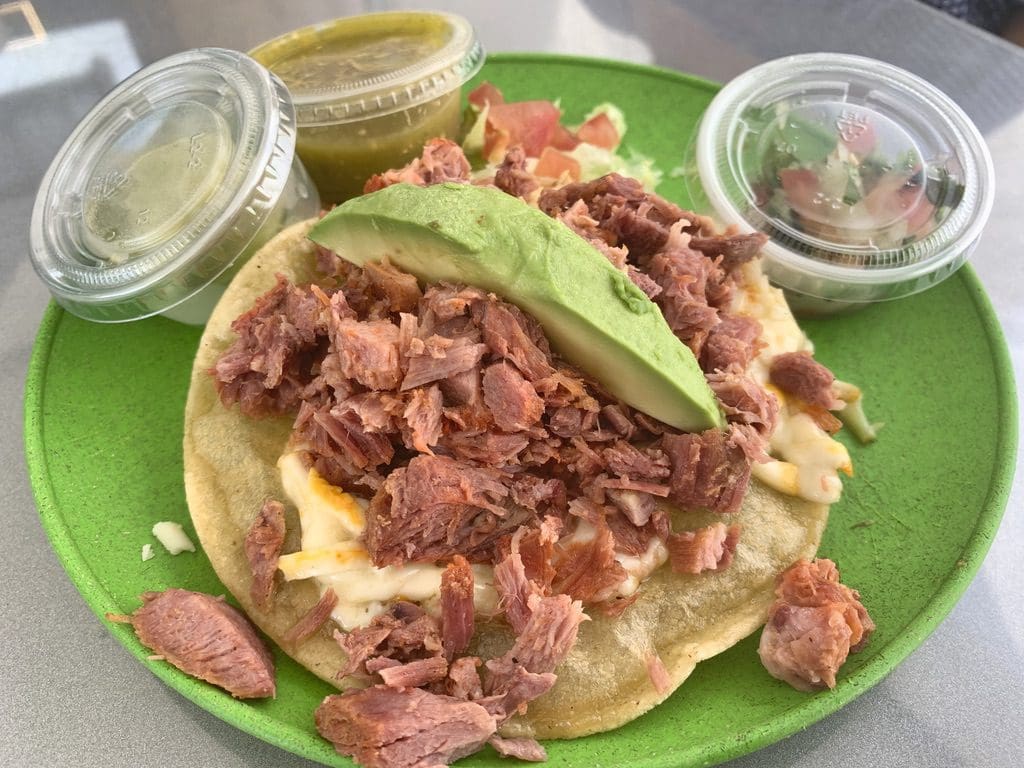
Guaca Guaca Tacos & Beer – Albuquerque, New Mexico (CLOSED)

What culinary voluptuaries consider exotic and delicious, timorous eaters might find distasteful and even nauseating. With M.F.K Fisher as their muse, culinary voluptuaries–the truly adventurous diners among us–don’t let themselves be drawn into a vortex of memories recalling foods they’ve already experienced. Instead, they live with carpe diem engraved on their hearts, ever in pursuit of their next culinary epiphany, the next “aha” moment when their taste buds awaken to never before experienced symphonies of incredible flavors. Sometimes to achieve the discoveries they crave, they have to reach into the distant past, their culture’s culinary roots. That’s certainly the case in contemporary Mexico where, for the past quarter-century or so, the scions of Montezuma have been frequenting restaurants and markets which prepare and serve Aztec foods.  “Wait,” you ask, “didn’t the Aztecs eat dogs, grasshoppers, iguanas and worms?  Is that what you mean by “Aztec Foods?”  While it’s true that the aforementioned proteins were staples of the Aztec diet and modern Mexican restaurants do offer several of them, the Mesoamerican culture also gave the world such everyday indulgences as avocado and chocolate. In Montezuma’s great city of Tenochtitlan (which the Spaniards later renamed Mexico City), chocolate was considered a luxury…

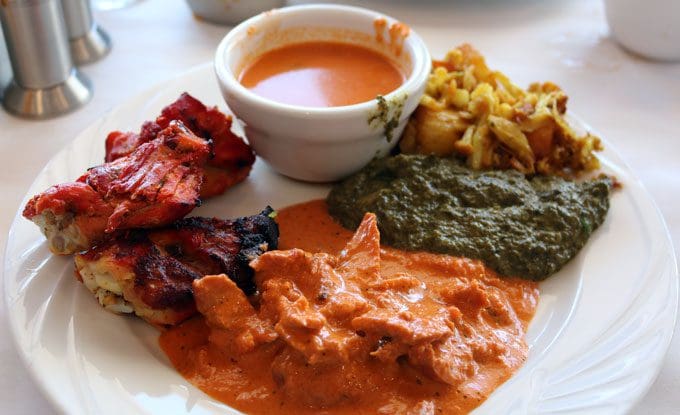
Curry Leaf – Albuquerque, New Mexico

Leonard: Is it racist that I took you to an Indian restaurant? Priya: It’s okay, I like Indian food. Leonard: Or as you probably call it back home, food. ~Big Bang Theory (Season Four, Episode 18) Queen Rania of Jordan cautioned against judging “through the prism of our own stereotypes.” Ill-founded stereotypes were very much in evidence after my team successfully landed an especially challenging project at Intel…and as with most stereotypes, they were based on faulty assumptions, overarching generalization and lack of experience. When we deliberated where to celebrate our achievement, my suggestion that our repast be held at an Indian restaurant was met with such comments as “Indian food is…too spicy, too rich, too much curry, too vegetarian” and worse, it “causes heartburn and (to put it mildly) gastric distress.” Prying more deeply revealed only one of my colleagues had ever actually ever tried Indian food. In truth, when it comes to Indian food, if we don’t subscribe to such stereotypes, even the most open-minded among us tend to generalize about it. Much as we do with Italian food, we compartmentalize Indian food as either “Northern” or “Southern,” generalizations which are inaccurate and which don’t do justice to…

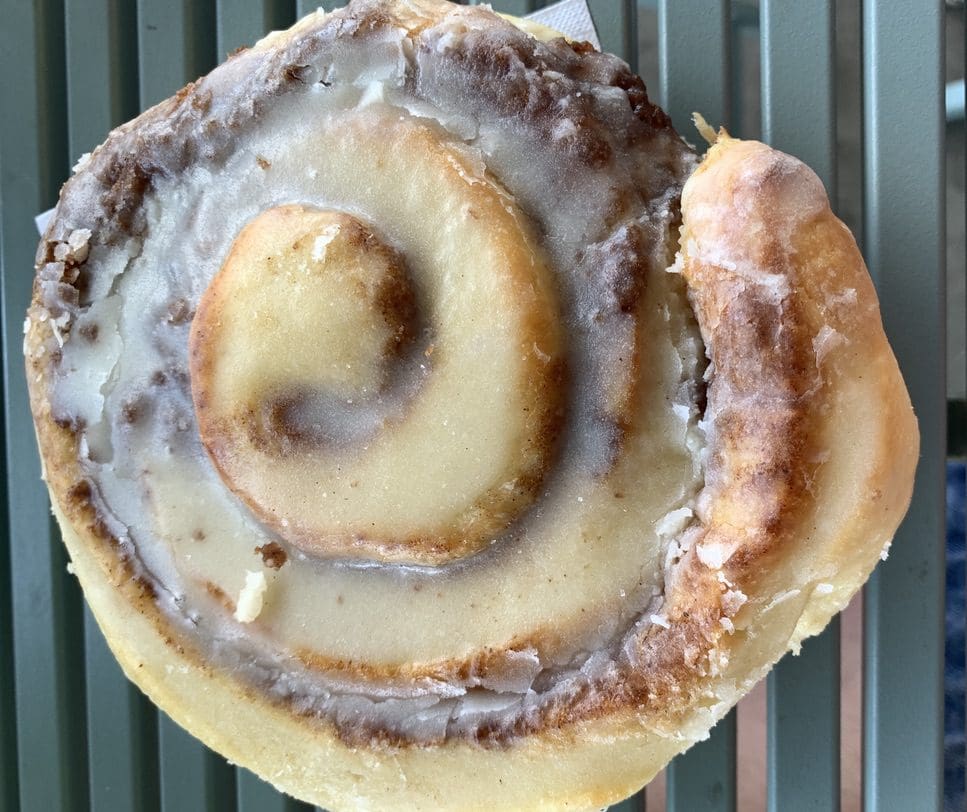
Bristol Doughnut Co. – Albuquerque, New Mexico

While most people speak with fond nostalgia about their first ride on a double-decker bus, the memories of our inaugural trip are tinged with horror that traumatizes us to this day. As with most visitors making their first excursion to London, we wanted to take in all the sights with the best vantage point you can have. That meant sitting on the top deck of a double-decker. These bi-level behemoths ride higher than almost everything else on the road save for those noisy articulated lorries ( what we Yanks call semi-trailer trucks). Despite the congestion that typifies London’s streets, double-deckers provide spectacular, mostly unobstructed views of the city. Though we arrived early to ensure we got seats on the coveted top deck, a couple dozen early birds got there earlier. As we climbed the stairs to our lofty perch, the portly fellow in front of us “let ‘er rip,” emitting the most noxious effluvia imaginable. Our eyes began to water as we coughed and sputtered at the malodorous “silent but deadly” emanation. Surely this odoriferous rank was equal to or more potent than the sulfuric gates of Hell. Congestion at the top slowed our ascent and heightened our suffering. Then,…

Stufys – Albuquerque, New Mexico

In a 2015 episode of Food Network Star competition, Lenny “The Cowboy Chef” McNab committed a serious culinary faux pas that brought about a serious rebuke from one of the celebrity judges.  During the “Cutthroat Kitchen” heat when contestants were asked to make a breakfast plate, Lenny used masa (corn flour) to make what he called sopaipillas.  Judge Bobby Flay took one bite of the “sopaipilla,” found the corn meal disk inedible and spit it out.  He then proceeded to give the Cowboy Chef an “if looks could kill” stare over having presenting the tainted tortillas as sopaipillas.  Flay was undoubtedly wondering if the Cowboy Chef was really from New York City…as in  “New York City!  Git a rope. An acknowledged expert on the cuisine of the great Southwest, Flay explained that a sopaipilla is a pillowy fried bread.  Misconceptions about the sopaipilla are definitely not solely the purview of the Cowboy Chef.  When The Daily Meal named the sopaipilla “the most iconic dessert” in the state of Arizona, they noted “Sometimes referred to as the Navajo taco, sopaipillais the correct name for the fried bread invented by the indigenous Navajo Indians, and the treat was voted the state dish of…

Flamez Bistro – Albuquerque, New Mexico (CLOSED)

Hold the pickles Hold the lettuce Special orders don’t upset us All we ask is that you let us serve it your way In 1974, Burger King introduced its most successful and long-standing advertising campaign, the heart of which was “Have It Your Way,” a catchy jingle designed to contrast just how flexible Burger King is compared to its largest competitor, the ubiquitous McDonalds. The earworm-inspiring jingle told us we could have burgers made especially for us—tailor-made, customized, prepared any way we want them. It implied that unlike its rigid and inflexible competitor, Burger King recognizes our uniqueness and they celebrate it with burgers that reflect our individuality, lifestyles and dietary considerations. There are, Burger King tells us, 221,184 ways to have the Whopper made our way. It’s hard to fathom that nearly a quarter-million combinations are possible from a burger whose basic constituents are a flame-grilled quarter-pound beef patty, sesame seed bun, mayonnaise, lettuce, tomatoes, pickles, ketchup and sliced onion. Only a fuzzy-math-proficient government accountant could possibly appreciate and explain how a Whopper can be made your way so many ways. Whataburger, which prides itself on delivering each customer’s burger made-to-order, advertises 36,864 different ways to make a Whataburger and…

The Cowgirl BBQ – Santa Fe, New Mexico

Cowgirl” is an attitude really. A pioneer spirit, a special American brand of courage. The cowgirl faces life head-on, lives by her own lights, and makes no excuses. Cowgirls take stands; they speak up. They defend things they hold dear. ~Dale Evans In a 1980s commercial for Pace Picante sauce, several hungry cowboys threatened to string up the cook for brandishing a foreign-made (translation: not made in Texas) salsa.  “Why, this here salsa is made in New York City!”  “New York City?  Gil a rope!” With such a xenophobic attitude about New York City, you would think those cowboys would have raised a ruckus when a restaurant named the Cowgirl Hall of Fame launched in New York City.  “New York City?  Git a rope!”  The restaurant’s raison d’être was to promote the culture of the American cowgirl through the foods of the American West and Southwest.  On 1 June 1993, the second instantiation of the Cowgirl Hall of Fame opened its doors, this one in a hundred-year-old building in the historic Guadalupe district of Santa Fe.  Known today solely as Cowgirl BBQ, this quaint restaurant celebrates Cowgirls thematically and attitudinally. A portrait library is replete with photographs of National Cowgirl…

Pig + Fig Cafe – White Rock, New Mexico

In its eighth season, the brilliant sitcom Seinfeld helped introduce casual comic book fans to the concept of Bizarro world, a setting which is weirdly inverted or opposite of expectations. In other words, a Bizarro world is a mirror image of conventionality, logic and reality, everything being reversed. Jerry Seinfeld’s polar opposite Kevin, for example, was depicted as kind, selfless and reliable in contrast to Jerry’s indifference, self-absorption and forgetfulness. Gene was quiet, studious, polite and giving while his Bizarro counterpart George was loud, obnoxious, cheap and slovenly. Some people believe there’s a polar opposite—a Bizarro version—of every one of us. I met “Bizarro Gil” while stationed at Keesler Air Force Base in Biloxi, Mississippi. While I (all modesty aside) consider myself a bit of a renaissance man, Derwin was atavistic, a throwback to the days of Ralph Kramden when men were short-tempered, disparaging and chauvinistic. He couldn’t understand why I would take my Kim out for dinner so often when there we had a perfectly good stove at home. It galled him that Kim often picked where we’d eat. His retort to that grievous affront was “The last time women decided what to eat, they doomed humanity for eternity,”…

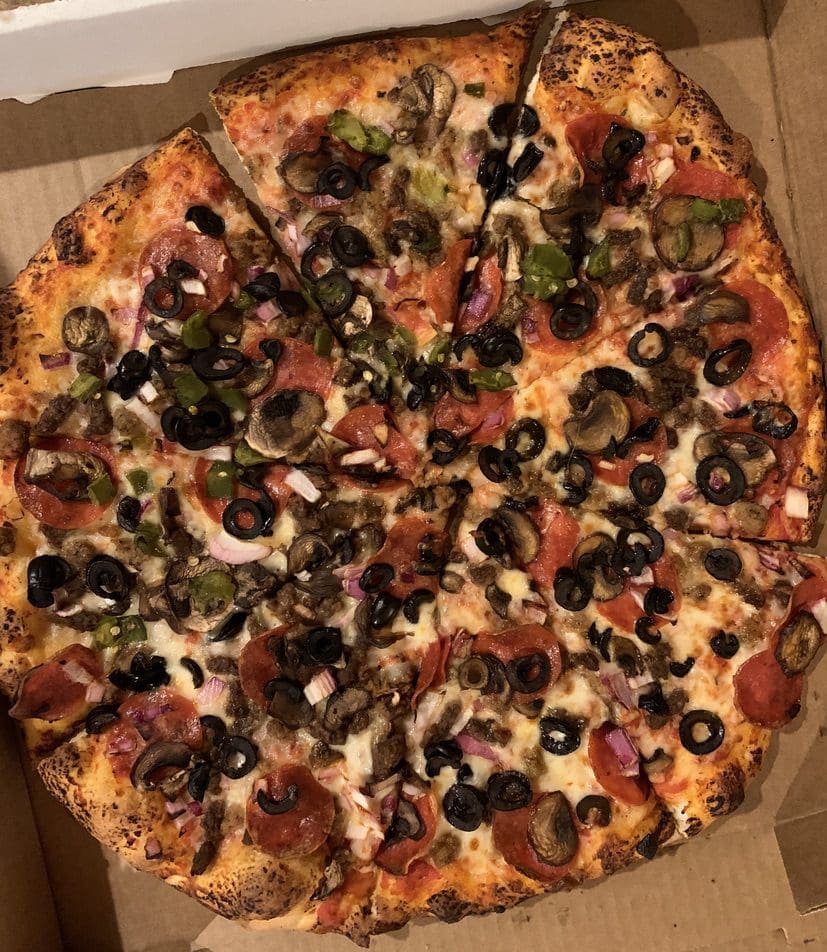
Mamacita’s Pizza – Abiquiu, New Mexico

If you’re up north in the Abiquiu area perusing Yelp because you’re jonesing for New Mexican food, would you heed the recommendations–good or bad–of someone from Mississippi or Delaware or Texas?  No way!  You’d look at reviews written by savvy New Mexicans.  They’ll steer you right, probably to El Farolito in El Rito (15 miles away) or Angelina’s in Espanola (27 miles away). With all due apologies to my fellow New Mexicans, when we visited Abiquiu and were curious about a rather famous pizzeria, we didn’t put much stock in Yelp reviews written by denizens of the Land of Enchantment.  We were blown away by the sheer volume of reviews from out-of-staters (and not just Texans, Arizonans and Coloradans).  Mamacita’s Pizza has five star reviews from Toronto, Canada; Madison, Wisconsin; Brooklyn, New York; San Francisco, California and North Tonawanda, New York. The five-star review from North Tonawanda was especially significant because this western New York city is just a stone’s throw from the Buffalo home of Bocce Club Pizza, one of the very best pizzas I’ve ever had.  My dear friend Becky Mercuri had one shipped to me for my most recent 39th birthday.  It may have been the best…