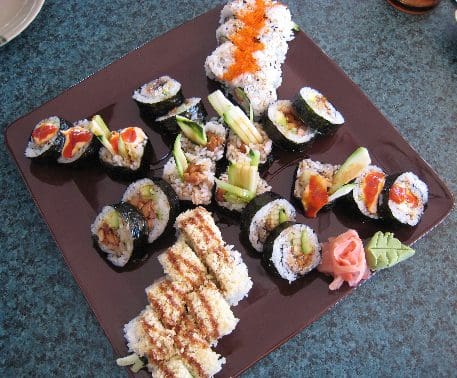
Sushi King – Albuquerque, New Mexico

Two roads diverged in a wood, and I– I took the one less traveled by, And that has made all the difference. – Robert Frost The path to becoming a sushi aficionado is, in some ways, an assertion of individualism. You might also consider it an expression in audacity. Sushi, as most of us know, is not for everyone. Even the decision to try it the first time can be daunting. Some otherwise intrepid diners will never even get that far, the notion of consuming “raw fish” being too extreme for them. Some will take the safe path and partake primarily or exclusively of “cooked” sushi, grilled fish enrobed in tempura batter and served warm. Others, like my friend Maui…
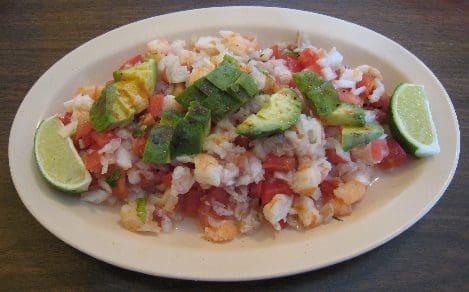
Ruben’s Grill – Albuquerque, New Mexico

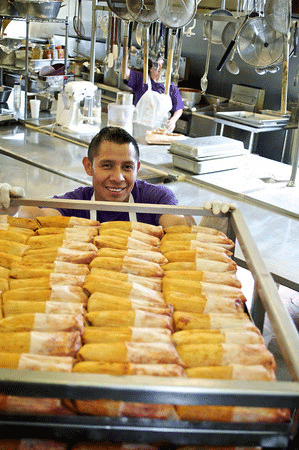
During the Mexican Revolution of 1910, many women joined the army both in response to the tremendous need for their service, but also to accompany their husbands, many of whom were conscripted into service. Traveling with the revolutionary armies, it was often the role of women to forage for food and cook meals. As much as possible, the women who followed the armies tried to provide a homey meal experience complete with tablecloth, decorative plates and vases for flowers. As soldaderas, their contributions to the Mexican Revolutionary were not limited to “traditional” roles of the time–serving as caregivers and as cooks. Many women distinguished themselves on the battlefield and are today remembered in such songs as La Adelita. It was…

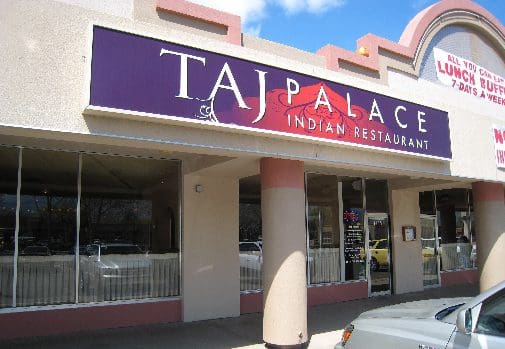
Taj Palace – Albuquerque, New Mexico

Indian cuisine is one of the world’s most diverse and sophisticated cuisines, fashioned over time by ancient traditions, diversity of religion, climatic variety and the influence of neighboring countries.  It is so diverse, in fact, that the characterization “Indian cuisine” would be wholly inaccurate. There are more Indian cuisines than there are regions in this ethnically diverse subcontinent comprising 17.5 percent of the world’s population. While categorization by geographical region–North Indian, South Indian, East Indian and West Indian–is prevalent, such groupings are at least partially exclusionary of cuisines whose basis is religious, especially the Hindu and Muslim faiths.  One of the great things about being an aficionado of Indian cuisine is that we can appreciate both its tremendous diversity and…

Eldorado Court – Santa Fe, New Mexico (CLOSED)

In Spanish, the word Eldorado translates to “the gilded one” or the “golden one” and refers to an imaginary place of great wealth and opportunity sought in South America by 16th-century explorers. In Santa Fe, Eldorado means a stately landmark hotel just off the historic Plaza in which guests are graced by the art of hospitality in lavish accommodations. The heart of the hotel is the Eldorado Court, located just off the main lobby. During our first visit in 2005, the Eldorado Court was “guarded” by two multi-hued, bigger than life coyotes (the type that helped define Santa Fe style years ago). Those coyotes have been repositioned onto ledges where they still remain in vigilant watch. On Sundays, Eldorado Court…

El Modelo – Albuquerque, New Mexico

Growing up in the 60s in a bucolic village in Northern New Mexico, we had no idea about such things as political correctness and multi-culturalism. It would be decades before the ascendency of the “woke” movement.  My friends included descendents of Montezuma, scions of the Spanish explorers, Native Americans from a nearby Pueblo and even a few “white” kids.  None of us really thought about things like “inclusion” and “diversity.”  We lived it! Being kids, there was naturally a lot of good-natured name-calling and teasing, but even when tempers flared, I can’t recall racial stereotype-based derogatory terms ever used in anger.  We thought nothing of teasing the “rich” white kids about their “white as them” Rainbo bread sandwiches and they retorted…

Osteria d’Assisi – Santa Fe, New Mexico

Historians have characterized the discovery, exploration, and colonization of the Americas in the late fifteenth and sixteenth centuries as having had three express purposes: glory, gold and God. This holds true in New Mexico where Spanish Explorers may have come for glory and gold, but finding neither, stayed for God.  Believing the large population of native peoples needed to hear the Gospel, the Spaniards established New Mexico first as a colony then as a mission. The effort to Christianize the native peoples was led by Franciscans, known then as the Sons of St. Francis of Assisi.  The sandal-shod Franciscans carried the Gospel throughout the Indian pueblos, indelibly imprinting Franciscan spirituality into the fabric and soul of New Mexico’s Catholicism. Evidence…

Las Mañanitas – Albuquerque, New Mexico (CLOSED)

Estas son las mañanitas, que cantaba el Rey David, Hoy por ser día de tu santo, te las cantamos a ti, Despierta, mi bien, despierta, mira que ya amaneció, Ya los pajarillos cantan, la luna ya se metió. This is the morning song that King David sang Because today is your saint’s day we’re singing it for you Wake up, my dear, wake up, look it is already dawn The birds are already singing and the moon has set Las Mañanitas, the traditional Mexican birthday song often sung in Catholic churches and birthday parties is one of my very favorite songs of any genre.  It offers the recipient a good-morning wish just as King David himself might have. During early…

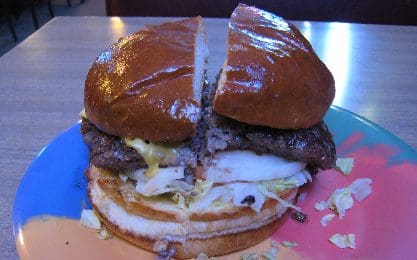
The Original Wineburger – Phoenix, Arizona (CLOSED)

Every year, children of all ages fall in love all over again with the heart-warming 1947 Christmas movie, Miracle on 34th Street. We’re aghast when the district attorney demands that defense lawyer Fred Gailey provide “authoritative proof” that Kris Kringle is “the one and only Santa Claus.” We share Gailey’s seeming desperation when he offers as evidence, a solitary letter addressed to Santa Claus at the NYC Courthouse. We’re enraged when the D.A. retorts that one letter is hardly enough proof, and are proudly vindicated when Gailey has guards march in with huge bags overflowing with letters. We revel in Gailey’s argument, “Your Honor, every one of these letters is addressed to Santa Claus. The Post Office has delivered them.…

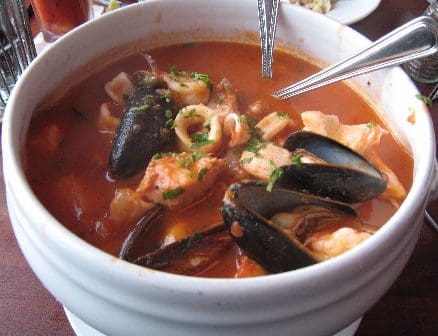
Crab House at Pier 39 – San Francisco, California

Every town has them–the touristy attractions every out-of-town visitor wants to hit and locals avoid like a Lobo basketball team coached by Ritchie McKay. To visitors, these attractions represent what your town is all about and nothing you tell them will dissuade them from thinking so.  After all, your local Chamber of Commerce paints these attractions as “can’t miss” and “absolutely must see.” Generally packaged with these touristy attractions are  dining destinations that promise to deliver authentic local flavor–the cuisine de culture so to speak. In Albuquerque that generally means a meal at a New Mexican restaurant–usually one with the stereotypical accoutrements that more closely represent Old Mexico than New Mexico. Invariably, in the Duke City those package deal restaurants…

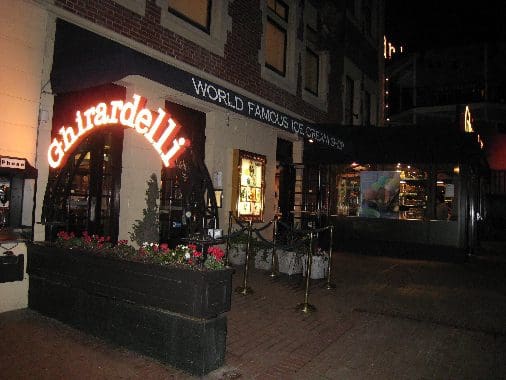
Ghirardelli Chocolate Shop & Soda Fountain – Las Vegas, Nevada

While Ghirardelli chocolate is available worldwide, there are only a few shop locations–mostly in California with outliers in Las Vegas, Chicago and in two Florida cities. Named after Italian chocolatier Domingo Ghirardelli who brought his chocolate from Peru to San Francisco, Ghirardelli Shops are a true chocoholics dream where you can purchase a tempting assortment of chocolate confections and gifts. The San Francisco location on Ghirardelli Square is a historical site near Pier 39 (where the pictures on this review were taken) that is even equipped with chocolate making equipment so you can see artistry at work. Truly one of the most progressive cities in the world, Las Vegas has a Ghirardelli chocolate shop near Harrah’s.  It’s designed like an…

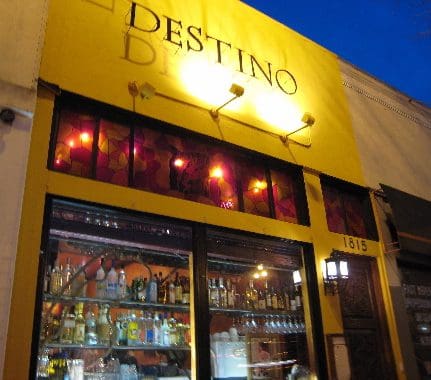
Destino Nuevo Latino Bistro – San Francisco, California (CLOSED)

In 2004, The Economist (a British weekly news publication) proclaimed that “Peru can lay claim to one of the world’s dozen or so great cuisines.” In 2005, Bon Appetit declared Peruvian “the next hot cuisine,” extolling its “vibrant ceviches, crispy, spiced rotisserie chickens and packed-with-flavor empanadas” then encapsulating its declaration with “this is one cuisine we could eat every day.”  A year later, at the world’s premier gastronomic forum, the International Summit of Gastronomy, Lima (the coastal nation’s capital city) was touted as the “gastronomic capital of the Americas.” What’s surprising is not that the culture-rich cuisine of a small, multi-ethnic nation rarely on the world’s stage received such acclaim, it’s that it took so long.  Peru’s culinary traditions, after…